
Top OEM Precision Components & Tooling Solutions
Explore our integrated manufacturing capabilities spanning metal 3D printing prototyping, MIM, powder metallurgy, and die casting.
Navigating Industrial Additive Manufacturing Sourcing
In the era of agile manufacturing and smart supply chains, evaluating a professional 3D printing supplier is no longer just about buying rapid prototypes. It represents a paradigm shift toward hybrid production—merging additive manufacturing (AM) with conventional powder metallurgy (PM), metal injection molding (MIM), and high-precision CNC machining.
Global Landscape of Additive Manufacturing in B2B Supply Chains
The global market for industrial 3D printing and additive manufacturing has transitioned from experimental design verification to full-scale serialized industrial production. Tier-1 automotive brands, medical device pioneers, aerospace engineering conglomerates, and consumer electronics leaders are increasingly seeking top-tier 3D printing suppliers capable of delivering production-grade metal and polymer components under rigorous quality management systems such as ISO 9001 and IATF 16949.
Modern enterprises utilize Selective Laser Melting (SLM) and Direct Metal Laser Sintering (DMLS) for functional prototypes that possess density and structural integrity matching wrought metals. This eliminates costly tooling revisions during initial R&D phases.
By decentralizing production and utilizing digital inventory models, global sourcing teams reduce lead times for complex spare parts from months to days, mitigating risks associated with geopolitical shifts and raw material bottlenecks.
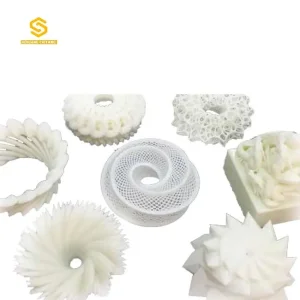
Additive processes unlock organic shapes, conformal cooling channels in injection molds, lightweight lattice structures, and consolidated assemblies that were previously impossible to produce via conventional 5-axis CNC milling.
China’s Manufacturing Infrastructure & Efficiency Advantages
China has solidified its position as the world's leading industrial manufacturing nexus. For international buyers seeking a qualified 3D printing supplier, partnering with a China-based factory offers unmatched structural efficiency benefits:
- End-to-End Industrial Clusters: China’s industrial parks integrate raw metal powder atomization, additive machinery building, secondary CNC finishing, electroplating, heat treatment, and CMM inspection within tight regional ecosystems. This drastically shrinks internal transport times.
- Speed of Iteration: While Western manufacturing suppliers often require weeks for engineering DFM (Design for Manufacturability) evaluation and quoting, advanced suppliers like Ningbo Jiehuang (JHMIM) deliver complete technical feedback and commercial quotations within 24 to 48 hours.
- Capital Efficiency & Tooling Flexibility: When an additive prototype transitions into medium-to-high volume production, Chinese factories seamlessly transition the project to low-cost multi-cavity Metal Injection Molding (MIM) or high-tonnage Powder Metallurgy (PM) pressing. This delivers substantial cost savings per part.
Hybrid Manufacturing Architecture: Bridging 3D Printing, MIM, PM, and CNC
A major flaw in modern sourcing is treating manufacturing methods in isolation. A world-class contract manufacturer evaluates engineering drawings under a multi-process matrix to optimize cost, lead time, and mechanical performance.
| Manufacturing Process | Ideal Volume Range | Geometric Complexity | Surface Finish (Ra) | Lead Time to Sample | Unit Cost Scale |
|---|---|---|---|---|---|
| Metal 3D Printing (SLM/DMLS) | 1 – 500 pcs | Extreme (Lattice, Internal Channels) | 6.3 – 12.5 μm | 3 – 7 Days | Medium – High |
| Metal Injection Molding (MIM) | 2,000 – 1,000,000+ pcs | Very High (Complex 3D Geometry <100g) | 0.8 – 3.2 μm | 25 – 35 Days (Tooling) | Ultra Low at Scale |
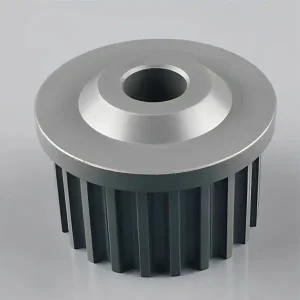
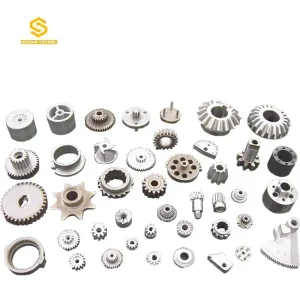
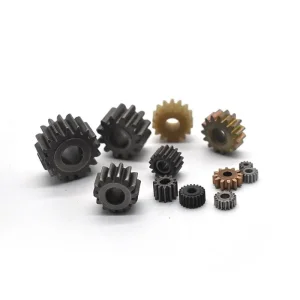
| Powder Metallurgy (PM) | 5,000 – 500,000+ pcs | Medium (Prismatic, Gears, Bushings) | 1.6 – 6.3 μm | 30 – 40 Days (Tooling) | Lowest for Gears |
| Precision CNC Machining | 10 – 5,000 pcs | Medium (Subtractive 5-Axis Features) | 0.4 – 1.6 μm | 5 – 10 Days | Linear by Machine Time |
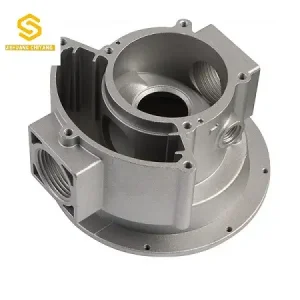
| Aluminum/Zinc Die Casting | 2,000 – 500,000+ pcs | High (Thin-walled Housings) | 1.6 – 3.2 μm | 30 – 45 Days (Tooling) | Very Low for Enclosures |
Localized Application Paradigms & Industry Sector Solutions
Understanding how industrial 3D printing and powder processing intersect across specific verticals provides actionable blueprinting for global procurement leads:
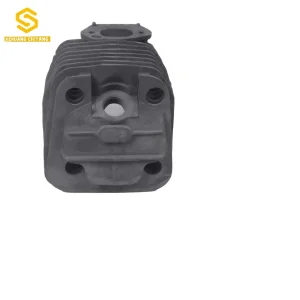
Automotive OEMs leverage metal 3D printing for functional prototyping of variable valve timing mechanisms, turbocharger impellers, and custom sensor brackets. Once validated, high-volume production transitions smoothly to IATF 16949-certified powder metallurgy or aluminum die casting, maintaining high density and structural strength under high torque conditions.
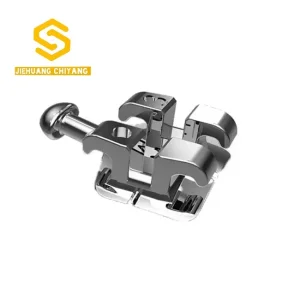
Medical equipment manufacturers require strict biocompatibility and high strength-to-weight ratios. Materials like 316L stainless steel, 17-4PH, and Titanium alloys (Ti-6Al-4V) are processed via SLM for anatomical implants or converted into multi-cavity MIM tooling for surgical staplers, endoscopic clamps, and orthodontic brackets.
Next-gen consumer tech demands ultra-compact structural frames, laptop hinges, smartwatch housings, and intricate camera modules. Prototyping via ceramic 3D printing and Ti-MIM allows designers to push geometric limits while guaranteeing high scratch resistance and premium surface polishing aesthetics.
Robotic end-effectors, micro gearboxes, and fluid control valves benefit from combined AM and CNC manufacturing. Rapid printing of customized robotic grippers reduces downtime on assembly lines, while sintered steel gears deliver wear resistance under high mechanical stress.
Global Industrial 3D Printing Trends (2025–2030)
As industrial manufacturing evolves, several technological catalysts are defining the next decade of metal additive sourcing:
- Multi-Laser Powder Bed Fusion (PBF): Quad-laser and octa-laser metal 3D printers are drastically increasing build rates, bringing down the per-cubic-centimeter cost of metal printing and closing the cost gap with conventional milling.
- Binder Jetting Expansion: Metal Binder Jetting (MBJ) combines the design freedom of 3D printing with the high-throughput furnace sintering of MIM. This technology offers high-volume additive manufacturing without requiring support structures during printing.
- AI-Driven Generative Design & Real-Time In-Situ Monitoring: Machine learning algorithms optimize internal material density while melt-pool thermal imaging ensures 100% defect-free parts for aerospace and defense applications.
Enterprise Procurement Framework: Evaluating Your 3D Printing Supplier
When selecting a manufacturing partner, global sourcing directors must look beyond price per part. A rigorous supplier evaluation framework should include:
- Quality System Accreditations: Ensure the factory maintains verified ISO 9001 and IATF 16949 certifications with traceable raw material heat numbers.
- In-House Secondary Machining & Quality Control: Confirm that the supplier possesses 5-axis CNC machining center equipment, CMM inspection, optical projectors, salt spray test tanks, and density testing gear under one roof.
- Intellectual Property & Data Security Protocols: Verify that the supplier enforces strict operational non-disclosure agreements (NDAs) and operates secure data storage for internal drawings.
Industrial Engineering & Procurement Guidance
Get expert insights into tolerances, technical trade-offs, lead times, and manufacturing workflows.
What technical files are required to receive a full quote?
How does metal 3D printing compare to MIM in terms of unit cost?
What density and mechanical properties can metal 3D printed parts achieve?
How do you protect intellectual property and proprietary customer drawings?
What post-processing and finishing operations do you provide in-house?
What are the standard lead times for prototypes versus tooling production?
What minimum order quantities (MOQ) apply across processes?
How does Jiehuang ensure batch-to-batch dimensional accuracy?
Custom OEM Components & Precision Castings
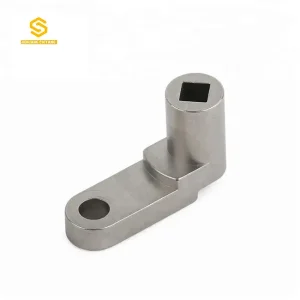
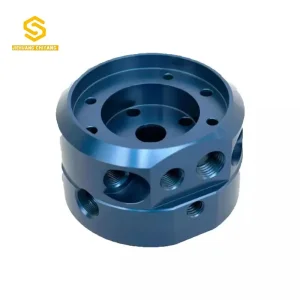
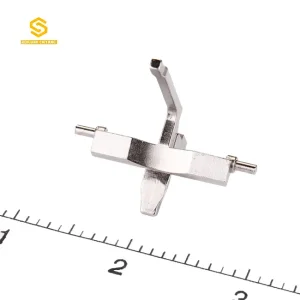
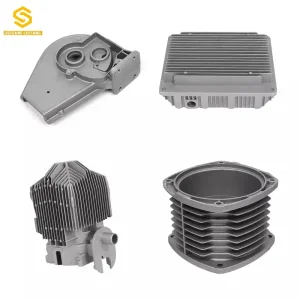
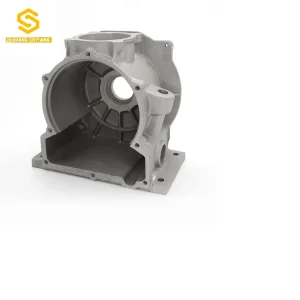
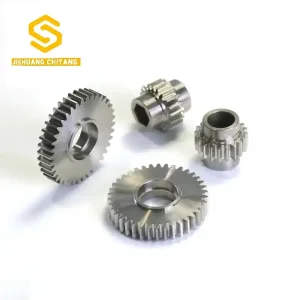
Review our specialized product offerings across dental, automotive, lock hardware, and precision valve components.
Ready to Accelerate Your Manufacturing Project?
Send us your 2D/3D CAD drawings today. Our senior metallurgy and tooling engineering team will deliver a comprehensive DFM manufacturability analysis and itemized quotation within 48 hours.