
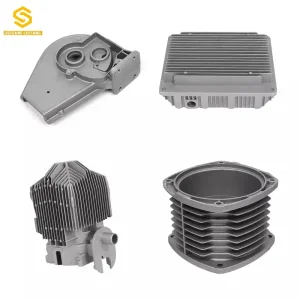
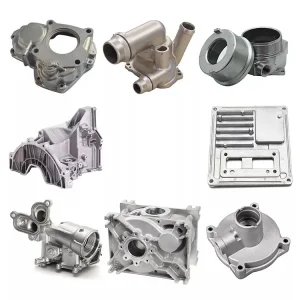
Featured Custom Zinc & Alloy Castings
High-density, tight-tolerance zinc die cast parts engineered for automotive, electronics, and precision hardware applications.
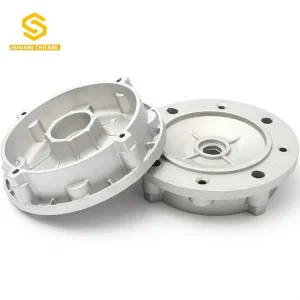
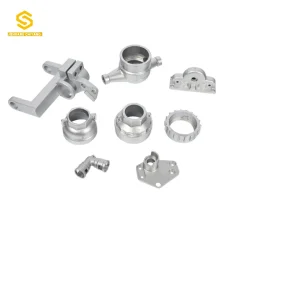
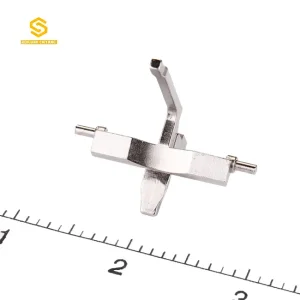
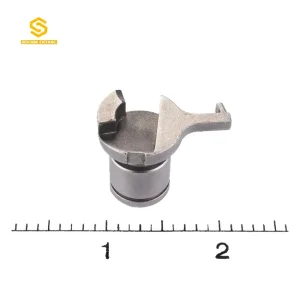
1. Precision Zinc Die Casting Metallurgy & Process Physics
Zinc die casting stands as one of the most efficient, durable, and dimensional-precise metal-forming technologies available in modern industrial manufacturing. Operating predominantly via the hot-chamber die casting process (also known as the gooseneck process), zinc alloys boast exceptionally low melting temperatures (~380°C to 420°C) relative to aluminum or iron. This metallurgical characteristic drastically reduces thermal shock on tool steel dies, allowing mold life cycles to frequently exceed 1,000,000 shots without significant cavity erosion or dimensional degradation.
The fluidity of molten zinc under high injection pressure (typically between 15 to 30 MPa) enables the casting of complex structural geometries with micro-wall thickness down to 0.35 mm, drafting angles as low as 0.5°, and precise internal threads formed directly within the tool. Consequently, global OEMs utilize zinc alloy die casting to consolidate multi-part assemblies into a single, cohesive, net-shape component, eliminating secondary CNC machining, lowering assembly overhead, and enhancing total mechanical integrity.
1.1 Zamak Alloy Matrix & Mechanical Performance Benchmarks
Selecting the optimal zinc alloy grade is foundational to achieving the ideal balance of tensile strength, elongation, thermal conductivity, and electroplating compatibility. Below is the engineering matrix for the most widely specified industrial zinc alloys (Zamak and ZA series):
| Alloy Grade | Composition Baseline | Tensile Strength (MPa) | Yield Strength (MPa) | Elongation (%) | Key Engineering Attributes & Best Applications |
|---|---|---|---|---|---|
| Zamak 3 (Z33521) | Zn-4% Al-0.03% Mg | 283 | 209 | 10.0% | Industry standard. Superior balance of castability, dimensional stability, and excellent plating/coatability. Ideal for housing & hardware. |
| Zamak 5 (Z35531) | Zn-4% Al-1% Cu | 331 | 250 | 7.0% | Added 1% copper increases tensile strength, hardness, and wear resistance at the cost of slight ductility reduction. Preferred for load-bearing gears. |
| Zamak 2 (Z35521) | Zn-4% Al-3% Cu | 359 | 310 | 7.0% | Highest strength and hardness among standard Zamak alloys. Excellent anti-friction qualities; frequently replaces structural bronze bushings. |
| Zamak 7 | High-Purity Low Mg | 283 | 209 | 13.0% | Ultra-high fluidity grade for thin-wall casting. Superior surface smoothness making it the premier choice for cosmetic consumer electronics. |
| ZA-8 | Zn-8% Al-1% Cu | 372 | 290 | 6.0% | Can be hot-chamber cast. Excellent creep resistance and elevated structural strength for heavy-duty industrial brackets. |
| ZA-12 / ZA-27 | High-Alumina Zinc | 400 - 440 | 310 - 370 | 4.0 - 10% | Cold-chamber process required. Extreme tensile performance rivaling cast iron and structural aluminum alloys. |
China’s Factory Ecosystem Advantages in Zinc Die Casting
Why leading global tier-1 automotive and electronic manufacturers concentrate their precision casting supply chains in integrated Chinese industrial clusters.
Fully Integrated Supply Chain Density
China's major manufacturing hubs (such as Ningbo, Shenzhen, and Dongguan) integrate raw material smelting, high-speed automated die casting, precision multi-axis CNC secondary finishing, and advanced surface treatment within a 30-kilometer radius. This extreme density dramatically reduces production lead times from months to weeks.
Advanced Tooling & Mold Automation
Chinese precision toolmakers employ multi-cavity hot-runner tooling equipped with real-time pressure transducers, automated hydraulic core-pulling, and internal conformal cooling channels. This guarantees rapid cycle times (up to 800-1200 shots per hour on miniature automated hot-chamber machines) with virtually zero porosity defect rates.
Comprehensive Surface Finishing Ecosystem
Zinc die castings require flawless surface electroplating, powder coating, or PVD finishes. Chinese factories offer in-house electroplating lines capable of trivalent chrome, satin nickel, copper-nickel-chrome multi-layer protection, and anti-corrosion passivation compliant with stringent European RoHS and REACH environmental regulations.
Localized Application Scenarios & Sector Solutions
Exploring how custom zinc die cast parts deliver mechanical strength, EMI shielding, and high cosmetic appeal across critical industry sectors.
Automotive Systems & E-Mobility
Precision zinc castings dominate in vehicle safety and electrical infrastructure. Key components include electronic power steering (EPS) sensor housings, seatbelt retractor gears, rearview mirror bracket mechanisms, EV battery connector terminals, and door latch mechanisms requiring high fatigue resistance.
Consumer Electronics & Smart Devices
Due to zinc's natural RF (Radio Frequency) and EMI (Electromagnetic Interference) shielding, it is extensively used for smartphone internal chassis frames, foldable display friction hinges, smartwatch cases, high-end headphone gimbal connectors, and optical fiber transceiver modules.
Smart Home & Architectural Hardware
High cosmetic appeal combined with security-grade strength makes zinc the premium choice for biometric smart door lock mortise assemblies, designer door handles, window operators, high-pressure sanitary plumbing valve bodies, and luxury furniture fittings.
Medical Instruments & Diagnostics
Zinc die castings provide substantial tactile weight, high rigidity, and excellent castability for non-invasive surgical tool handles, diagnostic equipment chassis mounts, optical microscope focus adjustments, and laboratory fluidic manifold blocks.
Industrial Equipment & Pneumatics
Pneumatic valve housings, fluid pressure regulators, heavy-duty electrical enclosure latches, industrial gearboxes, and power tool impact housings benefit from Zamak 5's high yield strength and vibration damping qualities.
5G & Telecommunications Infrastructure
Next-gen wireless communications rely on cast zinc RF filter housings, fiber optic connector shells, outdoor transceiver mounting plates, and heat dissipation heat sinks requiring strict hermetic sealing capabilities.
3. Technological Evolution & Future Trends in Zinc Manufacturing
The global zinc die casting sector is undergoing a massive transformation driven by advanced computer modeling, environmental sustainability initiatives, and dynamic market requirements for lightweight, highly integrated metal structures. Leading Chinese original design manufacturers (ODMs) and OEM suppliers are pioneering several critical technology frontiers:
3.1 Ultra-Thin-Wall Casting Technology (UTWC)
Historically, zinc die castings maintained wall thicknesses between 1.2 mm and 2.5 mm. Through modern computer-controlled injection dynamics, high-vacuum assisted mold evacuation systems, and optimized thermal management, modern zinc casting facilities routinely mass-produce structural component walls down to 0.35 mm - 0.50 mm. This breakthrough allows zinc to compete directly with engineered polymers and magnesium alloys, providing superior impact resistance, EMI attenuation, and cosmetic cold-touch feel without adding unwanted weight to hand-held smart devices.
3.2 AI-Simulated Moldflow & Real-Time PQ2 Monitoring
Eliminating internal porosity (both gas porosity and shrinkage porosity) is mandatory for pressure-tight and load-bearing applications. Industry 4.0 casting facilities leverage advanced numerical simulation software (e.g., ProCAST, MAGMASOFT) prior to cutting steel tooling. By optimizing gate velocity, runner geometry, and overflow positioning, engineers ensure laminar liquid metal flow. During production, dynamic PQ2 diagram monitoring sensors continually track hydraulic press pressure and plunger speed in real-time, instantly auto-rejecting any cast component that deviates from specified parameters.
3.3 Sustainable & Low-Carbon Metallurgical Supply Chains
Zinc is inherently a highly sustainable material. It is 100% recyclable without degradation of its physical or mechanical properties. Furthermore, because zinc alloy melting temperatures require approximately 30-40% less energy consumption than aluminum melting processes, the carbon footprint per manufactured unit is significantly reduced. Modern manufacturers are increasingly utilizing closed-loop re-melting systems where runners, sprues, and trimmed flash are immediately recycled in-house, achieving material utilization efficiency exceeding 98%.
Zinc Die Casting vs. Alternative Manufacturing Processes
A clear quantitative comparison evaluating when to specify Zinc Die Casting over Aluminum Die Casting, MIM, and CNC Machining.
| Evaluation Parameter | Zinc Die Casting | Aluminum Die Casting | Metal Injection Molding (MIM) | 5-Axis CNC Machining |
|---|---|---|---|---|
| Typical Mold Life (Shots) | 750,000 - 2,000,000+ | 80,000 - 150,000 | 250,000 - 500,000 | N/A (No Tooling) |
| Min. Castable Wall Thickness | 0.35 mm - 0.50 mm | 1.20 mm - 1.50 mm | 0.50 mm - 1.00 mm | 0.80 mm |
| Dimensional Tolerance (Cast) | ±0.025 mm / inch | ±0.050 mm / inch | ±0.030 mm / inch | ±0.005 mm |
| Draft Angle Requirements | 0.5° - 1.0° | 2.0° - 3.0° | 0.5° - 1.0° | 0° (Zero Draft) |
| Electroplating Compatibility | Exceptional (Mirror Finish) | Fair / Difficult | Good (Requires Passivation) | Material Dependent |
| Part Size Range | 1g to 3.5 kg | 50g to 30 kg+ | 0.1g to 250g (Best small) | Unlimited |
| Unit Cost at High Volume | Extremely Low | Low to Medium | Medium | Very High |
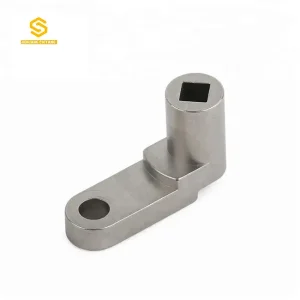
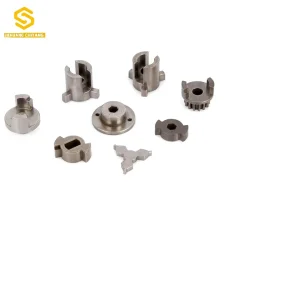
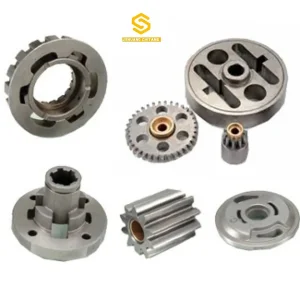
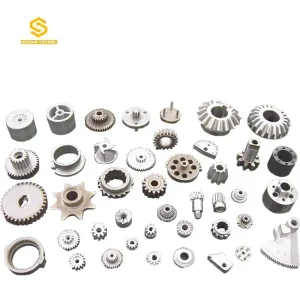
Precision Metal Components & Specialized Castings
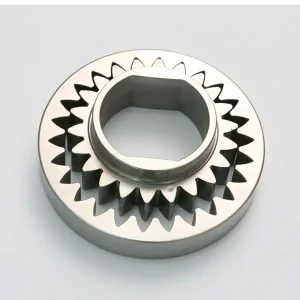
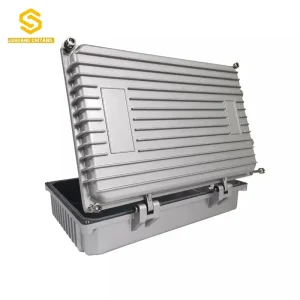
Explore our full line of specialized hardware, sintered parts, powder metallurgy molds, and zinc-aluminum custom products.
4. Global Enterprise Procurement Needs & Risk Mitigation
Strategic sourcing directors and global procurement managers must look beyond unit piece price to evaluate total cost of ownership (TCO), quality consistency, and intellectual property protection. When sourcing custom zinc die castings from China, tier-1 enterprises mandate adherence to rigorous quality control frameworks:
4.1 Quality Control Assurance Framework (IATF 16949 & ISO 9001)
An enterprise-grade manufacturing facility must execute an end-to-end quality loop spanning raw material incoming inspection to final CMM verification:
- Spectrographic Chemical Analysis: Verifying every ingot melt batch with optical emission spectrometers to guarantee Zamak composition compliance and prevent lead/cadmium/tin intergranular corrosion contamination.
- Non-Destructive X-Ray Defect Inspection: 100% real-time volumetric scanning to verify zero porosity inside structural load-bearing sections prior to machining.
- Automatic Optical Inspection (AOI): 3D laser scanners and vision sorting machines capable of measuring complex dimensions at 200 parts per minute with ±0.005 mm repeatability.
- Production Part Approval Process (PPAP Level 3): Complete documentation suite including Process Flow Diagrams, PFMEA, Control Plans, MSA (Gauge R&R), Cpk capability studies (Cpk > 1.67), and full dimensional inspection results.
4.2 Tooling Ownership, IP Security, & Logistics Risk Management
Global buyer contracts should explicitly stipulate tool ownership rights. Quality Chinese suppliers maintain dedicated mold storage vaults with automated humidity and corrosion control, offering guaranteed tool life warranties (rebuilding molds at factory expense if shot counts surpass contract thresholds). Furthermore, establishing dual-port ocean freight access (e.g., via Ningbo-Zhoushan Port) combined with localized safety stock warehousing guarantees supply chain continuity even during global shipping disruptions.
Frequently Asked Sourcing & Engineering Questions
Expert responses to critical questions asked by design engineers, quality auditors, and procurement managers.
Accelerate Your Engineering Project with Custom Zinc Casting
Partner with a premier Chinese OEM/ODM zinc die casting manufacturer. Upload your 3D CAD models (STEP/IGES/X_T) and 2D engineering drawings for a comprehensive DFM feedback report and fast quotation.
Request a Technical Quotation