
Explore OEM custom engineered technical ceramics manufactured via high-density powder injection molding for high-wear, high-temperature, and micro-precision applications.
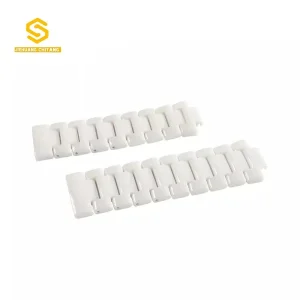
China Ceramic injection molding casting Watch Band For Wrist Strap Manufacturer, Factory
View Product Details →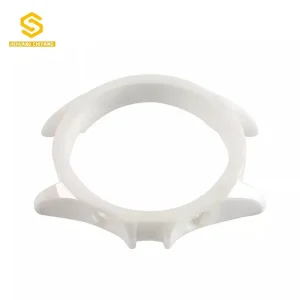
Wholesale Customized ceramic injection molding watch case for wrist accessories Suppliers, Factories
View Product Details →
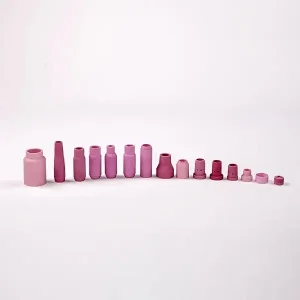
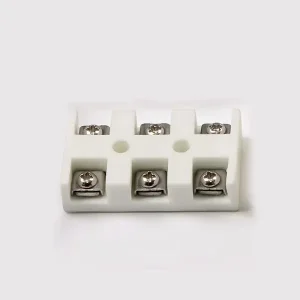
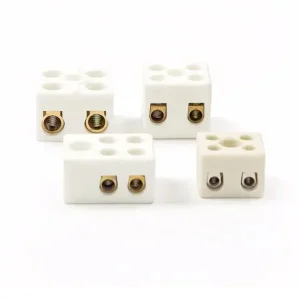
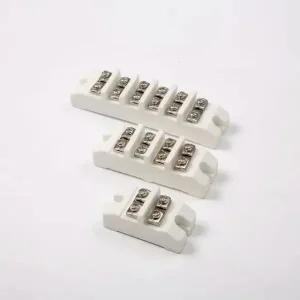
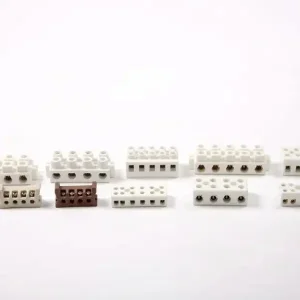
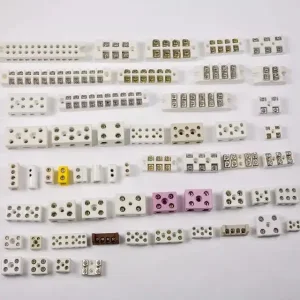
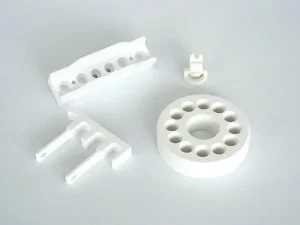
China High Temperature Ceramic Terminal Block Wire Connector Manufacturer, Factories
View Product Details →1. Global Market Trajectory & Next-Gen Trends in Ceramic Injection Molding (CIM)
The shift from conventional subtractive diamond machining to Near-Net-Shape Powder Injection Molding is revolutionizing high-performance engineering ceramics across global industrial supply chains.
Submicron Powder Synthesis
Modern CIM manufacturing relies on nanostructured and submicron powders (typically 0.1 to 0.8 µm grain diameter) of Yttria-Stabilized Zirconia (Y-TZP) and high-purity Alumina (Al2O3 > 99.8%). Nano-sized raw powders enhance kinetic sintering mass transfer, allowing fully dense microstructures at reduced thermal exposure curves, eliminating residual micro-porosity.
Catalytic & Thermal Solvent Debinding
Traditional slow thermal debinding is rapidly being replaced by multi-stage solvent extraction combined with catalytic nitric acid debinding protocols. This breakthrough reduces binder removal cycle times from 48 hours down to under 8 hours for thick-walled components, preserving structural integrity without blistering or internal stress cracks.
High-Wear & Biocompatible Expansion
Demand is surging in non-traditional applications: 5G/6G RF microwave filter cavities, ceramic surgical instrument handles, luxury smartwatch bezels, ceramic terminal connectors, and EV battery thermal isolation seals. CIM enables complex 3D internal geometries (e.g., cross-hole channels, undercuts, and thin walls down to 0.3mm) impossible via pressing or green machining.
2. Technical Deep-Dive: DFM, Feedstock Rheology & Sintering Kinetics
Understanding the physics behind ceramic powder binder systems, volumetric shrinkage prediction, and microstructural grain growth control.
Phase 1: Feedstock Formulations
A multi-component binder matrix consisting of primary thermoplastic polymers (Polyethylene, Polypropylene), secondary wax plastifiers (Paraffin Wax), and surfactant coupling agents (Stearic Acid) is homogenized with ultra-pure ceramic powder at a solids loading ratio of 58% to 65% by volume. Rheological flow curves are maintained at shear rates between 1000s⁻¹ and 3000s⁻¹ to guarantee uniform mold cavity packing without powder-binder separation.
Phase 2: Injection & Green Part Control
Using precision closed-loop CNC electric injection machines, green parts are molded with precise cavity pressure feedback. Tooling incorporates oversized scaling multipliers (typically 1.18 to 1.25) to account for downstream linear shrinkage during thermal densification. Multi-cavity runner balance analysis (Moldflow) ensures zero weld-line stress zones.
Phase 3: Sintering Physics
After binder extraction, the "brown" component enters high-temperature continuous atmosphere kilns (up to 1650°C). Solid-state diffusion leads to atomic neck growth, pore elimination, and grain boundary consolidation. The resulting sintered ceramic achieves Vickers hardness exceeding HV 1200-1500 and flexural strength up to 1000 MPa (for Y-TZP zirconia).
| Manufacturing Parameter | Alumina (Al2O3 99.5%) | Zirconia (Y-TZP ZrO2) | Silicon Nitride (Si3N4) | Conventional Metal MIM (316L) |
|---|---|---|---|---|
| Volumetric Shrinkage (%) | 15.5% - 18.0% | 20.0% - 22.5% | 16.0% - 18.5% | 14.0% - 16.5% |
| Dimensional Tolerance (Standard) | ± 0.3% of nominal (±0.03mm) | ± 0.3% of nominal (±0.025mm) | ± 0.4% of nominal | ± 0.3% of nominal |
| Vickers Hardness (HV 0.5) | 1400 - 1600 HV | 1200 - 1350 HV | 1500 - 1700 HV | 220 - 250 HV |
| Thermal Conductivity (W/m·K) | 30 W/m·K | 2.5 - 3.0 W/m·K | 30 - 35 W/m·K | 15 W/m·K |
| Dielectric Strength (kV/mm) | 18 - 20 kV/mm | 10 - 12 kV/mm | 15 - 18 kV/mm | Conductive (N/A) |
3. Strategic Sourcing Matrix: Key Procurement Criteria for Global OEM Buyers
A analytical evaluation guide for Procurement Managers, Supply Chain Directors, and Lead Systems Design Engineers evaluating Ceramic Injection Molding suppliers.
Batch-to-Batch Repeatability
Procurement teams require tight statistical process control (Cpk > 1.67) across multi-million part runs. Variations in raw powder lot chemistry or sintering thermal profiles can cause dimensional drift. Supplier evaluation must audit CMM optical inspection, laser micrometer verification, and X-ray diffraction grain analysis.
In-House Tooling & DFM Speed
Lead time is critical for product launches. Top-tier suppliers provide thorough Design for Manufacturability (DFM) reports within 24-48 hours, recommending optimal gate locations, parting lines, wall thickness uniformity, and radii to prevent stress concentrations before steel cutting.
Secondary CNC Diamond Machining
While CIM provides near-net shape, critical mating faces require tolerances tighter than ±0.005mm. Direct factory capabilities in diamond lap grinding, surface honing, and 5-axis CNC diamond milling eliminate reliance on 3rd-party vendors and safeguard proprietary IP.
Compliance & Traceability
Tier-1 automotive, medical, and aerospace buyers demand rigorous quality certifications: IATF 16949, ISO 9001, RoHS, REACH, and full raw material lot traceability down to the powder synthesis batch level, backed by 100% key-dimension inspection guarantees.
4. China Industry 4.0: Supply Chain Resilience & Cost-Efficiency Advantages
How Ningbo Jiehuang (JHMIM) leverages integrated industrial ecosystem clusters, advanced automation, and agile manufacturing to yield 30%–50% cost advantages over Western counterparts.
Vertically Integrated Supply Ecosystem
Situated in Ningbo’s manufacturing hub, JHMIM operates within an integrated supply chain ecosystem—ranging from raw powder synthesis to precision EDM mold making, thermal sintering, surface polishing, and electroplating. This proximity compresses tooling design-to-sample cycles down to just 25-30 days.
Industry 4.0 Automated Production
Deploying automated robotic part pickers, closed-loop thermal debinding lines, and AI-driven Automated Optical Inspection (AOI) sorting equipment, JHMIM maintains continuous 24/7 manufacturing operations. Digital MES integration ensures complete lot traceability with zero human-error insertion.
Substantial Total Cost of Ownership (TCO) Drop
Compared to traditional Western machining or high-cost local MIM operations, China's advanced CIM infrastructure offers lower tooling costs, optimized material yield (>98% feedstock reuse), and scalable mass production capabilities—delivering unmatched unit pricing at high volumes.
5. Deep-Dive Sector Application Scenarios
Ceramic Injection Molding components engineered for demanding electrical, thermal, wear, and aesthetic applications across global industries.
High-Temperature Electrical & Power
Components: Ceramic terminal strips, high-temperature terminal blocks, fuse ceramic tubes, electrical resistance blocks, insulator connectors.
Material Used: High-Purity Steatite & Alumina Ceramics (Al2O3).
Key Benefit: Extreme dielectric strength (>18 kV/mm), zero electrical breakdown under continuous 1000°C thermal loads, high mechanical arc resistance.
Smart Wearables & Consumer Electronics
Components: Smartwatch bezels, ceramic watch straps, scratch-proof watch cases, ceramic smartphone buttons, camera lens trim rings.
Material Used: Yttria-Stabilized Zirconia (Y-TZP) in Black, White, & Custom Colors.
Key Benefit: High scratch resistance (Mohs 8.5+), luxurious mirror-like surface finish, skin-friendly hypoallergenic touch, zero 5G RF signal attenuation.
Automotive & EV Thermal Management
Components: EV battery isolation seals, high-voltage ceramic connectors, oxygen sensor substrates, water pump ceramic shaft bearings.
Material Used: Toughened Zirconia & Alumina Matrix Composites (ZTA).
Key Benefit: Excellent thermal shock resistance, chemical inertness against corrosive engine coolant/acids, zero wear under high rotational speeds.
Medical & Surgical Technology
Components: Endoscopic surgical tips, dental implant abutments, biocompatible scalpel blade holders, fluidic micro-valves.
Material Used: Medical-Grade Zirconia & Silicon Nitride.
Key Benefit: 100% biocompatible, resistant to repeated autoclave steam sterilization cycles, non-magnetic for full MRI compatibility.
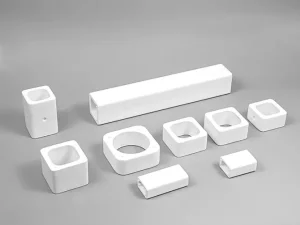
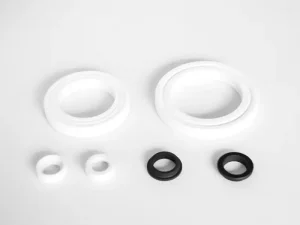
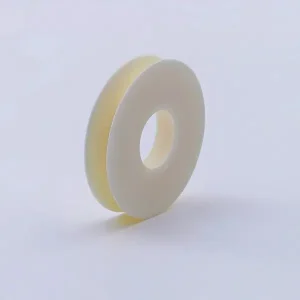
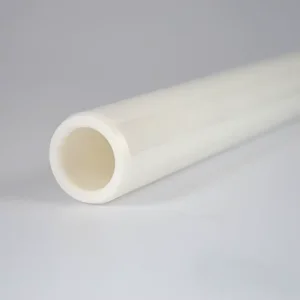
Review additional high-purity alumina, zirconia tubes, seals, terminal blocks, and powder metallurgy component offerings available from Jiehuang (JHMIM).
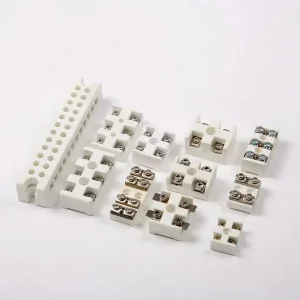

Wholesale Hot-selling China Pm Powder Metallurgy Sintering Parts Manufacturers, Supplier
View Product Details →6. Frequently Asked Questions (FAQ) for Technical Ceramic Procurement
Clear, authoritative engineering answers to common technical queries from procurement specialists, manufacturing engineers, and sourcing directors.
While both processes utilize powder injection molding principles (mixing powder with a polymer binder to mold green parts), CIM uses inorganic non-metallic ceramic powders (such as Alumina Al2O3 or Zirconia ZrO2) rather than metal alloys. CIM requires much higher sintering temperatures (up to 1650°C), experiences larger volumetric shrinkage (18%–22% vs. 14%–16% in MIM), and yields non-conductive, ultra-hard, corrosion-resistant end components.
As-sintered CIM tolerances are typically held within ±0.3% to ±0.5% of nominal dimensions (e.g., ±0.03mm on a 10mm feature). For tight tolerance features requiring micron-level precision (such as ±0.002mm), secondary diamond CNC grinding, lapping, or surface polishing is performed post-sintering.
At Jiehuang (JHMIM), standard production MOQ starts at 2,000 pieces per run due to mold setup and furnace thermal cycle batch optimization. Tooling design, DFM sign-off, and first article sample submission generally take 25 to 35 calendar days, depending on part complexity and cavity quantity.
Yttria-Stabilized Zirconia (Y-TZP) offers significantly higher flexural strength (up to 900–1200 MPa) and fracture toughness (6–8 MPa·m^1/2) compared to Alumina (300–400 MPa flexural strength). Zirconia undergoes "transformation toughening" under mechanical stress, stopping crack propagation, making it ideal for structural parts, watch bezels, scalpel blades, and high-impact wear components.
Yes. Ningbo Jiehuang (JHMIM) enforces strict IP confidentiality protocols. We routinely execute customer NDAs or supply our standard bilingual engineering NDA before reviewing 2D (PDF) or 3D (STEP/IGES) CAD models for DFM evaluation.