
High-Precision Micro MIM & Powder Metallurgy Components
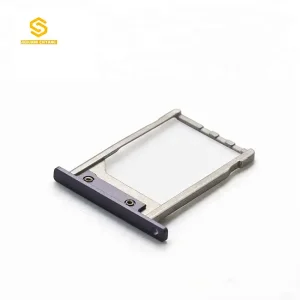
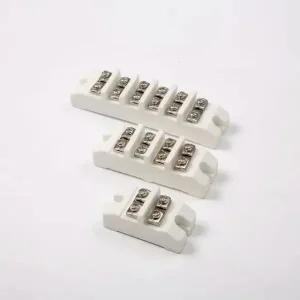
Explore our top-tier OEM Metal Injection Molding (MIM) parts engineered for critical automotive, electronic, and industrial hardware applications. Each product reflects rigorous tolerance control and material integrity.




Global Industrial Landscape of Metal Injection Molding (MIM)
In the modern manufacturing ecosystem, global Original Equipment Manufacturers (OEMs) face intense pressure to produce complex, high-strength metal components at aggressive price points. Metal Injection Molding (MIM) has evolved into a premier near-net-shape manufacturing technology, combining the shape design freedom of plastic injection molding with the mechanical integrity of wrought metals.
By utilizing fine metal powders (typically 5 to 20 micrometers) combined with thermoplastic binder matrices, MIM enables the mass production of intricate 3D geometries—such as undercuts, thin walls, internal threads, and cross-holes—eliminating multi-axis CNC machining passes and reducing raw material waste by up to 95%.
The 4-Stage MIM Process Engineering Roadmap
Achieving dimensional repeatability and structural homogeneity in MIM components requires meticulous thermal and chemical process controls across four foundational stages.
1. Feedstock Preparation
Gas-atomized micro-fine metal powders are homogeneously blended with custom thermoplastic binder systems (paraffin wax, polypropylene, polyacetal) at precise solid loading fractions (typically 60-65 vol%). The resulting feedstock exhibits optimal pseudoplastic rheology for smooth mold filling.
2. Precision Injection Molding
Feedstock pellets are heated and injected into multi-cavity hardened tool steel molds using closed-loop hydraulic or electric molding machines. The molded green parts possess exact structural features, scaled up by 15% to 22% to account for predictable sintering shrinkage.
3. Catalytic & Solvent Debinding
Primary binder extraction removes primary polymer phases without altering part geometry. Utilizing nitric acid vapor (catalytic debinding for POM feedstocks) or solvent bath extraction, micro-porous channels are formed, leaving a "brown part" held together by backbone binders.
4. High-Temperature Vacuum Sintering
Brown parts enter high-vacuum or continuous controlled-atmosphere furnaces heated to 1250°C–1380°C. Diffusion-driven neck growth merges metal particles, eliminating pore networks to achieve 96% to 99% theoretical density and metallurgical grain structures equal to wrought materials.
Secondary Post-Processing
For ultra-demanding tolerances, MIM components undergo secondary sizing, Hot Isostatic Pressing (HIPing), precision CNC finish machining, coin pressing, or surface plating (PVD, Ni-plating, anodizing) to deliver turn-key solutions.
Comprehensive MIM Alloy Selection Guide
Selecting the appropriate alloy formulation is crucial to optimizing yield strength, corrosion resistance, magnetic permeability, and post-sinter heat treatment response. Below is our engineering property benchmark table.
| Alloy Grade | Composition Standard | Sintered Density (g/cm³) | Tensile Strength (MPa) | Yield Strength (MPa) | Elongation (%) | Hardness | Primary Industrial Applications |
|---|---|---|---|---|---|---|---|
| 17-4PH Stainless | Fe-17Cr-4Ni-4Cu-Nb | ≥ 7.60 | 1,150 | 1,000 | ≥ 5.0 | 36–42 HRC | Medical instruments, aerospace locks, automotive sensors |
| 316L Stainless | Fe-18Cr-12Ni-2.5Mo | ≥ 7.80 | 520 | 210 | ≥ 40.0 | 65–75 HRB | Biomedical implants, consumer electronics, watch cases |
| 4605 Low-Alloy | Fe-2Ni-0.5Mo-0.5C | ≥ 7.55 | 1,480 (Heat Treated) | 1,250 | ≥ 2.0 | 45–52 HRC | High-torque power tool gears, automotive transmission ratchets |
| Ti-6Al-4V (Grade 5) | Ti-6Al-4V | ≥ 4.42 | 950 | 880 | ≥ 10.0 | 32–36 HRC | Titanium surgical handles, aerospace fasteners, lightweight hinges |
| Fe-Ni Soft Magnetic | Fe-50Ni | ≥ 7.65 | 450 | 160 | ≥ 28.0 | 50–60 HRB | Solenoid cores, electromagnetic actuators, relay components |
| Tungsten Heavy Alloy | 95W-Ni-Fe | ≥ 18.0 | 920 | 630 | ≥ 8.0 | 28–32 HRC | Vibration dampeners, defense balance weights, medical shielding |
Global Procurement Demand & Cost Feasibility Analysis
When evaluating OEM supply chain strategy, understanding the crossover point between CNC Machining, Investment Casting, Die Casting, and Metal Injection Molding is vital to maximizing ROI.
Annual Volume Thresholds
MIM becomes highly cost-effective at annual volumes starting from 2,000 to 5,000 units up to millions. Tooling investment (amortized hardened steel molds) is offset by ultra-low cycle times (15-30 seconds per shot) and near-zero material waste.
Part Weight & Dimension Limits
Optimal component mass ranges from 0.1 grams up to 100 grams. While maximum weight can reach 280 grams, smaller, complex geometries gain the maximum relative cost advantage over traditional sub-contract machining.
Design Freedom Rules (DFM)
Wall thickness should remain uniform between 0.8 mm and 5.0 mm to prevent thermal sinking or distortion. Internal fillets (R ≥ 0.5 mm) reduce stress concentrations during the high-temperature sintering shrinkage stage.
| Manufacturing Parameter | Metal Injection Molding (MIM) | 5-Axis CNC Machining | Investment Casting | Metal 3D Printing (SLM/DMLS) |
|---|---|---|---|---|
| Geometrical Complexity | Very High (Complex 3D shapes) | Moderate to High | Moderate to High | Maximum / Unlimited |
| Material Utilization Rate | > 95% (Near Net-Shape) | 15% – 40% (High Scrap) | 70% – 80% | > 90% |
| Surface Finish (Ra) | 0.8 – 1.6 μm (As-Sintered) | 0.4 – 1.6 μm | 3.2 – 6.3 μm | 6.3 – 12.5 μm |
| Economic Production Volume | 2,000 to 1,000,000+ pcs | 1 to 1,000 pcs | 500 to 10,000 pcs | 1 to 500 pcs (Prototyping) |
| Tooling Cost / NRE | Moderate (Hardened Steel Molds) | None / Minimal Fixturing | Low to Moderate (Wax Dies) | None |
Macro Sector Solutions & Strategic Roadmap (2025–2035)
MIM technology continues to expand across high-value engineering sectors. Below are key vertical implementations and future metallurgical breakthroughs.
Automotive Powertrain & EV Systems
Implementation of sintered variable valve timing (VVT) rotors, turbocharger wastegate levers, electric vehicle steering column locks, and sensor housings operating in high-temperature, corrosive environments under IATF 16949 standards.
Consumer Electronics & Wearables
Ultra-thin foldable smartphone hinges, SIM card tray mechanisms, smartwatch titanium cases, and camera ring housings requiring polished mirror surface finishes and precise mechanical interlocks.
Medical Surgical Hardware
Biocompatible 316L and titanium laparoscopic grasper jaws, endoscopic stapler components, scalpel handles, and ceramic micro-connectors engineered for repeatable sterilization and high tactile strength.
Next-generation MIM developments focus on Micro-MIM (components under 50 milligrams with wall thicknesses down to 0.1mm), TiMIM (Titanium Powder Injection Molding) for aerospace weight optimization, and AI-Optimized Thermal Profile Sintering to guarantee zero-defect microstructural homogeneity.
Industrial Powder Metallurgy & Ceramic Molded Components
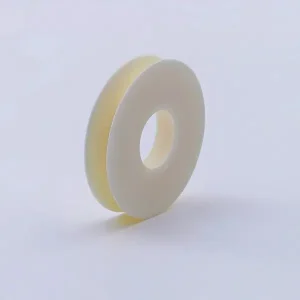
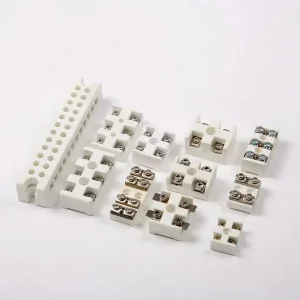
Explore our specialized hardware connectors, high-temperature ceramic insulators, and heavy-duty sintered structural parts manufactured for worldwide distribution.






Global Supply Chain, Quality Inspection & Compliance
We adhere to rigorous international manufacturing and quality standards, maintaining full lot traceability from raw metal powder analysis to final export packing.
IATF 16949 & ISO 9001 Systems
Our manufacturing facilities operate under audited quality management standards. APQP, PPAP Level 3 documentation, FMEA, and MSA studies are fully supported for automotive and industrial OEM programs.
Advanced Metrology Lab
Outfitted with ZEISS Coordinate Measuring Machines (CMM), optical 3D profile projectors, X-ray computed tomography (CT) porosity scanners, density testing kits, and metallographic grain analysis microscopes.
Localized Global Logistics
With strategic distribution partners across Europe, North America, and East Asia, we offer flexible shipping terms (FOB, CIF, DDP) and Vendor-Managed Inventory (VMI) buffer stocks to guarantee smooth supply chain integration.
Metal Injection Molding (MIM) Procurement FAQ
Direct technical answers from our senior metallurgical engineering team addressing common sourcing and manufacturing queries.
1. What tolerances can be achieved with as-sintered MIM components?
Standard as-sintered tolerances for MIM components are typically ±0.3% to ±0.5% of nominal dimension (e.g., ±0.05 mm for a 10 mm dimension). By implementing secondary sizing, coining, or precision CNC finishing, tighter tolerances down to ±0.005 mm can be consistently guaranteed.
2. How does the density of MIM parts compare to machined wrought metal?
MIM parts typically achieve between 96% and 99% of theoretical material density. As a result, mechanical properties—including tensile strength, impact toughness, fatigue resistance, and corrosion resistance—are virtually identical to traditional wrought materials standard wrought standards.
3. Can MIM parts undergo heat treatment and secondary surface plating?
Yes. Because MIM parts possess closed micro-porosity, they respond exceptionally well to standard post-sinter thermal treatments—including carburizing, quenching, tempering, and precipitation hardening (e.g., H900 for 17-4PH). They can also be readily electroplated, passivated, PVD coated, or nitrided.
4. What is the typical lead time for MIM tooling and production samples?
Initial DFM review and 3D mold flow analysis are completed within 48 hours. Hardened steel mold construction (single or multi-cavity) takes approximately 25 to 35 days, followed by sample submission (with full FAI inspection reports) within 5 business days post-tooling completion.
5. Is Non-Disclosure Agreement (NDA) supported prior to sending 2D/3D CAD drawings?
Absolute confidentiality is guaranteed. We routinely execute bilateral NDAs with international OEM clients before receiving 3D STEP/IGES models or 2D technical drawings. All project data is stored in encrypted, access-restricted engineering servers.