
Featured MIM & Precision Metal Components
Explore our high-precision OEM solutions for global consumer electronics and hardware assemblies.
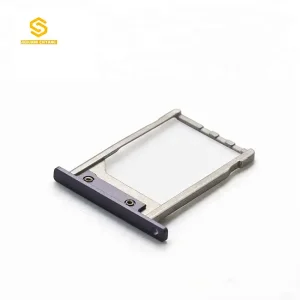
Wholesale SIM Slot by Metal Injection Molding Manufacturer
View Product Details →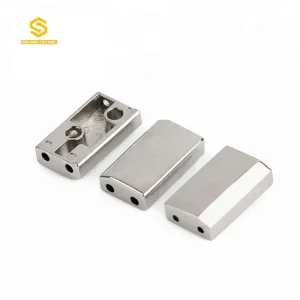
China OEM Custom MIM Stainless Steel Watch Buckles Clasps Supplier
View Product Details →
China MIM For Stainless Steel Watch Frame Manufacturers, Suppliers
View Product Details →
Wholesale metal injection of metallic CPU Cooling fans Suppliers, Factory
View Product Details →
China Metal MIM Product For Earphone Parts Suppliers, Factories
View Product Details →
China OEM Supply Metal Injection Molding Parts for Customized Machinery
View Product Details →
China ODM Powder Metallurgy Mold for High Shape Complexity Headset
View Product Details →
Stainless Steel Sintered Iron Powder Metallurgy Parts Suppliers
View Product Details →The Paradigm Shift in Consumer Electronics: Why MIM Dominates Micro-Engineering
In the rapidly evolving landscape of consumer electronics, structural components are subjected to aggressive miniaturization, extreme mechanical stress, and demanding cosmetic finish specs. Traditional computer numerical control (CNC) machining and stampings are increasingly encountering physical and financial limits when tasked with producing intricate 3D geometries below 50 grams. **Metal Injection Molding (MIM)** has emerged as the definitive manufacturing process to bridge this gap, offering wrought-like material density (>96-99%), design freedom akin to plastic injection molding, and unmatched unit-cost economics at mass production scale.
Global Industrial Demand Drivers
The market expansion of foldable smartphones (waterfall hinges), wearable biosensors (smartwatches, ring monitors), true wireless stereo (TWS) audio acoustic housings, and lightweight AR/VR optics has escalated the demand for micro-scale, high-strength metal components. OEMs can no longer compromise between tensile strength and geometric complexity. MIM enables the direct molding of undercuts, internal threads, cosmetic bevels, and thin-walled cavities in a single process step.
Material Utilization & Sustainability ROI
Unlike subtractive CNC machining—where up to 80% to 90% of raw titanium or stainless steel billet is reduced to scrap metal shavings—Metal Injection Molding achieves near-net-shape forming with a material utilization rate exceeding **95%**. This dramatic reduction in raw metal waste not only slashes piece-part costs for high-value alloys (such as 17-4PH, 316L, and Titanium Grade 5) but directly supports enterprise Scope 3 carbon reduction objectives.
End-to-End MIM Process Metallurgy & Technical Roadmap
Achieving microscopic tolerances and zero-defect cosmetic surfaces requires a meticulous, multi-stage powder metallurgy process. At Ningbo Jiehuang Chiyang Electronic Tech Co., Ltd. (JHMIM), our advanced metallurgical laboratory monitors powder particle size distribution (PSD), binder rheology, debinding chemical rates, and high-vacuum sintering furnace profiles.
1. Powder Feedstock
Gas-atomized micro metal powders (D50 < 10–15 μm) are uniformly blended with a proprietary multi-component wax-polymer binder system to formulate homogenous feedstock with optimal melt flow index (MFI).
2. Micro Molding
Feedstock is injected under high pressure into multi-cavity precision molds on high-speed electric injection molding machinery, forming a stress-free green part with intricate geometries.
3. Catalytic Debinding
Primary binders are removed chemically via nitric acid vapor (catalytic debinding) or solvent extraction, leaving an interconnected porous brown part ready for thermal consolidation.
4. Vacuum Sintering
Brown parts are subjected to temperatures up to 1,380°C in continuous hydrogen or vacuum sintering furnaces. Linear shrinkage (typically 12–18%) is precise, creating a dense metallurgical structure.
Consumer Electronics MIM Material Matrix
Selecting the optimal alloy system is critical for balancing mechanical yield strength, magnetic permeability, corrosion resistance, and post-sintering finish quality.
| Material Grade | Tensile Strength (MPa) | Hardness (HV / HRC) | Primary Physical Traits | Target Electronics Applications |
|---|---|---|---|---|
| 17-4PH Stainless Steel | 1,150 – 1,350 | 38 – 44 HRC | Precipitation hardening, exceptional yield strength, wear resistance | Foldable smartphone hinges, structural cams, laptop latches |
| 316L Stainless Steel | 520 – 620 | 150 – 200 HV | Non-magnetic, bio-compatible, superior salt-spray corrosion resistance | Smartwatch bodies, SIM card trays, earphone sound nozzles |
| Ti-6Al-4V (TiMIM Grade 5) | 890 – 1,000 | 300 – 360 HV | Ultra-lightweight, high strength-to-weight ratio, skin-safe allergy free | Flagship wearable frames, smart ring chassis, premium buckles |
| Fe-Ni Alloy (Fe-50Ni / Fe-2Ni) | 450 – 700 | 140 – 220 HV | High magnetic saturation, excellent soft-magnetic performance | Linear vibration motor cores, acoustic speaker solenoids |
| Tungsten Heavy Alloys (W-Ni-Fe) | 850 – 980 | 28 – 35 HRC | Ultra-high density (17.5–18.2 g/cm³), compact mass distribution | Haptic motor eccentric rotating masses (ERM), counterweights |
Engineering Scenarios in Consumer Electronics
From handheld mobile devices to wearable health monitoring gear, JHMIM supplies mission-critical structural components engineered for long-cycle reliability. Below are detailed technical application scenarios where our MIM production replaces multi-part machined assemblies.
1. Foldable Smartphone Hinges
Foldable displays demand multi-axis friction hinges consisting of over 30 micro gears, link arms, and slider brackets. Using 17-4PH stainless steel MIM, we mold complex gear teeth profiles (Module < 0.2) and internal cam channels directly into net shape, achieving smooth kinetic torque curves without secondary gear hobbing.
- Zero-backlash gear teeth integration
- Sintered density ≥ 7.78 g/cm³
2. Smartwatch Frames & Clasps
Smartwatch cases and luxury deployant watch buckles require hypoallergenic 316L stainless steel or Titanium MIM. Our process yields seamless compound curves, integrated antenna isolation grooves, and pin holes. Post-sintering Mirror-Polishing and PVD coating produce premium aesthetic surfaces.
3. TWS Earphone Sound Chambers
Miniaturized earphone acoustic nozzles and structural earbud hinges require acoustic resonance control and mechanical rigidity. MIM permits acoustic damping chambers with wall thicknesses down to 0.3mm while maintaining precise thread engagement for ear-tip mounts.
4. Micro SIM Slots & Connectors
External interface slots, ejector pin levers, and Type-C connector mid-plates require intense dimensional stability. MIM delivers high-volume production of SIM tray holders with razor-sharp tolerances (+/- 0.02mm) that prevent water/dust ingress in IP68-rated smartphones.
- Wholesale Precision MIM SIM Slots
- IP68 Sealing Geometry Compliance
5. Thermal Cooling Fan Components
Ultra-thin gaming laptops and compact desktop consoles rely on high-thermal conductivity fan hubs and metallic impeller components. Metal injection molded metallic cooling fan components allow complex aerodynamic blade shapes integrated into low-vibration hubs.
- Metallic CPU Cooling Fan Components
- Balanced High-RPM Dynamic Motion
6. Micro Gears & Actuators
Smart camera zoom mechanisms, haptic actuators, and automotive electronic control units rely on ultra-fine planetary gearboxes. MIM handles planetary sun/ring gears in sintered iron and stainless steel with zero post-machining requirement.
China Supply Chain Resilience & Ningbo Manufacturing Efficiency
Speed to market is paramount in consumer electronics product lifecycles. Situated in the world-class manufacturing cluster of Ningbo, China, JHMIM combines complete vertical integration—from mold tooling build to automated debinding and surface plating—with rapid engineering turnaround.
Vertical In-House Tooling & Prototyping
Our in-house CNC toolroom and metal 3D printing equipment reduce sample lead times to under 30 days. Prior to hardening mold steel, our engineering team executes DFM (Design for Manufacturability) mold-flow simulations to predict thermal shrinkage, parting line locations, and ejector pin positions, eliminating costly tooling modifications later.
- 48-Hour DFM & Cost Estimation Turnaround
- In-house EDM, Wire-Cutting, and CNC High-Speed Milling
- Rapid Prototyping via Metal 3D Printing (SLM/DMLS)
Multi-Process Hybrid Ecosystem
When component designs scale beyond typical MIM weight limits or require complementary lightweight structural housings, JHMIM seamlessly deploys our adjacent production technologies—including powder metallurgy gear compaction, aluminum die casting, and zinc alloy die casting.
Quality Assurance, Compliance & Global Logistics Support
To serve tier-1 consumer electronics brands and global OEMs across North America, Europe, Japan, and Southeast Asia, JHMIM enforces a zero-defect quality management framework backed by internationally recognized standard certifications.
Certifications & Traceability
Operating under **IATF 16949** and **ISO 9001** certified control loops, every MIM heat-treat lot and raw material master batch undergoes spectrometer verification, CMM 3D dimensional scanning, optical profile checks, and full MES barcode tracking.
RoHS, REACH & Conflict-Free
All stainless steel, titanium, heavy alloy powders, and surface plating treatments (PVD, Anodizing, Electroless Nickel) strictly comply with EU RoHS 3.0, REACH SVHC, and Conflict-Free Mineral Sourcing (3TG) standards.
Global Fulfillment & IP Protection
We safeguard customer IP under robust non-disclosure agreements (NDAs) and segregated server environments. Flexible logistics options include DDP/DAP air and sea freight with localized customs clearance documentation.
Industrial & Mechanical PM & Casting Solutions
Additional structural components, engine timing gears, low-cost mechanical parts, and specialized ceramic blocks.

Low Cost Custom MIM Mechanical Powder Metallurgy Parts
View Product Details →
Stainless Steel Sintered MIM Gear Parts for Electronic Components
View Product Details →
Precision Magnesium Zinc Aluminum Die Casting Hardware Parts
View Product Details →
Zinc Alloy & Aluminum Precision Metal Die-Casting Components
View Product Details →
High Precision MIM & PM Gear Structural Metal Components
View Product Details →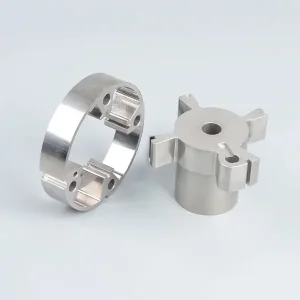
Engine Variable Timing Systems: High Performance PM Parts
View Product Details →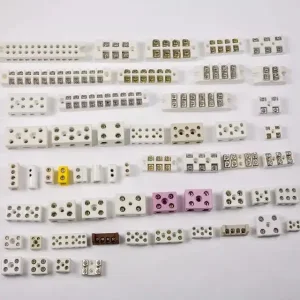
Wholesale High Temperature Ceramic Terminal Blocks Supplier
View Product Details →
OEM Aluminum / Zinc / Alloy Gravity & Sand Die Casting Parts
View Product Details →Engineering & Procurement Questions (FAQ)
Common inquiries from product design engineers and supply chain directors evaluating MIM suppliers.
Ready to Optimize Your Hardware Component Costs?
Send us your 2D/3D component drawings today. Our senior metallurgical team will provide a comprehensive DFM manufacturability analysis and an itemized quotation within **48 hours**.