
Die Cast & Powder Metallurgy OEM Solutions
Directly manufactured in our IATF 16949 & ISO 9001 certified production lines with 100% critical dimension validation.







The Global Die Casting Industry: Structural Trends & Strategic Shifts
High-Pressure Die Casting (HPDC) stands at the inflection point of modern industrial manufacturing. As global OEM supply chains pivot toward lightweighting, structural integration, and energy efficiency, die casting manufacturers have transitioned from basic foundry operations to high-precision engineering hubs.
Automotive Electrification & Megacasting Revolution
The transformation of automotive architectures due to Electric Vehicle (EV) adoption has reshaped high-pressure aluminum die casting. Traditional automotive assemblies requiring 70+ stamped and welded steel sheet parts are being replaced by single, ultra-large die-cast structural components (Giga-casting or Megacasting). These monolithic battery enclosures, rear underbodies, and shock towers drastically reduce vehicle curb weight while enhancing structural rigidity, crash safety, and manufacturing efficiency.
Sustainability & Closed-Loop Circular Metallurgy
Modern die casting factories are leading industrial decarbonization. Recycled secondary aluminum alloys (such as secondary ADC12 and A380) require only 5% of the energy consumed in primary aluminum smelting, cutting carbon intensity by up to 95%. Tier-1 suppliers and global OEMs now mandate rigorous ESG compliance, closed-loop metal recycling systems, and real-time carbon footprint tracking across all metal processing facilities.
Advanced Die Casting Processes & Alloy Metallurgical Selection
Choosing the precise metallurgical route and material alloy is paramount to balancing mechanical yield strength, thermal conductivity, corrosion resistance, and unit cost.
High-Pressure Die Casting
Molten metal is injected at high velocities (30 to 100 m/s) under immense pressure (300 to 1200 bar) into hardened steel dies. Ideal for thin-wall, high-volume complex geometries with superior surface finish.
Vacuum-Assisted Die Casting
By pulling a vacuum in the mold cavity prior to shot injection, gas entrapment porosity is minimized to <1%. Enables subsequent T6 heat treatment and structural welding for safety-critical components.
Squeeze & Low-Pressure Casting
Molten alloy solidifies under direct hydrostatic pressure, completely eliminating internal shrinkage porosity. Delivers forging-level mechanical properties, structural elongation, and fatigue strength.
Industrial Alloy Engineering Matrix
| Alloy Grade | Composition Base | Tensile Strength (MPa) | Thermal Conductivity | Primary Application Scenarios |
|---|---|---|---|---|
| ADC12 / A383 | Al-Si-Cu | 310 MPa | 96 W/m·K | Automotive engine housings, transmission cases, general brackets. Excellent castability and fluidity. |
| A360 | Al-Si-Mg | 320 MPa | 113 W/m·K | Corrosion-resistant marine components, fluid pumps, high-pressure hydraulic manifolds. |
| A380 | Al-Si-Cu-Zn | 330 MPa | 100 W/m·K | Most widely used non-ferrous alloy; ideal for structural hardware, electronic enclosures, power tool housings. |
| AZ91D | Mg-Al-Zn | 230 MPa | 72 W/m·K | Ultra-lightweight magnesium alloy for automotive steering columns, laptop frames, drone arms. |
| ZAMAK 3 / 5 | Zinc Alloy | 280–330 MPa | 113 W/m·K | Ultra-high precision micro-casting, decorative hardware, electronic shielding, complex lock mechanisms. |
Process Selection Guide: Die Casting vs. MIM vs. Powder Metallurgy vs. CNC
Engineering buyers must weigh unit cost, structural geometry, tooling investment, and production throughput. This comparative trade-off matrix provides data-driven decision parameters for design engineers.
| Evaluation Parameter | High-Pressure Die Casting (HPDC) | Metal Injection Molding (MIM) | Powder Metallurgy (PM) | 5-Axis CNC Machining |
|---|---|---|---|---|
| Optimal Part Weight | 50g to 25kg+ | 0.1g to 250g | 5g to 3kg | Unlimited |
| Dimensional Tolerance | ±0.05mm – ±0.1mm | ±0.3% (Up to ±0.01mm post-finish) | ±0.02mm – ±0.05mm | ±0.005mm |
| Geometric Complexity | High (Thin walls, deep ribs, complex cores) | Ultra-High (Undercuts, threads, internal channels) | Medium (2.5D stepped press directions) | High (Tool accessibility dependent) |
| Material Efficiency | Very High (Remeltable runners & sprues) | High (95%+ material utilization) | Near 100% (Zero waste powder sintering) | Low to Medium (High chip waste) |
| Production Velocity | Extremely Fast (100–1000 shots/hr) | Fast (Multi-cavity mold cycles) | Ultra-Fast (Automated compaction) | Slow to Medium (Part cycle dependent) |
| Economic Order Quantity (MOQ) | 2,000 – 50,000+ units | 2,000 – 20,000+ units | 5,000 – 100,000+ units | 1 – 1,000 units |
Target Application Ecosystems & Regional Compliance
Precision metal components power critical infrastructure across global Tier-1 automotive, telecommunications, medical technology, and industrial power tool sectors.
Automotive & e-Mobility
High-integrity aluminum die castings are crucial for electric drive unit (EDU) housings, inverter heat sinks, battery module frames, wiper motor gears, and steering gearboxes. Our factories adhere strictly to IATF 16949 standards, providing PPAP Level 3 documentation, full lot traceability, and zero-defect quality control.
5G & Telecom Radiators
5G massive MIMO base station enclosures demand complex thin-wall aluminum die casting with exceptional thermal dissipation profiles. Alloy choices such as ADC12 combined with high-performance thermal interface coatings ensure long-term outdoor operational reliability under extreme thermal cycling.
Precision Medical & Industrial
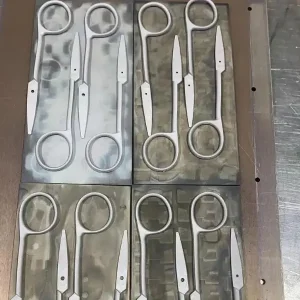
Integrating Metal Injection Molding (MIM) and precision zinc die casting for surgical tool handles, pump impellers, and hydraulic valve housings. Certified compliance with RoHS, REACH, and ISO 13485 manufacturing protocols guarantees bio-compatibility and non-corrosive performance.
Technology Roadmap: Smart Foundries & Industry 4.0 Integration
The future of die casting manufacturing relies on intelligent automation, real-time process monitoring, and advanced non-destructive evaluation (NDE) technologies.
Phase 1: Rheocasting & Semi-Solid Metal Processing (SSM)
Transitioning from fully liquid metal injection to semi-solid slurry casting. Lower injection temperatures reduce thermal shock on die steel, extend mold lifespan by 200%, and eliminate turbulent air entrapment to produce gas-free structural parts.
Phase 2: Closed-Loop AI Melt Quality & Thermal Imaging Control
Deploying automated infrared thermal imaging sensors across die faces to monitor temperature distribution dynamically. Closed-loop AI algorithms adjust cooling channel flow rates in real-time to prevent hot spots, soldering, and shrinkage porosity.
Phase 3: Automated Inline X-Ray CT Inspection
100% inline non-destructive Industrial Computed Tomography (CT) scanning integrated with robotic cell handling. Internal void fractions are quantified automatically against OEM specifications, instantly ejecting non-compliant parts.
Design for Manufacturability (DFM) & Quality Engineering Assurance
Our engineering team evaluates every 2D/3D CAD model through rigorous simulation software before tool cutting, guaranteeing optimal mold filling and dimensional accuracy.
Comprehensive DFM & Moldflow Simulation
Before committing to tool steel cutting (H13/SKD61), our metallurgical engineers perform comprehensive MAGMA/Flow-3D thermal and mold filling simulations. We evaluate gate location, runner geometry, overflow positioning, draft angles (1°–2° minimum), and wall thickness uniformity to eliminate potential defects such as cold shuts, air locks, and core bending.
Advanced Quality Control Laboratory
Quality reliability is enforced through state-of-the-art metrology hardware:
- Coordinate Measuring Machines (CMM): ZEISS CMM with sub-micron precision for geometric dimensioning & tolerancing (GD&T).
- Optical Emission Spectrometers: 100% raw material melt verify before injection.
- Salt Spray & Corrosion Chambers: ASTM B117 testing for anodized, electroplated, and powder-coated surface treatments.
Die Casting Manufacturing FAQ
Common technical and procurement queries addressed by our senior metallurgical engineering director.
Standard high-grade H13 or premium Dievar tool steel dies typically achieve 80,000 to 150,000 shot cycles for aluminum alloys under standard operating temperatures. For zinc die casting, due to lower melting temperatures, tool lifespan frequently exceeds 500,000 to 1,000,000 shots.
We utilize high-vacuum assisted extraction (pulling sub-50 mbar cavity pressure), optimize high-speed shot profiles, regulate squeeze pressure during solidification, and run MAGMA flow simulations prior to mold machining to guarantee gas and shrinkage porosity remain under strict OEM specifications.
Standard HPDC parts cannot be heat-treated easily due to blister formation from trapped gas expansion. However, parts produced via our Vacuum-Assisted Die Casting or Squeeze Casting processes can undergo T4, T6, and T7 heat treatments and are fully weldable for structural assembly.
Our turnkey capabilities include automated shot blasting, CNC precision machining, anodizing (Type II & Type III Hardcoat), powder coating, e-coating (electrophoretic deposition), chromate conversion coatings, passivation, and custom electroplating (nickel, chrome, zinc).
We accept 3D CAD files in STEP (.stp), IGES (.igs), or SolidWorks (.sldprt) formats for geometry analysis, along with 2D engineering drawings in PDF format specifying critical dimensions, GD&T tolerances, alloy material grades, and surface finish requirements. Quotations are returned within 24 to 48 hours.
Custom OEM Fabrication & Powder Metallurgy Portfolio
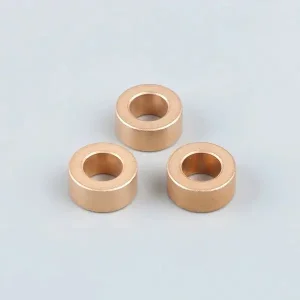
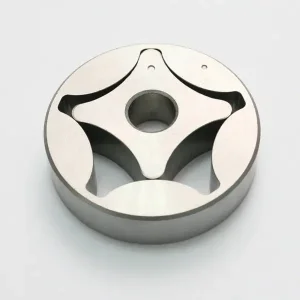
Explore our expanded manufacturing spectrum, from precision titanium MIM to sintered bronze bearings and custom zinc die castings.






Ready to Optimize Your Die Cast Components?
Send us your 2D/3D engineering drawings today. Receive a comprehensive DFM manufacturability analysis and an itemized competitive quotation within 24 to 48 hours.