
Featured Medical MIM Components & Assemblies
Directly manufactured in our state-of-the-art China OEM facilities for minimal invasive surgery, dental orthodontics, and orthopedic instruments.
Executive Whitepaper: The Paradigm Shift in Medical Device Component Manufacturing
In the rapidly evolving landscape of modern healthcare technology, medical device Original Equipment Manufacturers (OEMs) face a dual challenge: accelerating miniaturization and complex 3D ergonomic design while meeting stringent cost-containment mandates imposed by global healthcare systems. Traditional manufacturing techniques—such as multi-axis CNC Swiss machining, investment casting, and multi-stage stamping—frequently reach their economic and physical limits when producing complex, ultra-small bio-compatible metal components.
Metal Injection Molding (MIM) has emerged as the definitive high-volume manufacturing technology for medical devices. Combining the geometric design freedom of plastic injection molding with the structural integrity, mechanical performance, and corrosion resistance of wrought metals, MIM allows medical technology manufacturers to produce highly intricate, net-shape metal parts with minimal secondary operations.
As a specialized China MIM factory and contract manufacturer with over two decades of metallurgical expertise, Jiehuang (JHMIM) integrates proprietary binder formulations, precision mold tooling, atmosphere-controlled debinding/sintering, and ISO-certified cleanroom operations. This deep-dive whitepaper explores how OEM buyers and medical product engineers can leverage MIM technology to gain a decisive competitive advantage in global markets.
Global Commercial Status & Procurement Demands
Analyzing global market growth vectors, regulatory hurdles, and procurement benchmarks across North America, Europe, and Asia-Pacific.
Accelerating Global CAGR
The global medical MIM market is projected to grow at a CAGR exceeding 8.4% through 2032. Growth is fueled by the surging demand for Minimally Invasive Surgery (MIS), robotic surgical systems (e.g., Da Vinci instruments), and single-use disposable laparoscopic instruments requiring cost-effective mass production.
ISO 13485 & Regulatory Rigor
Global medical OEMs (FDA Class I, II, and III device makers) require suppliers to guarantee 100% material lot traceability, zero contamination, and biocompatibility validation (ISO 10993). Precision MIM factories must supply full inspection certificates (CoC, CMM dimensional reports, and metallurgical spectrum test reports).
TCO & Supply Chain Resilience
Procurement officers are moving away from regional machine shops toward integrated Chinese OEM factories capable of delivering near-net-shape components at 30-50% lower unit costs. Fast DFM turnaround and stable tooling lead times (under 30 days) are primary supplier selection criteria.
Medical MIM Alloy Selection & Metallurgical Performance Matrix
Material integrity is non-negotiable in medical device manufacturing. MIM uses ultra-fine spherical metal powders (typically 4–15 microns) blended with a custom thermoplastic binder system. During vacuum sintering at temperatures exceeding 1300°C, binder residual is completely eliminated, yielding dense, pore-free grain structures that match wrought material specs.
| Material Designation | Standard Specification | Density (g/cm³) | Tensile Strength (MPa) | Yield Strength (MPa) | Primary Medical Applications |
|---|---|---|---|---|---|
| 316L Stainless Steel | ASTM F2885 / ISO 5832-1 | ≥ 7.90 (>98%) | 520 | 220 | Laparoscopic forceps, surgical handles, dental brackets, endoscopic housing |
| 17-4PH Stainless Steel | ASTM F2885 / AISI 630 | ≥ 7.65 (>98%) | 1,150 (H900) | 1,000 | High-torque surgical gears, articulating hinges, needle drivers, bone cutters |
| 420 / 440C Martensitic | ASTM A276 | ≥ 7.60 (>97.5%) | 1,600 (Heat Treated) | 1,450 | Scalpel blades, surgical scissors, osteotome jaws, reusable cutting tips |
| Ti-6Al-4V (Grade 5 TiMIM) | ASTM F2885 Titanium | ≥ 4.42 (>97%) | 895 | 825 | Orthopedic spinal implants, suture anchors, lightweight titanium handles |
| Co-Cr-Mo Alloy (F75) | ASTM F75 | ≥ 8.20 (>98%) | 950 | 600 | Dental copings, knee & joint trial implants, wear-resistant medical guides |
Where Medical Technology Relies on MIM
From ergonomic surgical knife handles to microscopic articulating robotic jaws, see how MIM enables breakthrough medical designs.
Scalpels & Ergonomic Knife Handles
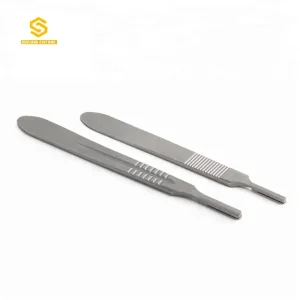
MIM enables weight-balanced, ergonomically contoured 316L and Titanium scalpel handles with anti-slip textures, internal hollow weight channels, and integrated quick-release blade retention mechanisms produced in a single mold operation.
Minimal Invasive Surgical Forceps
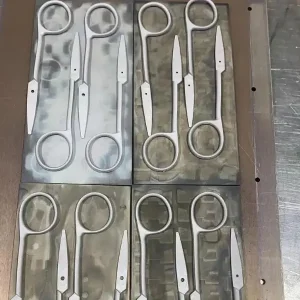
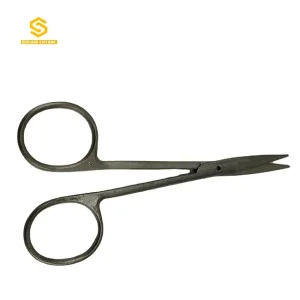
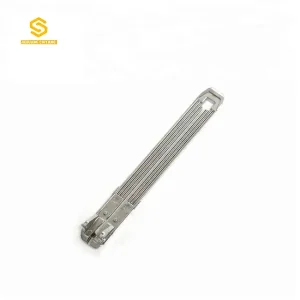
Laparoscopic graspers, scissors, and dissector jaws require micro serrations, pin holes (Ø0.5mm), and internal actuation clevises. MIM provides high structural rigidity in 17-4PH steel to withstand high tactile clamping forces without distortion.
Orthodontic Brackets & Dental Implants
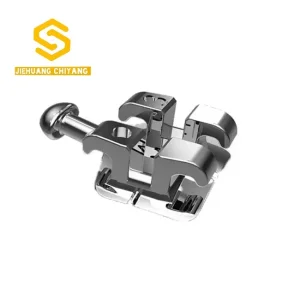
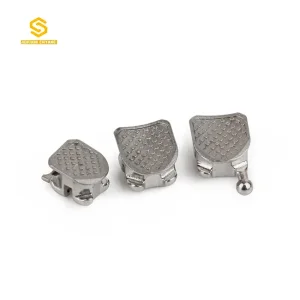
MIM mesh-base metal orthodontic brackets offer superior bond strength and ultra-smooth archwire slots (tolerance ±0.015mm). Biocompatible 316L and nickel-free stainless alloys eliminate patient allergic reactions while enhancing aesthetic comfort.
Robotic Surgical Endo-Wrist Joints
Next-generation robotic surgery demands multi-axis articulation components. MIM allows micro cable pulleys, planetary gear sets, and wrist housings with sub-millimeter geometry to be mass-produced with zero backlash.
Orthopedic Fixation & Spine Cages
Titanium MIM (TiMIM) produces light bone screws, suture anchors, and spinal fixation clamps. TiMIM provides an elasticity modulus closer to natural human bone, facilitating rapid osseointegration.
Medical Device Housings & Lock Modules
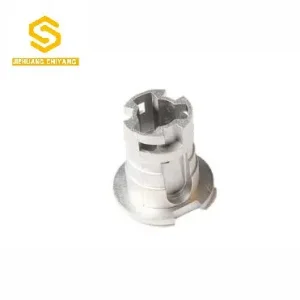
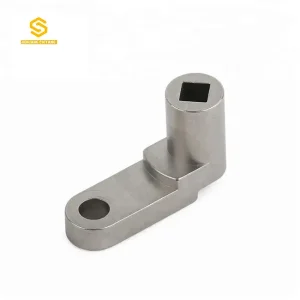
Precision housings for insulin pumps, hearing aids, and diagnostic equipment benefit from MIM’s ability to combine multiple structural bracket components into a single, seamless, high-strength metal enclosure.
China OEM Factory Advantage: Speed, Scale, & Metallurgical Precision
Sourcing medical MIM components from Jiehuang (JHMIM) in Ningbo, China offers global OEMs an unbeatable balance of engineering agility, robust supply chain integration, and dramatic cost savings:
- In-House Tooling & Rapid DFM Engineering: Our senior engineering team conducts free DFM (Design for Manufacturability) analysis on your STEP and 2D drawings within 24 to 48 hours. By utilizing in-house CNC mold making, mirror EDM, and wire EDM, tooling lead times are condensed to 25–30 days.
- Advanced German & Japanese Equipment Infrastructure: Operating automated Arburg and Nissei injection molding presses, continuous vacuum debinding/sintering furnaces, and 1,000-ton hydraulic powder compaction presses ensures stable batch-to-batch repeatability (Cpk ≥ 1.67).
- Integrated Post-Processing & Surface Finishing: We provide total turnkey finishing under one roof—including CNC secondary machining, magnetic tumbling, electropolishing, passivation (ASTM A967), PVD coating, laser engraving, and heat treatment (H900, Annealing, Carburizing).
- Comprehensive Quality Inspection: Equipped with Hexagon CMMs, optical profile projectors, ICP-OES elemental analyzers, density testers, and automated optical sorting lines, we guarantee 100% critical dimension compliance prior to global shipment.
Future Trends in Medical Powder Metallurgy
How next-generation materials, Micro-MIM, and smart automated factory lines are shaping the future of medical technology.
Micro-MIM Technology (<0.05g)
As surgical instruments continue to shrink, Micro-MIM utilizes ultra-fine nano powders (<2 microns) and micro-injection units to mold parts weighing less than 0.05 grams with wall thicknesses down to 0.1mm for neural and cardiovascular devices.
Bio-Resorbable Metallic Alloys
R&D into Magnesium (Mg) and Zinc (Zn) alloy MIM powders allows temporary medical implants (such as biodegradable bone pins and vascular stents) to safely dissolve inside the human body after healing, eliminating secondary removal surgeries.
AI Inspection & Binder Jet Hybrid
Combining 3D Binder Jetting for rapid metal prototype validation with AI machine vision defect recognition during mass MIM sintering eliminates human error and guarantees zero-defect quality delivery.
Frequently Asked Engineering Questions
Direct insights from our Chief Metallurgist regarding tolerances, biocompatibility, and production timelines.
Additional OEM MIM & Hardware Products
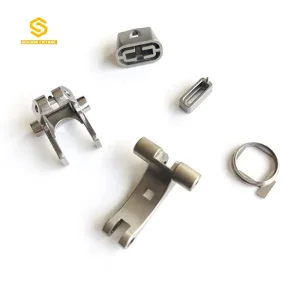
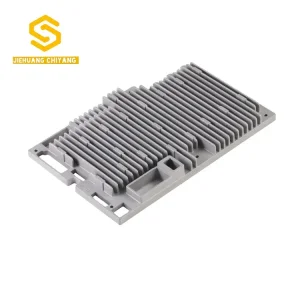
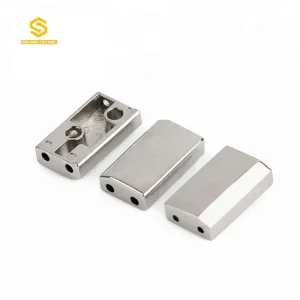
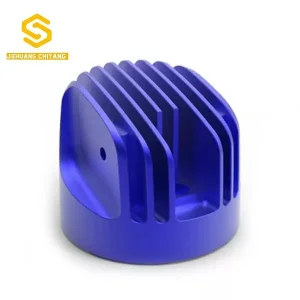
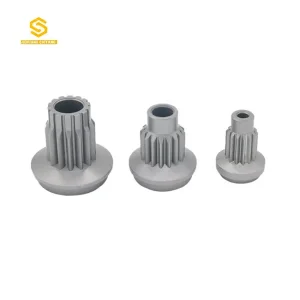
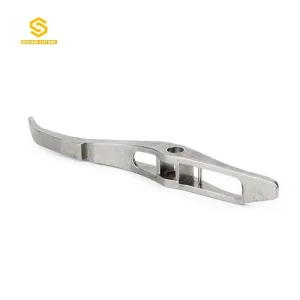
Explore our complete range of precision sintered components, watch clasps, automotive gears, and aluminum/zinc die castings.
Partner with a Certified Medical MIM Factory
Send your STEP 3D models and 2D drawings today. Receive a free engineering DFM review, material feedback, and a transparent quotation within 48 hours.