
Precision Engineered Component Portfolio
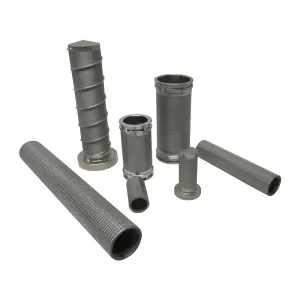
Explore our certified manufacturing capabilities spanning sintered filtration, die-casting, high-temperature ceramic components, and multi-axis CNC metal solutions.




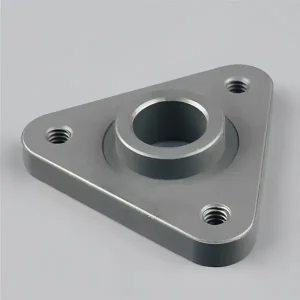

Engineering Precision: Navigating Global Demand for Advanced CNC Machining Services
In an era defined by rapid technological iteration, supply chain re-shoring, and hyper-complex product architectures, enterprise procurement directors face a dual challenge: achieving micron-level tolerances while optimizing Total Cost of Ownership (TCO). As a premier global CNC machining service manufacturer & factory, Ningbo Jiehuang Chiyang Electronic Tech Co., Ltd. (JHMIM) bridges the gap between raw material science and full-scale industrial execution.
Multi-Axis Synchronous Milling
Utilizing 5-axis continuous CNC milling setups to cut complex geometry in a single clamping phase. Eliminates repositioning errors and minimizes fixture setup delays for aerospace and medical components.
Integrated Hybrid Process
Combines Metal Injection Molding (MIM), Powder Metallurgy (PM), and Die Casting with high-speed secondary CNC finishing. Reduces unit costs by up to 45% on high-volume production runs.
Zero-Defect Quality Assurance
Full-spectrum inspection using CMM, optical profile measuring machines, spectrum analyzers, and 100% key-dimension verification under strict ISO 9001 and IATF 16949 oversight.
Global Procurement Demand & Strategic Manufacturing Trends
Enterprise buyers across North America, Europe, and the Asia-Pacific region are shifting away from fragmented component sourcing toward consolidated manufacturing partners capable of offering multi-disciplinary precision engineering. Modern procurement frameworks focus heavily on mitigating geopolitical risks, eliminating tariff friction, and ensuring zero-line-stoppage reliability.
Total Cost of Ownership (TCO) Optimization
Direct machining of complex solid billets often yields excessive chip waste and high machine hour costs. Modern OEM procurement teams leverage hybrid routes: near-net shape sintering or casting followed by sub-micron 5-axis CNC finishing to slash material yield waste by up to 60%.
Accelerated Time-to-Market (TTM)
With product life cycles compressing in EV automotive and consumer electronics, enterprise clients require prototype-to-mass-production continuity. Our fast-track CNC prototyping pipeline transitions smoothly into hard-tooled volume production within 30 days.
Tailored CNC Machining Solutions across Critical Sectors
Different industrial sectors demand unique metallurgical attributes, tolerance margins, and regulatory validations. Our CNC engineering team custom-tailors production processes for mission-critical applications.
Automotive & Electric Vehicles (EV)
Manufacturing high-torque transmission gears, variable valve timing (VVT) components, sensor housings, and lightweight battery enclosure structural brackets. Compliance with IATF 16949 standards ensures complete lot traceability and full PPAP Level 3 documentation.
Medical Devices & Surgical Instruments
Precision turning and micro-milling of bio-compatible materials including 316L stainless steel, Grade 5 Titanium (Ti-6Al-4V), and PEEK. Production of surgical handles, endo-cutter jaws, and orthopedic implant fixation components under stringent cleanliness protocols.
Aerospace & Defense Systems
Execution of thin-walled aluminum structures, fuel nozzle housings, and high-temperature alloy actuators. Machining to micro-inch surface finishes with 100% non-destructive testing (NDT), ultrasonic inspection, and CMM dimension verification.
Robotics & Industrial Automation
Production of high-precision planetary gearboxes, harmonic drive components, robotic arm joints, and pneumatic valve manifolds. Machined from high-strength alloy steels and brass with customized heat treatment for maximal fatigue resistance.
Semiconductor & Electronics
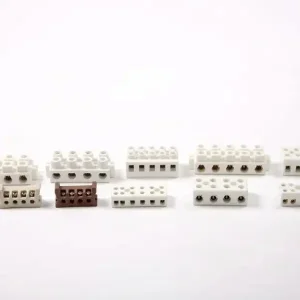
Ultra-smooth copper heat sinks, RF shield cans, ceramic terminal blocks, and vacuum chamber components requiring sub-micron dimensional stability and spec-compliant surface plating (electroless nickel, gold, anodizing).
Fluid Handling & Filtration Equipment
Specialized sintered metal filter housings, pump flanges, hydraulic valve bodies, and drinking water filter funnels. Designed to withstand severe chemical environments, elevated pressure differentials, and extreme operational wear.
Technology Roadmap & Industry 4.0 Transformation
At JHMIM, our CNC machining facility continuously integrates cutting-edge automation, digital-twin software modeling, and AI-driven quality validation to push the boundaries of mechanical engineering.
5-Axis Synchronous CNC Machining
Our workshop houses high-speed 5-axis machining centers capable of spindle speeds exceeding 20,000 RPM. By allowing tool access from all angles in one setup, we maintain zero geometric variance between complex intersecting features.
AI-Driven Toolpath Generation & Simulation
Implementation of adaptive milling algorithms optimizes tool engagement angles, preventing chatter and extending tool life. Digital twin software simulates toolpaths in 3D prior to physical cutting, eliminating collision risks and drawing errors.
Sintering & MIM + CNC Precision Turning
By blending Powder Metallurgy (PM) and Metal Injection Molding (MIM) with secondary CNC machining, we produce fully dense structural parts at lower tooling costs, bypassing traditional raw material waste.
In-Process CMM & Automated Inspection
On-machine touch probes provide real-time dimensional feedback directly to the CNC controller. Automatic offset adjustments compensate for thermal expansion and tool wear, ensuring standard Cpk values > 1.67.
Machinable Alloy Specifications & Surface Coatings
Choosing the right material alloy and post-processing treatment is vital for component performance under stress, corrosion, and wear. Below is an engineering matrix of our primary CNC machining materials.
| Material Category | Common Alloy Grades | Tensile Strength (MPa) | Primary Industrial Application | Recommended Surface Treatments |
|---|---|---|---|---|
| Aluminum Alloys | AL6061-T6, AL7075-T6, AL5052, ADC12 | 290 - 570 | Aerospace, EV Housings, Heatsinks, Structural Enclosures | Type II/III Hard Anodizing, Bead Blasting, Powder Coating |
| Stainless Steel | SUS304, SUS316L, 17-4PH, 440C | 515 - 1100 | Medical Devices, Surgical Jaws, Chemical Valves, Marine Hardware | Electropolishing, Passivation, PVD Coating (TiN/TiCCN) |
| Alloy & Carbon Steel | 4140, 4340, 8620, C45, SKD11 | 650 - 1500 | Automotive Gears, Power Tool Spindles, Industrial Shafts | Carburizing, Quenching, Black Oxide, Zinc Plating |
| Titanium Alloys | Grade 2, Grade 5 (Ti-6Al-4V) | 480 - 950 | Biomedical Implants, Aerospace Actuators, Defense Components | Anodizing (Color/Micro-arc), Acid Etching, Polishing |
| Copper & Brass | C36000, C11000, Beryllium Copper | 300 - 550 | Electrical Terminals, RF Shielding, Hydraulic Bushes | Electroless Nickel Plating, Gold/Silver Plating, Passivation |
| Engineering Ceramics | Alumina (Al2O3), Zirconia (ZrO2) | 2000+ (Compressive) | High-Temp Electrical Blocks, Wear Guides, Insulators | Precision Diamond Grinding, Lapping, Laser Marking |
Localization Support, Quality Assurance & Certification Standards
Navigating global commerce requires strict adherence to international regulatory metrics, intellectual property protection, and localized logistics support.
ISO 9001 & IATF 16949 Certified
Our quality management system is audited annually to ensure standardized control processes. Every order comes with full Material Test Reports (MTR), CMM Inspection Reports, and Certificate of Conformance (CoC).
IP Protection & Non-Disclosure (NDA)
We enforce strict data encryption and access control protocols for client 3D STEP models and technical drawings. We routinely sign bilateral NDA agreements prior to engineering review.
Global DDP Delivery & Logistics
Seamless door-to-door shipping (DDP, FOB, CIF) via express air freight or ocean freight. Our dedicated export compliance specialists clear customs smoothly across US, EU, UK, and Asian ports.
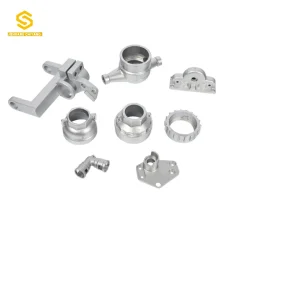
Featured Custom OEM Metal & Die Casting Solutions
Complete our product cycle with high-precision die-cast alloys, MIM structural parts, and custom brass-zinc machinery components.




Frequently Asked Questions for CNC Machining Services
Find engineering-level answers regarding lead times, CAD file submissions, prototype vs. production cost breakdowns, and quality validation policies.
We provide comprehensive DFM analysis and price quotations within 48 hours after receiving 3D CAD drawings (STEP/IGES) and 2D PDFs. Prototype lead times typically range from 5 to 7 working days, while full production tooling and mass-run deliveries take approximately 20 to 30 days depending on secondary finish requirements.
Our engineering department conducts a cost-benefit calculation based on annual volume, geometric complexity, and material utilization. For annual quantities under 2,000 pieces or highly unique geometries, direct 5-axis CNC machining is most economical. For high-volume projects (>5,000 pcs/year), forming parts via MIM or Powder Metallurgy first and adding secondary CNC finishing for key tolerances typically saves 30% to 50% in unit cost.
We accept 3D CAD files in STEP (.stp, .step), IGES (.igs), and SolidWorks (.sldprt) formats to inspect spatial geometry. Additionally, a 2D PDF drawing with GD&T tolerances, thread callouts, surface roughness requirements (Ra), and material grade specifications is essential for setting precise quality control parameters.
On standard high-speed CNC milling and turning machines, our baseline accuracy is ±0.005 mm (5 microns). With high-precision jig grinding, Swiss-type CNC turning, and climate-controlled CMM verification, we achieve micro-tolerances down to ±0.001 mm (1 micron) for critical shaft journals and bearing bores.
Yes. We strictly adhere to commercial Non-Disclosure Agreements (NDAs). All customer digital files are stored on secure internal servers with restricted engineering access. We never disclose CAD models, prototype data, or client business details to third-party entities.
We offer complete end-to-end surface finishes including Type II/III hard anodizing, chemical passivation, electropolishing, bead blasting, powder coating, zinc/nickel electroplating, laser etching, PVD coating, and customized heat treatments (carburizing, nitriding, vacuum quenching).