
Automotive MIM & Sintered Precision Components
High-density engineered parts designed for tier-1 automotive supply chains and high-volume OEM assembly.


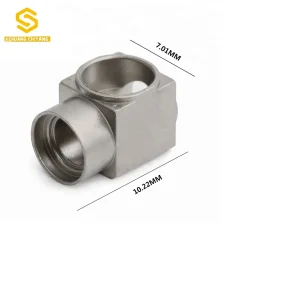





Automotive Metal Injection Molding (MIM): The Metallurgical Imperative
In modern automotive engineering, the transition toward lightweighting, high torque density, and miniaturization has reached a physical threshold where traditional subtractive CNC machining and investment casting struggle to balance cost, geometrical flexibility, and structural integrity. Metal Injection Molding (MIM) has emerged as an indispensable manufacturing technology for Tier-1 suppliers and global automotive OEMs. Combining the design freedom of plastic injection molding with the material performance of wrought metals, MIM enables the mass production of complex, high-density, high-fatigue-strength automotive components with minimal post-machining.
Sintered Density, Dynamic Fatigue, and Microstructural Integrity
The mechanical performance of automotive MIM parts hinges on achieving consistent relative sintered densities exceeding 95% to 99%. Unlike traditional press-and-sinter powder metallurgy (PM), which exhibits directional density gradients and interconnected porosity, MIM utilizes spherical gas-atomized metal powders (typically 4–22 µm) mixed with a multi-component thermoplastic binder matrix. High-temperature thermal or catalytic debinding followed by solid-state sintering near the liquidus point drives atomic diffusion, closing micropores and eliminating stress concentrators.
This near-wrought grain structure provides outstanding dynamic fatigue resistance, tensile strength, and impact toughness—properties critical for automotive powertrains, electronic power steering (EPS) gearboxes, turbocharger actuators, and variable valve timing (VVT) systems that undergo millions of cyclic load stresses over vehicle lifespans exceeding 200,000 kilometers.
During high-temperature vacuum sintering, automotive MIM parts experience volumetric shrinkage ranging between 15% and 22%. Achieving DIN ISO 2768-mK tolerances without secondary sizing requires precise 3D mold cavity scaling, thermal simulation of binder decomposition vectors, and custom ceramic sintering setters designed to mitigate gravity-induced sag and thermal friction gradients.
Automotive Material Engineering & Metallurgy Selection Matrix
Selecting the optimal alloy system is crucial for meeting demanding automotive engineering criteria, such as high-temperature oxidation resistance, wear resistance under unlubricated contact, or precise magnetic permeability for sensor targets. Ningbo Jiehuang Chiyang Electronic Tech Co., Ltd. (JHMIM) formulates standard and custom MIM feedstocks tuned for specific automotive operational environments.
| Material Grade | Composition / Type | Tensile Strength (MPa) | Yield Strength (MPa) | Hardness | Primary Automotive Applications |
|---|---|---|---|---|---|
| 17-4PH (1.4542) | Precipitation Hardening Stainless Steel | 1,150 - 1,350 | 1,000 - 1,150 | 38 - 44 HRC | Turbocharger wastegate linkages, fuel rail clamps, sensor housings, transmission lock pawls. |
| 316L (1.4404) | Austenitic Stainless Steel | 520 - 620 | 220 - 300 | 150 - 190 HV | Exhaust sensor bosses, EGR valve fittings, fluid connectors, cosmetic interior trim accents. |
| Fe-Ni Alloy (FN-0205) | Low-Alloy Steel (Fe-2%Ni) | 650 - 950 (Heat Treated) | 480 - 750 | 25 - 45 HRC | VVT rotor blades, oil pump gears, seat recliner lock gears, EPS steering column couplings. |
| HK30 / Inconel 718 | Austenitic High-Temp / Nickel Superalloy | 750 - 1,200 | 450 - 900 | 30 - 40 HRC | Hot-side turbocharger actuator levers, exhaust bypass valves, manifold flanges. |
| Fe-Si (Fe-3%Si) | Soft Magnetic Alloy | 400 - 500 | 280 - 350 | 140 - 180 HV | EV drive motor resolver cores, ABS magnetic sensor targets, solenoid actuator armatures. |
Heat Treatment Optimization
Case hardening, carburizing, nitriding, and vacuum quenching are tailored to achieve extreme surface hardness (up to 60 HRC) while maintaining a tough, ductile core for impact resistance.
Corrosion Resistance
Automotive exterior underbody and engine bay MIM parts undergo salt spray testing exceeding 720 hours (ASTM B117) via passivation, PVD coating, or electroless nickel plating.
Custom Feedstock Formulations
In-house powder compounding enables customized alloy compositions with tailored coefficient of thermal expansion (CTE) matching adjacent ceramic or aluminum assemblies.
Quality Compliance & Localization Support Framework
Automotive supply chains operate under zero-defect quality mandates. JHMIM implements a complete quality ecosystem tailored for global Tier-1 and Tier-2 automotive buyers, bridging international engineering standards with responsive local technical support.
PPAP Level 3 & APQP Integration
Every automotive tooling project is managed through Advanced Product Quality Planning (APQP). We deliver complete Production Part Approval Process (PPAP Level 3) packages, including Process Flow Diagrams, Process FMEA (PFMEA), Control Plans, Gage R&R studies, Dimensional Inspection Reports, and Material Test Certifications.
IMDS, REACH & RoHS Environmental Traceability
Full compliance with global automotive regulatory standards. All material batches are logged into the International Material Data System (IMDS), verifying chemical constituent compliance and ensuring zero heavy metal or SVHC contamination in accordance with EU REACH and RoHS directives.
Dedicated Global OEM Account Management
We bridge the timezone gap for procurement managers in North America, Europe, and Asia. Our dedicated bilingual engineering teams provide technical support, DFM updates, and 24-hour response cycles, ensuring smooth communication from prototype verification through SOP (Start of Production).
In-House Advanced Inspection Metrology
Our quality control facility is equipped with Zeiss Automated Coordinate Measuring Machines (CMM), Optical 3D Surface Profilometers, X-ray Fluorescence (XRF) alloy analyzers, Keyence vision measurement systems, and destructive universal strength testing rigs.
China Factory Supply Chain Advantage: The Ningbo Precision Cluster
Strategic location and vertical integration define the competitiveness of Ningbo Jiehuang Chiyang Electronic Tech Co., Ltd. Situated in Ningbo, Zhejiang Province—one of China's primary advanced manufacturing and automotive supply hubs—JHMIM offers global procurement teams unmatched cost performance, rapid tooling turnaround, and supply chain resilience.
1. Integrated In-House Tooling & Mold Making
By building high-precision multi-cavity MIM molds in-house using CNC high-speed milling, wire EDM, and mirror EDM, JHMIM reduces mold lead times to just 25–35 days—40% faster than Western toolmakers—while maintaining mold core hardness and micro-tolerance integrity.
2. Raw Powder & Feedstock Ecosystem
Direct collaborative partnerships with top-tier gas atomization powder suppliers in China and proprietary feedstock compounding allow tight control over batch-to-batch viscosity, mold flow behavior, and sintering shrinkage—delivering significant cost savings on raw materials.
3. Logistics Hub: Ningbo Beilun Port
Located within an hour's drive of Ningbo-Zhoushan Port—the world's largest port by cargo throughput—JHMIM streamlines sea, air, and multimodal freight logistics. We offer flexible trade terms including FOB, CIF, DDP, and DAP directly to global automotive assembly plants.
Solving Global OEM Sourcing Pain Points: DFM & Cost Optimization
Automotive procurement and engineering executives face constant pressure to shorten program launch cycles, eliminate secondary operations, and achieve aggressive cost-out targets without compromising component reliability. JHMIM addresses these challenges through comprehensive early-stage engineering engagement.
Design for Manufacturability (DFM) Guidelines
Our engineering team conducts detailed DFM reviews for every drawing submission, optimizing wall thickness uniformity (ideally 0.8mm–5mm), introducing subtle draft angles (0.5°–1°), reinforcing high-stress transition radii, and strategically locating mold parting lines and ejector pin contacts to avoid functional sealing faces.
Rapid Prototyping Options Before Tooling
To validate component fit and functional kinetics before committing to production tooling, JHMIM offers metal 3D printing (Direct Metal Laser Sintering - DMLS) and binder jetting using production-grade alloys, allowing physical testing within days.
For complex 3D geometries produced in annual volumes between 20,000 and 5,000,000 pieces, MIM eliminates up to 90% of raw material scrap generated by subtractive CNC milling. Part-to-part consistency eliminates human setups, reducing total unit production cost by 30% to 50%.
Localized Automotive Application Scenarios
JHMIM components operate reliably across critical vehicle systems, meeting stringent automotive performance standards under harsh thermal and mechanical conditions.
Powertrain & Engine Systems
VVT rotors and vanes, oil pump gear sets, turbocharger wastegate actuation levers, rocker arm tips, and EGR valve components.
EV Drive Units & Thermal Valves
Electric drive actuator gears, thermal management coolant distribution valve spools, battery disconnect solenoid switches, and high-permeability magnetic cores.
Chassis, Steering & Braking
EPS steering feedback gear segments, ABS/ESP hydraulic control unit solenoid armatures, brake wear sensor clips, and parking brake lock teeth.
Safety Systems & Interiors
Seat recliner latch gears, seat belt retractor lock pawls, door latch mechanism levers, steering column tilt adjustment components, and decorative interior trim elements.
Industry Trends: The Evolution of MIM in Autonomous & Electric Vehicles
As the global automotive industry accelerates toward electrification and autonomous driving (AD/ADAS), component requirements are shifting from internal combustion engine (ICE) hardware toward compact electric actuators, sensor housings, and soft magnetic materials.
Shift to High-Torque Miniaturization
Electric smart actuators for steer-by-wire and brake-by-wire systems require compact, high-precision planetary micro-gears. MIM enables the integration of complex gear profiles directly onto shaft mechanisms without secondary hobbing or shaping.
Soft Magnetic MIM Alloys
EV solenoid valves, fast-charging contactors, and resolver feedback sensors demand low coercive force and high flux density. Specialized Fe-Si and Fe-Ni soft magnetic MIM formulations replace stacked electrical steel laminations for complex 3D magnetic paths.
Lightweight Titanium MIM (TiMIM)
For high-performance EV supercars and aerospace-grade automotive applications, Titanium MIM (Ti-6Al-4V) delivers exceptional strength-to-weight ratios and chemical resistance, reducing unsprung mass in suspension and brake caliper linkage assemblies.
Frequently Asked Questions: Automotive MIM Procurement & Engineering
Technical and commercial clarity for automotive engineering teams, quality managers, and global sourcing specialists.
Custom automotive MIM tooling design and fabrication typically takes 30 to 40 days. Initial T1 samples, along with dimensional measurement protocols, are dispatched immediately following sintering verification. Full PPAP Level 3 documentation packages require approximately 2 weeks following customer sample validation.
While traditional press-and-sinter PM is limited to 2D extruded profiles with density around 85–90%, MIM creates complex 3D geometries (undercuts, helical gear teeth, cross-holes) with sintered densities up to 98.5%. This delivers significantly higher tensile strength, dynamic fatigue resistance, and impact energy absorption.
Standard MIM dimensional tolerances range within ±0.3% to ±0.5% of nominal dimensions. For critical automotive mating features (such as bearing journal diameters or pin bores), secondary precision sizing, CNC reaming, or centerless grinding maintains tight tolerances down to ±0.005 mm (±5 µm).
Yes. We routinely sign bilateral or customer-standard Non-Disclosure Agreements (NDAs) before reviewing 2D/3D technical files. All customer engineering data, CAD models, and project details are kept secure under strict internal access control protocols.
Additional OEM Automotive & Powder Metallurgy Products
Explore our full lineup of precision metal components, stainless steel injection molded parts, die-cast housings, and custom gears.







