
Featured Industrial MIM Components & Tool Assemblies
Explore our OEM sintered metal parts engineered for maximum yield strength, fatigue resistance, and complex near-net-shape geometries.
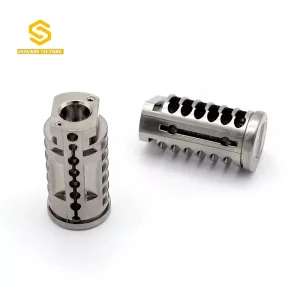
Wholesale Metal Injection Molding Locking Technology Factory
View Specifications
Wholesale MIM Manufacturer 316L Stainless Steel Textile Machinery Parts
View Specifications
China MIM Metal Injection Coffee Machine Spare Parts Suppliers
View Specifications
Wholesale Stainless Steel Mini Ball Valve Parts With Drawing
View Specifications
Wholesale Machinery Industrial Spare Parts Suppliers Manufacturer
View Specifications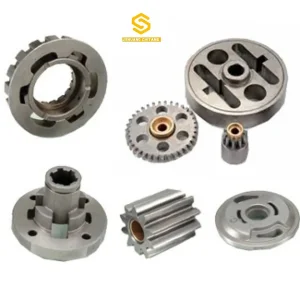
China MIM Metal Injection Molding 316L Stainless Steel Textile Parts
View Specifications
China Custom Sintered Titanium MIM Parts for Auto & Tool Hardware
View Specifications
China OEM Customized Aluminium Transmission Casting with 3D Drawings
View SpecificationsGlobal Landscape of MIM in Industrial & Tooling Sectors
Macroeconomic shifts, energy efficiency mandates, and intense demand for ergonomic power tools are driving global adoption of Metal Injection Molding.
1. The Industrial Shift Toward Net-Shape Powder Metallurgy
The global industrial and hand/power tools manufacturing market is experiencing a profound technological renaissance. As industrial applications demand higher torque density, micro-miniaturization, extended duty cycles, and superior corrosion resistance, traditional fabrication techniques—such as multi-axis CNC subtractive machining, zinc/aluminum die casting, and investment casting—reach operational and financial bottlenecks.
Metal Injection Molding (MIM) has emerged as the definitive manufacturing process to break these trade-offs. Combining the geometric design freedom of plastic injection molding with the structural performance of wrought metal alloys, MIM enables high-volume output of complex, high-strength industrial parts at a fraction of machining costs.
Information Gain Insight: According to global powder metallurgy benchmarks, industrial tool OEM managers switching from 5-axis CNC machining of alloy steel to MIM achieve an average material utilization increase from ~35% (subtractive waste) to over 95% (near-net-shape processing), resulting in total landed component savings of 30% to 55% at volume scale (>10,000 units/year).
2. Regional Market Adoption Dynamics (North America, EU, Asia-Pacific)
Industrial tool manufacturing demands vary across geographic regions, creating distinct localized application hubs for specialized MIM procurement:
- North America (US & Canada): High demand for heavy-duty cordless power tools, professional-grade pneumatic fastening systems, and commercial locking hardware. OEMs prioritize high-hardenability tool steel alloys (e.g., M2, AISI 8620) and rapid prototype validation.
- European Union (Germany, Switzerland, Italy): Focuses on extreme-precision textile machinery components, high-pressure hydraulic valve inserts, and luxury architectural lock systems. Strict ISO and REACH compliance with emphasis on nickel-free stainless steel alloys (e.g., Catamold 17-4PH, 316L).
- Asia-Pacific (China, Japan, South Korea): Serving as both the primary global production epicenter and a rapidly growing consumer market for industrial automation hardware, robotic grippers, and micro-gearboxes. China's mature MIM ecosystem (led by centers like Ningbo) offers complete vertical integration from raw metal atomization to PVD coating.
Manufacturing Process Benchmark Matrix
Comparative analysis evaluating key operational variables for industrial tool component production.
| Evaluation Parameter | Metal Injection Molding (MIM) | 5-Axis CNC Machining | Investment Casting | Conventional Press & Sinter |
|---|---|---|---|---|
| Geometry Complexity | Extremely High (3D undercuts, internal threads) | Medium to High (Tool access limited) | High (Draft angle required) | Low to Medium (2.5D press-direction only) |
| Material Utilization | > 95% (Near-Net Shape) | 15% – 45% (High chip waste) | 60% – 70% (Sprue/gate runners) | > 90% |
| Relative Density | 96% – 99% Theoretical Density | 100% Wrought Density | 92% – 97% (Porosity risk) | 80% – 90% (Interconnected pores) |
| Dimensional Tolerance | ±0.3% to ±0.5% (±0.05mm achievable) | ±0.005mm to ±0.02mm | ±0.7% to ±1.0% | ±0.5% to ±0.8% |
| Surface Roughness (Ra) | 1.0 to 1.6 µm (As-sintered) | 0.8 to 3.2 µm | 3.2 to 6.3 µm | 2.0 to 4.0 µm |
| Break-Even Annual Volume | > 2,000 – 100,000+ units | 1 – 1,000 units | 500 – 5,000 units | > 10,000 units |
High-Performance Alloys for Industrial Tools & Hardware
Selecting the precise powder metallurgy alloy chemistry to match demanding mechanical stress, wear environments, and environmental exposure.
17-4PH / SUS630 Stainless Steel
Precipitation-hardening stainless steel combining exceptional tensile strength (>1100 MPa after H900 heat treatment) with excellent corrosion resistance. Ideal for industrial valve parts, lock shackles, and heavy-duty tool latches.
AISI M2 / M4 High-Speed Tool Steels
Tungsten-molybdenum tool steels designed for high impact, thermal stability, and extreme abrasive wear. Widely used in power tool planet gears, impact driver bits, cable cutters, and industrial punch inserts (HRC 60-65).
316L Austenitic Stainless Steel
Ultra-low carbon stainless steel offering supreme ductility and chemical resistance. Impervious to harsh chemical cleaners, salt spray, and moisture. The top choice for textile machine yarn guides, food processing equipment, and outdoor lock components.
Fe-Ni & Fe-Cu Low Alloy Steels (FN-0205)
Tailored iron-nickel powder blends delivering high fatigue strength, core toughness, and secondary heat-treatability. Specially optimized for high-torque gear trains, power transmission ratchets, and structural brackets.
Titanium Alloys (Ti-6Al-4V / TiMIM)
Delivers a 40% weight reduction compared to steel alongside exceptional strength-to-weight ratios and bio-inertness. Crucial for premium aerospace tool grips, lightweight handheld equipment, and specialized marine hardware.
Tungsten Carbide & Technical Ceramics (CIM)
For extreme-duty industrial scenarios involving intense friction and thermal loads. Zirconia (ZrO2) and Alumina (Al2O3) ceramic molding provides non-conductive, wear-resistant insulators and terminal blocks.
Localized Application Scenarios for Industrial OEM Buyers
How global equipment builders integrate JHMIM metal injection molded parts to enhance durability and streamline assembly.
A. Power Tools & Fastening Systems (Impact Drivers, Drills, Saws)
Modern professional power tools operate under aggressive shock loads and vibrational fatigue. Traditional stamped or broached gears suffer from tooth shear, while CNC-machined gearboxes incur high costs. MIM allows complex 3D planetary gear sets, ring gears, impact anvil mechanisms, chuck jaws, and clutch detents to be molded in a single step with integrated spline keys and oil-retaining porous surface micro-structures.
B. Security & Commercial Lock Technology
Smart commercial locks, high-security padlocks, and architectural door handles require complex internal locking cams, anti-pick tumbler pins, latch bolts, and electronic deadbolt levers. MIM technology yields pick-resistant micro-geometries in high-hardness stainless steel (17-4PH) that pass rigorous UL security and burglar-proof testing.
C. Industrial Hydraulics, Pneumatics & Fluid Handling
Miniature solenoid valves, high-pressure hydraulic spools, mini ball valve cores, and pneumatic tool triggers demand flawless sealing surfaces and zero internal porosity. JHMIM’s catalytic debinding and vacuum sintering protocols guarantee near-wrought internal density (>98%), eliminating pressure leak paths under high PSI fluid environments.
D. Textile Machinery & Automation Equipment
High-speed weaving looms and knitting equipment contain thread grippers, cam followers, yarn tension levers, and needle holders that cycle thousands of times per minute. Utilizing MIM 316L and custom tool steels reduces part mass while drastically increasing abrasive wear resistance against synthetic yarn friction.
Technology Roadmap & Future Innovations (2025–2030)
How JHMIM is shaping the future of industrial powder metallurgy through AI-assisted DFM, micro-MIM, and sustainable binder systems.
AI-Driven Mold Flow & Sintering Simulation
Implementing finite element software to predict isotropic thermal shrinkage (15%-20%) and binder debinding kinetics. Eliminates mold trial iterations, reducing prototype lead times from 45 days to 18 days.
Micro-MIM & Ultra-Thin Wall Molding
Advancing multi-cavity tooling capable of molding sub-gram parts (< 0.05g) with wall thicknesses down to 0.2mm for medical surgical instruments, micro-robotics, and fiber-optic hardware connectors.
Zero-Emission Catalytic Debinding
Transitioning to eco-friendly, fully recyclable polyoxymethylene (POM) binder backbones paired with nitric acid catalytic gas-phase debinding. Drastically reduces carbon footprint while increasing green strength.
Frequently Asked Questions (FAQ)
Direct technical answers to common questions asked by industrial procurement officers and chief engineers.
What is the typical size and weight limit for industrial tool parts made by MIM?
MIM is economically optimized for small to medium-sized precision parts weighing between 0.1 grams and 250 grams. However, JHMIM's heavy compaction equipment and oversized sintering furnaces can produce structural parts up to 286 grams with maximum dimensions around 150mm.
How does the mechanical strength of a MIM part compare to traditional machined wrought steel?
Because MIM parts achieve 96% to 99% theoretical density through ultra-fine spherical powder sintering, their tensile strength, yield strength, fatigue endurance, and hardness are virtually identical (within 95-99%) to wrought materials, and far superior to conventional press-and-sinter PM or die castings.
Can MIM industrial parts undergo secondary operations like heat treatment and plating?
Yes. MIM components respond to all standard secondary finishing operations including carburizing, quenching, tempering, case hardening (achieving HRC 60+ on tool steels), magnetic polishing, electroplating (Ni/Cr), PVD coating, black oxide, and precision CNC machining of sub-micron tolerances.
How does JHMIM ensure quality consistency across high-volume production batches?
JHMIM operates under strictly audited ISO 9001:2015 and IATF 16949 quality systems. Every production batch undergoes automated CMM 3D scanning, optical profile inspection, metallurgical density verification, and 100% key-dimension inspection before packaging. Full material test reports (MTR) and FAI documents accompany all shipments.
Explore Related Precision OEM Products
Discover our broader metallurgical capability spectrum across earphone hardware, ceramic insulators, die casting engine components, and copper-sintered bushings.

China Metal MIM Product For Earphone Parts Suppliers
View Specifications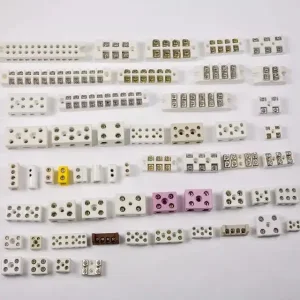
Wholesale Ceramic Terminal Blocks Supplier Manufacturer
View Specifications
Customized Engine Cylinder Kit Oxidation Aluminium Die Casting
View Specifications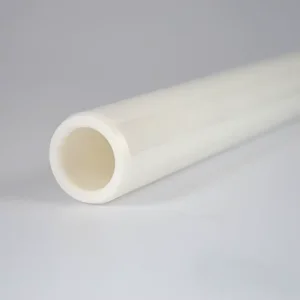
Wholesale Zirconia Ceramic Tube Manufacturer Factories
View Specifications
China Quality SUS 304 Small Size Metal Powder Metallurgy Parts
View Specifications
China OEM Factory Manufacturer of MIM Parts for Lock Accessories
View Specifications
China Low MOQ Aluminum Alloy Die Casting Precision Parts Supplier
View Specifications
China OEM Powdered Copper Based Sintered Metal Parts Supplier
View SpecificationsAccelerate Your Industrial & Tool Manufacturing With MIM
Send your CAD drawing (STEP/IGES/PDF) to our senior metallurgy team today. Receive a free comprehensive Design for Manufacturability (DFM) review and transparent itemized quote within 48 hours.
Submit Drawing For Free DFM Review