
Featured Aluminum Die Casting Components & Tooling
Explore our custom precision-engineered die cast assemblies manufactured to strict IATF 16949 and ISO 9001 quality specifications.





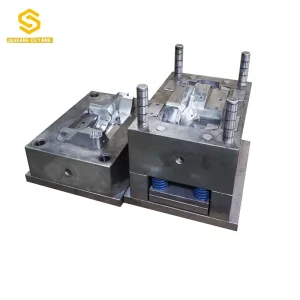
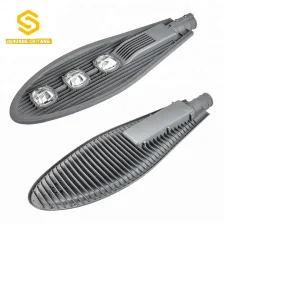

Global Landscape & Technical Evolution of Aluminum Die Casting
How lightweighting mandates, electric vehicle (EV) powertrains, and high-density electronic thermal management are restructuring the global die casting ecosystem.
Market Macro-Dynamics & Supply Shifts
The global market for high-pressure aluminum die casting is undergoing a structural paradigm shift. Valued at over USD 65 Billion globally, demand is driven by rapid electrification in mobility and high-frequency telecommunications. OEMs require cast structural components that deliver optimized mechanical strength while aggressively stripping out weight to maximize battery range and energy efficiency.
Modern pressure die casting (HPDC) has moved beyond simple, non-structural enclosures. Tier-1 buyers now mandate thin-wall structural integrity, vacuum-assisted porosity control, and seamless integration with multi-axis CNC secondary operations. Precision aluminum suppliers must serve as co-engineering partners, balancing thermal conductivity, yield strength, and dimensional stability under severe cyclic fatigue.
The Search for "Information Gain" in Sourcing
Sourcing aluminum die cast components requires evaluating technical trade-offs across alloys, mold design, thermal dissipation, and post-machining tolerances. Many suppliers offer standardized casting, but true efficiency comes from integrated process engineering—where mold flow simulation (MAGMA) precedes steel cutting, and melt degassing prevents microscopic porosity before it compromises structural integrity.
This engineering whitepaper details alloy chemistry, advanced pressure casting processes, tooling design guidelines, and supply chain strategies to provide actionable value for procurement leads and senior mechanical design engineers.
Aluminum Alloy Selection Guide: ADC12 vs. A360 vs. A380 vs. AlSi10Mg
Choosing the precise alloy chemistry dictates castability, thermal dissipation, elongation performance, and post-casting finishing capabilities.
| Alloy Standard | Chemical Composition Focus | Tensile Strength (MPa) | Thermal Cond. (W/m·K) | Primary Industrial Application | Key Mechanical Advantage |
|---|---|---|---|---|---|
| ADC12 (JIS) | Al-Si-Cu System (Si 9.6-12%, Cu 1.5-3.5%) | 310 - 330 | 96 | Automotive covers, motor housings, brackets | Exceptional fluidity, low hot-tearing risk, easy machining |
| A360 (ASTM) | Al-Si-Mg System (Si 9.0-10.0%, Mg 0.4-0.6%) | 315 - 340 | 113 | Marine hardware, outdoor LED housings, electronic enclosures | Superior corrosion resistance and high-temperature strength |
| A380 (ASTM) | Al-Si-Cu System (Si 7.5-9.5%, Cu 3.0-4.0%) | 320 - 335 | 96.2 | Transmission cases, power tool chassis, structural brackets | Optimal balance of mechanical toughness and casting economy |
| AlSi10Mg | Al-Si-Mg System (High purity low-iron) | 300 - 350 (T6) | 130 - 150 | EV Inverter housings, heat sinks, structural chassis components | High thermal dissipation, excellent weldability & elongation |
| A356 / C356 | Al-Si-Mg (Low Cu, strictly controlled impurities) | 290 - 310 (T6) | 150 - 160 | High-stress structural arms, wheel hubs, aerospace brackets | Maximum fatigue resistance and impact strength post-heat treatment |
Fluidity & Mold Filling
Silicon content (8-12%) lowers the melt's dynamic viscosity, allowing complete fill of thin-wall ribs (<1.5mm) over long flow lengths before solidifying.
Corrosion Resistance vs. Machinability
Copper (Cu) enhances tensile strength and hardness but lowers corrosion resistance. Low-copper alloys like A360 require strict melt control but perform exceptionally outdoors.
Thermal Management
5G micro base stations and EV power electronics demand high thermal conductivity (>130 W/m·K). Custom low-iron alloys minimize thermal resistance across the chassis.
High-Pressure Pressure Die Casting (HPDC) Manufacturing Architecture
From raw aluminum ingot melting and rotary degassing to high-speed shot injection and automated CNC machining.
Melt Preparation & Degassing
High-purity aluminum ingots are melted in central reverberatory furnaces. Nitrogen gas injection and rotary impellers strip hydrogen gas to keep dissolved H₂ below 0.11 cm³/100g Al, preventing gas porosity.
Real-Time Shot Injection
Molten metal is metered into cold-chamber die casting machines (ranging from 280 Ton to 2,500 Ton). Closed-loop shot control executes real-time 3-phase injection at speeds up to 8 m/s, filling the mold in under 30 milliseconds.
Vacuum Venting & Solidification
High-capacity chill block vacuum valves evacuate air from the die cavity down to <50 mbar prior to shot arrival, virtually eliminating trapped air bubbles for heat-treatable density.
Precision CNC Post-Finishing
Castings undergo robotic trimming and transfer to 4-axis and 5-axis CNC machining centers. Mating faces, bearing bores, and O-ring grooves are machined to tolerances of ±0.008 mm.
Tooling Engineering: Design for Manufacturability (DFM) Rules
Tooling life and dimensional repeatability depend on upfront mold design. Our engineering team provides a detailed DFM report for every geometry prior to steel cutting:
China Factory Efficiency & Integrated Industrial Clusters
How Ningbo’s world-class casting and tooling ecosystem delivers speed, cost efficiency, and end-to-end risk mitigation for global supply chains.
Localized Supply Ecosystem
Located in Ningbo—China's premier manufacturing center for precision molds and die casting—our facility is situated within a 30-mile radius of raw alloy refineries, specialized tool steel suppliers (H13, Dievar), heat treatment specialists, and surface finishing lines. This geographic density compresses tooling lead times to 25–35 days.
Rapid Tooling & Prototyping Speed
We bridge early-stage R&D and mass production through rapid metal 3D printing (DMLS) and soft-tooling prototyping. Design iterations that take months in Western facilities are validated within 10 to 14 days, allowing overseas engineering teams to meet aggressive product launch timelines.
Total Cost of Ownership Optimization
By pairing high-level automation (robotic ladling, automatic spraying, integrated vision inspection) with efficient factory overhead management, our customers achieve 25% to 45% total landed cost savings compared to North American or European production, without sacrificing precision.
Localized Application Scenarios across Global Industries
From extreme automotive under-hood thermal cycles to high-exposure outdoor LED street lighting, aluminum die casting provides structural protection and thermal dissipation.
E-Axle & Inverter Housings
Electric vehicle drive units require lightweight, leak-tight castings capable of housing high-voltage electronics. Using vacuum-assisted casting and helium leak detection down to 10⁻⁵ mbar·L/s, our ADC12/AlSi10Mg housings prevent coolant ingress while dissipating heat generated by IGBT modules.
Active Antenna Units (AAU) & Heat Sinks
5G base stations mounted on outdoor telecom towers face continuous environmental exposure and high thermal loads. Cast aluminum enclosures with integrated micro-fin heat sinks maximize surface area for natural convection cooling, while chromate conversion and outdoor powder coating block salt spray corrosion.
LED Street Light & High-Bay Fixtures
Municipal street lighting housings must withstand hurricane-force wind loads, UV exposure, and thermal dissipation needs up to 300W LED arrays. Precision die casting forms complex mounting hinges, wire channels, and IP67 weather-gasket grooves directly in the mold tool.
Pneumatic Air Cylinders & Valve Bodies
Factory automation systems rely on aluminum pneumatic cylinders and fluid control valve bodies. High-pressure die casting provides smooth internal bore finishes, reducing secondary honing steps while maintaining pressure tight performance under 16 bar cyclic working air pressure.
Articulated Robot Joint Gearboxes
Collaborative robots (cobots) require lightweight arm segments and gear housings to minimize rotational inertia. Low-copper aluminum castings yield rigid structural frames that absorb high torsional torque during rapid acceleration-deceleration cycles.
Energy Storage System (ESS) Enclosures
Utility-scale lithium-battery storage banks use die-cast modular cooling plates and junction boxes. Aluminum’s high strength-to-weight ratio ensures modular stackability while serving as an EMI/RFI shield for sensitive battery management system (BMS) controllers.
Future Outlook: Next-Generation Die Casting Technologies
How semi-solid rheocasting, integrated gigacasting, and AI-driven quality inspection are shaping the future of industrial metal manufacturing.
Semi-Solid Metal (SSM) Rheocasting
Traditional pressure die casting injects 100% liquid alloy, creating turbulent flow and gas entrapment risks. Semi-solid metal casting cools liquid aluminum into a globular slurry (40–50% solid phase) prior to injection. Laminar planar mold filling virtually eliminates air porosity, allowing parts to undergo full T6 heat treatment for wrought-alloy level yield strength (>350 MPa).
Large Integrated Gigacasting Trend
The automotive sector is shifting toward single-piece megacastings that consolidate 60+ stamped sheet metal components into one integrated aluminum rear underbody frame. This drastically reduces vehicle assembly line footprints, robot welding points, and body weight while requiring ultra-large tonnage presses (6,000T to 12,000T).
Closed-Loop Recycled Alloys & Low Carbon Footprints
Environmental regulations and corporate Scope 3 carbon targets are driving demand for recycled secondary aluminum. Refining low-carbon primary ingots paired with 100% in-house runner and gate recycling slashes embodied carbon emissions by up to 85% per kilogram of finished casting compared to traditional primary smelting.
In-Line Real-Time AI Defect Inspection
Integrating 3D optical lasers and inline automated X-ray inspection (AXI) powered by neural network vision models allows instantaneous detection of sub-surface shrinkage porosity, inclusions, or thread defects before parts exit the cell. This guarantees near-zero DPPM (Defects Per Million Parts) for critical tier-1 automotive deliveries.
Global Compliance & Multi-Tier Quality Assurance
Every production lot undergoes rigorous laboratory inspection, full dimensional CMM layout, and international regulatory verification.
IATF 16949 & ISO Quality Control
Our Quality Management System (QMS) is certified under IATF 16949 for automotive component manufacturing. Production runs follow strict APQP (Advanced Product Quality Planning) protocols, PPAP Level 3 documentation, and full lot-level traceabilities from raw ingot melt heat to final sea/air freight packing.
Advanced Quality Control Instruments
Our in-house Metrology Laboratory is equipped with high-precision Coordinate Measuring Machines (CMM with Zeiss probes, accuracy ±0.002mm), Optical Profile Projectors, X-ray NDT Tomography, Spectrometers for melt alloy composition verification, and Salt Spray Testing Chambers for finish corrosion ratings.
Environmental & Global Compliance
All manufactured aluminum castings strictly adhere to global environmental compliance standards including EU RoHS 3 (Directive 2015/863) and REACH (SVHC chemical declarations). Material test reports (MTR) and conflict-free mineral disclosures accompany every commercial batch shipment.
North America, Europe & Japan Logistics Engine
We provide flexible Incoterms including FOB Ningbo/Shanghai, CIF destination ports, and DDP (Delivered Duty Paid) directly to your regional fulfillment warehouse. Customs documentation, tariff classifications, and international door-to-door freight insurance are handled seamlessly by our dedicated export team.
Send 2D/3D step files for engineering review
Custom Structural Parts, Gears & Specialty Castings
Discover our broader OEM product line spanning powder metallurgy, zinc die casting, titanium injection molding, and custom gears.



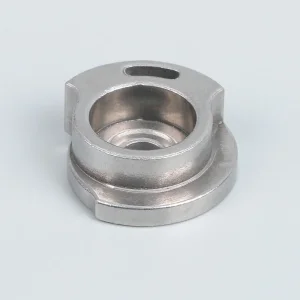




Frequently Asked Engineering & Procurement Questions
Detailed answers regarding tool steel life, porosity controls, surface finishes, DFM guidelines, and order minimums.
Ready to Optimize Your Aluminum Die Cast Components?
Submit your CAD models (STEP/IGES/PDF) today. Receive a free engineering DFM review, mold flow analysis report, and itemized commercial quote within 48 hours.