
Featured Precision Powder Metallurgy & MIM Products
Engineered OEM components produced with advanced powder compaction, MIM sintering, and precision die casting alloys.







Global Commercial & Industrial Landscape of MIM Materials
Analyzing the evolution of metal injection molding materials, supply chain shifts, atomization technologies, and global demand dynamics across high-tech sectors.
Supply Chain Dynamics & Powder Synthesis Trends
Metal Injection Molding (MIM) has transformed from a niche manufacturing method into a premier production technology for complex, high-density, structural metal components. The backbone of this manufacturing revolution lies in specialized MIM materials and powder feedstock engineering. Worldwide demand is heavily driven by miniaturization trends in consumer electronics, automotive electrification, surgical instruments, and aerospace hardware.
Key to commercial success is raw material synthesis. MIM relies on extremely fine spherical metal powders, typically produced via gas atomization or water atomization. Gas-atomized powders yield smooth spherical particles with optimal packing efficiency and rheological flow, whereas water-atomized powders offer cost advantages for low-alloy steels. Global tier-1 OEMs increasingly mandate customized powder particle size distributions (PSD) to ensure repeatable volumetric shrinkage during thermal debinding and sintering.
Material Selection & Performance Imperatives
Selecting the correct MIM alloy requires balancing mechanical performance, corrosion resistance, magnetic susceptibility, and cost. Unlike traditional powder metallurgy (PM) press-and-sinter parts which retain 10% to 15% internal porosity, modern MIM components reach 96% to 99% theoretical density, matching or exceeding wrought material standards.
Global procurement teams prioritize vendors capable of maintaining tight material chemistry control. Minor deviations in interstitial elements such as carbon, oxygen, and nitrogen can drastically affect grain growth, tensile strength, and post-sinter heat treatment response. Leading MIM material suppliers leverage certified raw powders combined with advanced thermoplastic polymer binder systems to achieve flawless moldability and thermal debinding kinetics.
MIM Material Classification & Technical Metallurgy Standards
A comprehensive breakdown of standard and specialty alloys engineered for metal injection molding applications, backed by MPIF Standard 35 parameters.
Stainless Steels
Primary Grades: 17-4PH, 316L, 304L, 420, 440C, 17-7PH.
Stainless steel represents over 50% of the worldwide MIM market. 17-4PH is a precipitation-hardening alloy providing high tensile yield strength and wear resistance after H900 heat treatment. 316L offers exceptional pitting corrosion resistance and biocompatibility, making it the premier choice for medical surgical tools and consumer wearables.
Low-Alloy & Tool Steels
Primary Grades: Fe-2Ni, Fe-8Ni, 8620, 4140, 4605, M2, M4, D2.
Low-alloy iron-nickel steels deliver outstanding fatigue strength and impact toughness for high-stress structural gears and automotive power-train mechanisms. High-speed tool steels like M2 retain hardness at elevated temperatures, ideal for cutting tools, industrial punch inserts, and wear-resistant nozzles.
Titanium & Specialty Superalloys
Primary Grades: Ti-6Al-4V, CP-Ti (Grade 2/4), Inconel 625/718, Fe-Ni Soft Magnetic.
Titanium Metal Injection Molding (TiMIM) is expanding rapidly due to its strength-to-weight ratio and bio-inertness. Superalloys like Inconel handle extreme oxidative temperatures in turbocharger components, while specialized Fe-Si and Fe-Co soft magnetic alloys deliver high magnetic permeability for electrical actuators.
| Material Category | MIM Designation | Sintered Density (g/cm³) | Tensile Strength (MPa) | Yield Strength (MPa) | Elongation (%) | Hardness |
|---|---|---|---|---|---|---|
| Precipitation Stainless | MIM-17-4PH (H900) | 7.60 - 7.78 | 1,180 - 1,350 | 1,090 - 1,200 | 4.0 - 6.0 | 38 - 43 HRC |
| Austenitic Stainless | MIM-316L | 7.80 - 7.92 | 520 - 580 | 210 - 240 | 40.0 - 50.0 | 65 - 75 HRB |
| Martensitic Stainless | MIM-420 (Hardened) | 7.50 - 7.65 | 1,450 - 1,600 | 1,250 - 1,380 | 1.0 - 2.5 | 48 - 53 HRC |
| Low-Alloy Steel | MIM-4605 (Heat Treated) | 7.50 - 7.65 | 1,500 - 1,680 | 1,350 - 1,480 | 1.5 - 3.0 | 45 - 50 HRC |
| Iron-Nickel Structural | MIM-Fe-8%Ni | 7.55 - 7.70 | 820 - 950 | 650 - 780 | 5.0 - 8.0 | 25 - 32 HRC |
| Titanium Alloy | MIM-Ti-6Al-4V | 4.40 - 4.45 | 880 - 960 | 790 - 860 | 8.0 - 12.0 | 30 - 36 HRC |
| High-Speed Tool Steel | MIM-M2 (As-Quenched) | 7.90 - 8.05 | 1,800 - 2,100 | 1,600 - 1,850 | < 1.0 | 60 - 65 HRC |
The Science of MIM Feedstock Engineering & Binder Sintering
Understanding powder-to-binder volumetric ratios, debinding kinematics, and liquid-phase sintering control.
Feedstock Rheology & Blending Formulation
MIM feedstock is a carefully compounded homogenous mixture of ultra-fine metal powders (60% to 65% by volume) and a multi-component polymer binder matrix (35% to 40% by volume). The binder typically consists of primary components like Paraffin Wax (PW) or Polyethylene Glycol (PEG) for fluidity, secondary backbone polymers like Polypropylene (PP) or Polyethylene (PE) for green strength, and surfactant lubricants like Stearic Acid.
Viscosity control during injection molding is paramount. Feedstock must exhibit shear-thinning (pseudoplastic) behavior, allowing easy flow into intricate mold cavities under pressure while maintaining dimensional stability upon rapid cooling. Advanced catalytic feedstock systems utilize Polyacetal (POM) binders, which undergo direct solid-to-gas depolymerization under gaseous nitric acid atmosphere, vastly accelerating debinding speed.
Debinding Kinematics & Sintering Metallurgy
The transition from a "green part" to a fully dense metallic component occurs via two main stages: debinding and high-temperature vacuum sintering.
- Solvent / Catalytic Debinding: Removes the primary binder phase, creating a network of open interconnected pores throughout the "brown part" without altering component dimensions.
- Thermal Debinding & Sintering: Placed in high-vacuum or atmosphere-controlled furnaces (Hydrogen, Nitrogen, Argon). As temperatures rise to 1250°C - 1380°C, remaining backbone polymers burn off cleanly, and atomic diffusion drives solid-state necking between metal particles.
- Volumetric Shrinkage Management: Linear shrinkage during sintering typically ranges between 12% and 20% depending on solids loading. Precise tooling scale factors ensure final parts adhere to ISO 2768-m tolerances.
China Factory Efficiency & Supply Chain Advantages
Why leading global OEMs partner with Ningbo and Chinese MIM manufacturing hubs for high-volume precision metal components.
30% - 50% Landed Cost Reduction
By replacing multi-axis CNC machining, lost-wax investment casting, or multi-piece assemblies with single-step MIM molding, global procurement teams achieve dramatic unit cost savings while improving component structural consistency.
In-House Tooling & Rapid DFM
Chinese MIM leaders operate integrated toolshops equipped with high-speed CNC centers, wire EDM, and mirror-finish EDM equipment. Engineering DFM reviews are returned within 48 hours, and multi-cavity hardened steel molds are completed in 25–30 days.
Integrated Quality & Scale
Equipped with continuous debinding-sintering furnace lines, Japanese Cremer atmosphere control systems, CMMs, XRF spectrometers, and automated optical sorting equipment, Chinese plants guarantee IATF 16949 and ISO 9001 compliance for zero-defect mass delivery.
Cross-Industry Applications & Specialized MIM Use Cases
From micro surgical staplers to high-torque automotive gears—how MIM materials solve complex geometric challenges.
Automotive Powertrain & Sensor Systems
MIM materials like MIM-4605 and 17-4PH are widely specified for turbocharger VNT nozzle rings, Variable Valve Timing (VVT) rotors, seat belt lock pawls, ABS sensor brackets, and fuel injection armatures. MIM parts deliver exceptional fatigue resistance under severe vibration and thermal cycling.
Medical Devices & Surgical Instrumentation
Biocompatible MIM-316L and Ti-6Al-4V enable complex geometries in minimally invasive surgical tools, laparoscopic grasper jaws, endoscopic staplers, dental brackets, and orthopedic implant tools. MIM eliminates post-machining burrs and provides smooth tactile finishes.
Consumer Electronics & Mobile Smart Devices
The rapid rise of foldable smartphones, wearable smartwatches, and wireless earbuds relies heavily on high-strength MIM hinges, camera ring bezels, earbud structural chassis, and micro electrical connectors. MIM 17-4PH allows wall thicknesses as thin as 0.4mm while retaining structural stiffness.
Industrial Hardware, Power Tools & Defense
MIM tool steels (M2, D2) and tungsten heavy alloys are ideal for high-impact power tool planetary gearboxes, hydraulic valve spools, door lock cylinders, and defense trigger assemblies that require superior wear resistance and high hardness without costly secondary grinding.
Design for Manufacturability (DFM) Rules for MIM Buyers
Key engineering design recommendations to optimize component quality, reduce tooling costs, and prevent defect formation.
Wall Thickness Uniformity
Maintain consistent wall thickness between 0.8mm and 5.0mm. Abrupt thickness transitions induce sink marks, thermal stresses, and internal voids during debinding. Use gradual step transitions or core-out thick sections with ribbing.
Draft Angles & Radii
Provide a minimum draft angle of 0.5° to 1.0° for easy cavity ejection. Incorporate generous internal fillets (R > 0.5mm) to reduce stress concentration and facilitate homogeneous feedstock mold filling.
Sintering Support & Flatness
Design components with a primary flat datum surface or provide dedicated ceramic sintering tray support points. This minimizes thermal distortion and sag when parts reach high plastic state temperatures in the furnace.
Frequently Asked Questions (Technical MIM Q&A)
In-depth technical answers addressing material selection, tooling costs, density, tolerances, and production lead times.
How does MIM material density compare to wrought metals and traditional PM parts?
MIM parts achieve 96% to 99% theoretical density, which is substantially higher than conventional press-and-sinter powder metallurgy (typically 80–88% density). Consequently, MIM parts exhibit mechanical properties (tensile strength, yield strength, impact toughness) nearly identical to forged or wrought alloys.
What standard tolerances can be achieved directly from the sintering furnace?
Standard as-sintered MIM tolerances are ±0.3% to ±0.5% of nominal dimensions (e.g., ±0.03mm on a 10mm dimension). Critical features requiring tighter tolerances down to ±0.01mm can easily be achieved via secondary coining (sizing), CNC machining, or precision grinding.
What is the typical Minimum Order Quantity (MOQ) and tooling lead time?
Standard production MOQ is generally 2,000 to 5,000 pieces per batch to offset set-up and sintering furnace runs. Tooling fabrication typically takes 25 to 30 days, with prototype metal 3D-printed or single-cavity sample parts delivered shortly after for DFM validation.
Can MIM parts undergo secondary heat treatments and surface finishing?
Yes. MIM materials respond identically to wrought alloys regarding heat treatment processes including carburizing, quenching, tempering, nitriding, and precipitation hardening (e.g., 17-4PH H900). Furthermore, MIM parts readily accept electroplating, PVD coating, passivation, polishing, and black oxide finishes.
What drawing formats are required for a complete DFM and cost quotation?
We require 3D CAD step files (.STEP, .STP, or .IGS) for volumetric shape evaluation, paired with 2D drawings (.PDF or .DWG) specifying material grade, critical tolerances, surface finish requirements, and heat treatment standards. Quotes are delivered within 48 hours.
How does MIM compare to CNC machining in terms of economics?
CNC machining is cost-effective for simple geometries or low production volumes (< 1,000 pcs). However, for complex 3D geometries, undercuts, and volumes above 2,000 pcs, MIM eliminates raw material scrap waste and multi-axis machining setup time, delivering 30% to 50% cost reductions.
Explore Additional OEM Sintered & Die Cast Components
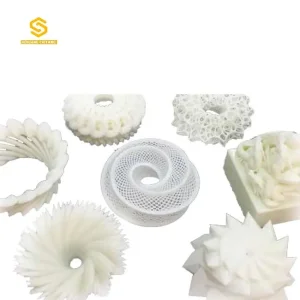
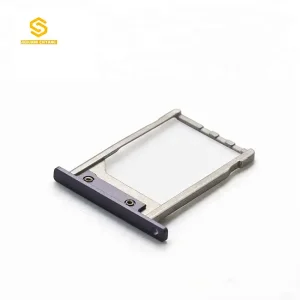
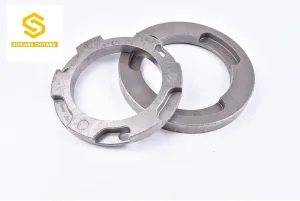
Full range of custom powder metal parts, sintered filters, custom die castings, and specialized MIM components.



Partner with a Certified MIM Materials & Manufacturing Leader
Send us your 2D/3D component drawings today. Receive an engineer-reviewed DFM analysis, comprehensive material selection advice, and a transparent quotation within 48 hours.
Request Free Engineering DFM & Quote