
How to Choose Powder Metallurgy Parts Suppliers?
Choosing a Powder Metallurgy Parts supplier is a technical decision, not just a price comparison. MPIF’s 2023 State of the PM Industry report estimated North American powder metallurgy shipments at $5.6 billion in 2022. That scale reflects a mature industry, but supplier capabilities still vary widely. A polished sample can hide inconsistent density, weak process controls, or limited capacity.
Start with the part’s real demands. A small gear may need tight dimensional control and repeatable strength. A porous filter needs connected pores, not merely a low quote. Review the supplier’s experience with your alloy, part geometry, annual volume, and secondary operations. Ask for capability evidence: inspection plans, material traceability, process records, and results from production runs. Look closely at how they manage tooling wear and sintering variation. The answers matter.
Dr. Randall M. German, a leading powder metallurgy researcher and author, has explained how powder characteristics, compaction, and sintering shape component properties. In paraphrase, his work points to a useful selection principle: evaluate the whole process, not only the finished part. That distinction is easy to miss. Request samples made with production tooling, then compare measurements against your drawing and service conditions. Check lead times, change-control practices, and communication during engineering reviews. If a supplier cannot explain a defect in plain terms, pause. A supplier may look capable on paper and still disappoint in production. No checklist removes all risk, but careful questions make the choice more defensible.
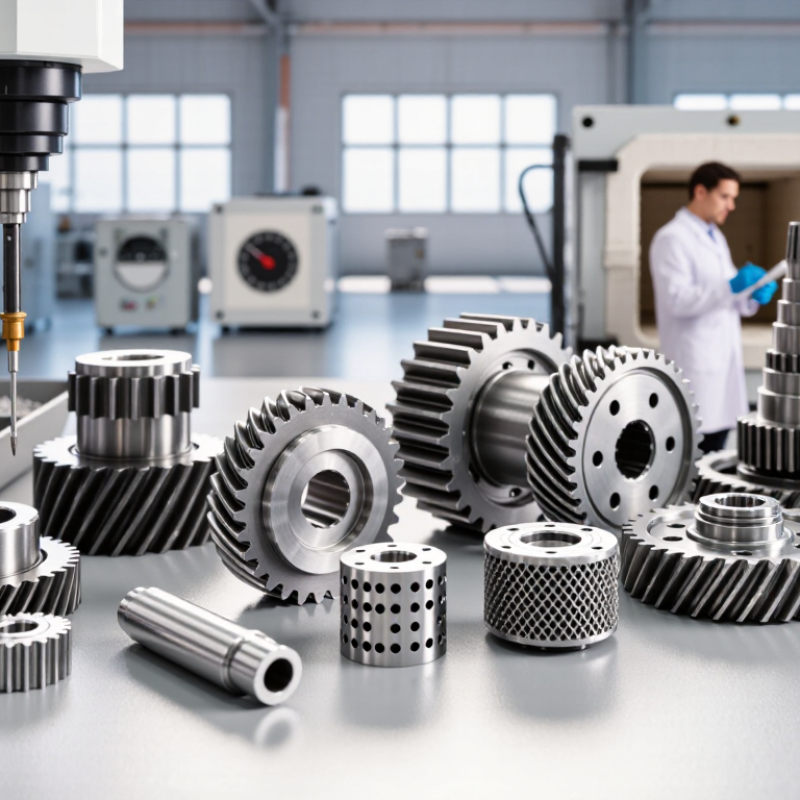
Define Your Part Requirements and Supplier Criteria
How to Choose Powder Metallurgy Parts Suppliers?
Define Your Part Requirements and Supplier Criteria
Before comparing suppliers, turn the part’s job into measurable requirements. Record its material, dimensions, critical tolerances, surface finish, and expected annual volume. Note where the component will operate, including load, temperature, and exposure to moisture or chemicals. A small bracket and a rotating gear need very different checks. Be specific about which dimensions affect assembly or performance; not every surface needs the same tolerance.
Tips: Send a clear drawing, 3D model, and sample application details. Ask suppliers to identify features that may challenge compaction, sintering, or post-processing. Request capability data for critical dimensions, inspection methods, material documentation, and sample approval plans. Also compare tooling ownership, production capacity, lead times, and how changes are managed. Clear answers matter.
Some requirements will be uncertain at the start. That is normal, but label assumptions instead of hiding them. A tolerance copied from an old drawing may be unnecessarily tight, or it may protect an important fit. Ask the supplier to explain trade-offs with real process limits and inspection evidence. Check how defects are handled and whether batches can be traced. A polished quotation is not proof of capability. Review the details, and revisit the brief when testing reveals something you missed.
How to Choose Powder Metallurgy Parts Suppliers? - Define Your Part Requirements and Supplier Criteria
| Evaluation Dimension | Define Your Part Requirement | What to Assess in a Supplier | Useful Evidence or Questions |
|---|---|---|---|
| Part function and operating conditions | Describe the part’s load, speed, temperature, environment, expected service life, and failure risks. | Whether the supplier asks about the application and can explain how material and process choices affect performance. | Request a design review and identify any application tests needed before production approval. |
| Material and composition | Specify required material chemistry, material standard where applicable, magnetic or corrosion behavior, and any restricted substances. | Ability to source and control the specified powder, maintain traceability, and propose alternatives only with approval. | Review material certificates, incoming inspection records, and the process for approving material substitutions. |
| Geometry and design for manufacture | Provide a controlled drawing or 3D model with critical dimensions, datum scheme, holes, slots, steps, and functional interfaces. | Experience assessing compactability, ejection, tooling access, wall thickness, and features that may require secondary operations. | Ask for a manufacturability review, proposed parting or pressing direction, and clearly documented design assumptions. |
| Dimensions and tolerances | Identify critical-to-function dimensions and assign tolerances based on the assembly and operating needs. | Measurement capability, dimensional control plan, and a realistic explanation of which dimensions may need sizing or machining. | Request sample inspection results and confirm measurement methods, gauge responsibilities, and acceptance criteria. |
| Density and porosity | State any required density, porosity, permeability, or impregnation characteristics; these depend on the part’s function. | Control of compaction and sintering conditions, and ability to verify density using an agreed method. | Define the test method, sampling frequency, and acceptance limits in the drawing or quality agreement. |
| Mechanical and functional properties | Specify required strength, hardness, wear resistance, fatigue performance, or other functional properties where applicable. | Capability to recommend suitable material and post-processing, such as heat treatment, while validating the finished part. | Request test data from representative parts and agree on test methods and specimen or part sampling. |
| Surface finish and secondary operations | Define surface-finish requirements, deburring needs, and any machining, coating, heat treatment, or impregnation requirements. | Whether secondary operations are performed and controlled in-house or through qualified external processes. | Clarify process sequence, finish acceptance criteria, subcontractor controls, and responsibility for final inspection. |
| Production volume and demand pattern | Estimate annual demand, order quantities, ramp-up expectations, forecast visibility, and expected product life. | Capacity and flexibility for the expected production profile, including a plan for demand changes or supply interruptions. | Ask for quoted lead times, minimum order quantities, capacity assumptions, and the process for managing forecast changes. |
| Tooling and launch requirements | Define timing for prototypes, production approval, tooling ownership expectations, and any required tool-life assumptions. | Tool design and maintenance capability, validation approach, and clarity on tooling charges and ownership terms. | Request a tooling schedule, maintenance plan, change-control process, and written terms covering storage and transfer. |
| Quality management and traceability | Set requirements for inspection, lot identification, records retention, nonconformance handling, and change notification. | Documented quality processes, calibrated measurement equipment, corrective-action capability, and traceability appropriate to the application. | Review relevant quality-system documentation, sample control plans, inspection reports, and nonconformance procedures. |
| Compliance and industry-specific needs | List applicable customer, regulatory, environmental, or industry requirements for the part and its intended market. | Ability to identify applicable requirements and provide supporting documentation where required. | Confirm requirements during quotation and agree on the records, declarations, or audits needed for approval. |
| Total cost and commercial terms | Consider piece price alongside tooling, inspection, packaging, freight, inventory, and potential secondary-process costs. | Transparent cost assumptions, quotation validity, payment terms, and a defined process for engineering or material changes. | Compare quotations using the same drawing revision, specifications, volumes, delivery terms, and inspection requirements. |
| Delivery and supply continuity | Specify required delivery frequency, packaging, shipment location, and any safety-stock or continuity expectations. | Production planning, delivery performance tracking, contingency planning, and communication for delays or capacity constraints. | Ask for standard lead times, escalation contacts, business-continuity measures, and packaging samples if relevant. |
Note: Powder metallurgy capabilities and achievable limits vary by material, part geometry, tooling, and process route. Treat the criteria above as a starting point and agree on application-specific requirements and test methods with the supplier before production.
FAQS
Share a clear drawing, 3D model, material, critical dimensions, surface finish, and expected annual volume. Include operating loads, temperatures, and exposure conditions.
Identify dimensions that affect fit or performance. Ask for process limits and inspection evidence; an old drawing may include unnecessarily tight tolerances. Worth checking.
Ask how production settings, drawing revisions, and out-of-spec parts are controlled. Request sample inspection records and equipment calibration details.
Depending on the application, review density, dimensions, hardness, tensile results, or metallographic checks. Confirm how often testing occurs and whether results represent each lot.
Request a sample lot packet linking material batches, process conditions, inspection results, and shipped parts. Check that part numbers, revisions, and batch IDs agree.
Ask which presses and furnaces support your part, and how much capacity is already committed. Press availability alone may hide limited furnace space.
Check schedules for tooling, first-article samples, inspections, and secondary operations. Ask for delivery records on comparable parts, not only estimates.
Ask about backup equipment, late material deliveries, and recovery schedules. Request documented responsibilities and order history. No plan is perfect; I would verify the assumptions.
Conclusion
Choosing the right Powder Metallurgy Parts supplier starts with a clear definition of your component’s requirements, including its design, material, tolerances, expected volumes, and performance needs. Use these details to establish practical supplier criteria. Then assess each supplier’s experience and technical capabilities, such as material selection, process control, tooling, and ability to support design adjustments.
A reliable supplier should also demonstrate effective quality systems, appropriate testing, and traceability throughout production. Review its manufacturing capacity, expected lead times, and plans for maintaining a dependable supply as demand changes. Finally, compare overall costs alongside communication, responsiveness, and long-term support. Considering these factors together can help you select a supplier that fits your project needs and supports consistent production over time.
