
Precision Metal Components & Processing Solutions
Featured Industrial Hardware, Powder Metallurgy, and Sintered Metal Equipment Manufactured in China






Executive Whitepaper: Industrialization of Metal Additive Manufacturing in China
Strategic shift from rapid prototyping to high-volume, structural end-use component production
Market Insight 2025
The global metal 3D printing market is expanding at a CAGR exceed 22.4%, driven by the adoption of Laser Powder Bed Fusion (L-PBF), Direct Metal Laser Sintering (DMLS), and Binder Jetting technologies. Chinese suppliers and manufacturing hubs have shifted from regional suppliers to global manufacturing powerhouses, establishing robust supply chains across metal atomization, ultra-high-speed multi-laser printing machines, automated post-processing, and rigorous quality verification.
Modern advanced manufacturing relies heavily on component topology optimization, light-weighting, and zero-waste material utilization. Traditional subtractive processes like 5-axis CNC machining suffer from prohibitive scrap rates when fabricating complex internal channels or thin-walled aerospace housings. Conversely, metal 3D printing (Metal Additive Manufacturing) enables engineers to print high-density structural parts directly from CAD geometry with near-zero material waste.
Multi-Laser Throughput Acceleration
China's top 3D printing metal parts factories deploy 8-laser, 12-laser, and up to 16-laser L-PBF systems operating synchronously. This high multi-laser optical overlap drastically reduces build time per part, rendering metal 3D printing commercially viable for medium-to-high volume automotive and consumer hardware production runs.
Powder Quality & Atomization Control
Vertical supply chain integration allows domestic suppliers to control spherical powder quality at the source. Utilizing Vacuum Induction Melting Inert Gas Atomization (VIGA) and Plasma Atomization (PA), raw alloy powders achieve low oxygen pickup, optimal particle size distribution (PSD 15-53µm), and high tap density.
Hybrid AM & MIM Convergence
Leading suppliers in Ningbo and Zhejiang bridge the gap between low-volume 3D metal printing and ultra-high-volume Metal Injection Molding (MIM). Using Metal 3D printing for functional prototyping and initial pilot production ensures seamless design transfer into production MIM tooling once volumes exceed 10,000 units.
Global Sourcing & Procurement Demand Dynamics
Evaluating vendor capability, landed cost economics, and supply chain resiliency
When international procurement teams source metal 3D printed parts from Chinese suppliers and factories, the decision extends far beyond piece-price comparison. Buyers evaluate total landed cost, structural integrity assurances, engineering DFM support, and intellectual property safeguards.
| Evaluation Parameter | Legacy Subtractive CNC | Metal 3D Printing (SLM/DMLS) | Metal Injection Molding (MIM) |
|---|---|---|---|
| Tooling NRE Cost | Zero Initial Tooling | Zero Initial Tooling | $3,000 - $15,000 (Hard Mold) |
| Geometric Complexity Limit | Restricted by tool access & angles | Virtually Unlimited (Internal channels, lattices) | High (Draft angles & core pins required) |
| Optimal Production Run | 1 to 500 units | 1 to 3,000 units | 2,000 to 1,000,000+ units |
| Material Efficiency | Low (15% - 40% typical utilization) | High (>95% recycled powder reuse) | Very High (>98% feed reuse) |
| Lead Time to First Article | 3 - 7 Days | 2 - 5 Days | 25 - 35 Days (Includes Tooling) |
Key Supply Chain Safeguards for Overseas Procurement
- Material Certification & Traceability: Certified chemical composition (ICP-OES) and particle size distribution (PSD) report for every powder batch, conforming to ASTM B855 and ASTM B214 standards.
- Non-Destructive Testing (NDT): In-house Industrial Computed Tomography (CT) Scanning for internal void detection, crack analysis, and wall-thickness verification without damaging critical components.
- IP & NDA Protection Frameworks: Encrypted file transfers, strict internal data access control, non-disclosure agreements enforceable under international trade jurisdictions.
Technology Ecosystem & Metallurgy Science
Understanding powder bed fusion, binder jetting, and heat treatment post-processing
Selective Laser Melting (SLM) / L-PBF
Utilizes fine Ytterbium fiber lasers to fully melt spherical metal powder particles layer-by-layer under an inert Argon or Nitrogen purge atmosphere. Achieves near 100% isotropic theoretical mechanical properties, equivalent to forged or wrought metals.
Industrial Metal Binder Jetting (MBJ)
Deposits liquid binder onto powder layers followed by high-temperature vacuum sintering in specialized furnaces. Offers ultra-fast print speeds and superior surface finishes without requiring support structures, drastically lowering post-machining labor.
Hot Isostatic Pressing (HIP) Post-Processing
Exposes printed components to elevated temperatures (up to 1200°C) and equalized argon gas pressure (up to 200 MPa). HIP closes internal micro-porosity, dramatically enhancing fatigue resistance for critical flight-hardware and medical devices.
Primary Alloys Processed in Chinese Metal 3D Printing Factories
| Alloy Class | Material Standard | Key Mechanical Characteristics | Primary Sector Applications |
|---|---|---|---|
| Stainless Steel | 316L / 17-4PH / 15-5PH | High tensile strength, superior corrosion resistance, high ductility | Medical instruments, marine hardware, chemical valves |
| Titanium Alloys | Ti-6Al-4V (Grade 5 / Grade 23 ELI) | Ultra-high strength-to-weight ratio, biocompatible, non-magnetic | Aerospace structural brackets, orthopedic bone implants |
| Nickel Superalloys | Inconel 718 / Inconel 625 | Extreme oxidation resistance, maintains strength at >700°C | Turbine blades, rocket nozzles, exhaust manifolds |
| Aluminum Alloys | AlSi10Mg / Scalmalloy | Lightweight, excellent thermal conductivity, cast-like properties | EV heat exchangers, motorsport brackets, drone airframes |
| Tool & Die Steels | 1.2709 (MS1 Maraging Steel) / H13 | High hardness (up to 54 HRC post-aging), wear resistant | Injection mold inserts with conformal cooling channels |
Industry-Specific Macro Solutions
Engineered end-use applications across global high-tech industries
Aerospace & Defense Solutions
Topology-optimized brackets and internal oil-feed channels reduce structural mass by up to 55% while maintaining strict yield strength requirements. Consolidation of assemblies from 20 welded pieces into a single 3D printed monolithic part eliminates assembly failure points.
Medical & Surgical Technology
Production of trabecular porous bone-in-growth surfaces directly integrated into orthopedic hip and knee implants. Custom surgical handles and micro-dental brackets manufactured with Ti-6Al-4V ELI titanium powder comply with ISO 13485 quality regimes.
Automotive & Electric Vehicles (EV)
Rapid iteration of lightweight liquid cooling cold plates, high-torque powder metallurgy gears, and customized drive motor housings. Fast prototyping reduces the design-to-vehicle testing cycle from months down to days.
Conformal Cooling Mold Tooling
Metal 3D printed mold inserts featuring internal cooling lines that conform precisely to the geometry of the plastic cavity. Reduces injection molding cycle time by 20% to 40% while preventing part warpage and sink marks.
Integrated Manufacturing Power: Ningbo Jiehuang (JHMIM)
Combining Metal 3D Printing, Powder Metallurgy (PM), and Die Casting under one certified factory roof
20+ Years of Metallurgy & Precision Part Manufacturing
Operating a modern 28,000 m² automated manufacturing facility in Ningbo, China, Jiehuang (JHMIM) is an IATF 16949 and ISO 9001 certified OEM manufacturer specializing in Metal Injection Molding (MIM), Powder Metallurgy (PM), Precision Die Casting, and Metal 3D Printing services.
With an engineering team composed of over 15+ senior metallurgical R&D experts working alongside 30+ quality assurance specialists, JHMIM delivers comprehensive DFM reviews within 48 hours and provides full lot traceability for every production batch shipped to Japan, North America, and Western Europe.
Technology Roadmap & Future Outlook (2025–2030)
Next-generation advancements shaping China's metal additive manufacturing landscape
AI In-Situ Melt Pool Monitoring
Integrating optical pyrometers, high-speed thermal cameras, and machine learning models directly into laser scan heads. Real-time layer defect detection automatically adjusts laser power, scan speed, and hatch spacing to eliminate porosity during execution.
Closed-Loop Automated Powder Handling
Full automation of powder sieving, vacuum conveyancing, atmospheric mixing, and recycling inside sealed argon environments. Completely removes human contact, prevents moisture absorption, and preserves ultra-low oxygen content across dozens of re-use cycles.
Hybrid Additive-Subtractive CNC Centers
Combining 5-axis CNC high-speed milling heads with multi-axis laser cladding/DMLS print heads in a single machine workspace. Allows critical internal features to be finished to mirror tolerances before over-printing subsequent geometric layers.
Frequently Asked Questions (Technical Sourcing FAQ)
Direct answers from our senior metallurgical and procurement engineering team
Additional Precision OEM Products & Sintered Hardware
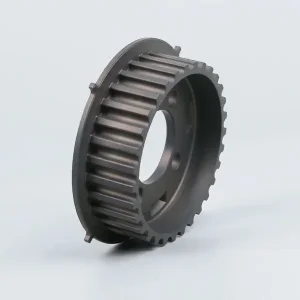
Explore custom die casting, powder metallurgy timing gears, titanium components, and specialized tooling molds





Ready to Optimize Your Metal Component Manufacturing?
Submit your 3D STEP files and 2D drawings to receive a comprehensive Design for Additive Manufacturing (DFAM) report and transparent factory quotation within 48 hours.