
High-Pressure Aluminum & Zinc Alloy Cast Parts
Directly sourced from verified China precision die casting facilities with low MOQ and fast design-for-manufacturability (DFM) verification.






Engineering Architecture of Modern Aluminum Die Casting
Unlocking structural performance, weight reduction, and precision thermal management through advanced Chinese manufacturing networks.
High-Pressure Die Casting (HPDC) Mastery
High-Pressure Die Casting (HPDC) remains the cornerstone process for high-volume production of lightweight aluminum components. By injecting molten metal under intense pressure (typically 30 to 100 MPa) into hardened steel molds, Chinese manufacturers achieve complex net-shape geometries with wall thicknesses as thin as 1.2 mm to 1.5 mm.
Key alloy families such as ADC12, A380, AlSi10Mg, and A360 provide tailored balances between yield strength, corrosion resistance, and thermal conductivity for demanding operational environments.
DFM & Mold Flow Thermal Simulation
Tier-1 factories in China implement rigorous MAGMASOFT or AnyCasting numerical simulations prior to tooling steel cutting. This preliminary engineering step evaluates fill fronts, solidification speed, and gas entrapment risks.
Engineers optimize runner designs, gate locations, and chill blocks to guarantee minimal internal porosity (conforming to ASTM E505 Level 1 & Level 2 radiographic standards), ensuring structural integrity under cyclic mechanical loads.
Precision CNC Post-Machining Integration
While die casting achieves impressive raw tolerances (ISO 8062 CT4–CT6), critical mating surfaces, bearing bores, and threaded holes require CNC secondary finishing. Modern Chinese suppliers integrate multi-axis CNC machining cells directly adjacent to the casting bays.
Equipped with high-precision coordinate measuring machines (CMM) and laser scanners, factories guarantee dimensional control down to ±0.005 mm for demanding automotive and aerospace assemblies.
Aluminum Die Casting Alloy Comparison
Selecting the right alloy composition based on mechanical, electrical, and thermal properties.
| Alloy Specification | Tensile Strength (MPa) | Yield Strength (MPa) | Thermal Conductivity (W/m·K) | Corrosion Resistance | Primary Industrial Applications |
|---|---|---|---|---|---|
| A380 (ANSI/AA) | 325 | 160 | 96.2 | Moderate | Automotive brackets, engine enclosures, electrical housings |
| ADC12 (JIS H5302) | 310 | 150 | 92.0 | Moderate | General machinery, power tool cases, electronic chassis |
| A360 (High Corrosion) | 317 | 170 | 113.0 | Very High | Marine hardware, outdoor LED housings, pump impellers |
| AlSi10Mg (EN AC-43000) | 340 | 210 | 110.0–130.0 | High | Thin-walled EV battery structural components, heat sinks |
| AlSi9Cu3 (EN AC-46000) | 320 | 160 | 105.0 | Good | High-stress powertrain components, hydraulic valve manifolds |
China Factory Ecosystem vs. Global OEM Requirements
Bridging regional industrial cluster benefits with strict international compliance frameworks.
Integrated Industrial Clusters
China's key casting hubs (such as Ningbo, Guangdong, and Jiangsu) aggregate the entire value chain within a 30-kilometer radius. Raw material smelting, toolmaking steel suppliers, heat treatment centers, and surface coaters (anodizing, powder coating, electroplating) operate in high-density ecosystems.
This geographic concentration reduces production cycle times by up to 40% compared to fragmented Western supply chains.
Global Procurement Alignment
International OEMs require seamless integration with internal ERPs, strict compliance with NDA protocols, and clear engineering documentation. Top Chinese casting vendors provide comprehensive engineering teams fluent in English and trained in international drafting standards (ISO, ASME Y14.5M).
They routinely deliver full PPAP Level 3 (Production Part Approval Process) documentation including dimensional control plans, FMEA, and material certs.
Total Cost of Ownership (TCO) Optimization
Beyond competitive piece-part pricing, Chinese factories minimize long-term TCO through extended tool life guarantees (typically 100,000 to 300,000 shots for steel molds), fast tooling modification turnaround times, and flexible shipping options (DDP, FOB, CIF).
Buffer inventory strategies and localized safety stock options further mitigate global shipping delays and tariff volatility.
Localization Support & Global Regulatory Compliance
Rigorous compliance protocols ensuring friction-free global import and operational security.
IATF 16949 & ISO 9001
Certified quality management systems governing every stage of production from raw alloy ingot inspection to final palletizing. Statistical Process Control (SPC) is enforced across all critical dimensions.
RoHS & REACH Compliance
Full environmental safety assurance. Heavy metal contents (Lead, Cadmium, Mercury, Hexavalent Chromium) are strictly monitored using optical emission spectrometers to comply with EU directives.
Localized Customer Support
Dedicated project managers assigned to international accounts ensure round-the-clock technical feedback, rapid DFM turnarounds within 24–48 hours, and clear bi-lingual engineering notes.
IP Protection Protocols
Strict non-disclosure agreement (NDA) enforcement, segregated digital file vaults, restricted floor access, and secure CAD data encryption safeguard your proprietary innovations.
Technological Trends Reshaping Aluminum Die Casting
From Giga-casting systems to AI-guided thermal monitoring, discover how modern China factories lead industry transformation.
1. High-Tonnage Mega-Casting (Gigacasting)
The EV revolution has accelerated adoption of ultra-large die casting presses ranging from 6,000 to 12,000 tons of clamping force. By consolidating dozens of stamped sheet metal parts into single-piece structural underbodies, OEMs achieve significant weight savings, reduced assembly line footprints, and lower manufacturing complexity.
2. AI-Driven Real-Time Quality Control
Leading Chinese factories embed infrared thermography, ultrasonic sensors, and deep-learning machine vision into the die-casting cell. Algorithms analyze cavity temperature distribution and plunger speed profiles in real-time, instantly adjusting shot parameters to prevent flash, porosity, or cold shuts before defects occur.
3. Low-Carbon Sustainable Alloys
Global decarbonization mandates are driving demand for secondary recycled aluminum alloys that retain primary-grade mechanical strength. China’s advanced aluminum smelters utilize specialized refining and degasification systems to produce low-carbon alloys (recycled content > 80%), drastically slashing product carbon footprint (PCF).
Key Industry Applications & Cross-Sector Deployment
High-reliability aluminum cast parts engineered for diverse global operating environments.
Automotive & EV Systems
Electric drive motor housings, inverter enclosures, battery module trays, steering knuckles, and gearbox covers demanding high pressure-tightness and structural ductility.
5G & Telecommunications
Complex high-density cooling fins, outdoor transceiver heatsinks, and antenna housings engineered for optimum electromagnetic shielding (EMI) and environmental weatherproofing.
Medical Equipment Chassis
Precision diagnostic instrument frames, surgical tool handles, and portable monitor structural casings requiring cosmetic powder coatings and chemical cleaning resistance.
Industrial Robotics & Automation
Lightweight robotic arm links, pneumatic actuator cylinders, servo motor mounts, and planetary gearbox housings optimized for high strength-to-weight performance.
Frequently Asked Questions (FAQ)
Expert technical advice regarding die casting tooling, MOQ, quality assurance, and manufacturing logistics.
HPDC is optimal for lightweight, medium-to-large aluminum and zinc parts requiring structural strength, thin wall sections, and excellent thermal performance. Powder Metallurgy (PM) and Metal Injection Molding (MIM) excel at producing small, exceptionally high-density, high-complexity steel or titanium parts where machining is prohibitive. HPDC offers faster cycle times for larger components.
Advanced facilities utilize vacuum-assisted die casting systems (reducing cavity pressure below 50 mbar during injection), optimize thermal gating via mold flow software, and incorporate squeeze pins in high-mass regions. Post-casting verification includes 100% non-destructive X-ray inspection conforming to ASTM E505 standards.
Standard mold steel alloys like H13 (or premium DIEVAR / 8407 steels) with suitable vacuum heat treatment and surface nitriding routinely yield 100,000 to 150,000 shots for aluminum die casting before major refurbishing is required. For zinc die casting, tool life can easily exceed 500,000 to 1,000,000 shots due to lower melting temperatures.
While prototype tooling can be delivered in as fast as 15 days, production tooling typically requires 25–35 days including T1 sample approval. Production MOQs generally start at 2,000 pieces per batch for custom die castings, though initial pilot lots can be arranged for early-stage engineering validation.
Full in-house surface treatment services include shot blasting, precision tumbling, chromate conversion (RoHS-compliant TCP/surtec 650), powder coating, liquid painting, anodizing (suitable for specialized low-copper alloys), and electro-less nickel plating for corrosion resistance and aesthetic finishes.
Engineers conduct a tool modification impact analysis. Minor geometric additions can often be accomplished via direct CNC or EDM wire cutting on existing tool inserts ("metal-safe" design modifications). Major dimensional shifts are managed through modular interchangeable inserts to minimize costly full-tool re-cuts.
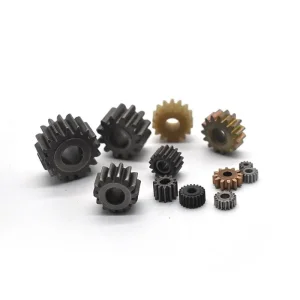
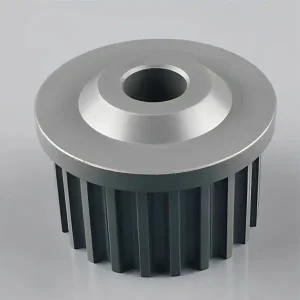
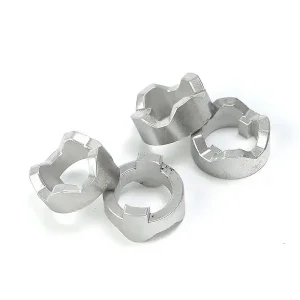
Custom Casting & Powder Metallurgy Solutions
Explore our complete range of specialized metal casting, MIM, and hardware components.




Ready to Optimize Your Die Casting Sourcing Strategy?
Submit your 2D engineering PDF and 3D CAD models (STEP/IGES) to receive a comprehensive DFM evaluation, tool design proposal, and transparent quote within 48 hours.