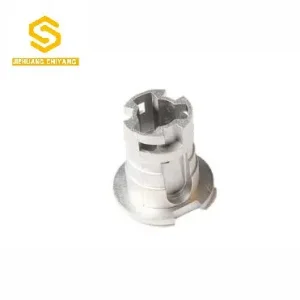
Featured OEM Metal & Aluminum Component Solutions
Explore our initial engineering showcase of precision-manufactured industrial hardware, MIM structural units, die-cast elements, and powder metallurgy components built for critical international applications.



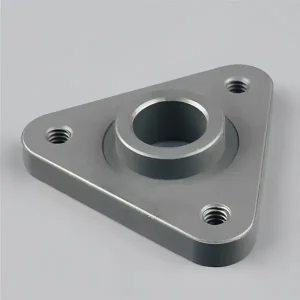



1. Macro Analysis: China's Aluminium Die Casting Paradigm
In modern global manufacturing, China’s aluminium die casting sector has transformed from a labor-intensive casting ecosystem into an automated, highly integrated engineering hub. Driven by aggressive demand in electric mobility (EVs), renewable energy infrastructure, 5G telecommunications, and high-precision industrial tooling, Chinese casting manufacturers stand at the forefront of High-Pressure Die Casting (HPDC) and integrated Gigacasting technologies.
For tier-1 automotive OEMs and multinational hardware developers, sourcing aluminium die casting parts from China factories provides a decisive competitive edge. Beyond favorable piece-part economics, modern Chinese plants offer end-to-end design-for-manufacturability (DFM) verification, rapid mold construction, advanced alloy formulation, and strict adherence to international quality benchmarks such as IATF 16949 and ISO 9001.
High-Pressure Precision
Utilizing cold-chamber die casting machines ranging from 280T to over 6,000T, achieving tight dimensional tolerances (+/-0.02mm post-machining) for structurally intensive components.
Custom Alloy Engineering
Expertise spanning standard ADC12, A380, and A360 to specialized low-iron, high-ductility alloys engineered specifically for structural crash resistance without heat treatment.
Turnkey Verticalization
Complete integration under one roof: In-house mold design, flow simulation, die casting, multi-axis CNC finishing, surface treatment, and sub-assembly validation.
2. Architectural Dynamics of China’s Die Casting Supply Chain
The concentration of upstream alloy smelters, die steel suppliers (e.g., Dievar, H13), tooling workshops, and surface treatment facilities within major industrial clusters (such as the Yangtze River Delta and Pearl River Delta) creates unmatched velocity.
Lead-Time Compression & Tooling Agility
Traditional European or North American mold fabrication often requires 12 to 16 weeks. Chinese factories systematically reduce tool delivery to 4 to 6 weeks through parallel CNC toolpath machining, high-speed EDM, and automated CMM electrode checks.
- Magmasoft / ProCAST flow simulation prior to steel cutting
- Rapid prototype tooling utilizing metal 3D printing or soft tooling
- In-house mold trial presses reducing iteration cycles to days
Total Cost of Ownership (TCO) Optimization
While direct unit cost savings typically range between 25% and 45%, true value is captured through integrated downstream processing. Chinese manufacturers eliminate intermediate shipping steps by completing shot blasting, CNC milling, powder coating, and leak testing within unified manufacturing zones.
- Raw aluminum material pricing tied directly to Shanghai Metal Exchange (SME)
- Automated cell robotics minimizing yield variations and scrap loss
- Optimized ocean and air freight logistics adjacent to Ningbo and Shanghai ports
3. High-Pressure Die Casting (HPDC) Technological Capabilities
To achieve void-free casting and structural integrity required for pressure-tight applications, premier Chinese factories implement state-of-the-art technological enhancements during metal injection and cooling phases.
Vacuum-Assisted Die Casting
By evacuating air from the mold cavity down to sub-50 mbar pressures prior to shot injection, gas porosity is virtually eliminated. This enables full T6 heat treatment and structural welding of thin-walled aluminum components.
Squeeze & Semi-Solid Casting
Combining forging density with casting geometric freedom. Squeeze casting applies high pressure during solidification, ideal for heavy-duty suspension brackets and safety-critical automotive parts.
Robotic Automation Cells
Fully integrated robotic extractors, die sprayers, and trimming presses guarantee thermal equilibrium across the mold face, increasing die longevity while ensuring repeatable casting density.
4. Technical Comparison of Standard Die Casting Aluminum Alloys
Selecting the correct aluminum alloy formulation requires balancing fluidity, mechanical yield strength, thermal dissipation, and corrosion resistance. The table below outlines primary alloys processed by leading Chinese suppliers.
| Alloy Grade | Tensile Strength (MPa) | Thermal Conductivity (W/m·K) | Corrosion Resistance | Primary Application Scenarios |
|---|---|---|---|---|
| ADC12 (Al-Si-Cu) | 240 - 290 | 96 | Moderate | General machinery, gearbox housings, power tool casings, motor covers. |
| A380 (US Standard) | 320 | 96.2 | Fair to Good | Automotive engine brackets, electronic enclosures, pump bodies. |
| A360 (High Corrosion) | 300 | 113 | Excellent | Marine hardware, outdoor LED streetlights, liquid fluid valves. |
| AlSi10Mg (Fe-Free/Low) | 330 (Post T6) | 130 - 150 | High | EV structural nodes, crash beams, complex thin-wall telecom heat sinks. |
5. Global Enterprise Procurement Strategy & Risk Management
Procuring engineered metal components across international borders requires a structured framework to audit factory operations, secure technical intellectual property, and ensure uninterrupted production flow.
Vendor Qualification & Quality Audits
Leading overseas buyers implement a four-tier audit system before issuing Purchase Orders (POs):
- System Audit: Verifying IATF 16949 / ISO 9001 certifications and traceability software (MES)
- Process Audit: Evaluating melt degassing, spectrographic melt validation, and shot monitoring
- Product Audit: Full PPAP (Production Part Approval Process) Level 3 submission including CPK/CMK data
- Lab Equipment: CMM, X-Ray non-destructive defect testing, Salt-Spray testing, and Metallographic microscopy
Tooling Ownership & IP Security
Mitigating supply chain risk involves clear legal agreements regarding mold ownership, design copyright, and maintenance terms.
- Explicit tooling ownership clauses transferring die rights upon initial payment completion
- Comprehensive Non-Disclosure Agreements (NDAs) governed by international legal jurisdictions
- Guaranteed tool steel lifespan maintenance (e.g., 100,000 to 300,000 shot lifespan guarantees)
- Digital file encryption protocols for 3D CAD/STEP model transfers
6. Localized Support, Regulatory Compliance, and Green Manufacturing
Modern international trade requires Chinese die casting suppliers to seamlessly integrate into global ESG (Environmental, Social, and Governance) targets and Western environmental regulations.
Environmental Compliance
Strict adherence to EU RoHS (Restriction of Hazardous Substances) and REACH directives. All ingot supplies are certified chemical-analysis verified, guaranteeing lead, cadmium, and hexavalent chromium remain below legal thresholds.
Carbon Footprint Reduction
Implementation of centralized electric melting furnaces, closed-loop water recirculation systems, and secondary aluminum alloy integration—reducing embodied carbon per unit weight up to 60% compared to primary smelter virgin metal.
Localized Global Response
Dedicated English-fluent engineering project management teams operating across European and North American time zones, providing 24-hour turnaround on Engineering Change Orders (ECOs) and technical support.
7. Industrial Field Applications for Custom Aluminium Castings
Aluminum die cast components serve as fundamental structural backbones across multiple advanced industries due to their high strength-to-weight ratio and dimensional stability.
Automotive & EV
Electric vehicle battery trays, motor end-bells, inverter heat sinks, steering knuckles, and structural body pillars.
5G & Telecom
Outdoor base station filter housings, high-density cooling fins, optical transceiver enclosures, and antenna brackets.
Industrial Equipment
Pneumatic cylinder caps, high-pressure pump bodies, robotic joint housings, and power tool gear cases.
Medical & Energy
Diagnostic scanner chassis structural arms, solar micro-inverter casings, and surgical equipment housings.
8. Market Trends & Technological Evolution (2025–2030)
The future of aluminium die casting is defined by scale expansion and artificial intelligence integration. Key industry developments driving Chinese manufacturing centers include:
Gigacasting Integration
Consolidating dozens of stamped sheet metal components into a single large-scale die-cast structural unit. Utilizing ultra-large presses (6,000T to 12,000T), EV manufacturers drastically reduce vehicle weight and assembly complexity.
AI Real-time Defect Detection
Replacing manual visual checks with inline high-energy X-ray vision systems powered by deep learning models. Internal shrinkage cavities and gas pores are identified automatically at production speeds.
Non-Heat-Treated High Ductility Alloys
Adoption of advanced aluminum-silicon-magnesium-manganese formulations that achieve high elongation (>10%) directly in the as-cast state, bypassing costly thermal energy processing.
9. Frequently Asked Questions (Technical & Procurement Q&A)
Common technical questions addressed by senior application engineers during design review and vendor onboarding phases.
Q1: What are the fundamental Design for Manufacturability (DFM) rules for aluminum die casting?
Key guidelines include maintaining uniform wall thickness (ideally between 1.5mm and 4.0mm) to prevent sink marks and porosity, incorporating draft angles of at least 1° to 2° for interior cores and 0.5° to 1° for outer walls, avoiding sharp internal corners by applying generous radii (R > 0.5 x wall thickness), and placing ejection pins on non-cosmetic surfaces.
Q2: How do Chinese factories prevent porosity in pressure-tight aluminum parts?
Porosity control utilizes high-efficiency vacuum degassing of liquid melt, high-vacuum mold evacuation systems during injection, optimized gate design calculated via Magmasoft flow simulations, and squeeze pins in heavy thermal mass regions. For critical liquid or gas-handling parts, 100% helium or air-under-water leak testing is implemented.
Q3: What is the typical tooling lifespan for an aluminum HPDC die?
A standard die built with premium steel like H13 or imported Böhler W302 / Uddeholm Dievar yields between 80,000 and 150,000 shots depending on part geometry and wall thickness. Proper die pre-heating, stress-relieving heat treatments every 25,000 cycles, and automated mold spraying extend die longevity substantially.
Q4: What surface finishing treatments are available post-casting?
Common secondary treatments include shot blasting (stainless steel shot or ceramic beads), chemical passivation, anodizing (for low-copper alloys like A360 or custom grades), electro-powder coating, liquid painting, e-coating (electrophoretic deposition), and precision CNC surface milling for gasket mating zones.
Q5: How does die casting compare with CNC machining from billet aluminum?
CNC machining from solid billet is ideal for low volume (< 500 units) or rapid prototyping due to zero upfront tooling cost. However, for volume production (> 1,000 units), die casting reduces unit cost by 60%–80%, decreases unit production time from hours to seconds, and minimizes material waste.
Q6: What is the standard sample delivery timeline after PO issuance?
Typical mold design and simulation takes 5 to 7 days. Mold steel machining and assembly requires 25 to 35 days. T1 initial trial samples with full CMM dimensional measurement reports and material certificates are usually dispatched within 35 to 45 days total from project approval.
Q7: How are raw material cost fluctuations managed in long-term supply contracts?
Most professional Chinese die casting suppliers utilize raw aluminum index floating price models tied directly to published spot market rates (e.g., Shanghai Metal Exchange or London Metal Exchange). Unit part prices adjust quarterly based on an agreed formula accounting for net casting shot weight.
Q8: Can aluminum die castings be welded or heat-treated?
Standard conventional HPDC parts cannot be safely welded or T6 heat-treated because trapped high-pressure gas expands and forms surface blisters. However, parts produced using High-Vacuum Die Casting (<30 mbar) or Squeeze Casting can undergo full T6 heat treatment and orbital or laser welding without blister formation.
Custom Sintered, MIM & Alloy Part Directory
Review our complementary extended catalog of specialized metal injection molding (MIM), precision gear sintering, zinc die casting, and custom OEM industrial parts.