
Direct access to core OEM manufacturing lines, custom sintered hardware, and MIM/Powder Metallurgy solutions engineered to IATF 16949 standards.






Aluminium Powder Metallurgy (APM) and Aluminium Matrix Composites (AMCs) represent a disruptive material frontier in modern lightweight manufacturing. As global OEM industries accelerate towards aggressive decarbonization, structural weight reduction, and extreme thermal management efficiency, traditional aluminum die casting and subtractive CNC machining are encountering physical and economic ceilings.
Unlike iron or copper powders, aluminum particles are coated with a stubborn, thermodynamically stable alumina oxide skin ($Al_2O_3$) that resists thermal breakdown up to 2000°C. Sintering aluminum requires precise liquid-phase additives (such as Cu, Mg, Si, and Sn) combined with ultra-dry continuous nitrogen atmospheres (dew points below -40°C) to disrupt the oxide shell and allow solid-state micro-diffusion.
APM processes convert raw atomized elemental or pre-alloyed aluminum powder directly into high-density structural components with material utilization rates exceeding 95%. This eliminates millions of tons of swarf and scrap generated by subtractive billet machining, reducing energy consumption per part by up to 60% across large-scale manufacturing runs.
The electrification of transport and high-performance computing requires materials with high thermal conductivity (>180 W/m·K) combined with tailored Coefficients of Thermal Expansion (CTE). APM allows tailor-made alloy compositions—such as high-silicon Al-Si alloys or SiC-reinforced composites—that cannot be cast or forged through conventional metallurgy.
Chinese powder metallurgy hubs—specifically centered in Ningbo and the Yangtze River Delta—have achieved global competitiveness through deep supply chain integration, advanced equipment automation, and aggressive metallurgical engineering investments.
Leading Chinese APM suppliers like Ningbo Jiehuang (JHMIM) operate fully integrated production ecosystems. From air/gas powder atomization, precision CNC compacting presses (ranging from 15 to 1,000 tons), continuous mesh-belt vacuum sintering furnaces, to in-house secondary CNC finish machining and anodizing, every process step occurs under one quality assurance umbrella. This eliminates inter-vendor freight delays and reduces lead times for complex tooling samples to under 30 days.
Tooling for powder metallurgy compaction dies and sintered aluminum molds in China typically costs 40% to 65% less than equivalent tooling built in North America or Western Europe. Lower initial tooling amortizations lower the Minimum Order Quantity (MOQ) barrier, allowing tier-1 OEMs to validate pilot production runs (2,000 to 5,000 pieces) without excessive capital expenditure.
Modern Chinese suppliers operate under certified ISO 9001 and automotive-grade IATF 16949 quality systems. Utilizing Japan-imported optical profile measuring systems, Coordinate Measuring Machines (CMM), Archimedean density testers, and continuous oxygen/nitrogen analyzers, Chinese factories provide 100% critical dimension checks and full metallurgical batch traceability.
Rather than acting as passive contract fabricators, Chinese technical teams conduct pre-quote Design for Manufacturability (DFM) evaluations. Engineers review draft angles, radius optimization, density gradients, and wall thickness uniformity within 48 hours, highlighting manufacturing risks prior to mold cutting.
Selecting the correct manufacturing route requires evaluating mechanical strength, density, thermal conductivity, and final component cost. The table below compares standard APM alloys against traditional aluminium processing methods.
| Process / Alloy Grade | Relative Density (%) | Tensile Strength (MPa) | Yield Strength (MPa) | Thermal Conduct. (W/m·K) | Material Utilization | Unit Cost at Scale |
|---|---|---|---|---|---|---|
| Sintered Al 201AB (Al-Cu-Mg-Si) | 95.5% – 98.0% | 230 – 330 | 190 – 280 | 160 – 180 | 95% + | Lowest |
| Sintered Al 601AB (Al-Mg-Si-Cu) | 96.0% – 98.5% | 180 – 240 | 140 – 200 | 170 – 190 | 95% + | Low |
| Aluminium MIM (Al-MIM 7075 Equivalent) | 97.5% – 99.2% | 380 – 480 | 330 – 420 | 130 – 150 | 98% + | Moderate |
| Aluminum Die Casting (ADC12 / A380) | 90.0% – 94.0% (Porosity risk) | 210 – 310 | 140 – 180 | 96 – 100 | 75% – 85% | Low (High Tooling Cost) |
| CNC Machined Wrought 6061-T6 | 100% | 290 – 310 | 240 – 270 | 167 – 170 | 15% – 40% (High Scrap) | High (Machine Time Heavy) |
Aluminium powder metallurgy components are engineered for demanding structural and thermal environments across diverse global industries.
Used in Variable Valve Timing (VVT) rotors, electric drive unit heat-sink plates, oil pump gears, and lightweight structural steering system brackets. Sintered aluminum reduces rotational inertia in high-RPM automotive assemblies.
Aluminum matrix composite (AMC) electronics packaging housings provide tailored low Thermal Expansion Coefficients (CTE matching silicon chips) while delivering 40% weight savings over copper-tungsten heat spreaders.
High-density aluminum MIM and PM hinge mechanisms, smartwatch internal structural frames, laptop heat-pipe connector blocks, and camera mounting rings requiring decorative anodizing and sleek surface finishes.
Sintered aluminum planetary gear carriers, robotic arm joint mounts, and lightweight impact driver gearboxes that demand high fatigue strength without subjecting battery systems to excessive payload weight.
Procuring custom aluminum powder metallurgy components requires evaluating technical qualification criteria to ensure lot-to-lot repeatability and prevent structural failure.
- Verify continuous sintering furnace dew-point tracking (< -40°C logged continuously).
- Confirm powder storage in humidity-controlled environments to avoid pre-oxidation.
- Inspect in-house tool shop capabilities (wire EDM, CNC grinding accuracy to ±0.005mm).
- Conduct full 2D/3D tolerance stack analysis for compaction ejection draft angles.
- Validate prototype geometry via Selective Laser Melting (SLM 3D metal printing) prior to tooling.
- Execute PPAP Level 3 documentation including FAI, Gauge R&R, and Cpk analysis (>1.67).
- Establish automated Statistical Process Control (SPC) on critical dimension features.
- Implement vacuum-sealed rust-inhibiting packaging for ocean freight shipment.
- Establish safety stock buffer inventory in domestic warehouse hubs.
The powder metallurgy landscape is undergoing rapid technological evolution driven by material science breakthroughs and hybrid manufacturing technologies.
Development of multi-principal element aluminium powders yielding sintered components with tensile strengths exceeding 550 MPa, approaching titanium alloy performance levels while maintaining lightweight characteristics.
Integration of high-speed powder compaction for main structural bodies combined with targeted SLM 3D metal printing for internal cooling channels and customized geometry features.
Transitioning sintering furnace atmospheres from pure nitrogen/ammonia dissociators to green hydrogen reduction streams, eliminating micro-nitride embrittlement and reducing carbon footprints.
Expert answers to technical procurement questions regarding design constraints, material selection, and factory validation.
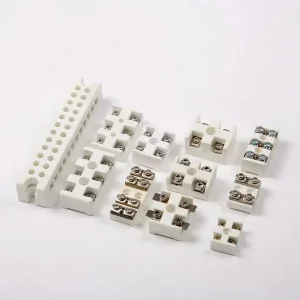
Additional custom manufacturing solutions, powder alloys, ceramic connectors, and precision sintered components from our OEM factory floor.







Upload your 2D/3D component drawings today. Ningbo Jiehuang's senior metallurgical engineering team will provide a full DFM analysis and transparent itemized quote within 48 hours.
Request DFM Review & Pricing Quote