
-

-

China Metal injection molding stainless steel parts Manufacturers, Factories
-

China China custom wholesale aluminum pressure die csating parts suppliers Manufacturers, Supplier
-
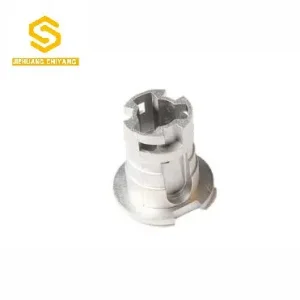
Wholesale metal injection molding parts for medical technology Manufacturer, Factory
-

-
-

-

China Powder Metal Parts Medical Surgical Handle Supplier, Factory
The Evolution of Aluminum Die Casting Housings in High-Density Power & Thermal Applications
Analyzing global demand, structural lightweighting trends, thermal management dynamics, and next-generation alloy architectures for Tier-1 OEMs.
Executive Summary: As modern electronic systems, Electric Vehicle (EV) powertrains, 5G active antenna units (AAU), and industrial robotics demand higher power densities within shrinking physical footprints, aluminum die casting housings have transitioned from basic mechanical enclosures into multifunctional thermo-structural assets. Achieving dimensional stability, IP68 hermetic sealing, low porosity, and high heat dissipation requires deep synergy between metallurgical design, high-pressure die casting (HPDC) simulation, and Industry 4.0 process control.
Thermal Dissipation Architecture
Modern aluminum housings double as high-efficiency heat sinks. Integrated cooling fins, micro-channel liquid cooling loops, and ultra-thin wall sections allow thermal dissipation rates exceeding 180 W/m·K when combined with optimized hypoeutectic or eutectic aluminum-silicon alloys.
Electromagnetic Shielding (EMI/RFI)
Aluminum alloys naturally block high-frequency electromagnetic interference. High-pressure die-cast enclosures provide structural EMI attenuation up to 90 dB across 10 MHz–10 GHz spectrums, safeguarding sensitive microelectronics in harsh automotive and telecom environments.
Structural Lightweighting & Mass Reduction
Replacing cast iron or CNC-milled steel enclosures with thin-wall vacuum-assisted aluminum die casting reduces component weight by 45% to 65% while maintaining tensile strengths up to 320 MPa, critical for extending EV battery range and robotic payload capacity.
Comprehensive Metallurgy & Alloy Selection Guide for Die Cast Housings
Selecting the optimal aluminum matrix determines mechanical toughness, fluid flow castability, corrosion resistance, and post-surface treatment performance.
| Alloy Standard | Chemical Composition Key Elements | Tensile Strength (MPa) | Thermal Conductivity (W/m·K) | Corrosion Resistance | Primary Application Suitability |
|---|---|---|---|---|---|
| ADC12 / A383 | Al-Si11Cu2Fe (Si 9.6-12.0%, Cu 1.5-3.5%) | 310 MPa | 96 W/m·K | Moderate | General industrial housings, gearbox covers, electrical junction boxes. Excellent castability. |
| A380 / YL102 | Al-Si8Cu3Fe (Si 7.5-9.5%, Cu 3.0-4.0%) | 320 MPa | 96 W/m·K | Good | North America Standard Automotive engine brackets, ECU housings, power tool bodies. |
| A360 | Al-Si10Mg (Si 9.0-10.5%, Mg 0.4-0.6%) | 300 MPa | 113 W/m·K | Excellent | Outdoor telecom enclosures, marine pump housings, fluid manifolds requiring high pressure tightness. |
| AlSi9Cu3 (EN AC-46000) | Al-Si9Cu3Fe (Si 8.0-11.0%, Cu 2.0-4.0%) | 280 MPa | 110 W/m·K | Good | European Automotive Standard EV inverter cases, battery junction boxes, transmission housings. |
| High Thermal Al (Custom) | Low Cu/Fe Purified Al Matrix (Si 7.0-9.0%) | 240 MPa | 150-180 W/m·K | Superior | 5G AAU Heat Sinks, High-power LED driver housings, EV fast-charging power modules. |
High-Pressure Die Casting (HPDC)
Operates under hydraulic injection pressures ranging from 300 to 1,200 bar. Ideal for thin-wall (up to 1.5mm) high-volume housings with micro-cooling fins. Fast cycle times make HPDC the most cost-efficient method for orders over 2,000 units.
Vacuum-Assisted Die Casting
By evacuating mold cavity air to under 50 mbar prior to metal shot injection, gas porosity is virtually eliminated. This enables structural housings to undergo T6 heat treatment and structural welding without blister formation.
Low-Pressure & Gravity Casting
Suited for ultra-heavy-wall thick housings (6mm+) or low-volume prototypes. Offers exceptionally dense grain structure and superior mechanical fatigue resistance for heavy off-highway machinery housings.
Smart Manufacturing, Supply Chain Resilience & Cost Optimization
How Ningbo Jiehuang (JHMIM) combines real-time digital process monitoring, automated die-casting cells, and localized supply chain integration to deliver unmatched enterprise value.
Automated Robotic Cells
Fully automated die casting islands equipped with ABB/KUKA robotic arm extraction, automated die lubricant spraying, and inline trim presses guarantee zero operator variability across 24/7 production cycles.
Inline NDT & X-Ray Defectoscopy
100% real-time non-destructive testing (NDT) via industrial high-resolution X-ray inspection detects internal shrinkage, cold shuts, and gas inclusions down to 0.1mm before secondary precision machining.
In-House Precision CNC Finishing
Equipped with 4-axis and 5-axis Brother and Fanuc CNC machining centers, achieving tight tolerance features like O-ring seal grooves, bearing bores, and threaded blind holes to ±0.015mm repeatability.
Ningbo Port Supply Chain Logistics
Situated in Ningbo—the world's largest logistics port hub—providing direct integrated access to raw alloy ingot refineries, mold steel suppliers, surface plating, and global ocean/air freight networks.
DFM Guidelines for Industrial Designers & Procurement Engineers
Optimizing aluminum die casting geometries prior to tooling freeze cuts tooling lead times by 30% and lowers part unit costs dramatically.
Uniform Wall Thickness Architecture
Maintain wall thickness between 2.0mm and 3.5mm across housing body segments. Avoid drastic cross-sectional wall jumps to eliminate sink marks, internal thermal stresses, and micro-cracking during cooling.
Draft Angle & Ejection Optimization
Incorporate minimum draft angles of 1.0° to 2.0° on internal cavity walls and 0.5° to 1.0° on external walls. Proper draft angles prevent galling, surface drag marks, and extend mold steel life past 100,000 shots.
Rib Design & Structural Stiffeners
Design structural ribs at 60% of the adjacent wall thickness to maximize flexural rigidity without triggering shrinkage defects. Add generous fillet radii (R 1.5mm–2.5mm) at all internal corner junctions to disperse mechanical stress concentration.
Quality Assurance & Compliance Framework: Every production batch at Ningbo Jiehuang undergoes stringent quality verification including Spectrum Chemical Analysis, CMM 3D Coordinate Measuring, Salt Spray Corrosion Resistance Testing (ASTM B117 up to 720 hours), Helium Leak Detection for IP67/IP68 enclosures, and PPAP Level 3 documentation for automotive OEM clients.
High-Performance Industry Application Scenarios
Tailored aluminum housing solutions built to withstand extreme environmental, mechanical, and thermal stresses.
Automotive EV Powertrain & Inverters
Water-cooled inverter housings with integrated stainless steel cooling tubes cast directly into ADC12/AlSi9Cu3 bodies. Resists vibration shocks up to 30G while maintaining hermetic coolant isolation.
5G Telecom Outdoor AAU Enclosures
Lightweight high-thermal conductivity aluminum enclosures finished with outdoor-grade anti-corrosion powder coating. Weatherproof IP67 performance for operating ambient temperatures from -40°C to +85°C.
Industrial Servo Motor & Drive Housings
Precision-cast motor shells featuring integral stator mounting ribs, thin cooling fins, and CNC-machined bearing pockets achieving concentricity within 0.02mm to ensure silent high-RPM rotation.
Medical Equipment Chassis
Electromagnetically shielded diagnostic scanner housings and mobile surgical equipment enclosures finished with medical-grade antimicrobial epoxy powder coatings or decorative anodizing.
Technical FAQ: Aluminum Die Casting Housings Sourcing & Engineering
Expert insights addressing key procurement, engineering validation, and manufacturing questions for enterprise buyers.
We employ advanced vacuum-assisted high-pressure die casting technology paired with MAGMASoft thermal flow simulation software. By pulling mold cavity vacuum levels down below 50 mbar during metal injection, ambient air entrapment is mitigated. Furthermore, squeeze pins are implemented in heavy wall sections to apply secondary pressure during solidification, ensuring dense structural integrity capable of passing 100% helium leak testing for IP68 ratings.
Standard aluminum die casting alloys like ADC12 and A380 contain 8% to 12% silicon and copper additives, which result in a dark grey, patchy appearance if conventional decorative anodizing is applied. For applications requiring cosmetic or protective anodization, we recommend high-purity specialized aluminum alloys (such as AlSi7Mg or custom low-copper alloys), or alternative surface treatments such as Chromate Conversion Coating (Passivation), E-coating (Electrodeposition), or outdoor-grade Fluorocarbon Powder Coating.
Our die casting molds are manufactured using premium imported H13 or Dievar hot-work tool steel with multi-stage heat treatment (50-52 HRC). Standard mold lifespans range from 80,000 to 150,000 shots depending on part geometry and alloy injection temperature. Prototype tooling lead times are typically 25–30 days, while multi-cavity production tooling takes 35–45 days inclusive of initial T1 sample delivery and FAI (First Article Inspection) reporting.
Every project submitted to Ningbo Jiehuang undergoes a comprehensive, engineer-led DFM (Design for Manufacturability) review within 48 hours. We analyze draft angles, wall thickness uniformity, parting line placement, ejector pin locations, thermal stress areas, and potential flow turbulence. Identifying design flaws prior to steel cutting prevents costly mold modifications, reduces cycle times, and ensures seamless transition into mass production.
Ningbo Jiehuang Chiyang Electronic Tech Co., Ltd. operates under fully certified IATF 16949 (Automotive Quality Management System) and ISO 9001 quality frameworks. Our metrology lab is equipped with Zeiss CMM machines, spectrographs, salt spray test chambers, tensile testers, and optical projection systems to issue full PPAP Level 3 documentation, material certifications, and dimensional inspection reports with every shipment.
-

-

-
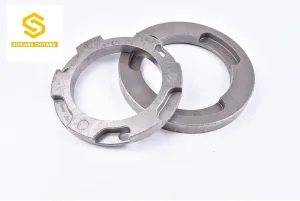
Wholesale Wholesale ODM Powder Metallurgy Diesel Engine Oil Pump Rotor Manufacturer, Manufacturers
-
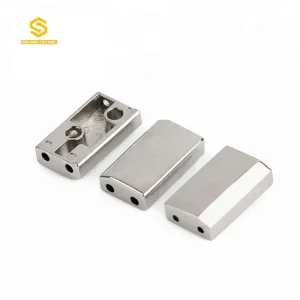
China OEM Custom MIM Stainless Steel Watch Buckles Clasps Supplier, Suppliers
-
-
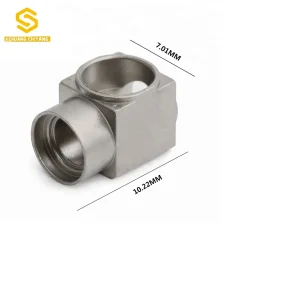
China High Precision Custom Small Metal Parts Manufacturing With MIM Process Supplier, Suppliers
-
-
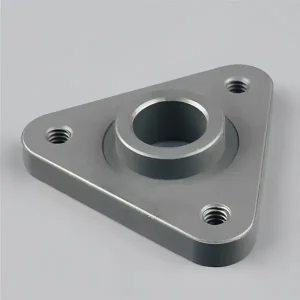
China Sintered Powder Metal Water Pump Flange Supplier Manufacturers, Factories