

Industry Whitepaper & Global Procurement Guide
China Aluminum Injection Molding Suppliers & Factories
Advanced Net-Shape Metallurgy, Industry 4.0 Precision & Strategic Global Sourcing Frameworks
Precision Catalog
Featured Engineering Components & Assemblies
Direct factory production lines specializing in Metal Injection Molding (MIM), Powder Metallurgy, and Die Casting solutions.

OEM/ODM High Density Low Alloy Steel/Titanium Powder MIM Component
View Product Details
Metal Injection Moulded Copper Base Gears for Automobile Parts
View Product Details
High Precision Powder Injection Molding Components & Assemblies
View Product Details
Mechanical Joint Element for Precision Metal Injection Molding
View Product Details
OEM High Precision Powder Metallurgy Sintered Structural Parts
View Product Details
Customized Stainless Steel Irregular Parts via Metal Injection Molding
View Product Details
Custom Metal Brass/Zinc & Anodized Aluminum Die Casting Parts
View Product Details
Metallurgical Innovation
The Paradigm Shift in Light-Alloy Manufacturing: Aluminum MIM vs. Die Casting
Deconstructing the technological breakthroughs, thermodynamic challenges, and market dynamics driving global OEM adoption of Chinese aluminum powder metallurgy.
Understanding Semantic Search Realities: AluMIM vs. HPDC
While search intent for "China Aluminum Injection Molding Suppliers" often encompasses traditional High-Pressure Aluminum Die Casting (HPDC), cutting-edge engineering intent points specifically toward Aluminum Metal Injection Molding (AluMIM) and sintered aluminum powder metallurgy. Historically, aluminum was considered "un-MIM-able" due to the stable, impenetrable aluminum oxide ($\text{Al}_2\text{O}_3$) film surrounding atomized particles, coupled with aluminum's narrow liquid-phase sintering window.
Today, leading Chinese manufacturers have mastered proprietary chemical debinding and vacuum-controlled liquid-phase sintering techniques (utilizing Al-Zn-Mg-Cu or Al-Si-Mg alloy matrices), making micro-scale, ultra-complex, net-shape aluminum components a commercial reality for global tier-1 buyers.
Global Market Trajectory & Growth Vectors (2025–2032)
The global demand for high-precision lightweight components is escalating rapidly. Driven by strict carbon-neutral mandates, EV range optimization, robotics miniaturization, and thermal efficiency demands in 5G/AI hardware, the compound annual growth rate (CAGR) for lightweight net-shape metal components is projected at 8.4% through 2032.
China controls over 60% of the world's powder metallurgy capacity and raw material refinement. OEM buyers are increasingly moving away from machine-intensive subtractive manufacturing to China's integrated aluminum sintering and die casting ecosystems to cut unit costs by up to 45% without compromising yield strength.
98.5%
Sintered Theoretical Density
< 0.3%
Dimensional Variance (±mm)
45%
Cost Reduction vs. 5-Axis CNC
IATF 16949
Automotive Quality Standard
Engineering Insights
Metallurgical Foundations: Chemistry, Debinding & Liquid-Phase Sintering
Achieving aerospace-grade mechanical properties requires rigorous control over feedstock rheology, sintering atmospheres, and alloy chemistry.
1. Inert Gas Atomization & Powder Morphology
The foundation of precision Aluminum MIM begins with spherical, fine-grained aluminum powders produced via high-pressure nitrogen or argon gas atomization. Particle size distribution ($D_{50}$ typically around 10–15 $\mu m$) is strictly managed to ensure optimal packing fraction and flowability when compounded with multi-component wax-polymer binder systems.
2. Solvent & Thermal Debinding Protocols
Extracted through a two-stage process, "green" parts undergo catalytic or solvent debinding to dissolve primary paraffin waxes, creating an open micro-porous structure ("brown" state). Secondary thermal debinding occurs inside controlled atmosphere retorts where residual backbone polymers burn off cleanly without carbon contamination.
3. Supersolidus Liquid Phase Sintering (SLPS)
Sintering occurs under ultra-high purity Nitrogen ($N_2$) or vacuum atmospheres with trace magnesium vapors. Magnesium acts as a crucial oxygen scavenger, disrupting the surface alumina film. At temperatures between 590°C and 640°C, a precise fraction of liquid phase forms along grain boundaries, driving capillary-induced densification to 97–99% of theoretical density.
Supply Chain Superiority
China Industrial Ecosystem: Supply Chain Resilience & Efficiency
How Chinese manufacturers combine hyper-clustered supply networks, automated tooling, and high-volume quality systems to deliver unrivaled cost-competitiveness.
The Yangtze River Delta Manufacturing Cluster Advantage
China's powder metallurgy and light-alloy casting centers (concentrated in Zhejiang, Jiangsu, and Guangdong regions) offer an unmatched industrial density. Within a 50-kilometer radius, factories integrate gas atomization raw material suppliers, high-precision CNC moldmakers, specialty heat-treatment facilities (T4/T6 temper), and advanced surface finishing plants (anodizing, PVD, micro-arc oxidation).
This geographic concentration reduces raw material transit times, minimizes logistics overheads, and enables rapid iteration of mold modifications during the DFM (Design for Manufacturability) phase.
Industry 4.0 Automation & Process Repeatability
Modern Chinese suppliers have aggressively deployed Industry 4.0 automation. Fully closed-loop electric injection molding machines ensure shot-to-shot consistency within 0.1% weight tolerance. Robot-assisted part extraction prevents green-part deformation.
Continuous vacuum sintering furnaces equipped with multi-zone temperature controls maintain thermal uniformity within ±1°C across the entire hot zone. Real-time MES (Manufacturing Execution Systems) trace every batch from virgin powder certification to final CMM measurement, securing full compliance with tier-1 automotive standards.
Industrial Applications
Where Global OEMs Deploy Sintered & Cast Aluminum
From electric vehicle powertrains to aerospace thermal management, explore specialized cross-industry engineering applications.
Automotive & EV Powertrain
Complex planetary gear carriers, variable valve timing actuators, e-motor cooling plates, steering column locks, and lightweight sensor housings where mass reduction directly increases battery mileage per charge.
Consumer Electronics & Optics
Foldable smartphone hinge mechanisms, camera modules, wearable smartwatch chassis, drone structural brackets, and heat-dissipating housing shells requiring fine cosmetic surfaces and post-anodizing aesthetics.
Robotics, Medical & Defense
Surgical robot articulation joints, lightweight exoskeletons, drone motor mounts, optics housings, and hand-held diagnostic gear needing high strength-to-weight ratios and bio-compatibility options.
Design Decision Matrix
Process Selection Framework for Global Engineers
Evaluate parameters to select the optimal route: Aluminum MIM vs. Die Casting vs. 5-Axis CNC vs. 3D Printing (LPBF).
| Evaluation Parameter | Aluminum MIM (Al-MIM) | High Pressure Die Casting (HPDC) | 5-Axis CNC Machining | Metal 3D Printing (LPBF) |
|---|---|---|---|---|
| Geometric Complexity | Extremely High (Undercuts, micro-holes) | Moderate (Draft angles required) | High (Tool access constrained) | Unlimited (Internal voids/channels) |
| Typical Annual Volume | 10,000 – 5,000,000+ units | 50,000 – 10,000,000+ units | 1 – 5,000 units | 1 – 1,000 units (Prototyping) |
| Material Density | 97.5% – 99.0% theoretical | 90% – 95% (Porosity risks) | 100% (Wrought billet) | 99.0% – 99.8% |
| Wall Thickness Capability | 0.5 mm – 5.0 mm | 1.5 mm – 12.0 mm | No minimum limit | 0.4 mm – unbounded |
| Surface Roughness ($Ra$) | 1.2 – 3.2 $\mu m$ (Smooth) | 3.2 – 6.3 $\mu m$ | 0.8 – 3.2 $\mu m$ | 6.3 – 12.5 $\mu m$ (Rough) |
| Tooling Cost & Lead Time | Moderate ($3k – $15k / 3-4 wks) | High ($15k – $80k / 6-10 wks) | Zero Tooling | Zero Tooling |
| Material Utilization | > 95% (Near-Net Shape) | ~ 85% (Runners/Sprues) | 10% – 40% (High scrap rate) | > 98% (Powder recycle) |
Expanded Catalog
Custom Tooling, Machining & Casting Solutions
High-capacity OEM manufacturing facilities tailored for automotive, industrial, and consumer electronics hardware.
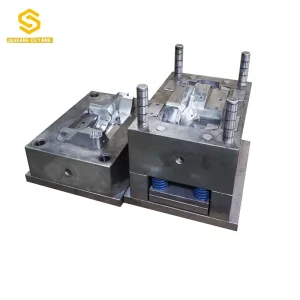
Precision CNC Machining Service & Aluminium Die Casting Tooling Mold
View Product Details
Customized MIM Powder Metallurgy Power Mechanical Components
View Product Details
MIM Sintering Metal Parts for SS304/SS316 Stainless Steel Components
View Product Details
Metal Injection Moulding Powders (MIM) Gas and Water Atomized
View Product Details
Wholesale OEM/ODM Custom Plastic & Composite Injection Moulds
View Product Details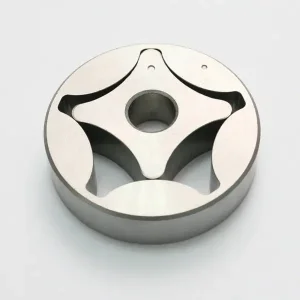
Precision Sintered Powder Metallurgy Oil Pump Rotors & Gears
View Product Details
Custom Wholesale High Precision Aluminum Pressure Die Casting Parts
View Product Details
Custom Made High Strength Aluminum Die Casting Auto Structural Components
View Product Details
Knowledge Base
Frequently Asked Questions by Global Buyers
Addressing engineering, quality assurance, commercial terms, and export logistics inquiries.
What dimensional tolerances can Chinese Aluminum MIM factories achieve?
Standard as-sintered tolerances for Aluminum MIM range from ±0.3% to ±0.5% of nominal dimension (e.g., ±0.03 mm on a 10 mm feature). For critical fitting dimensions, post-sintering secondary CNC sizing or coining operations can tighten tolerances down to ±0.008 mm.
How does thermal conductivity compare between sintered Al-MIM and wrought 6061 aluminum?
Sintered Al-MIM components using 6061 alloy matrix achieve thermal conductivity ratings between 150 and 180 W/m·K (compared to ~166 W/m·K for wrought 6061-T6). Because densities reach over 98%, thermal pathways are nearly identical to forged aluminum, making it ideal for micro thermal heatsinks.
What is the typical tooling lifespan for aluminum injection molding and die casting?
Because MIM feedstock is non-abrasive compared to liquid metal, MIM molds made from hardened tool steel (e.g., H13 or S7) typically last for 500,000 to 1,000,000 shots. High-Pressure Aluminum Die Casting dies, exposed to high thermal fatigue and molten aluminum erosion, generally require re-tooling after 80,000 to 150,000 shots.
What surface treatment options are available for sintered aluminum parts?
Sintered aluminum components accept standard surface treatments, including Type II Clear/Color Anodizing, Type III Hardcoat Anodizing, Electroless Nickel Plating, Powder Coating, and Micro-Arc Oxidation (MAO), providing superior corrosion protection and salt-spray resistance (>500 hours).
What minimum order quantities (MOQ) and sample lead times apply?
Standard MOQs start at 2,000 pieces for MIM parts and die-cast components. Tooling and prototype T1 samples are typically delivered within 25–35 calendar days following DFM approval, with mass production runs taking 2–3 weeks.
How do Chinese factories handle IP protection and non-disclosure agreements (NDAs)?
Established Chinese suppliers routinely sign legally binding bilingual Non-Disclosure Agreements (NDAs) under Chinese law (governed by courts in Ningbo, Shanghai, or Shenzhen) before reviewing CAD models. Proprietary project files are secured via isolated internal CAD servers with strict role-based access control.
Accelerate Your Project with China's Premier Light-Alloy Experts
Submit your STEP/IGES 3D models and 2D engineering drawings today. Receive a detailed DFM manufacturability analysis and an itemized quotation within 48 hours.
Request DFM Review & Quotation