
State-of-the-Art Precision Powder Metallurgy Solutions
Welcome to the definitive industry resource for China Aluminum Metal Injection Molding (AluMIM) engineering and advanced component fabrication. As global OEM supply chains pivot toward ultra-lightweight materials, micro-component consolidation, and zero-machining sustainability, Chinese manufacturing facilities lead the market through advanced powder formulation, atmospheric vacuum sintering, and proprietary binder extraction technologies.
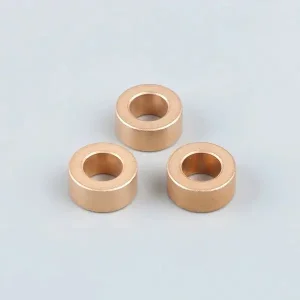
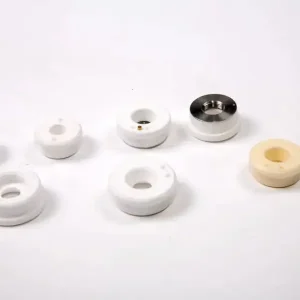
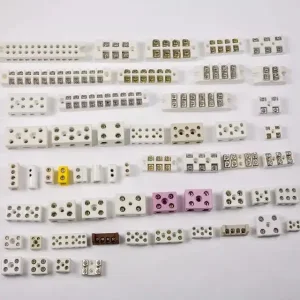
Below is a curated selection of our premier OEM manufacturing capabilities, encompassing precision sintered sleeve bearings, custom die castings, laser-processed ceramics, structural stainless steel components, and high-performance locking mechanisms.





The Metallurgy of Aluminum Metal Injection Molding (AluMIM)
While Metal Injection Molding (MIM) has historically been dominated by iron-nickel alloys, 17-4PH, and 316L stainless steel, the implementation of Aluminum Metal Injection Molding (AluMIM) represents a quantum leap in lightweight structural manufacturing. Engineered for applications where density reduction (approaching 2.7 g/cm³) must coexist with high specific strength and thermal management, AluMIM overcomes long-standing thermodynamic barriers through state-of-the-art chemical engineering.
Oxide Barrier Breakdown
Aluminum's extreme affinity for oxygen generates a tenacious, self-passivating alumina ($Al_2O_3$) film (2–5 nm thick) around each micro-powder particle. Chinese metallurgical facilities utilize specialized oxygen-getter additives (e.g., Magnesium, Titanium, and rare-earth dopants) combined with ultra-high purity Nitrogen or vacuum sintering atmospheres to disrupt the oxide layer and promote atomic necking.
Liquid-Phase Sintering (LPS)
Unlike stainless steel sintering which predominantly relies on solid-state diffusion, AluMIM relies on precisely calibrated Liquid-Phase Sintering (LPS). By formulating pre-alloyed or elemental powder blends with eutectic constituents (such as Al-Si, Al-Cu, or Al-Zn-Mg), a transient liquid phase forms at sintering temperatures (550°C to 620°C), accelerating mass transport and achieving structural densities exceeding 98% of theoretical maximum.
Custom Binder Chemistry
Polymer binder systems must burn off cleanly without leaving residual carbon, which forms brittle Aluminum Carbide ($Al_4C_3$) and severely degrades corrosion resistance and mechanical ductility. Advanced multi-component binder systems (PEG-POM or wax-EVA blends) enable low-temperature solvent debinding followed by catalytic thermal decomposition under inert atmospheres.
Process Comparison: AluMIM vs. Alternative Manufacturing Routes
Selecting the appropriate net-shape process requires balancing component complexity, mechanical performance, thermal requirements, and production volume. The comparison matrix below highlights why leading OEMs contract China-based factories for complex aluminum geometry.
| Performance / Feature Parameter | Aluminum MIM (AluMIM) | High-Pressure Die Casting (HPDC) | 5-Axis CNC Machining | Stainless Steel MIM (17-4PH) |
|---|---|---|---|---|
| Density & Mass Efficiency | Low (~2.7 g/cm³) — Ultra-lightweight | Low (~2.7 g/cm³) — Trapped porosity | Low (~2.7 g/cm³) — Material waste high | High (~7.8 g/cm³) — Heavy structural |
| Complex Geometry Capability | Extreme (Internal threads, undercuts) | Moderate (Draft angles mandatory) | High (Tool access restricted) | Extreme (Complex micro-features) |
| Wall Thickness (Min. Feature) | 0.5 mm – 3.0 mm (Thin-wall optimized) | 1.5 mm – 5.0 mm | 0.8 mm – No micro-cavities | 0.4 mm – 2.5 mm |
| Thermal Conductivity | 150 - 180 W/m·K (High purity) | 90 - 120 W/m·K (Alloyed impurities) | 160 - 200 W/m·K (Wrought stock) | 15 - 25 W/m·K (Low conductor) |
| As-Sintered Dimensional Tolerance | ±0.3% to ±0.5% | ±0.5% to ±0.8% | ±0.005 mm (Ultra-precise) | ±0.3% to ±0.5% |
| High-Volume Break-Even Point | 5,000 to 1,000,000+ units | 10,000+ units (High tooling cost) | Low volume only (<1,000 units) | 5,000 to 1,000,000+ units |
Global Industrial Applications & Market Dynamics
The global demand for China-manufactured Aluminum MIM components is expanding rapidly across multi-billion dollar technology sectors. By eliminating post-machining scrap rates and reducing overall system mass, OEM engineers utilize AluMIM in critical sub-assemblies:
Automotive Electrification (EVs)
With Electric Vehicle architectures requiring aggressive mass reduction to maximize battery range, AluMIM is deployed in cooling plates, power inverter heat exchangers, lightweight sensor housings, and electronic power steering (EPS) control arms. The process allows micro-channel fluid passages to be molded directly into thermal management plates without secondary drilling.
Aerospace & Avionics
Weight reduction directly correlates with fuel economy and payload capacity in aerospace platforms. AluMIM delivers critical structural bracketry, optical sensor mounts, payload chassis components, and drone (UAV) gimbal hardware that withstand vibration loads while offering weight reductions up to 65% compared to steel alternatives.
5G & Telecommunications
Modern 5G infrastructure relies on micro millimeter-wave transceivers, active antenna units (AAUs), and high-efficiency heat sinks. AluMIM enables the fabrication of intricate pin-fin thermal sinks featuring high surface-area-to-volume ratios that are physically unmachinable via conventional CNC milling or standard casting dies.
Biomedical & Wearable Tech
From ergonomic surgical device handles to consumer smart ring frames, smartwatches, and AR/VR headset structures, AluMIM provides a bio-compatible, lightweight skin-contact substrate that accepts anodic oxidation, PVD deposition, and micro-bead blasting cosmetic finishes.
DFM Guidelines & Technical Alloy Roadmap (2026–2030)
Successful manufacturing of custom aluminum injection molded components relies heavily on rigorous Design for Manufacturability (DFM) collaboration between global OEM design teams and local Chinese factory engineers.
Design for Manufacturability (DFM) Standard Rules
- Uniform Wall Thickness: Maintain consistent wall dimensions between 1.0 mm and 3.0 mm to prevent sink marks, differential thermal contraction, and warping during debinding and sintering.
- Volumetric Shrinkage Factor: Account for high linear sintering shrinkage (typically 12% to 18%) through 3D CAD scaling, mold cavity sizing, and finite element thermal simulation.
- Draft Angles & Radius Optimization: Incorporate 0.5° to 1.0° draft angles on deep vertical cores. Provide internal fillet radii of minimum 0.5 mm to minimize stress concentration points during ejection.
- Gate Location & De-gating Strategy: Position injection gates on non-functional, non-cosmetic surfaces to allow clean automated shearing without residual gate stubs.
AluMIM Advanced Material Formulations
- 6061-Equivalent Sintered Alloy: Al-Mg-Si composition offering excellent structural strength, heat treatability (T4/T6 temper), high ductility, and corrosion resistance. Ideal for automotive brackets and consumer electronics.
- 7075-Equivalent High-Strength Alloy: Al-Zn-Mg-Cu matrix yielding tensile strengths exceeding 450 MPa post-heat treatment. Used in aerospace latches, military hardware, and sports equipment.
- Al-Si Eutectic Thermal Formulations: High-silicon alloys (12% to 17% Si) tailored for ultra-low Coefficient of Thermal Expansion (CTE) and maximum thermal dissipation in electronic packaging.
- Scandium & Zirconium Micro-Alloys: Next-generation powder additions that refine grain structures, elevate recrystallization temperatures, and prevent hot-cracking during liquid-phase sintering.
Quality Management System & Macro Industry Turnkey Solutions
Leading Chinese manufacturing hubs in Zhejiang, Guangdong, and Jiangsu operate under international quality standard frameworks including ISO 9001:2015 and IATF 16949:2016. Factory workflows integrate raw material gas atomization testing, inline debinding mass monitoring, computerized furnace atmosphere control, and 100% automated optical inspection (AOI).
1. Gas Atomization & Powder Characterization
Super-fine spherical powders (D50 ranging from 10 to 25 microns) are atomized under inert Argon atmospheres to prevent oxidation prior to compounding. Hall flow rates, tap density, and particle size distribution are verified via laser diffraction analyzers.
2. Precision Mold Tooling & Multi-Cavity Execution
CNC EDM wire-cutting and high-speed CNC milling guarantee mold cavity tolerances within ±0.005 mm. Multi-cavity hot runner molds facilitate mass production outputs exceeding 50,000 components per day per press.
3. Vacuum Continuous Sintering Line
Continuous mesh-belt furnaces equipped with dew-point controllers and multi-zone heating ensure reproducible thermal profiles (±1°C uniformity), driving consistent density across entire production batches.
4. Surface Finishing & Anodization
As-sintered components undergo automated centrifugal tumbling, shot blasting, precision CNC coining/sizing, Type II/III hard anodizing, micro-bead blasting, or electroless nickel plating for superior surface protection.
Featured China Powder Metallurgy & Die Casting Portfolio
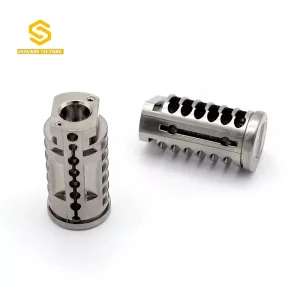
Explore our secondary collection of custom engineered components, highlighting our comprehensive capability across sintered timing gear rings, automotive die-cast assemblies, surgical MIM hardware, and OEM powder metallurgy spare parts.







Frequently Asked Questions (FAQ) — Aluminum MIM Engineering
Aluminum forms an extremely stable passivation oxide film ($Al_2O_3$) on particle surfaces that resists reduction at standard sintering temperatures. Furthermore, aluminum alloys have a narrow thermal processing window (often within ±5°C of their solidus/liquidus line) during Liquid-Phase Sintering. Chinese manufacturing facilities master this by utilizing precise oxygen-getter atmosphere controls, specialized dew-point regulation, and custom pre-alloyed powder formulations.
With modern vacuum-assisted liquid phase sintering and optimized particle packing ratios, sintered relative densities typically reach 97.5% to 99.2% of theoretical density (~2.67 to 2.72 g/cm³ depending on the alloy system). This yields mechanical properties comparable to wrought 6061-T6 aluminum.
Yes. Because density exceeds 98% and residual interconnected surface porosity is minimized, AluMIM parts accept standard Type II color anodizing, Type III hard anodizing, micro-arc oxidation (MAO), and physical vapor deposition (PVD) coatings.
Standard tooling fabrication for multi-cavity injection molds ranges from 25 to 35 business days. T1 initial sample parts (including DFM verification, dimensional CMM inspection reports, and material certs) are delivered within 7 to 10 days following tooling completion.
For production runs exceeding 5,000 units, AluMIM routinely delivers unit cost savings between 40% and 75% compared to 5-axis CNC machining. CNC machining incurs high tool wear, lengthy cycle times, and up to 80% raw material scrap. AluMIM is a near-net-shape process with over 95% material utilization.