
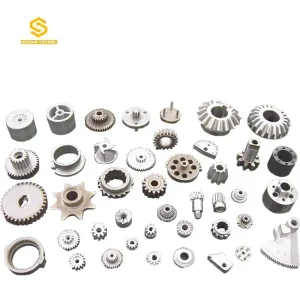
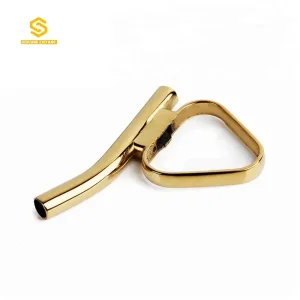
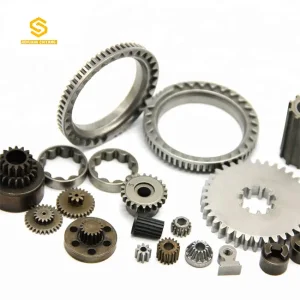
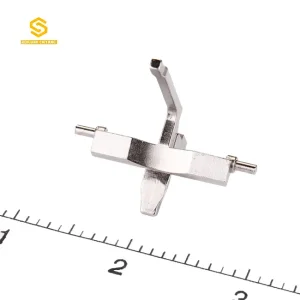
Examine our certified product range manufactured via Metal Injection Molding (MIM), powder metallurgy sintering, and precision CNC finishing, tailored for global OEM/ODM procurement standards.
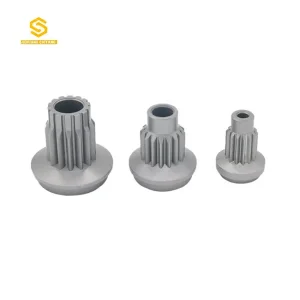
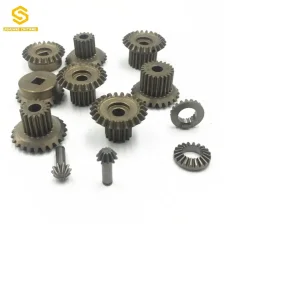
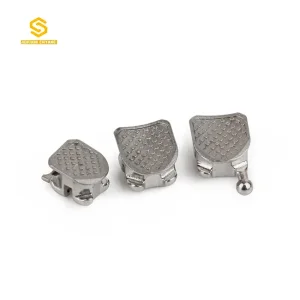
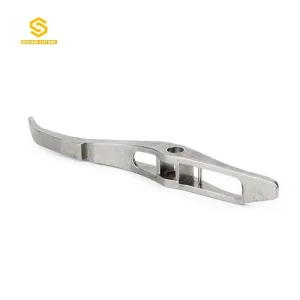
Metal Injection Molding (MIM) has fundamentally transformed the manufacturing paradigm for orthodontic brackets, specifically the widely adopted Roth Prescription System. Achieving consistent torque, angulation, and slot integrity requires unprecedented metallurgical control at the sub-millimeter scale.
Slot Dimension Precision (.018" & .022")
The core advantage of China MIM suppliers lies in achieving slot dimensional tolerances within ±0.008 mm (±8 microns). Traditional CNC micro-milling or multi-piece soldering introduces accumulated tolerances. MIM produces a single-body solid structure with zero-torque loss during archwire engagement.
17-4PH & Nickel-Free Stainless Steel
Medical-grade 17-4PH (UNS S17400) precipitation-hardening stainless steel provides ultimate tensile strength exceeding 1,150 MPa after H900 heat treatment. For patients with nickel sensitivity, leading Chinese factories synthesize Cobalt-Chromium (Co-Cr) and Bio-Titanium (Ti-6Al-4V) MIM formulations.
80-Mesh Gauge Dovetail Base Design
MIM allows complex undercuts on the bracket base that are impossible via conventional machining. Integrated 80-mesh micro-etched dovetail retention grooves maximize shear bond strength (SBS > 12 MPa), preventing premature debonding during clinical orthodontic procedures.
Information Gain Insights: Sintering Kinetics & Volumetric Shrinkage Calibration
A critical challenge in manufacturing Roth MIM brackets is managing the uniform 15% to 20% volumetric shrinkage during the high-temperature debinding and sintering phase. Advanced Chinese MIM factories utilize multi-physics finite element analysis (FEA) software—such as Moldex3D—to model powder-binder separation, thermal expansion differentials, and gravity-induced distortion. By customizing ceramic setters and optimizing catalytic debinding with HNO3 gas phase catalysts, dimensional deviation across a 64-cavity mold is held strictly within ISO 2768-mK limits.
Global medical device brands and tier-1 industrial buyers rely on China's integrated supply chain ecosystem. Industrial clusters in Ningbo and Eastern China combine raw material atomization, mold fabrication, vacuum sintering, and surface treatment within a 50-kilometer radius.
Catalytic nitric acid debinding lines operate continuously, reducing processing time from 48 hours (solvent method) to under 4 hours with 99.8% binder extraction efficiency.
Continuous walking-beam vacuum furnaces equipped with partial pressure hydrogen (H2) and argon (Ar) atmosphere control prevent grain boundary oxidation.
100% Automated Optical Inspection (AOI) with AI machine vision scanning checks key dimensions, flash, burrs, and tie-wing integrity at 120 parts per minute.
| Manufacturing Attribute | Metal Injection Molding (MIM) | 5-Axis CNC Micro-Milling | Micro Investment Casting | Metal 3D Printing (SLM/DMLS) |
|---|---|---|---|---|
| Min. Wall Thickness | 0.20 mm | 0.50 mm | 1.00 mm | 0.35 mm |
| Dimensional Tolerance | ±0.3% to ±0.5% (±0.008 mm) | ±0.005 mm | ±0.8% to ±1.2% | ±0.10 mm |
| Surface Roughness (As-Sintered) | Ra 1.0 – 1.6 µm (Polished Ra 0.2) | Ra 0.8 µm | Ra 3.2 – 6.3 µm | Ra 6.3 – 12.5 µm |
| Material Density | 96% – 99.5% | 100% | 92% – 95% | 97% – 99% |
| Unit Cost (Volume >50k pcs) | Ultra Low (Optimal) | Extremely High | Moderate | High |
| Geometric Complexity | Unlimited (3D Undercuts/Slots) | Tool Reach Limited | Moderate | Very High |
While Roth MIM brackets represent the pinnacle of micro-medical MIM engineering, top-tier Chinese factories utilize identical precision sintering infrastructure to solve complex component challenges across critical industries.
Orthodontic & Surgical MIM
Roth/MBT brackets, self-ligating slide clips, endoscopic surgical jaws, harmonic scalpel housings, and orthopedic implant fixation components certified to ISO 13485 standards.
Powder Metal Actuators
Turbocharger wastegate vanes, variable valve timing (VVT) rotors, seat recliner gears, and ABS sensor brackets engineered under IATF 16949 automotive quality management.
Foldable Phone Hinges
Ultra-high-strength steel (MIM 4605 / 4140) micro-gears, camera module brackets, and smartwatch structural chassis requiring sub-millimeter geometry and cosmetic PVD coatings.
Fluid Control & Hardware
Stainless steel mini ball valve bodies, hydraulic spool valves, cable drag chain links, and impact-resistant power tool gearboxes with tailored surface hardness (up to 60 HRC).
Engineering excellence must be backed by transparent documentation and strict compliance frameworks to ensure seamless cross-border customs clearance and regulatory approvals.
Full Regulatory Traceability
Every shipment is furnished with full material certificates (EN 10204 3.1), raw powder lot analysis, CMM dimensional reports, and salt-spray corrosion test documentation. Material compositions comply strictly with EU RoHS, REACH, and FDA medical device material guidelines.
Local Technical Support
Direct access to senior metallurgists and DFM engineers in English and German. Initial DFM reports and 3D mold-flow simulations are provided within 48 hours of drawing submission.
Intellectual Property & NDA Protection
Strict IP protection protocol enforced through legally binding bilateral NDAs. Production files are segmented on secure internal servers with encrypted CAD/CAM workflows.
The technological horizon for Chinese MIM manufacturers expands beyond standard stainless steels into advanced ceramic formulations, binder jetting hybrids, and micro-MIM architectures.
Ceramic Injection Molding (CIM)
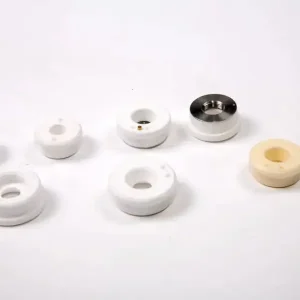
Development of translucent Zirconia (ZrO2) and High-Purity Alumina (Al2O3) ceramic Roth brackets. Combines zero stain absorption, tooth-colored aesthetics, and Vickers hardness exceeding 1,200 HV.
Titanium Micro MIM (TiMIM)
Overcoming oxygen pick-up challenges during Ti-6Al-4V sintering. Achieving oxygen content below 0.15% to meet ASTM F2885 standards for implantable medical components and ultra-lightweight aerospace brackets.
Binder Jetting Hybrid Workflows
Combining 3D Binder Jetting for rapid tooling-free prototyping with production MIM debinding and sintering furnaces—slashing development lead times for custom orthodontic appliances from 30 days to 5 days.
Explore the remaining selection of high-precision sintered components, non-standard custom hardware, and CNC machined OEM assemblies.
Addressing essential technical considerations for procurement officers, biomedical engineers, and supply chain directors seeking OEM MIM suppliers in China.