High-Precision OEM Components & Filter Elements
Explore our primary manufacturing catalog featuring powder metallurgy sintered components, aluminum/zinc die castings, and high-durability bronze filter solutions engineered for rigorous industrial performance.






Sintered Porous Bronze Filter Element Engineering
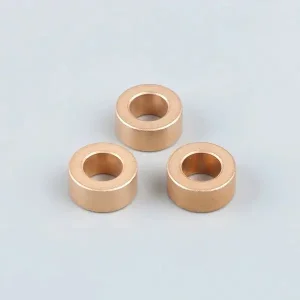
Sintered porous bronze filter elements represent a pinnacle of powder metallurgy technology, combining high mechanical strength, controlled interconnected porosity, and precise thermal conductivity for advanced fluid and gas filtration systems.
CuSn10 Alloy Metallurgy
Fabricated predominantly from spherical bronze powder (typically 89% Copper, 11% Tin alloy CuSn10 or CuSn8), our filter elements leverage solid-state diffusion bonding at temperatures between 750°C and 820°C under protective reducing atmospheres. This yields rigid, self-supporting metal structures with zero internal binder residues.
Controlled Porosity Matrix
By controlling raw powder particle size distribution (ranging from 45µm to 800µm), our factory achieves precisely defined void volumes from 20% up to 50%. Pore ratings range from 0.5 microns to 100 microns, offering predictable flow coefficients and ultra-low pressure drops across gaseous and liquid media.
Structural & Thermal Resilience
Unlike mesh screens or paper filters, sintered porous bronze elements withstand differential pressures up to 50 bar and operational temperatures from cryogenic -200°C up to +200°C. They demonstrate superior corrosion resistance against water, synthetic lubricants, standard hydraulic oils, and neutral industrial gases.
Porosity Grade & Flow Characteristics Matrix
| Filter Grade | Nominal Rating (µm) | Spherical Powder Mesh Size | Permeability Coefficient ($k / 10^{-12} m^2$) | Typical Application Scenario |
|---|---|---|---|---|
| JHM-B05 | 0.5 – 3.0 | -325 Mesh (<45 µm) | 0.85 | Analytical Instrument Protection, Micro Gas Diffusion |
| JHM-B10 | 5.0 – 10.0 | +325 / -200 Mesh (45-75 µm) | 3.40 | Pneumatic Logic Controls, Fine Oil Mist Separation |
| JHM-B25 | 15.0 – 25.0 | +200 / -140 Mesh (75-106 µm) | 12.80 | Hydraulic Circuit Protection, Air Line Mufflers |
| JHM-B50 | 40.0 – 50.0 | +140 / -100 Mesh (106-150 µm) | 45.00 | Coarse Fluid Filtration, Flame Arrestor Elements |
| JHM-B100 | 80.0 – 100.0 | +100 / -60 Mesh (150-250 µm) | 110.00 | High Flow Silencers, Bulk Granule Retention Plugs |
Global Commercial & Industrial Market Landscape
Demands for industrial automation, acoustic safety regulations (OSHA), clean energy gas treatment, and high-efficiency hydraulic systems are driving rapid growth in the global sintered porous metal component market.
Automotive & Heavy Equipment Shift
Global OEMs are replacing conventional polymer and paper filters with washable, infinitely reusable sintered bronze cartridges. The transition is accelerated by stringent zero-waste goals and extended equipment lifespan requirements in commercial trucks, agricultural machinery, and off-highway mining rigs.
OSHA Pneumatic Noise Regulations
Industrial health standards dictate maximum workplace noise levels (85 dBA ceiling). Sintered bronze pneumatic mufflers attenuate high-velocity exhaust air expansion noise by up to 35 dBA without causing excessive backpressure that degrades pneumatic cylinder cycle speeds.
Microscopic Process & Manufacturing Roadmap
From raw powder atomization to multi-layer gradient sintering, our Ningbo manufacturing facility pushes the boundaries of metallurgical consistency, pore distribution fidelity, and custom geometric complexity.
Centrifugal Atomization
Ultra-pure virgin copper and tin alloys are melted in induction furnaces and atomized via high-speed centrifugal discs or inert gas streams to create perfectly spherical granules with tight mesh tolerances.
Gravity & Press Moulding
Powder is vibratory-filled into high-precision CNC tooling molds (Gravity Sintering) or cold pressed under low tonnage (Compaction Sintering) to establish green density prior to thermal processing.
Atmospheric Sintering
Green bodies travel through mesh-belt continuous furnaces under dissociated ammonia ($NH_3$) or hydrogen reducing gas. Solid-state atomic necking bonds adjacent spheres without deformation.
Gradient & Hybrid Tech
Future-ready manufacturing incorporates dual-layer powder layering (asymmetrical porosity) and metal powder 3D printing hybridization for complex internal manifold integration.
Localized Application Scenarios & OEM Use Cases
Sintered bronze elements excel in punishing environments across heavy manufacturing, industrial fluid dynamics, medical instrumentation, and explosive gas containment.
Pneumatic Silencers & Exhaust Mufflers
Installed directly on solenoid valve exhaust ports, air cylinders, and pneumatic tools. They diffuse escaping compressed air evenly, reducing high-frequency hiss from 105 dBA down to safe 72 dBA levels while trapping internal oil mist.
Flame Arrestors & Venting Plugs
Utilized in petrochemical tanks, gas meters, and mining electronics. The high thermal mass of bronze rapidly cools travelling flame fronts below ignition thresholds, preventing catastrophic explosions (EN 12874 compliance).
Sensor Protection & Gas Sampling
Encapsulates environmental, humidity, and explosive gas sensors. Provides immediate atmospheric gas diffusion while shielding sensitive electronic elements from dust, water droplets, and mechanical impacts.
Hydraulic Valve Proportional Filtration
Positioned upstream of high-precision servo valves. Filters out debris generated during pump wear, preventing valve spool seizure and safeguarding multi-million dollar plastic injection or metal stamping machinery.
Powder Fluidization & Aeration Beds
Used in bulk powder handling, hopper discharge cones, and fluidizing silos. Low pressure air passing through uniform porous bronze sheets aerates dry powders (e.g., flour, cement, resins), ensuring smooth gravity flow.
Automotive Crankcase Breather Plugs
Fitted into engine valve covers and differential gearboxes. Allows internal pressure equalization caused by thermal expansion while preventing road splash contamination and capturing oil vapor aerosol droplets.
China Factory Supply Chain Resilience & Efficiency
Located in the Yangtze River Delta industrial hub (Ningbo, Zhejiang), Ningbo Jiehuang Chiyang Electronic Tech Co., Ltd. provides global B2B buyers with unprecedented supply stability, rapid tooling turnarounds, and cost competitiveness.
Vertical Powder-to-Part Integration
Our facility houses complete raw powder blending, high-precision tooling design, sintering furnace lines, secondary CNC machining, and automated quality testing under one 28,000 m² roof. This vertical integration eliminates subcontractor delays and guarantees lot-to-lot alloy repeatability.
Rapid Tooling & DFM Efficiency
With an in-house toolroom equipped with high-speed CNC centers and Wire EDM, custom bronze filter molds are finalized within 12 to 18 days. Every inquiry undergoes complimentary Design for Manufacturability (DFM) review within 48 hours to minimize material waste.
Testing Protocols & Compliance Standards
Quality assurance is embedded in every stage of our IATF 16949 and ISO 9001 certified workflow. We verify every batch using rigorous physical and non-destructive testing.
Bubble Point Test (ISO 4003)
Measures the pressure at which the first bubble emerges from an immersed porous element, accurately defining the maximum pore size ($d_{max}$).
Fluid Permeability (ISO 4022)
Determines air and liquid flow rates across standardized pressure differentials ($\Delta P$) to ensure exact system flow matching.
Compressive Strength (ASTM B925)
Verifies crushing resistance and structural integrity under heavy axial and radial mechanical loads.
RoHS & REACH Compliant
Raw bronze materials strictly adhere to international environmental standards, free from hazardous heavy metal impurities.
Frequently Asked Engineering Questions
Find clear technical answers regarding sintered bronze filter customization, maintenance, flow calculations, and ordering logistics.
How are sintered bronze filter elements cleaned for reuse?
Sintered bronze filters can be cleaned using reverse ultrasonic fluid bath agitation, high-pressure backwashing with clean solvent/gas, or chemical solvent degreasing. Because the metallic matrix is thermally bonded, it resists repeated cleaning cycles without structural pore breakdown.
What geometry limitations exist for gravity-sintered bronze parts?
Gravity-sintered bronze components can be molded into cylinders, conical caps, flat discs, threaded nipples, and complex cup shapes. Wall thickness should ideally remain above 1.5mm to maintain structural integrity during demolding and sintering. Threads can be directly molded or post-machined on CNC lathes.
How does CuSn10 bronze compare to porous 316L stainless steel?
CuSn10 sintered bronze offers significantly higher thermal conductivity, superior natural anti-galling properties when contacting mating metal threads, and lower raw material tooling costs. Porous 316L stainless steel is selected when extreme acid/alkali chemical resistance or operating temperatures above 400°C are required.
Can you customize pore size distribution for specific fluid viscosities?
Yes. By blending specific spherical powder fraction sizes (+200/-140 mesh, etc.), our metallurgists tailor pore size distribution curves. This optimizes flow permeability ($k$) specifically for heavy gear oils, light hydraulic fluids, compressed gases, or refrigerants.
What is your typical production lead time and Minimum Order Quantity (MOQ)?
Standard tooling setup and sample delivery takes 20 to 30 days. Batch production ranges from 15 to 25 days depending on order volume. Standard MOQ for custom sintered filter elements is 2,000 pieces, while standard pneumatic silencer catalog items can accommodate lower trial quantities.
Additional OEM Precision Components & Materials
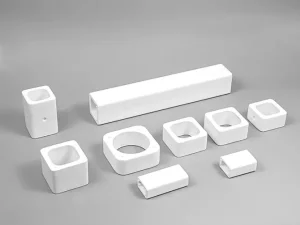
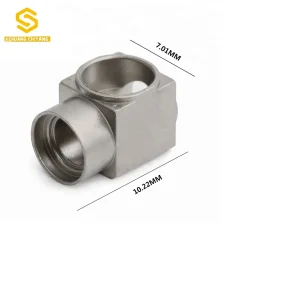
Discover our complementary powder metallurgy bearings, ceramic injection molded components, metal injection molding (MIM) assemblies, and zinc/aluminum alloy die castings.