
Featured CNC & Conversion Components
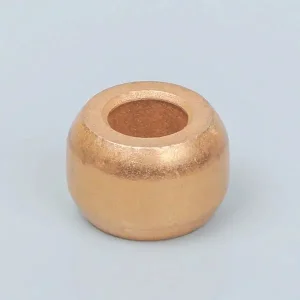
Precision metal components converted from subtractive CNC milling/turning to high-density sintered powder metallurgy and die casting.






Executive Summary: The Financial & Technical Imperative of CNC-to-PM Conversion
In high-volume precision metal manufacturing, relying solely on multi-axis CNC milling, turning, and grinding poses substantial unit-cost penalties. While CNC machining excels at low-volume rapid prototyping and ultra-tight tolerance calibration (e.g., ±0.002 mm), its fundamental limitation lies in chip removal inefficiency—often wasting up to 70% of raw bar stock as scrap while consuming extensive machine tool hours.
By transitioning complex structural parts from multi-axis CNC machining to net-shape Powder Metallurgy (PM) or Metal Injection Molding (MIM), global OEMs unlock significant manufacturing advantages. Sintered PM processes deliver a material utilization rate exceeding 95%, dramatically reduce energy consumption per part, and eliminate multi-setup machining bottlenecks.
Subtractive CNC Cost Drivers
- High Scrap Ratio: Up to 60%–80% of premium stainless steel, titanium, or alloy steel is machined away into swarf.
- Machine Cycle Dependency: Unit costs scale linearly with production volume due to fixed spindle-hour expenses.
- Tooling Wear: Frequent tool degradation when cutting tough alloys like 17-4PH or Inconel increases maintenance overhead.
- Deburring & Secondary Setup: Complex multi-sided geometries require expensive 5-axis indexing jigs and manual deburring.
Net-Shape Powder Metallurgy Advantages
- Near-Zero Waste: Powders are compacted directly into mold cavities, utilizing over 95% of raw input material.
- Exponential Amortization: High initial tooling cost is rapidly offset across annual runs exceeding 5,000 to 100,000+ units.
- Consolidated Part Geometry: Multi-piece CNC assemblies can be re-engineered into single, monolithic sintered parts.
- Engineered Porosity & Lubrication: Self-lubricating oil-impregnated bushings and controlled density for acoustic dampening.
CNC-to-PM Engineering Conversion & DFM Guidelines
Successfully transitioning a component from a CNC drawing to a powder metallurgy compaction die or MIM injection mold requires careful Design for Manufacturability (DFM). Powder behavior differs fundamentally from solid bar machining. Our engineering team at Ningbo Jiehuang Chiyang Electronic Tech Co., Ltd. applies strict conversion protocols to guarantee mechanical performance while minimizing unit cost.
1. Press-Direction Draft Angles
Conventional press-and-sinter powder metallurgy requires vertical ejectability from carbide dies. Walls parallel to the pressing direction should incorporate a slight draft (0.5° to 1.0°) to facilitate smooth ejection and prolong tool life.
2. Radius & Corner Chamfers
Avoid knife-edge corners or sharp internal 90° angles, which create stress concentration zones in press tooling. A minimum internal fillet radius of R 0.25 mm to R 0.50 mm improves green compact strength and powder flow.
3. Wall Thickness Uniformity
For Metal Injection Molding (MIM), maintaining uniform cross-sectional wall thickness (ideally 1.0 mm to 4.0 mm) prevents sink marks, voids, and non-uniform shrinkage during solvent/thermal debinding and sintering.
Technical Comparison Matrix: Process Capability & Tolerances
Evaluating process envelope, mechanical density, dimensional tolerances, and cost drivers across manufacturing technologies.
| Engineering Metric | Subtractive CNC Machining | Conventional Press & Sinter PM | Metal Injection Molding (MIM) | Aluminum / Zinc Die Casting |
|---|---|---|---|---|
| Typical As-Sintered Tolerance | ±0.005 mm to ±0.025 mm | ±0.05 mm to ±0.12 mm | ±0.3% to ±0.5% of dimension | ±0.08 mm to ±0.15 mm |
| Material Density (% Theoretical) | 100% Solid Billet | 85% – 92% (Up to 95% re-pressed) | 96% – 99% Near Wrought Density | 90% – 95% (Die porosity controlled) |
| Economic Volume Threshold | 1 to 1,000 units | 5,000 to 1,000,000+ units | 2,000 to 500,000+ units | 2,000 to 500,000+ units |
| Geometric Complexity Limit | Tool access dependent | 2.5D stepped profiles | 3D complex net-shape (undercuts) | Thin-wall housings & cavities |
| Material Scrap Ratio | High (40% – 80% swarf waste) | Ultra-Low (< 3% waste) | Ultra-Low (< 2% regrind runner) | Low (Runners re-melted) |
| Surface Roughness (Ra) | 0.4 μm – 1.6 μm | 1.6 μm – 3.2 μm | 1.0 μm – 2.0 μm | 1.2 μm – 3.2 μm |
Material Conversion Equivalency Framework (MPIF vs. Wrought ASTM Standards)
A major concern for engineering directors converting CNC parts to PM or MIM is material strength equivalency. Modern powder metallurgy utilizes pre-alloyed steel powders, diffusion-alloyed additives, and high-temperature vacuum sintering atmosphere control to yield mechanical properties that match or exceed wrought metals.
| Wrought / CNC Material (ASTM / AISI) | PM Equivalent (MPIF Standard 35) | MIM Equivalent Standard | Tensile Strength (MPa) | Primary Industrial Applications |
|---|---|---|---|---|
| AISI 1045 / Carbon Steel | FC-0208-50 (Copper-Steel) | MIM-1040 / Fe-C | 520 – 680 MPa | Structural brackets, oil pump gears, timing pulleys |
| AISI 4140 / 4340 Alloy Steel | FN-0205-105HT (Ni-Cu Steel) | MIM-4605 Heat Treated | 1,200 – 1,500 MPa | High-torque gears, power tool pinions, lock pawls |
| AISI 316L Stainless Steel | SS-316L-15 / SS-316L-25 | MIM-316L High Density | 520 – 600 MPa | Medical surgical handles, fluid mini ball valves, marine fittings |
| 17-4PH Precipitation Hardened SS | SS-17-4PH-100HT | MIM-17-4PH H900 Condition | 1,150 – 1,350 MPa | Aerospace fasteners, surgical jaws, firearm mechanisms |
| Ti-6Al-4V Titanium Alloy | Custom Spherical Powder PM | TiMIM (Titanium MIM) | 880 – 980 MPa | Biocompatible medical implants, aerospace hinges, premium wearables |
Macro Industry Solutions & OEM Conversion Case Benchmarks
Conversion engineering yields targeted benefits across critical high-tech manufacturing sectors:
Variable Valve Timing (VVT) & Transmission Gears
Original Process: 5-Axis CNC milling from bar stock with hobbing secondary operations.
Converted Process: Multi-level automatic PM press compaction using FN-0205 alloy powder.
Engineering Gain: Reduced unit manufacturing cost by 52%, integrated weight-reduction pockets directly in tooling, achieved Cpk ≥ 1.67 across 500,000 unit annual runs under IATF 16949 audit control.
Laparoscopic Surgical Jaws & Articulating Handles
Original Process: Wire EDM cutting combined with micro-CNC milling.
Converted Process: MIM 17-4PH stainless steel micro-molding.
Engineering Gain: Eliminated 4 discrete setup operations into a single injection cycle. Sintered density reached 98.5%, achieving tensile yield strength matching wrought bar stock with smooth Ra 1.2 μm finish.
Smartwatch Titanium Frames & Folding Phone Hinges
Original Process: Long-cycle CNC aluminum/titanium block milling.
Converted Process: Titanium MIM (TiMIM) with specialized vacuum binder burnout.
Engineering Gain: Yielded ultra-lightweight high-strength structural mechanisms with intricate internal gear teeth and cable channels built directly into net-shape geometry.
Stainless Steel Mini Ball Valve Components
Original Process: Investment casting followed by extensive CNC finishing.
Converted Process: Net-shape MIM 316L stainless steel injection molding.
Engineering Gain: Superior surface finish and corrosion resistance without internal casting porosity defects, cutting leak rates in pressure testing to zero.
China Industry 4.0 Factory Model: Integrated Precision Manufacturing
Operating from our 28,000 square meter facility in Ningbo, High-Tech Zone, Ningbo Jiehuang Chiyang Electronic Tech Co., Ltd. represents the modern wave of Chinese Industry 4.0 smart manufacturing. By unifying the entire powder metallurgy value chain within one facility, we eliminate subcontractor lead-time friction and enforce rigorous quality controls.
1. Tooling & Mold Design
In-house CNC sinker EDM, high-speed CNC milling, and carbide die fitting team delivering tooling turnaround within 25–30 days.
2. Automated Compaction
Fleet of high-precision CNC mechanical and hydraulic compaction presses ranging from 15 tons to 1,000 tons (10,000 kN) pressing force.
3. Atmosphere Sintering
Continuous mesh belt sintering furnaces and high-vacuum debinding/sintering vessels with computer-controlled hydrogen/nitrogen dew point regulation.
Secondary CNC Calibration & Finishing
When specific localized features require tolerances tighter than ±0.01 mm, our secondary CNC machining workshop (5-axis milling, CNC turning, centerless grinding, gear honing) finishes critical mating interfaces with high accuracy.
Metrology & CMM Inspection Lab
Full Quality Control ecosystem equipped with Zeiss Coordinate Measuring Machines (CMM), optical vision measuring systems, Metallographic Density Analyzers, Salt Spray Testing, and X-ray flaw detection equipment.
Global Procurement Strategy: Risk Mitigation & Localized Technical Support
Sourcing engineered metal components from overseas requires robust compliance protocols, intellectual property protection, and predictable logistics. We streamline international procurement for engineering buyers in North America, Europe, Japan, and Southeast Asia.
Strict IP & NDA Protocols
We sign legally binding Non-Disclosure Agreements (NDAs) prior to receiving CAD models (STEP/IGES/PDF). Project data is managed under isolated internal networks.
PPAP Level 3 Documentation
Every conversion project includes full Production Part Approval Process (PPAP) packages: Control Plans, FMEA analysis, Material Certificates, and CMM First Article Inspection (FAI) reports.
Rapid Metal 3D Prototyping
Bridge the gap before committing to hard PM/MIM tooling. Our metal 3D printing (DMLS/SLM) capabilities deliver functional prototypes within 5–7 business days for physical testing.
Sintered Powder Metallurgy & Precision Hardware Catalog
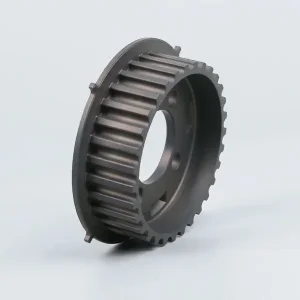
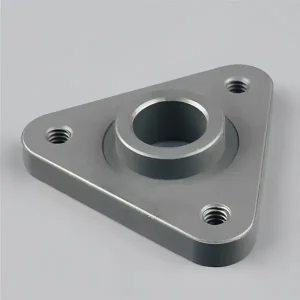
Explore our specialized sintered shaft sleeves, valve parts, spherical metal powders, and MIM assemblies.






CNC to PM Conversion Engineering FAQ
Comprehensive technical answers addressing common engineering, procurement, and design queries during process conversion.
Ready to Optimize Your Manufacturing Costs?
Upload your engineering drawings for a free, zero-obligation DFM conversion analysis and detailed 48-hour quote from our technical engineering team.