
Featured Custom Powder Metallurgy & MIM Products
Explore OEM high-precision sintered components, MIM brackets, and aluminum/zinc die-cast assemblies manufactured in China.







1. Technical Fundamentals of Powder Metallurgy & MIM Engineering
Modern industrial manufacturing relies heavily on component precision, material efficiency, and structural integrity. Custom powder metallurgy (PM) and Metal Injection Molding (MIM) represent the apex of net-shape alloy manufacturing. As a premier China custom powder metallurgy manufacturing manufacturer, Ningbo Jiehuang Chiyang Electronic Tech Co., Ltd. (JHMIM) bridges advanced material science with scalable mass production.
Unlike conventional subtractive CNC machining—which routinely wastes 40% to 70% of raw bar stock as metal chips—powder metallurgy synthesizes complex three-dimensional components through elemental or pre-alloyed metal powder compaction and high-temperature vacuum sintering. This yields net-shape or near-net-shape parts with near-wrought mechanical properties, exceptional surface finishes, and precise dimensional control (ISO IT8 to IT10 standards out of the furnace, and up to IT6 with secondary CNC sizing).
Gas & Water Atomization Powder Tech
Utilizing spherical micro-powders (D50 = 4 µm to 15 µm for MIM, and 45 µm to 150 µm for press-and-sinter PM) synthesized via high-pressure inert gas atomization. Ensures high tap density, superior powder flowability, and consistent green body strength.
Controlled Sintering Kinetics
State-of-the-art continuous mesh belt and high-vacuum batch furnaces operating up to 1380°C under pure Hydrogen (H₂), Nitrogen-Hydrogen (N₂/H₂), or Argon atmospheres to eliminate oxide films and achieve solid-state diffusion bonding.
Metallurgical Density Optimization
By controlling sintering shrink factors (typically 12% to 18% isotropic linear shrinkage in MIM), JHMIM achieves relative sintered densities ranging from 95% to 99.5% of theoretical density, guaranteeing high fatigue resistance and micro-hardness.
JHMIM Manufacturing Capability Matrix
Quantifiable engineering excellence backed by IATF 16949 and ISO 9001 certifications.
2. Strategic Advantages of Partnering with China Custom Powder Metallurgy Manufacturers
Global original equipment manufacturers (OEMs) across Tier-1 automotive, medical device, aerospace, and consumer electronics sectors increasingly source powder metal components from specialized Chinese manufacturers. The Ningbo industrial region, where JHMIM is headquartered, represents one of the world's most concentrated precision metallurgy ecosystems.
End-to-End Supply Chain Integration
From raw metal atomization, binder formulation, and injection molding feedstock compounding to multi-axis CNC tooling fabrication, sintering, and secondary surface plating—China's localized ecosystem eliminates international component lead time bottlenecks.
Rapid Tooling & Prototype Iteration
Utilizing high-speed CNC spark erosion (EDM), wire-cut EDM, and direct metal laser sintering (DMLS/3D printing), JHMIM compresses tooling production timelines down to 20–30 days. Prototype samples can be verified within 7–10 business days.
Cost Efficiency & Total Cost of Ownership (TCO)
China powder metallurgy manufacturers deliver a 30% to 50% cost reduction compared to European or North American suppliers without sacrificing physical property specifications, facilitating massive OEM margin expansion at production scale.
Advanced Multi-Cavity Tooling & Capacity
Capable of engineering complex 16-cavity, 32-cavity, and hot-runner MIM molds equipped with automated hydraulic core-pulling mechanisms to produce high-volume micro-parts at millions of units annually.
3. Emerging Industry Trends & Technological Innovations in PM & MIM
The global powder metallurgy sector is undergoing a profound paradigm shift driven by lightweight materials, electrification, micro-miniaturization, and digital simulation tools. JHMIM actively invests in next-generation processing pathways to maintain market leadership:
- Titanium Metal Injection Molding (TiMIM): Utilizing Ti-6Al-4V and commercially pure Titanium (CP-Ti) powders for ultra-lightweight aerospace hardware, biomedical dental implants, and premium wearable consumer devices. TiMIM combines titanium's extreme corrosion resistance and strength-to-weight ratio with near-net-shape molding versatility.
- Micro-MIM & High-Aspect-Ratio Components: Manufacturing intricate metallic components weighing less than 0.05 grams with wall thicknesses down to 0.2 mm. Critical for minimally invasive surgical articulators, micro-gearheads, and fiber-optic transceiver housings.
- Sinter-Hardening & High-Frequency Induction Heat Treatment: Eliminating post-sintering quench distortion by controlling furnace cooling rates (up to 5°C/second) under atmosphere. Converts austenite directly into martensite, achieving tooth core hardness up to 55–60 HRC in automotive planetary gears.
- AI-Driven Moldflow & Sintering Distortion Simulation: Leveraging Finite Element Analysis (FEA) software (such as Simufact Forming and Moldflow) to predict non-uniform thermal shrinkage, binder debinding stress, and gravity sagging prior to steel cutting, cutting tooling revision costs by 80%.
- Green Hydrogen Sintering & Carbon Neutral Manufacturing: Transitioning continuous furnace atmosphere generators from cracked ammonia to direct green hydrogen, eliminating carbon emissions during high-temperature thermal processing.
4. Comparative Material Selection & Mechanical Property Matrix
Selecting the optimal powder metallurgy alloy or metal injection molding material is essential for structural performance. The table below outlines standard materials processed by JHMIM in compliance with MPIF 35, ASTM, and DIN standards.
| Material Grade | Process Type | Sintered Density (g/cm³) | Tensile Strength (MPa) | Yield Strength (MPa) | Elongation (%) | Hardness | Primary Target Applications |
|---|---|---|---|---|---|---|---|
| MIM 17-4PH (1.4542) | MIM | 7.60 – 7.75 | 1,150 – 1,300 | 1,000 – 1,150 | 4 – 8 | 38 – 44 HRC | Surgical instruments, lock hardware, aerospace hinges |
| MIM 316L (1.4404) | MIM | 7.60 – 7.80 | 520 – 600 | 220 – 280 | 40 – 50 | 150 – 190 HV | Orthodontic brackets, watch band connectors, medical jaws |
| MIM Fe-2Ni / Fe-8Ni | MIM | 7.50 – 7.65 | 750 – 950 | 600 – 800 | 3 – 6 | 25 – 35 HRC | Automotive actuators, power tool levers, SMT connectors |
| FN-0205-80HT (MPIF 35) | Press & Sinter | 6.90 – 7.20 | 650 – 850 | 550 – 700 | < 1.0 | 30 – 40 HRC | High-load timing pulleys, engine sprockets, oil pump rotors |
| FC-0208-50 (MPIF 35) | Press & Sinter | 6.60 – 6.90 | 400 – 550 | 320 – 420 | 1.5 – 3.0 | 65 – 85 HRB | Garden tool accessories, window lock gears, bushings |
| Ti-6Al-4V (Grade 5) | Ti-MIM | 4.42 – 4.48 | 890 – 980 | 820 – 900 | 10 – 15 | 32 – 36 HRC | Medical implants, lightweight surgical scalpel frames |
| A380 / ADC12 | Die Casting | 2.72 – 2.75 | 310 – 330 | 160 – 180 | 2.5 – 3.5 | 75 – 85 HBW | LED light housings, automotive structural housings |
5. Specialized Application Scenarios & Engineering Case Studies
Custom powder metallurgy and MIM manufacturing serve critical roles across highly demanding industrial segments:
Automotive Powertrain & VVT Systems
Variable Valve Timing (VVT) rotors, vanes, oil pump gear sets, and turbocharger wastegate actuators demand extreme wear resistance and thermal stability. JHMIM processes copper-steels and nickel-steels with precision sizing dies to maintain tooth-to-tooth pitch error below 12 microns.
Medical Instruments & Dental Orthodontics
Orthodontic brackets require micro-features, smooth wire slots, and biocompatibility. Utilizing MIM 316L and 17-4PH stainless steels, JHMIM produces multi-ligature brackets with complex undercut channels, eliminating manual milling entirely.
Consumer Electronics & Smart Devices
Complex smartwatch band connectors, foldable smartphone hinges, and laptop cam mechanisms require high cosmetic appeal and tight mechanical alignment. MIM processes allow post-sinter PVD coatings, mirror polishing, and electrical grounding integration.
Industrial Power Tools & Lawn Equipment
Planetary gearboxes, bevel gears, and ratchet pawls in cordless drills and garden accessories withstand shock loads. Sinter-hardened PM alloys deliver high fatigue limits at lower unit costs compared to hobbed gear blanks.
6. Global OEM Procurement, Quality Assurance & DFM Framework
Procuring custom engineered metal parts across international borders requires rigorous vendor audit protocols and transparent quality control measures. JHMIM implements an advanced Quality Assurance Framework aligned with APQP and PPAP Level 3 requirements:
JHMIM Quality Control & Inspection Suite
Every batch undergo complete metallurgical and dimensional validation before release:
- CMM & Optical Coordinate Measuring: Zeiss 3D CMM and OGP video measuring machines verify 100% of critical dimensions specified in 2D engineering drawings.
- X-Ray Computed Tomography (CT) & Flaw Detection: Non-destructive testing scans internal density distribution and verifies zero internal voiding or debinding cracks.
- Metallographic Structure & Micro-Hardness Analysis: Polished sample cross-sections are etched to audit grain size, carbide distribution, micro-hardness profiles, and case depth.
- Salt Spray & Corrosion Resistance Testing: ASTM B117 salt spray chambers evaluate passivated 316L/17-4PH components to guarantee 48–96+ hours of zero red rust formation.
Design for Manufacturability (DFM) Guidelines for Buyers
To optimize unit cost and manufacturing yield when submitting RFQs for custom powder metallurgy or MIM parts, global buyers should observe key design principles:
- Maintain Uniform Wall Thickness: Rapid transitions in wall section induce differential thermal shrinkage, leading to sink marks or warping. Maintain ratios within 1:1.5 whenever possible.
- Leverage MIM Undercut & Thread Capabilities: External threads, knurling, logos, and internal blind holes can be directly molded, eliminating expensive secondary lathe turning.
- Incorporate Draft Angles: A minor draft angle (0.5° to 1.0°) facilitates smooth ejection from injection or compaction molds, extending mold tool life beyond 500,000 shots.
- Define Sizing & Coining Requirements: Specify wide open tolerances (±0.3% to ±0.5%) for non-critical features, reserving tight tolerances (±0.02 mm) for critical fitment locations subject to secondary coining or CNC grinding.
Precision Die Casting & Machined Metal Solutions
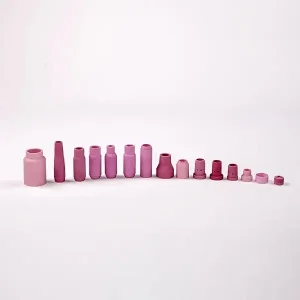
Explore our complementary precision manufacturing capabilities including CNC machining, zinc/aluminum die casting, and specialized ceramic strip modules.



7. Technical FAQ: Frequently Asked Procurement & Engineering Questions
In-depth answers from JHMIM senior metallurgical engineers regarding custom powder metallurgy manufacturing.
What is the fundamental difference between standard Powder Metallurgy (PM) and Metal Injection Molding (MIM)?
Standard PM uses coarse powders compacted uniaxially in rigid steel dies, making it best suited for 2.5D geometries like gears, bushings, and pulleys with uniform cross-sections. MIM combines fine metal powders with a polymer binder to form an injectable feedstock, allowing complex 3D shapes with undercuts, cross-holes, and thin walls similar to plastic injection molding.
What standard tolerances can be achieved directly out of the sintering furnace?
Directly out of the sintering furnace, MIM parts achieve standard tolerances of ±0.3% to ±0.5% of nominal dimension (e.g., ±0.03 mm on a 10 mm feature). Press-and-sinter PM components typically hold ±0.1% to ±0.3% along the press direction. For tighter requirements, secondary CNC sizing, coining, or CNC grinding achieves tolerances down to ±0.005 mm (IT6).
How does JHMIM ensure confidential IP protection when signing non-disclosure agreements (NDAs)?
We execute standard bi-lateral NDAs prior to reviewing customer CAD models or STEP files. All project data is stored on encrypted local servers with restricted, role-based access. Physical molds are assigned internal tracking codes to protect customer product identity on the shop floor.
What is the typical Minimum Order Quantity (MOQ) and tooling lead time?
Standard production MOQ is 2,000 pieces for MIM parts and 5,000 pieces for conventional PM components. Pilot run batch quantities are customizable during prototype validation. Tooling fabrication typically takes 25 to 30 days, with prototype samples delivered within 7 to 10 days post-tooling completion.
Can powder metal parts undergo conventional heat treatment and surface plating?
Yes. High-density sintered components (>7.4 g/cm³ or MIM parts >96% density) can be carburized, hardened, nitrided, passivated, or electroplated (Ni, Cr, Zn, Au, PVD) using standard processes without chemical entrapment issues.
What drawing formats are required for a fast DFM analysis and quotation?
We accept 3D STEP (.stp), IGES (.igs), or SolidWorks (.sldprt) files alongside 2D PDF drawings indicating critical dimensions, GD&T tolerances, thread specs, surface finish requirements, and target material grades. Quotations are returned within 24 to 48 hours.