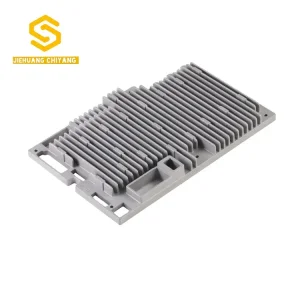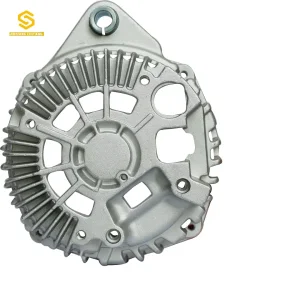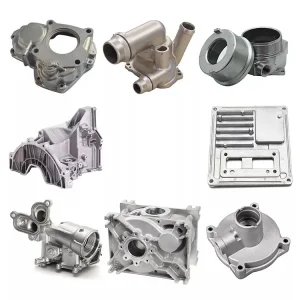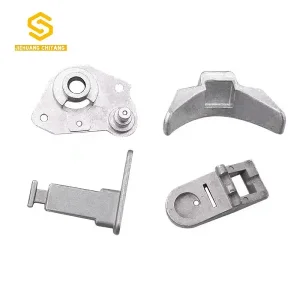
Precision Precision Casting & Die Casting Modules (Catalog Part 1)
Explore our certified OEM/ODM precision die casting, vacuum casting, and powder metallurgy products for high-performance applications.
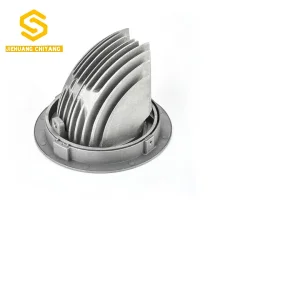
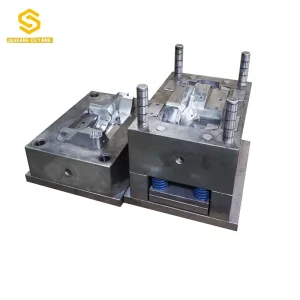
1. The Global Macro Environment & Industrial Status of LED Die-Cast Housings
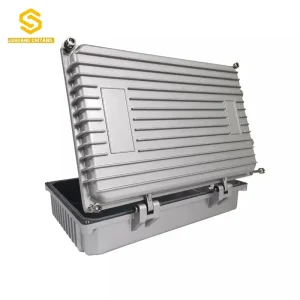
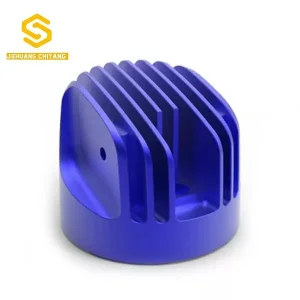
The global Solid-State Lighting (SSL) sector has transitioned from simple luminous efficacy competition to rigorous structural reliability, thermal efficiency, and environmental sustainability. Modern high-power LED luminaire systems—spanning stadium floodlights, industrial high-bays, architectural facades, smart city streetlights, and explosion-proof hazardous fixtures—impose severe demands on mechanical enclosures. As LED chip power densities surpass 150 W/cm², the metal housing is no longer a passive structural shell; it acts as the primary heat sink, mechanical protection barrier, and environmental shield.
China has solidified its position as the world's primary manufacturing cluster for high-pressure die-cast (HPDC) aluminum LED housings. Operating at the intersection of advanced metallurgy, automated die casting machinery, and complex surface finishing ecosystems, Chinese die-casting suppliers provide global Tier-1 OEM/ODM clients with significant structural efficiency, thermal conductivity optimization, and economies of scale. However, navigating the ecosystem of China Die Casting Led Housings Suppliers & Factories requires an engineering-level understanding of material purity, vacuum casting technologies, precision CNC post-machining, and international compliance standardizations.
Current industrial demands focus heavily on weight reduction without sacrificing structural rigidity. By leveraging high-tonnage cold-chamber die casting machines ranging from 800 to 3,500 tons, Chinese factories produce thin-walled, high-integrity LED housing designs equipped with complex cooling fin topologies, integrated driver cavities, and multi-channel wire conduits. These innovations significantly lower freight costs while ensuring that junction temperatures ($T_j$) remain strictly below 85°C to protect LED chips against lumen depreciation and color temperature drift.
2. Engineering & Metallurgy: Materials Selection & DFM Optimization
Selecting the appropriate aluminum alloy formulation is a critical design decision in engineering an outdoor LED luminaire enclosure. Mechanical tensile strength, fluidity during high-pressure injection, corrosion resistance, and thermal conductivity ($k$) must be carefully balanced.
ADC12 (JIS H5302) Alloys
The standard alloy for industrial LED die casting. Provides excellent die-filling fluidity, high dimensional stability, and moderate thermal conductivity (~96 W/m·K). Ideal for intricate cooling fin geometries.
A380 (ANSI/ASTM) Standard
Widely specified across North American markets. Balances pressure tightness, fluidity, and ease of machining. Delivers exceptional mechanical fatigue resistance under fluctuating outdoor wind loads.
A360 / AlSi10Mg High-Corrosion Alloys
Formulated with lower copper content (<0.6%) to offer superior corrosion resistance in marine, coastal, and chemical industrial environments. Delivers elevated yield strength under extreme thermal cycles.
Metallurgical Comparison Matrix for LED Die Cast Enclosures
The following engineering data table highlights key metallurgical properties essential for design engineers selecting materials for LED housing production in China:
| Alloy Grade | Silicon (Si) % | Copper (Cu) % | Thermal Cond. (W/m·K) | Tensile Strength (MPa) | Corrosion Resistance | Recommended LED Application |
|---|---|---|---|---|---|---|
| ADC12 | 9.6 – 12.0 | 1.5 – 3.5 | 96.2 | 310 | Moderate | Standard High-Bay, Streetlights, Indoor Commercial |
| A380 | 7.5 – 9.5 | 3.0 – 4.0 | 96.0 | 320 | Moderate / High | General Outdoor Floodlights, Automotive LED Modules |
| A360 | 9.0 – 10.0 | < 0.6 | 113.0 | 300 | Superior (Marine) | Harbor Floodlighting, Offshore Rigs, Coastal Roadways |
| AlSi10Mg | 9.0 – 11.0 | < 0.1 | 130.0 - 150.0 | 340 (Heat Treated) | Exceptional | High-Wattage Stadium Lights (>1000W), Thermal Critical |
Design for Manufacturability (DFM) & Thermal Boundary Calculations
Achieving optimal thermal dissipation requires a integrated co-design of heat sinks and die-casting mold cavities. The total thermal resistance $R_{th}$ of an LED housing system is calculated using the conductive-convective heat transfer model:
R_th(total) = (t_substrate / (k_alum * A_pcb)) + (1 / (h_conv * A_fins)) + R_interface
Where t_substrate represents the wall thickness directly under the LED Board, k_alum is the material thermal conductivity, h_conv is the natural convective heat transfer coefficient of air, and A_fins is the total effective surface area of the cooling fins. Advanced Chinese factories employ vacuum-assisted high-pressure die casting (V-HPDC) to eliminate internal gas porosity (gas voids under 1% by volume), ensuring that thermal conductivity bottlenecks inside the solid aluminum substrate are eliminated.
3. Environmental Protection, IP Sealing & Advanced Surface Engineering
Outdoor luminaires operate under harsh atmospheric conditions, including ultraviolet (UV) exposure, extreme thermal cycling (-40°C to +60°C), driving rain, high humidity, and salt spray. Consequently, the raw die-cast aluminum housing must undergo advanced surface pre-treatment and sealing engineering.
IP67 / IP68 Continuous Sealing
Precision CNC-milled gasket channels fitted with liquid-injected silicone gaskets or continuous EPDM O-rings ensure zero moisture ingress even under complete water immersion or high-pressure washer jets (IP69K).
1000h+ Salt-Spray Corrosion Protection
Multi-stage surface pretreatments, including zirconium-based chromate conversion, followed by electrostatic application of architectural-grade thermosetting powder coatings (e.g., AkzoNobel or Tiger Drylac), achieve 1,000 to 3,000 hours of continuous ASTM B117 salt-fog testing without blistering or filiform corrosion.
Pressure Equalization Vents
Integration of hydrophobic ePTFE breathing valves prevents internal air pressure buildups caused by rapid heating/cooling cycles, protecting internal driver seals and eliminating internal condensation (fogging) on optical glass lenses.
4. Application Scenarios & Regional Engineering Integration
Different international markets present distinct electrical, structural, and environmental challenges. Leading China Die Casting LED Housing suppliers maintain specialized engineering design tracks tailored to regional deployment needs:
North American Industrial & Outdoor Fixtures
Designed for compliance with UL 1598, CSA C22.2, and NEMA 4X certifications. Features robust 3/4" NPT conduit entries, multi-tier surge protection compartment channels, integrated 7-pin ANSI C136.41 NEMA / Zhaga socket receptacles for smart grid lighting controls, and wind-load resistance up to 160 mph (EPA testing).
European Architectural & Urban Roadways
Engineered according to EN 60598-1 and CE requirements. Focuses on sleek low-profile aerodynamic shapes, tool-less latch mechanisms for quick maintenance access, class II electrical insulation design, and strict dark-sky light pollution mitigation housing contours.
Explosion-Proof & Heavy Industrial Environments
Utilizes heavy-duty copper-free aluminum die castings with thick flame-proof joint surfaces (ATEX / IECEx compliant). Designed to withstand internal explosion pressures while maintaining safe thermal surface temperatures (T-Class rating) in petrochemical plants and mining sites.
5. Localization Support, Global Supply Chain & Compliance Guarantees
Partnering with high-caliber Chinese die-casting factories allows international OEMs to mitigate supply chain risks while maintaining high quality standards. World-class suppliers do not operate merely as job-shop founders; they provide end-to-end engineering support, fully compliant with modern environmental regulations and quality frameworks.
ISO 9001 & IATF 16949 Certification
Standardized quality management systems ensure batch-to-batch repeatability. Automated CMM (Coordinate Measuring Machines), X-ray non-destructive porosity inspection, and spectrographic material analysis are performed on every production lot.
RoHS & REACH Material Compliance
All aluminum ingots, passivations, powder coatings, and sealing gaskets comply with EU RoHS 3 (Directive 2015/863) and REACH SVHC regulations, enabling seamless custom clearance and market distribution in regulated regions.
Rapid DFM, Prototyping & Buffer Inventory
Fast-track tooling capabilities allow T1 prototype samples within 25–30 days. Top Chinese suppliers offer VMI (Vendor Managed Inventory) and regional warehousing support to guarantee stable lead times during demand spikes.
6. Technology Roadmap & Future Outlook (2025–2030)
The LED lighting die-casting industry is shifting toward smart, sustainable, and highly integrated thermal structures. Key technological advancements shaping the future include:
AI Mold Flow Simulation
Real-time machine learning algorithms optimize gate locations, runner geometry, and thermal die channels to eliminate air entrapment and shrink porosity before mold steel is cut.
Hyper-Conductive Alloys
Development of specialized silicon-copper modified alloys achieving thermal conductivities above 160 W/m·K while maintaining high HPDC moldability.
Gigacasting Integration
Consolidating multi-part luminaire assemblies, driver enclosures, and mounting brackets into single-piece monolithic die castings to eliminate secondary assembly labor.
Closed-Loop Green Aluminum
Utilizing 100% recycled post-industrial aluminum alloys processed with renewable hydro energy, lowering the carbon footprint per housing by up to 70%.
Embedded Thermal Sensors
Direct die-casting overmolding or internal cavity machining for smart thermal sensing modules connected directly to Smart City IoT networks.
OEM Metal Components & Precision Die Castings (Catalog Part 2)
Advanced hardware, MIM components, and high-pressure die cast alloy parts engineered for global industrial buyers.