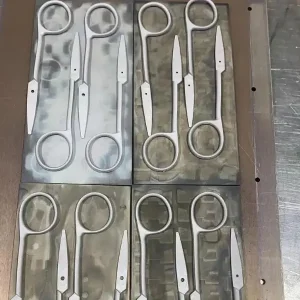
Precision Engineered Die Casting & Sintered Hardware
Explore our core OEM components manufactured under strict ISO 9001 and IATF 16949 quality protocols.







1. Macro-Industrial Landscape: The Paradigm Shift in Precision Metal Forming
The global manufacturing sector is undergoing an unprecedented structural transition. High-Pressure Die Casting (HPDC), once considered a purely mechanical founding method, has matured into a hyper-precise, digitalized engineering discipline. Driven by global demand for light-weighting, thermal performance, and integrated structural assemblies, selecting a qualified China die casting parts manufacturer is no longer just a cost-saving tactic—it is a core strategic lever for global supply chain resilience.
In modern commercial and industrial ecosystems, OEMs (Original Equipment Manufacturers) face compounding pressures: shortening product life cycles, stringent decarbonization mandates, and raw material volatility. High-Pressure Die Casting—particularly in Aluminium (ADC12, A380, A356) and Zinc (Zamak 3, Zamak 5) alloys—provides the near-net-shape accuracy needed to minimize material waste and eliminate redundant machining steps.
China's manufacturing infrastructure has evolved beyond low-cost, high-volume founding. Today, leading Chinese die casting factories represent high-end, vertically integrated manufacturing hubs equipped with automated real-time thermal monitoring, vacuum-assisted injection systems, multi-axis CNC finishing, and advanced surface treatment laboratories.
2. High-Pressure Die Casting Technological Evolution & Alloy Innovations
Recent technological leaps in HPDC have fundamentally expanded what can be achieved in metal geometry, structural integrity, and material performance.
Ultra-High Vacuum Die Casting (VDC)
Traditional die casting often suffered from gas porosity due to trapped air during high-velocity shot injection. Modern Chinese facilities utilize computer-controlled vacuum valves to drop die cavity pressure below 30 mbar prior to metal injection. This enables structural parts to undergo high-temperature heat treatment (T6) and welding without blistering.
Gigacasting & Structural Integration
Pioneered in automotive electric vehicle (EV) chassis design, ultra-large die casting presses (ranging from 4,500 to 12,000 tons of clamping force) can consolidate dozens of stamped steel parts into a single monolithic cast part. This eliminates hundreds of robotic welds and significantly boosts structural rigidity.
Specialized Engineering Alloys
Material development has matched process evolution. Beyond standard ADC12 and A380 alloys, manufacturers now process high-thermal conductivity aluminum for 5G telecom heat sinks, low-iron aluminum alloys (Silafont-36) for high elongation crash-relevant car components, and high-fluidity zinc alloys for thin-walled electronics.
Engineering Alloy Selection Matrix
| Alloy Grade | Material Type | Tensile Strength (MPa) | Thermal Conductivity (W/m·K) | Key Engineering Characteristics | Primary Industrial Applications |
|---|---|---|---|---|---|
| ADC12 (A383) | Aluminium Alloy | 310 MPa | 96 W/m·K | Excellent die filling, high dimensional stability, cost-effective | Automotive engine brackets, gearbox housings, power tool covers |
| A380 | Aluminium Alloy | 320 MPa | 100 W/m·K | Optimal balance of mechanical performance, castability, and machinability | Electrical enclosures, chassis brackets, pump housings |
| AlSi10Mg | Aluminium Alloy | 340 MPa | 110 W/m·K | High strength, heat treatable (T6), superior corrosion resistance | EV structural components, suspension arms, aerospace fittings |
| Zamak 3 | Zinc Alloy | 280 MPa | 113 W/m·K | Superb fluidity, tight tolerance casting, easy electroplating | Precision hardware, lock mechanisms, micro-gears, luxury charms |
| AZ91D | Magnesium Alloy | 230 MPa | 72 W/m·K | Ultra-lightweight, high strength-to-weight ratio, dampens vibration | Laptops, chainsaw housings, steering wheel cores, drones |
3. Global Procurement Dynamics: TCO, Quality Assurance & Risk Mitigation
For Chief Procurement Officers (CPOs) and Supply Chain Directors in North America, Europe, and Asia-Pacific, sourcing precision metal castings involves balancing piece price with complete Total Cost of Ownership (TCO).
Design for Manufacturability (DFM)
High-performing Chinese die casting factories run rigorous CAE Mold Flow Simulations prior to steel cutting. By analyzing fill velocities, thermal solidification profiles, and potential air entrapment zones, DFM engineers resolve draft angle issues, wall thickness variations, and ejection stress points early, saving tens of thousands of dollars in tooling modifications.
Multi-Tier Quality Protocols
Reliable manufacturing relies on verifiable data. Leading suppliers utilize fully automated Coordinate Measuring Machines (CMM), X-ray non-destructive porosity detectors, optical spectrum analyzers, and salt-spray testing chambers. Complete APQP (Advanced Product Quality Planning) and PPAP (Production Part Approval Process Level 3) documentation are standard requirements.
Tooling Amortization & Lifecycle
Premium H13, DIEVAR, or SKD61 tool steel tooling guarantees mold lifespans exceeding 100,000 to 500,000 shots. Amortizing precision tooling costs across high-volume production cycles lowers piece prices well below CNC-machined billets.
4. China Industry 4.0: Supply Chain Resilience & Structural Efficiency
China’s competitive edge in metal casting extends far beyond labor economics; it resides in its unmatched industrial ecosystem, digitized manufacturing integration, and deep port-adjacent infrastructure.
Integrated Metallurgy Clusters
Regional industrial clusters in Ningbo, Zhejiang, and Guangdong house complete, end-to-end supply chain ecosystems within a 50-kilometer radius. Raw molten ingot suppliers, tool & die makers, thermal treatment facilities, precision CNC machine shops, and surface treatment (anodizing, powder coating, electroplating) specialists operate collaboratively, drastically cutting transport lead times.
Automated Smart Operations
Modern Chinese factories feature automated robotic dosing, auto-spraying mold lubrication arms, robotic trimming presses, and MES (Manufacturing Execution Systems). Real-time IoT monitoring tracks parameter variations across shot velocity, holding pressure, and cooling fluid rates, maintaining consistent CPK > 1.33 quality indexes.
Agile Prototype-to-Mass Transition
Leveraging in-house metal 3D printing (SLM) and rapid CNC soft tooling, Chinese suppliers can provide functional metal prototypes in 5 to 7 days. Once verified, hardened production tooling is manufactured within 25 to 30 days, enabling fast time-to-market for international buyers.
5. Industry-Specific Applications & Custom Engineering Examples
Custom die-cast metal components perform critical roles across various industrial sectors worldwide.
Automotive & New Energy Vehicles
High-integrity aluminum die castings form the backbone of modern vehicles: battery module enclosures, inverter housings, electric motor end-bells, steering knuckles, and engine VVT timing systems. Lightweight alloys directly extend EV driving range.
Telecommunications & 5G Hardware
5G massive MIMO active antenna units require complex heat-dissipating geometries with high thermal conductivity. Die-cast aluminum housings featuring ultra-thin cooling fins (down to 1.2mm) provide weatherproof protection (IP68) and optimal thermal management.
Industrial Automation & Robotics
Precision pneumatic valve bodies, joint housings for articulated robotic arms, gearboxes, and motor brackets require leak-tight castings capable of withstanding continuous operational stress and pressure.
Medical Devices & Consumer Products
Surgical device handles, high-end optical equipment frames, luxury watch components, and power tool gear housings demand fine surface finishes, high mechanical strength, and tight dimensional compliance.
6. Manufacturing Process Comparison: Die Casting vs. MIM vs. PM vs. CNC
Selecting the correct manufacturing process depends on part geometry, material requirement, order volume, and unit cost targets.
| Manufacturing Process | Optimal Weight Range | Geometric Complexity | Material Suitability | Typical Volume (MOQ) | Unit Cost at Scale |
|---|---|---|---|---|---|
| High-Pressure Die Casting (HPDC) | 50g to 50kg+ | High (Thin walls, deep pockets, fins) | Aluminum, Zinc, Magnesium Alloys | 2,000+ pcs | Very Low |
| Metal Injection Molding (MIM) | 0.1g to 250g | Extreme (Micro-features, internal threads) | Stainless Steels, Titanium, Tool Steels | 2,000+ pcs | Low to Medium |
| Powder Metallurgy (PM) | 10g to 5kg | Medium (Symmetrical gears, bushings) | Iron-Nickel Steels, Bronze, Brass | 5,000+ pcs | Very Low |
| 5-Axis CNC Machining | Any size | High to Very High | Virtually all solid metals/plastics | 1 to 500 pcs | High |
7. Frequently Asked Questions (FAQ) for Global Buyers
More Precision Manufacturing Solutions & Special Parts
Browse our extended line of custom MIM, sintered metal, CNC turned, and titanium precision components.