
Featured Precision Modules & OEM Thermal Components
High-reliability hardware engineered for automotive control units, thermal dissipation, and complex electronic packaging.





1. Executive Technical Summary & Global Market Shift
Navigating the Transition to Centralized Autonomous Computing and High-Density Power Electronics Housings
The Paradigm Shift in ECU Packaging & Thermal Physics
In modern automotive and industrial architectures, the Electronic Control Unit (ECU) has evolved from simple engine management modules into ultra-dense, centralized domain controllers (DCU) and autonomous driving compute units (HPC). As electric vehicles (EVs) and smart machinery adopt 800V architectures and silicon carbide (SiC) inverters, ECU enclosures must handle vastly superior thermal fluxes, severe mechanical shock (up to 30g peak acceleration), and stringent electromagnetic interference (EMI/RFI) suppression.
Leading Tier-1 automotive integrators and industrial automation OEMs require custom ECU enclosures and housings that go beyond passive structural protection. Modern enclosures are active thermal management systems featuring integrated liquid cooling channels, precision-machined thermal interface surfaces, hermetic seals (IP67, IP68, IP69K), and continuous EMI shielding attenuation exceeding 80 dB across 10 MHz to 6 GHz.
Critical Operational Benchmarks
2. Material Science & Advanced Manufacturing Metallurgy
Comparing High-Pressure Die Casting (HPDC), Metal Injection Molding (MIM), and Precision CNC Finishing
| Manufacturing Process | Key Material Alloys | Tensile Strength (MPa) | Thermal Conductivity | Ideal Application Geometry | Cost Driver & Efficiency |
|---|---|---|---|---|---|
| High-Pressure Die Casting (HPDC) | ADC12, A380, AlSi10Mg, Silafont-36 | 240 – 320 MPa | 96 – 160 W/m·K | Large thin-walled housings, complex heat dissipation fins, multi-cavity structural covers | Lowest unit cost at volume (>5,000 pcs); low tooling amortized cost over lifecycle |
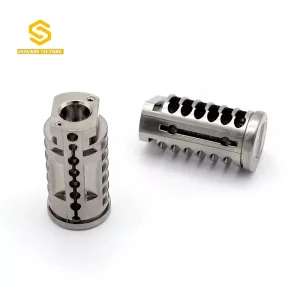
| Metal Injection Molding (MIM) | 17-4PH, 316L, Fe-Ni Alloys, Copper Base | 520 – 1150 MPa | 15 – 40 W/m·K (higher for Cu) | Miniature ECU sensor housings, ultra-dense connector locks, internal micro-mechanisms | Eliminates complex 5-axis machining; 95%+ material utilization rate |
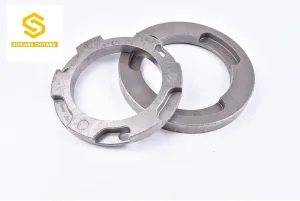
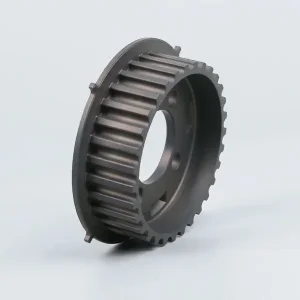
| Powder Metallurgy (PM Sintering) | Fe-Cu-C, MPIF Standards, Sintered Bronze | 300 – 650 MPa | 35 – 70 W/m·K | Structural brackets, mounting bushings, high-torque gear hubs inside actuators | Near-zero scrap rate; exceptional structural damping and dimensional precision |
| 5-Axis Precision CNC Machining | AL6061-T6, AL7075-T6, Pure Copper | 310 – 570 MPa | 160 – 390 W/m·K | Ultra-low volume prototypes, custom HPC cold plates, flight-grade ECU enclosures | Zero tooling cost; higher machine-hour unit cost; ideal for engineering validation |
Thermal Dissipation Engineering
Through high-vacuum die casting and optimized mold temperature controls, China manufacturers eliminate micro-porosity within aluminum walls. Integrated pin-fin and aspect-ratio-optimized cooling fins maximize passive thermal radiation and active airflow conduction away from sensitive MOSFETs and BGA microprocessors.
Hermetic Sealing & IP Protection
ECU enclosures must prevent moisture, salt fog, and hydrocarbon intrusion. Utilizing Form-In-Place Gaskets (FIPG), Liquid Silicone Rubber (LSR) overmolding, and high-precision CNC O-ring groove milling, enclosures achieve certified IP68 and IP69K sealing performance.
EMI/RFI Mitigation & Surface Finishing
To prevent high-frequency electronic cross-talk, enclosures undergo specialized surface treatments. Selective conductive chromate conversion (SurTec 650, Alodine 1200S) preserves low electrical contact resistance on grounding pads, while external surfaces receive automotive-grade powder coating or anodizing.
3. China Factory Efficiency & Ecosystem Scalability
Unlocking Unrivaled Speed-to-Market, Integrated Supply Chains, and Cost Competitiveness
1. Vertically Integrated Supply Clusters
China’s key automotive manufacturing clusters (such as Ningbo, Zhejiang, and Guangdong) offer unprecedented vertical integration. Tooling design, alloy smelting, high-tonnage die casting (ranging from 280T to 3,500T), precision CNC machining, surface treatment, and thermal testing occur within a 30-mile radius. This reduces engineering iteration lead times by up to 60%.
2. Advanced Simulation & DFM Speed
Leading Chinese ECU enclosure manufacturers provide complimentary DFM (Design for Manufacturability) analyses within 24 to 48 hours. By utilizing advanced FEA, Moldflow, and MagmaSOFT thermal casting simulations prior to cutting steel, engineers identify shrinkage, porosity risk, air traps, and draft angle conflicts before tooling fabrication begins.
3. Rapid Tooling & Prototype Delivery
While Western suppliers often require 12 to 16 weeks for production-grade die-cast tooling, Chinese manufacturers routinely execute prototype tooling in 15 days and full hardened production tooling (H13 steel, 50-52 HRC) in 30 to 35 days. Rapid metal 3D printing (SLM/DMLS) is also integrated for initial engineering verification samples within 5 days.
4. Specialized Industrial & Automotive Application Scenarios
Tailored Housing Designs for Rigorous Operational Environments across Global Markets
Electric Vehicle Inverters & Battery Management (BMS)
Automotive EVs require lightweight, highly rigid enclosures capable of housing high-voltage power PCBs and busbars. Custom die-cast aluminum BMS and Vehicle Control Unit (VCU) enclosures incorporate integrated friction-stir-welded (FSW) liquid cooling plates to prevent thermal runaway in high-stress driving cycles.
Autonomous Driving Domain Controllers (ADAS & LiDAR)
Level 3 to Level 5 autonomous driving compute platforms generate heat dissipation loads from 150W up to 600W. Specialized multi-piece housings feature ultra-flat internal pedestals (flatness <0.05 mm) to interface directly with GPU/NPU dies via Thermal Interface Materials (TIM), combined with external micro-fin air channels.
Heavy Construction Machinery & Agricultural Equipment
Industrial off-highway ECUs face extreme dust, mud, continuous vibration, and hydraulic fluid exposure. Thick-walled die-cast aluminum or heavy-duty powder-metallurgy reinforced brackets ensure high structural integrity, IP69K sealing against high-pressure washdowns, and operating temperature resistance from -40°C to +125°C.
Marine, Renewable Energy & Smart Grid Inverters
Coastal and marine power electronics demand extreme corrosion resistance. Housings utilize low-copper aluminum alloys (AlSi9Cu3 or pure Al-Mg alloys) combined with multi-stage anodization, fluorocarbon painting, and passivated stainless steel hardware to endure over 1,000 hours of continuous salt spray testing (ASTM B117).
5. Global Buyer Procurement & Supplier Audit Framework
Step-by-Step Quality Assurance Checkpoints for Sourcing ECU Housings from China
Quality System Compliance & Traceability
When evaluating a Chinese manufacturer for OEM ECU enclosures, global sourcing managers must verify compliance with automotive-grade quality management frameworks. Key engineering validation milestones include:
- IATF 16949 Certification: Essential for all automotive supply chains, ensuring structured risk management through APQP and PPAP Level 3 documentation.
- Advanced Dimensional Verification: In-house 3D Coordinate Measuring Machines (CMM) with probing accuracy under 2.5 µm, optical profilometers, and laser scanners for surface flatness mapping.
- Nondestructive Testing (NDT): X-ray inspection systems to ensure internal porosity meets ASTM E505 Level 1 or Level 2 standards before high-speed CNC milling.
- Environmental & Mechanical Testing: In-house thermal shock chambers (-50°C to +150°C), helium leak detectors for liquid channels, and multi-axis vibration shakers.
Sourcing Verification Checklist
✓ Tooling Life Guarantee
Ensure steel dies (e.g., Dievar, H13) are guaranteed for 100,000 to 300,000 shots with free maintenance.
✓ Material Certification
Demand Spectrometer elemental breakdown reports and RoHS/REACH compliance certificates for every raw material lot.
✓ Full Process Traceability
MES systems tracking heat numbers, casting batch codes, CNC operator IDs, and CMM inspection logs.
6. Next-Generation Trends in ECU Packaging & Die-Casting
Innovations Shaping the Future of Lightweight, High-Efficiency Electronic Housings
Giga-Casting & Structural Integration
As vehicle OEMs shift toward consolidated structural components, ECU enclosures are increasingly integrated directly into chassis side rails, battery pack top covers, or motor housings. This structural integration eliminates separate mounting brackets, reduces part count by up to 40%, and significantly cuts vehicle assembly labor.
Direct-To-Chip Liquid Cold Plates
Next-generation autonomous driving compute units utilize embedded liquid cold plates manufactured via vacuum die casting combined with vacuum brazing or friction stir welding (FSW). Coolant flows directly beneath power semiconductors, achieving thermal resistance values under 0.05 °C/W.
Advanced Nanocomposite EMI Coatings
With the rise of high-frequency 5G automotive connectivity and radar systems, enclosure surfaces are being enhanced with micro-arc oxidation (MAO) and plasma spray nanocomposite coatings. These advanced treatments offer simultaneous thermal radiation enhancement and high-frequency broadband EMI attenuation.
7. Frequently Asked Questions (Technical & Procurement FAQ)
Expert Guidance on Design Specifications, Manufacturing Feasibility, Tolerances, and Lead Times
Additional OEM High-Precision Metal Assemblies & Tooling
Explore our full range of custom powder metallurgy, die casting, and MIM manufacturing capabilities.







Ready to Optimize Your ECU Enclosures & Housings Sourcing?
Submit your STEP / IGES / PDF engineering drawings today. Our senior technical team provides a complete DFM manufacturability report and transparent mold tooling quotation within 48 hours.
Request Free DFM & Quote