
High-Precision Powder Metallurgy & Machined Parts Portfolio
Engineered for extreme performance, tight tolerances, and high volumetric efficiency across automotive, industrial, and aerospace sectors.



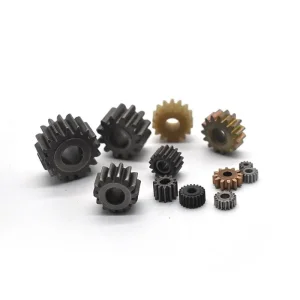


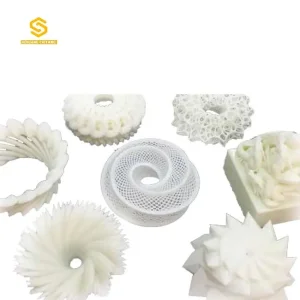
Macro Economic Landscape: The Evolution of High-Performance Powder Metallurgy & Spray Forming
The global advanced manufacturing ecosystem is undergoing a fundamental structural transition driven by decarbonization, electrification, micro-miniaturization, and lightweighting goals. European metallurgical benchmarks, historically pioneered by specialized institutions such as Gränges Powder Metallurgy SAS (renowned for high-silicon spray-formed aluminum alloys like DISPAL®), set the international standard for low thermal expansion, ultra-high wear resistance, and elevated Young’s modulus applications. Today, global supply chain directors and Tier-1 engineering procurement divisions actively partner with premier Chinese manufacturing hubs—such as Ningbo Jiehuang Chiyang Electronic Tech Co., Ltd. (JHMIM)—to bridge world-class metallurgical properties with scalable OEM volume manufacturing capabilities.
Electrification & Light-Weighting Dynamics
Automotive powertrains and thermal management systems require high-strength, low-density materials with low thermal expansion coefficients (CTE). Powder metallurgy (PM) and Metal Injection Molding (MIM) allow precise tailoring of grain structures, eliminating macro-segregation issues commonly encountered in traditional ingot casting.
Supply Chain Resilience & Total Cost of Ownership
By eliminating extensive multi-axis CNC secondary operations and material waste, near-net-shape PM and MIM processes deliver unit cost savings between 30% and 50%. Chinese OEM production hubs maintain localized raw material refining, continuous atmosphere sintering furnaces, and rapid DFM turnarounds to lower risk for global OEMs.
Technological Comparison: Spray Forming, Press-and-Sinter, and MIM Pathways
Understanding the boundary conditions between Spray Forming (as pioneered by European specialists such as Gränges PM SAS), Press-and-Sinter PM, and Metal Injection Molding (MIM) is critical for structural design engineers. Each route controls phase transformations, micro-porosity distribution, and carbide dispersion to maximize mechanical integrity under high dynamic fatigue loads.
| Manufacturing Process | Material Class & Alloys | Relative Density (%) | Geometric Complexity | Typical Part Weight Range | Ideal Application Scenario |
|---|---|---|---|---|---|
| Spray Forming (DISPAL Benchmark) | High-Silicon Al-Si Alloys (e.g., AlSi35, AlSi50) | 98.0% – 99.5% | Low to Medium (Extrusions/Billet machining) | 500 g – 50 kg | Avionics heat sinks, optical housings, linear drive guides |
| Metal Injection Molding (MIM) | 17-4PH, 316L, Ti-6Al-4V, Fe-Ni Low Alloys | 96.5% – 99.0% | Extreme (Complex 3D features, undercuts, threads) | 0.2 g – 286 g (Optimal <100 g) | Surgical instruments, lock mechanisms, micro gears, VVT parts |
| Press-and-Sinter PM | MPIF 35 Steels, Cu-Steels, Sinter-hardened alloys | 88.0% – 95.0% (Repressed >97%) | Medium (2.5D stepped press geometries) | 5 g – 5 kg | Planetary gearboxes, engine timing pulleys, oil pump rotors |
| Aluminum & Zinc Die Casting | A380, ADC12, Zamak 3, Zamak 5 | 92.0% – 96.0% (Localized porosity) | High (Thin-walled ribbed enclosures) | 10 g – 15 kg | Automotive ECU housings, heat sinks, structural brackets |
Engineering Information Gain: Phase Homogeneity in Rapid Solidification
Conventional casting of high-alloy aluminum or iron formulations leads to macro-segregation and coarse primary silicon flakes, resulting in catastrophic brittle failure under tensile loading. Both spray forming and inert-gas atomized powder compaction utilize rapid cooling rates (>10³ K/s) to arrest segregation, yielding fine primary microstructures (<5 µm). At Jiehuang (JHMIM), vacuum continuous atmosphere sintering with controlled nitrogen-hydrogen debinding protocols guarantees consistent tensile strength (>1100 MPa for heat-treated 17-4PH) matching wrought material standards.
Technology Roadmap & Future Horizons (2025–2030)
The future of powder metallurgy combines automated pressing, additive manufacturing hybrid routes, and AI-assisted process monitoring. Factories in China are setting new productivity records by integrating Smart MES tracking and closed-loop thermal feedback control.
1. Binder Jetting & Powder Hybridization
Combining high-throughput Binder Jetting (BJM) with mass sintering furnaces eliminates hard tooling investments for low-to-medium pilot series, permitting seamless transition into high-cavity MIM production once volumes exceed 50,000 units.
2. AI-Driven Thermal & Shrinkage Modeling
Sintering linear shrinkage ranges between 12% and 22% in complex MIM geometries. Utilizing finite-element AI simulation models allows JHMIM engineers to optimize mold cavity dimensions on the first iteration, slashing mold revision cycles from 45 days down to 14 days.
3. Sustainable Circular Powder Metallurgy
Zero-waste production models leverage 100% recycled feedstock runners and closed-loop solvent debinding fluid reclamation systems, lowering overall manufacturing carbon intensity in strict compliance with EU Green Deal and ESG mandates.
Quality Assurance Framework, Metrology & Global Compliance
Industrial procurement buyers managing critical OEM components require verified traceability and absolute quality stability. At Ningbo Jiehuang (JHMIM), certified ISO 9001 and IATF 16949 workflows govern every step from incoming powder inspection to final shipping.
Powder Characterization
Laser diffraction particle size analysis (D10, D50, D90), Hall flow meter testing, and tap density verification for uniform mold filling.
In-Line Optical & CMM
Automated 3D Zeiss Coordinate Measuring Machines (CMM), key dimension optical sorters, and surface roughness profilometers.
Metallographic Verification
Cross-sectional microstructural etching, porosity percentage computation, micro-Vickers hardness testing, and salt spray corrosion checks.
Global Regulatory Compliance
Full RoHS, REACH, IMDS database logging, and Conflict Minerals declarations supplied with complete First Article Inspection (FAI) reports.
Cross-Sector OEM Application Scenarios
From sub-millimeter gear teeth in power tools to structural titanium components in surgical handles, Chinese powder metallurgy factories serve demanding tier-1 OEMs worldwide.
Automotive & EV Systems
Components: Variable Valve Timing (VVT) rotors, oil pump gears, steering lock pawls, seat adjuster gears, and sensor brackets.
Key Requirement: High dynamic fatigue resistance, tight concentricity (<0.02 mm), and mass production cost efficiency.
Medical Devices & Surgical Tools
Components: Endoscopic grasper jaws, surgical stapler hinges, titanium scalpels, and dental implant tools.
Key Requirement: Biocompatible 316L/Ti-6Al-4V materials, high surface finish after passivation, and zero burr tolerances.
Industrial Tools & Consumer Electronics
Components: Micro planetary gearboxes, garden tool drive gears, smart lock clutch mechanisms, smartphone folding hinges.
Key Requirement: High torque capacity, wear resistance without post-machining hobbing, and aesthetic PVD/plating options.
Frequently Asked Questions: Technical & Procurement Insights
Clear answers to crucial engineering questions regarding design guidelines, tooling costs, lead times, and material selection.
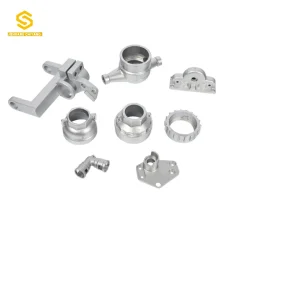
Custom OEM Powder Metallurgy, Die Casting & MIM Product Series
Explore additional high-volume precision solutions tailored for global machinery, electronic locks, and automotive applications.





Ready to Accelerate Your Powder Metallurgy & MIM Project?
Submit your 2D PDF and 3D STEP drawings today. Receive an engineer-reviewed Design for Manufacturability (DFM) analysis and a transparent quotation within 48 hours.