
Featured Industrial Transmission & Powder Metallurgy Components
Explore our high-precision sintered gears, MIM structural components, and custom die-cast assemblies manufactured under rigorous IATF 16949 quality protocols.
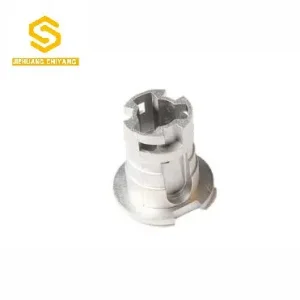
Wholesale metal injection molding parts for medical technology Manufacturer, Factory
View Details & Spec
China CE Certificate Sintered Parts Powder Metallurgy Metal Powder Manufacturer Manufacturer, Factories
View Details & Spec
Wholesale Best Price for OEM Custom High Precision CNC Machining/Machined/Machine/Milling/Turning/Stamping/Die Casting Metal Aluminum Alloy Auto Spare Machinery Parts Manufacturers, Supplier
View Details & Spec
China High Performance China Pm Motorcycle Sintered Gear Wheel Parts by Iron Alloy Powder Sintered Manufacturer, Manufacturers
View Details & Spec
Wholesale Professional Factory for Wholesale Motorcycle Accessories Aluminum Alloy Part Motorcycle Windscreen Die Casting Supplier, Factories
View Details & Spec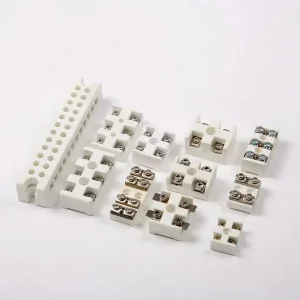
Wholesale ceramic connector block Manufacturers, Factory
View Details & Spec
Wholesale Quality Inspection for Precision CNC Pressure Aluminum Zinc Auto Household Die Casting Manufacturer, Factories
View Details & Spec
Wholesale China Factory custom A360 ADC12 die cast aluminum die casting auto spare parts Manufacturer, Factories
View Details & SpecState of Industrial Gearbox Transmission Manufacturing in China
Industrial gearboxes serve as the kinetic heart of modern mechanical architecture, transferring rotational torque, converting velocity, and maintaining precision angular positioning across heavy machinery, automated robotics, automotive drivetrains, and renewable energy installations. Sourcing transmission gears from leading Chinese suppliers requires a granular evaluation of metallurgical integrity, tooth profile micro-geometry, process optimization, and structural fatigue resistance.
Powder Metallurgy (PM) Gears
Powder metallurgy compaction utilizes press capacities up to 10,000 kN to form spur, helical, planetary, and bevel gear geometries. Sintered steel alloys (MPIF 35 FLN2-4405, FC-0208) deliver near-net shape geometry with exceptional mass production repeatability, eliminating traditional hobbing scrap.
Metal Injection Molding (MIM) Transmission Parts
When gearbox transmission gears demand intricate 3D geometries, internal splines, keyways, or multi-stepped hubs weighing under 300g, MIM provides complete geometric freedom. Utilizing ultra-fine metal powders blended with polymer binders, MIM achieves 95-99% theoretical density.
High-Precision Machining & Finishing
For high-load industrial speed reducers, post-sintering CNC shaving, gear shaving, hobbing, grinding (Reishauer process), and honing refine tooth contact profiles to AGMA Q10–Q12 specs, ensuring minimal pitch error and reduced NVH (Noise, Vibration, and Harshness).
| Manufacturing Route | Material Densification | Dimensional Accuracy | Economic MOQ | Primary Industrial Application |
|---|---|---|---|---|
| Powder Metallurgy (PM) | 88% - 95% Core Density | DIN 7 - ISO 8 | 5,000 Pcs | Planetary gearboxes, oil pump gears, automotive timing drives |
| Metal Injection Molding (MIM) | 96% - 99% Core Density | DIN 6 - ISO 7 | 2,000 Pcs | Micro gearheads, robotic surgical joints, power tool clutches |
| Surface Rolling + PM | 100% Surface / 95% Core | DIN 5 - ISO 6 | 3,000 Pcs | High-torque E-axle transmission gears, heavy reducer drives |
| CNC Milling & Die Casting | Solid Wrought / Cast Alloys | DIN 6 - ISO 7 | 2,000 Pcs | Gearbox housings, lightweight aluminum/zinc cover plates |
Strategic China Supply Chain Advantages in Gear Manufacturing
China’s industrial transmission ecosystem in regions like Ningbo (Zhejiang Province) offers global OEMs an unparalleled combination of raw material atomization, tooling design, heat treatment automation, and international logistics infrastructure.
Vertical Atomization to Tooling Synergy
By establishing localized raw material sourcing—such as gas and water atomized titanium powders, alloyed iron powders, and specialized binders—Chinese manufacturers eliminate multi-tier supply chain lead times. Tooling fabrication happens in-house using Swiss wire EDM and high-speed CNC centers, reducing sample lead time down to 30 days.
Integrated Metallurgical Heat Treatment
Transmission gears require precise surface hardness and tough ductal cores. Modern Chinese suppliers maintain internal continuous mesh-belt sintering furnaces, vacuum atmosphere debinding facilities, carburizing units, and induction hardening lines, ensuring full batch-to-batch repeatability and traceable metallographic phase structures.
Comprehensive Quality Governance & Traceability
Factory floors are monitored via Manufacturing Execution Systems (MES) compliant with IATF 16949 and ISO 9001 certifications. Coordinate Measuring Machines (CMM), gear measuring centers (Klingelnberg), and spectrographic material analyzers guarantee 100% dimensional adherence to critical tolerance callouts on customer drawings.
Navigating Global Sourcing Demands for Industrial Transmissions
Procurement directors and mechanical engineers face complex trade-offs when selecting international gear manufacturing partners. Balancing initial tooling expenditure, unit price, tolerances, and long-term fatigue life requires rigorous evaluation protocols.
DFM (Design for Manufacturability) Protocol
Every gear drawing undergoes algorithmic and empirical DFM review prior to quotation. Engineers assess draft angles, wall thickness uniformity, radius fillet stress concentrations, sinter shrinkage factors (typically 12–18% for MIM), and tooth root fillet optimization to prevent cracking during thermal treatment.
Cost Structure & MOQ Strategy
While traditional machining carries high unit labor and material waste costs, PM and MIM tooling require upfront mold investments. Chinese suppliers mitigate this through competitive tooling pricing ($2,500–$8,000 average mold cost) and low MOQs starting at 2,000 pieces for MIM and 5,000 pieces for standard powder metallurgy gears.
NVH & Acoustic Engineering Alignment
Modern industrial and automotive applications enforce strict decibel upper limits. Chinese gear suppliers utilize lead-in crowning, tip relief modifications, and precise surface finishing (Ra < 0.4 µm) to suppress harmonic resonance and vibration in high-RPM gearbox reducers.
Future Trends in Industrial Transmission Metallurgy
The industrial gearbox landscape is transitioning toward higher torque densities, lightweight alloys, electrification compatibility, and additive-powder hybrid manufacturing techniques.
Electrification & High-RPM Gear Sets
Electric vehicle (EV) speed reducers and high-frequency industrial actuators require gears capable of handling input speeds exceeding 15,000 RPM. Suppliers are deploying low-alloy nickel-molybdenum sintered steels hardened via vacuum carburizing to sustain extreme contact fatigue cycles.
Titanium & Lightweight Material MIM (TiMIM)
For aerospace gearboxes, medical surgical drives, and wearable exoskeletons, mass reduction is vital. Advanced Chinese MIM factories mass-produce Ti-6Al-4V titanium gears offering high strength-to-weight ratios and bio-compatibility without compromising torque transmission fidelity.
Metal 3D Printing Pre-Tooling Verification
To bridge prototype design to mass tooling, leading suppliers utilize Direct Metal Laser Sintering (DMLS) and Selective Laser Melting (SLM). Functional prototype gears can be tested under real load conditions within days before cutting hard tool steel molds.
Localized Application Scenarios across Global Industries
Industrial transmission gears engineered by Chinese factories perform reliably across diverse operational environments, spanning heavy construction equipment down to surgical robotics.
Automotive & Commercial Vehicle E-Axles
Used in planetary differential gear assemblies, oil pump drive wheels, variable valve timing (VVT) sprockets, and automatic transmission clutch hubs where high fatigue limit and silent mesh engagement are paramount.
Industrial Robotics & Servo Actuators
Integrated into zero-backlash harmonic drives, planetary gearboxes for articulated arms, and automated guided vehicles (AGVs) requiring compact gear modules (m < 0.5) with zero angular loss.
Heavy Mining, Agricultural & Construction Equipment
Forged and sintered spur/bevel gears handling extreme shock loading, dirt contamination, and high ambient temperatures in hydraulic pumps, track drives, and heavy machinery power take-off (PTO) units.
Precision Medical & Laboratory Actuation
Micro stainless steel (316L, 17-4PH) gear trains manufactured via MIM for surgical tools, peristaltic infusion pumps, and diagnostic equipment requiring chemical passivation and bio-compatibility.
Localization Support, Compliance & Quality Governance
Connecting global engineering specifications with local factory execution demands standardized quality control protocols, rigorous non-disclosure protections, and comprehensive environmental compliance.
International Quality Standards Adherence
Factories are audited and certified to IATF 16949 (Automotive Quality Management) and ISO 9001 standards. Gears are manufactured and measured according to AGMA 2001-D04, ISO 6336 gear strength rating algorithms, and DIN 3990 standard specifications.
Intellectual Property & Legal NDA Security
Client CAD files, STEP models, and 2D engineering drawings are handled under strict NDA protocols. Encrypted internal file management systems ensure zero unauthorized disclosure of client proprietary gear tooth profiles or patented drive designs.
RoHS, REACH & Environmental Compliance
All raw powders, synthetic oil impregnations, electroplated surface coatings (zinc, nickel, black oxide, passivation), and sub-assemblies comply strictly with EU REACH and RoHS environmental directives, supported by SGS testing reports.
Industrial Gearbox Transmission Gears FAQ
Technical responses from our engineering team addressing common procurement, design, and metallurgical questions.
What is the typical dimensional precision achievable for sintered transmission gears?
As-sintered powder metallurgy gears typically reach ISO Class 8 to 9 (AGMA Q7–Q8). When post-sintering sizing (coining) or surface rolling is applied, precision improves to ISO Class 6–7. Secondary tooth grinding or shaving can bring critical gear teeth to ISO Class 5 / AGMA Q11 specifications.
How does sintered gear strength compare to traditional wrought machined steel gears?
Standard sintered iron-nickel steels provide roughly 75-85% of equivalent wrought steel bending strength. However, using high-density compaction (>7.3 g/cm³), surface densification, and pre-alloyed nickel-moly powders (MPIF FLN2-4405), sintered gears match or exceed wrought steel performance at significantly reduced unit costs.
What is the lead time for custom gear tooling and initial FAI samples?
Tooling design, mold fabrication, and initial First Article Inspection (FAI) sample delivery take approximately 30 to 35 business days. Rapid prototype metal 3D printing (SLM) can deliver test samples in 5 to 7 days prior to cutting hard tooling molds.
Why is oil impregnation used in powder metallurgy transmission gears?
Interconnected porosity in sintered steel components allows vacuum impregnation of lubricating oils (up to 18-25% by volume). This self-lubricating capability drastically lowers friction, reduces wear during dry startup conditions, and eliminates the need for external grease maintenance in sealed gearboxes.
Specialized Powders, Gear Assemblies & Tooling Furnaces
Explore our complete range of raw atomized metal powders, titanium injection parts, automotive pump gears, and high-temperature vacuum sintering furnace systems.
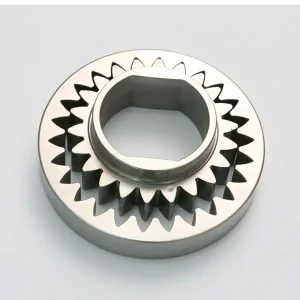
China Sintered Oil Pump Gear Supplier Manufacturer, Factory
View Details & Spec
Wholesale Cheap price China &Nbsp; Spherical Ti45al8nb Powder with Good Plasticity and Low Brittleness Manufacturer, Factory
View Details & Spec
Wholesale China Cheap price Metal Injection Moulding Powders (MIM) by Gas and Water Atomized Manufacturers, Factories
View Details & Spec
Wholesale MIM For high precision Auto Parts Manufacturer, Supplier
View Details & Spec
Wholesale Factory Customized OEM Titanium Alloy Parts by Metal Injection Molding MIM Sintering Process Manufacturers, Supplier
View Details & Spec
Wholesale aluminium die casting auto parts manufacturer in China Manufacturer, Suppliers
View Details & Spec
China Professional China 1700c High Temperature Vacuum Sintering Furnace Electric Atmosphere Vacuum Sintering Furnace for Powder Metallurgy Cim MIM Sintering Manufacturer, Suppliers
View Details & Spec
China Manufacturer Custom Metal Brass Zinc Die Casting Mould Parts Anodizing Aluminum Die Casting Suppliers, Factory
View Details & SpecReady to Optimize Your Industrial Transmission Gear Manufacturing?
Submit your 2D PDF drawings and 3D STEP files to our engineering team. Receive a comprehensive DFM feasibility review and transparent factory quotation within 48 hours.