
Featured Precision Injection Molded & Machined Components
Explore our top OEM/ODM high-precision parts engineered with rigorous dimensional tolerance limits, superior density, and repeatable surface integrity.

China ODM Supplier Custom OEM High Precision CNC Machining/Machined Auto Spare Machinery Parts
View Technical Specs
China Customized Powder Metallurgy Metal Injection Molding (MIM) Precision Parts
View Technical Specs
Wholesale Customized Alloy Metal Metallurgy Machinery Sintered PM Auto Components
View Technical Specs
Wholesale Medical Dental Orthodontic Brackets Manufactured by Precision MIM Process
View Technical Specs
Custom Zinc Die Casting Parts & Aluminum Casting Products OEM Supplier
View Technical Specs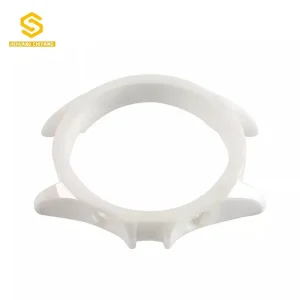
Wholesale Customized Ceramic Injection Molding (CIM) Watch Cases & Accessories
View Technical Specs
China OEM/ODM High Precision Powder Injection Molding (PIM) Parts Manufacturer
View Technical Specs
High Quality Sintered Powder Metallurgy Metal Parts & Mechanical Components
View Technical SpecsThe Physics of Injection Molding Tolerance & Volumetric Control
Mastering micro-level tolerances in complex polymer, ceramic, and metal injection molding requires systematic control of thermodynamic shrinkage, mold flow dynamics, and material phase transformation.
Shrinkage Dynamics & Anisotropic Behavior
Injection molding involves complex thermodynamic changes as molten polymers or metal/binder feedstocks undergo phase transitions. In Metal Injection Molding (MIM) and Ceramic Injection Molding (CIM), isotropic thermal shrinkage during debinding and high-temperature vacuum sintering can exceed 12% to 20% by volume. Achieving tight tolerances requires proprietary binder formulation, precise grain-size distribution, and non-linear volumetric shrink factors embedded directly into tool CAD models.
GD&T & Standardized Tolerance Classes
To establish seamless quality control across global engineering teams, dimensional requirements are categorized under international standards like DIN 16742 (for plastic moldings) and MPIF Standard 35 (for P/M and MIM parts). Critical parameters include linear dimensions, flatness, concentricity, perpendicularity, and positional tolerances defined under ISO 1101 GD&T conventions. High-yield production relies on establishing clear Cpk ≥ 1.33 process capability baselines on primary control dimensions.
| Manufacturing Technology | Standard Tolerance (Linear) | Precision Tolerance (Achievable) | Typical Cpk Range | Primary Tolerance Driver |
|---|---|---|---|---|
| Metal Injection Molding (MIM) | ±0.3% to ±0.5% | ±0.1% to ±0.15% | 1.33 – 1.67 | Powder loading homogeneity & sintering thermal control |
| Ceramic Injection Molding (CIM) | ±0.4% to ±0.6% | ±0.15% to ±0.2% | 1.25 – 1.50 | Sintering shrinkage distortion & binder removal rate |
| Thermoplastic Injection Molding | ±0.2% to ±0.4% (DIN 16742 TG5) | ±0.05% to ±0.1% (TG3) | 1.33 – 2.00 | Cavity pressure consistency & mold temperature drift |
| Aluminum / Zinc Die Casting | ±0.35 mm (ISO 8062 CT6) | ±0.08 mm (ISO 8062 CT4) | 1.33 – 1.50 | Thermal expansion of steel die & alloy thermal contraction |
| Secondary CNC Machining (Post-MIM) | ±0.010 mm | ±0.002 mm | 1.67 – 2.00 | CNC machine repeatability, fixture runout, tool wear |
Localized Application Scenarios & Industry Alignment
How high-precision injection molding tolerance capabilities empower global OEMs across demanding industrial, automotive, medical, and consumer electronics ecosystems.
Automotive Powertrain & Sensor Housings
Automotive systems demand strict adherence to IATF 16949 standards. Injection molded parts such as Variable Valve Timing (VVT) components, sensor bodies, and turbocharger actuator levers require exact dimensional repeatability (±0.03mm) under severe thermal cycling conditions to ensure oil-tight seal engagement and zero backlash performance.
Medical Surgical Devices & Orthodontics
Surgical instruments, endoscopic jaw articulators, and orthodontic brackets demand bio-compatible alloys (316L, 17-4PH, Titanium) molded to near-net shapes. Controlling micro-tolerances on features smaller than 0.5mm eliminates secondary hand-polishing, preserving critical edge radius dimensions and functional tactile feedback for surgeons.
3C Consumer Electronics & Wearables
Foldable smartphone hinges, smart watch ceramic cases, and laptop structural brackets operate within microscopic physical envelopes. Ultra-precise injection molding tolerance management prevents visible gaps, assures IP68 water resistance sealing, and provides premium haptic response for tactile switches and dynamic mechanical joints.
Technology Roadmap: The Next Era of Precision Injection Molding
From AI-driven Moldflow digital twins to advanced eco-friendly binder systems, China's injection molding ecosystem is rapidly advancing toward zero-defect smart manufacturing.
AI-Driven Moldflow & Closed-Loop Closed-Die Systems
By pairing 3D CAE filling simulations with real-time pressure transducers inside tool cavities, injection molding machines automatically adjust holding pressure curves and cooling cycles dynamically. This closed-loop control counteracts slight viscosity variations in batch feedstock, suppressing dimensional variance to under ±0.05% in real-time mass production.
Conformal Cooling & Metal 3D-Printed Tool Inserts
Traditional straight-drilled cooling channels create thermal hot spots, causing asymmetric cooling, core warpage, and tight tolerance failures. Implementing Direct Metal Laser Sintered (DMLS) mold inserts with conformal cooling channels allows uniform heat extraction, cutting cooling cycle times by 30% while drastically improving cross-sectional dimensional stability.
China Supply Chain Resilience & Production Efficiency
Combining integrated regional manufacturing clusters, ultra-fast tooling modification, and vertical powder/resin self-sufficiency for unmatched speed-to-market.
Ningbo & Greater Bay Precision Clusters
Our strategically situated facilities in Ningbo leverage hyper-dense supply chains encompassing raw material synthesis, EDM/wire-cut mold making, surface plating, and secondary CNC finishing within a 50 km radius, eliminating lead-time friction.
Rapid Tooling Iteration & Modifiability
By integrating in-house 5-axis CNC machining and high-precision sinker EDM with automated CMM probing, tooling adjustments (such as cavity adjustments for exact shrinkage fine-tuning) are completed within 48 to 72 hours following pilot batch measuring.
Risk Mitigation & Multi-Facility Redundancy
To guarantee complete supply security for global OEMs, automated multi-cavity presses, continuous atmosphere sintering furnaces, and standardized quality protocols operate across multiple parallel production lines, eliminating single-point yield risks.
Quality Management & Regulatory Compliance Framework
Full alignment with global quality benchmarks ensures frictionless importation, standardized verification, and absolute commercial confidentiality.
PPAP Level III & Full Metrological Traceability
Every custom injection molding project includes a complete Production Part Approval Process (PPAP Level III) submission package: Design Failure Mode and Effects Analysis (DFMEA), Process Flow Diagram, Control Plan, Measurement System Analysis (MSA), and full CMM dimensional scanning inspection reports matching customer print callouts.
RoHS, REACH & NDA Data Protection
All utilized raw materials—from feedstocks, masterbatches, and catalytic debinding fluids to final post-treatment lubricants—fully conform to EU RoHS 3 and REACH SVHC directives. Strict bilateral Non-Disclosure Agreements (NDAs) govern project files under secure access control.
Frequently Asked Technical & Commercial Questions
Get immediate answers to crucial engineering questions regarding achievable tolerances, mold shrinkage factors, and quality validation.
For standard MIM components without post-machining, linear dimensions can be held reliably within ±0.3% to ±0.5% (e.g., ±0.03mm on a 10mm feature). For critical features demanding tight tolerances down to ±0.005mm, secondary CNC milling, grinding, or sizing operations are applied.
Mold shrinkage rate is calculated based on feedstock polymer viscosity, powder loading density, gate location, thermal shrinkage kinetics, and sintering temperatures. Advanced Moldflow simulation predicts non-uniform shrinkage, allowing tooling engineers to apply localized cavity enlargement scaling prior to steel machining.
Thermoplastic molding tolerances are governed by DIN 16742 and ISO 20457 (Tolerance groups TG1 through TG8). Metal Injection Molding (MIM) follows MPIF Standard 35, while general metal die casting components align with ISO 8062 / GB/T 6414 guidelines.
We employ a "steel-safe" tooling approach where critical dimensions are deliberately machined slightly undersized or oversized. After T1 sample molding and CMM batch inspection, cavities are adjusted via precise sinker EDM or CNC grinding to lock in exact nominal dimensions.
We standardly guarantee Cpk ≥ 1.33 on designated key product characteristics (KPCs). For high-precision automotive powertrain or medical surgical components, process conditions are optimized to achieve Cpk ≥ 1.67 over full production runs.
Yes. We utilize direct metal laser sintering (DMLS) 3D printing to supply fully dense metal prototypes within 3 to 5 days. This allows engineers to conduct functional testing and verify fit/form prior to committing to production injection tooling.
Custom Precision Metal & Molded Components
Browse our extended catalog of sintered mechanical parts, lock components, motor bearings, zinc die castings, and ceramic wristbands.
China Wholesale Powder Metallurgy Customized Components & Sintered Spare Parts
View Technical Specs
Customized Powder Metallurgy Sintered Lock Cam Spare Parts & Hardware Components
View Technical Specs
High Quality Powder Metallurgy Pressed Copper Oil-Impregnated Motor Sleeve Bearings
View Technical Specs
OEM Supply Customized Metal Powder Metallurgy Sintered Iron Mechanical Components
View Technical Specs
Zinc Die Cast Set Screw Galvanized Steel Conduit Couplings & Electrical Fittings
View Technical Specs
Special Design Metal Injection Molding (MIM) Aluminum Structural Plates & Housings
View Technical Specs
Zinc Alloy Die Casting for Bathroom Faucet Connectors & Sanitary Hardware
View Technical Specs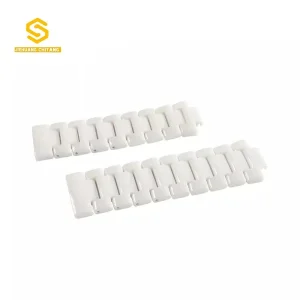
Ceramic Injection Molding (CIM) Watch Bands & High-Wear Accessories
View Technical SpecsReady to Optimize Your Injection Molding Tolerances?
Send your CAD models (STEP/IGES/PDF) today. Our senior engineering team will evaluate your drawing tolerances, conduct a comprehensive DFM moldability review, and send an itemized quotation within 48 hours.
Request Engineering DFM Review