
Featured OEM Metal Injection Molding Components
Explore our high-precision custom sintered parts, watch hardware, turbocharger rings, gears, and specialty alloy powders manufactured in China facilities.

Wholesale Trending Products China Spherical Ta1 Alloy Powder for Spraying/Weldable Supplier, Suppliers
View Product Details
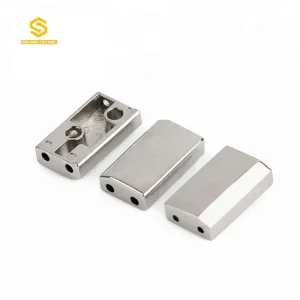
China Super Lowest Price Stainless Steel Machining for Turbo Vnt Nozzle Ring Supplier, Factories
View Product Details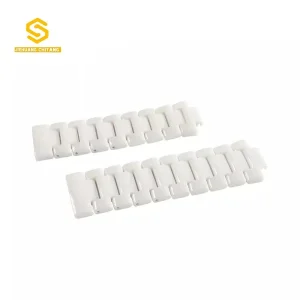
China Ceramic injection molding casting Watch Band For Wrist Strap Manufacturer, Factory
View Product Details

China Hot sale Factory Customized High Precision CNC Machining Die Casting Parts Metal Housing China Manufacturer Manufacturers, Supplier
View Product Details
Wholesale China oem Led High Precision Die Casting Manufacturer Supplier, Factory
View Product Details
China China OEM MIM Auto Spare Parts Car Parts Accessories Motor Motorcycle Parts by Metal Injection Molding CNC Machining Suppliers, Factories
View Product DetailsThe Strategic Role of Chinese Metal Injection Molding (MIM) Infrastructure
In the contemporary landscape of global precision manufacturing, Metal Injection Molding (MIM) has transitioned from a specialized niche process into a primary technology for mass-producing small, highly complex, and high-density metal components. Combining the geometric design freedom of plastic injection molding with the structural integrity, mechanical performance, and thermal resilience of wrought metals, MIM offers unmatched cost-efficiency for medium-to-high volume production runs.
China has solidified its position as the global epicenter for MIM manufacturing, housing advanced industrial hubs in Ningbo, Shenzhen, Dongguan, and Jiangsu. Factories in China leverage integrated material supply chains, state-of-the-art continuous catalytic debinding lines, high-vacuum sintering furnaces, and certified quality control ecosystems (IATF 16949, ISO 9001, ISO 13485). As multinational Original Equipment Manufacturers (OEMs) seek to balance unit cost reduction with stringent mechanical tolerances, collaborating with a top-tier China MIM factory provides a scalable competitive edge.
Manufacturing Technology Comparison: MIM vs. Alternative Routes
Understanding when to select Metal Injection Molding over conventional routes such as CNC Machining, Investment Casting, or Standard Press-and-Sinter Powder Metallurgy (PM) is essential for engineering design directors and procurement strategists.
| Manufacturing Attribute | Metal Injection Molding (MIM) | 5-Axis CNC Machining | Investment Casting (Lost Wax) | Press-and-Sinter PM |
|---|---|---|---|---|
| Geometric Complexity | Extreme (Internal features, undercuts, 3D curves) | High (Constrained by tool access & setup count) | Moderate to High | Limited (2.5D shapes, vertical press direction) |
| Annual Volume Economic Range | 2,000 to 5,000,000+ units | 1 to 2,000 units (Prototyping / Low volume) | 500 to 50,000 units | 10,000 to 1,000,000+ units |
| Material Utilization Rate | > 95% (Near-net shape, scrap recycled) | 15% to 40% (High chip waste) | 60% to 75% (Gating & riser waste) | > 90% |
| Relative Mechanical Strength | High (Equivalent to wrought metal, >97% density) | Maximum (100% wrought bar stock density) | Moderate (Risk of shrinkage porosity) | Moderate (Porosity around 80-92% density) |
| As-Sintered Roughness (Ra) | 0.8 µm – 1.6 µm | 0.8 µm – 3.2 µm | 3.2 µm – 6.3 µm | 1.6 µm – 3.2 µm |
Feedstock Chemistry, Debinding Kinetics, & Vacuum Sintering Thermodynamics
The core execution of high-performance Metal Injection Molding involves four tightly coupled process steps: Feedstock Preparation, Precision Injection Molding, Multi-Stage Debinding, and High-Temperature Sintering. A failure in temperature or atmosphere management at any phase directly impacts part geometry, dimensional variance, or grain integrity.
1. Fine Powder Selection & Feedstock Blending
The MIM process starts with ultra-fine metal powders, typically produced via gas atomization or water atomization, boasting a particle size distribution ($d_{50}$) ranging from 4 µm to 15 µm. These spherical or near-spherical powders are homogeneous-compounded with a multi-component binder system (e.g., Paraffin Wax, Polypropylene, or Polyoxymethylene/POM system popularized by Catamold).
- Powder Loading Factor: Typically 60% to 65% by volume metal powder to 35-40% binder matrix.
- Viscosity Control: Rheological tuning ensures smooth mold flow without jetting or phase separation under pressure.
2. Green State Injection Molding
Compounded feedstock pellets are fed into standard multi-cavity injection molding machines. Operating at temperatures between 160°C and 200°C, the fluid metal-binder mix fills tool cavities featuring complex core pins, slider actions, and micro-textures.
- Isotropic Shrinkage Allowance: Tool molds are oversized by 15% to 22% to account for shrinkage during final sintering.
- Green Density Consistency: Uniform pressure distribution prevents density gradients that cause post-sintering warpage.
3. Catalytic & Solvent Debinding
Prior to sintering, the primary binder components must be extracted from the "green part" to produce a porous "brown part." In advanced China MIM facilities, catalytic nitric acid ($HNO_3$) gaseous debinding at ~120°C converts POM directly into gaseous formaldehyde without liquid phase transition, dramatically reducing process time and preserving micro-structures.
4. High-Vacuum Thermal Sintering
The brown part enters a high-vacuum or partial-pressure hydrogen/argon atmosphere furnace. Heated to temperatures near the metal's solidus point (typically 1250°C to 1380°C depending on alloy chemistry), the residual backbone binder volatilizes and solid-state diffusion fuses the metal particles together.
Comprehensive MIM Material Engineering & Mechanical Property Specification
China MIM applications accommodate a broad spectrum of ferrous and non-ferrous engineering alloys. Below is a validated engineering reference matrix highlighting standard materials deployed in mass production:
| Material Grade | Material Class / Description | Tensile Strength (MPa) | Yield Strength (MPa) | Elongation (%) | Hardness (HRC / HV) | Primary Application Sector |
|---|---|---|---|---|---|---|
| 17-4PH (1.4542) | Precipitation Hardening Stainless Steel | 1,150 – 1,300 | 1,000 – 1,150 | > 5% | 38 – 44 HRC | Surgical instruments, aerospace hinges, industrial tools |
| 316L (1.4404) | Austenitic Stainless Steel (Non-magnetic) | 520 – 600 | 200 – 250 | > 40% | 150 – 190 HV | Medical implants, watch clasps, consumer electronics |
| Fe-2Ni / Fe-8Ni | Low-Alloy Structural Steel (Heat Treatable) | 650 – 1,400 (Q&T) | 500 – 1,100 | > 3% | 25 – 48 HRC | Automotive locks, power tool gears, firearms components |
| Ti-6Al-4V (Grade 5) | Alpha-Beta Titanium Alloy | 890 – 980 | 820 – 910 | > 10% | 32 – 38 HRC | Lightweight aerospace, orthopedic tools, wearable tech |
| Co-Cr-Mo (F75) | Cobalt-Chromium Superalloy | 900 – 1,100 | 600 – 700 | > 12% | 25 – 35 HRC | Dental frameworks, orthopedic joint components, turbine vanes |
| Tungsten-Heavy Alloy (W-Ni-Fe) | High-Density Shielding / Ballast Metal | 850 – 1,000 | 600 – 700 | > 8% | 28 – 35 HRC | Vibration dampers, medical radiation shielding, kinetic weights |
Global Procurement Demand & Application Solutions
Global procurement teams across North America, Europe, and Asia-Pacific actively leverage Chinese Metal Injection Molding factories to address specific structural, miniaturization, and volumetric demand bottlenecks in key industrial sectors:
Automotive & EV Powertrain
With strict transition schedules to electric and hybrid powertrains, vehicle manufacturers require lightweight, highly durable small mechanisms. Typical MIM solutions include:
- Variable Valve Timing (VVT) internal rotors and vanes.
- Turbocharger Variable Nozzle Turbine (VNT) ring mechanisms operating up to 950°C.
- EV steering column lock assemblies and battery safety disconnect latches.
- Automotive sensor housings and electronic control actuator levers.
Medical Tools & Orthopedics
Surgical instruments demand extreme corrosion resistance, biocompatibility, and intricate mechanical movement without tool play. Primary applications produced in ISO 13485 cleanrooms:
- Endoscopic grasper jaws, scissors, and vessel sealing shears (17-4PH & 316L).
- Laparoscopic articulation joints and surgical stapler components.
- Orthodontic metal brackets and dental pliers components.
- Titanium scalpels and lightweight orthopedic tool handles.
Consumer Tech & Smart Devices
Consumer electronics demand micro-tolerances combined with cosmetic surface finishes (PVD coating, mirroring, mirror polishing):
- Foldable smartphone multi-axis hinge mechanisms with sub-millimeter gear teeth.
- Smartwatch metal cases, decorative bezels, and luxury stainless steel buckles.
- Drone camera gimbal brackets, optics adjustment rings, and heatsinks.
- Action camera mounting clasps and high-strength connector housings.
Industrial Power Tools & Hardware
High-torque planetary gearboxes, heavy-duty impact wrenches, and security locking hardware require high surface hardness and fatigue limits:
- Complex spur gears, bevel gears, and planetary carrier rings.
- Smart lock anti-theft tumblers, deadbolt cams, and biometric lock gears.
- Pneumatic nailer driver blades and power tool trigger mechanisms.
- High-pressure hydraulic valve spools and mini ball-valve bodies.
Aerospace & Precision Hardware
Demanding environments operating under broad thermal fluctuations utilize specialized MIM materials:
- Titanium aerospace cable connectors and sensor attachment brackets.
- Kinetic weights and tungsten vibration dampers for aerospace guidance systems.
- Safety trigger mechanisms, fire selectors, and sights for tactical equipment.
Ceramic Injection Molding (CIM)
For applications requiring extreme dielectric insulation, non-scratch surfaces, or high chemical resistance:
- Zirconia ($ZrO_2$) ceramic watch cases, straps, and decorative rings.
- Alumina ($Al_2O_3$) ceramic textile guides, wire cutters, and insulating sleeves.
- Biocompatible ceramic dental abutments and ceramic surgical tips.
Technical Roadmap & Future Horizon of MIM Manufacturing
As industry standards evolve toward sub-miniaturization, additive manufacturing integration, and zero-carbon metal processing, leading Chinese MIM factories are pioneering four core technological vectors:
1. Titanium MIM (Ti-MIM) Breakthroughs
Historically limited by titanium’s extreme affinity for oxygen, carbon, and nitrogen at elevated sintering temperatures, modern Chinese facilities utilize ultra-clean argon atmosphere sintering and specialized non-reactive binder systems. This enables mass-market Ti-6Al-4V and pure Titanium component manufacturing with elongation exceeding 10% and oxygen content controlled below 0.15%.
2. Micro-MIM (Micro-Feature Injection Molding)
Deploying sub-micron metal powders ($d_{50} < 2 \, \mu m$) paired with high-precision electric injection units, Micro-MIM allows mass production of structural parts weighing less than 0.01 grams, featuring wall thicknesses under 100 µm and internal radii under 20 µm for medical micro-robotics and fiber-optic couplers.
3. Synergy Between Binder Jetting (3D) & MIM
To eliminate initial tooling costs ($3,000–$15,000) during prototype development, Chinese suppliers integrate Binder Jetting Additive Manufacturing (BJT). BJT uses identical MIM metal powders and sintering furnaces, allowing engineers to test functional samples in 5–7 days before cutting hard tool steel molds for volume runs.
4. Automated AI Visual Inspection & Closed-Loop Quality
Leveraging high-resolution 3D optical profilers, automated laser gauging, and AI vision sorting machines, high-capacity factories in China now achieve 100% automated dimensional and surface defect verification at speed rates exceeding 120 parts per minute.
Global Compliance, Quality Engineering, & Supply Chain Risk Mitigation
Partnering with an international China Metal Injection Molding Applications factory requires seamless alignment with global engineering norms, rigorous material traceability, and robust risk management structures.
Certifications & Standards
Tier-1 China facilities operate under audited management systems:
- IATF 16949:2016: Automotive quality management with full PPAP (Level 1–5) submission capability.
- ISO 13485:2016: Medical device quality control ensuring bio-burden monitoring and trace lot separation.
- ISO 9001 & ISO 14001: General quality and environmental management compliance.
Chemical & Environmental Safety
Full compliance with international material regulations:
- RoHS & REACH: Complete documentation proving absence of heavy metals, hazardous plasticizers, or SVHC substances.
- Conflict-Free Minerals: Certified ethical sourcing for Cobalt, Nickel, and Tungsten powders.
- Material Test Reports (MTR): Full batch spectral analysis, CMM dimensional reports, and salt-spray corrosion data accompanying every shipment.
Logistics & VMI Support
Seamless international trade terms and stocking programs:
- Flexible Incoterms: EXW, FOB Ningbo/Shanghai, CIF, DDP direct to customer warehouse.
- Vendor Managed Inventory (VMI) & Safety Stock buffering for fluctuating OEM release schedules.
- Custom protective packaging: Anti-static trays, vacuum oil sealing, and rust-inhibitive VCI packaging.
High-Precision Sintered, Die-Cast, & Hardware Solutions
Browse additional custom metal injection molded copper gears, stainless hardware, aluminum die castings, and titanium insert molding products.

Wholesale 2019 Good Quality China Metal Injection Moulded Copper Base Gears for Automobile Parts Manufacturer, Suppliers
View Product Details
China Online Exporter Metal Injection Molding MIM Custom SS304 SS316 Ss17-4 Material Stainless Steel Parts for CNC Machining Components Custom Parts Sintered Parts OEM Hardware Supplier, Suppliers
View Product Details
China One of Hottest for Custom Zinc Die Casting Parts, Aluminum Casting Products, Die Casting Manufacturer OEM Manufacturer, Supplier
View Product Details
Wholesale Customized Engine Cylinder Kit Oxidation Aluminium Die Casting Metal Spare Parts China Manufacturer Manufacturer, Factory
View Product Details
China China Cheap price Custom OEM MIM Metal Tianium Insert Fold Injection Molding Parts Supplier, Factories
View Product Details
Wholesale Reasonable price for Die Casting Die Zinc Alloy Aluminum Alloy Die Castings Aluminum Electroplated Nickel Precision Castings CNC Aluminum Panel Products Supplier, Suppliers
View Product Details
Wholesale High Quality Stainless Steel Powder Metallurgy Bearing/Auto Parts/Motorcycle Parts/Household Electrical Bearing Parts/Made in China Supplier, Suppliers
View Product Details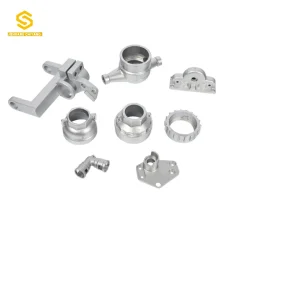
China China wholesale China Zhongshan Experienced Manufacturers A380 Aluminum Alloy/Zinc Alloy Parts OEM Precision Die Casting for Furniture Hardware Manufacturer, Supplier
View Product DetailsFrequently Asked Questions: Technical & Sourcing Guide
What dimensional tolerances can a China MIM factory achieve as-sintered?
Standard as-sintered dimensional tolerance for MIM components is ±0.3% to ±0.5% of the nominal dimension (for example, ±0.03 mm on a 10 mm feature). For critical high-precision features, post-sintering secondary operations such as CNC sizing, coining, grinding, or wire EDM can achieve tolerances down to ±0.005 mm (5 µm).
What is the typical Minimum Order Quantity (MOQ) and break-even point?
Due to hard tool steel mold setup costs, the standard economic production volume for Metal Injection Molding typically starts at 2,000 to 5,000 pieces annually. Compared to full 5-axis CNC machining from solid bar stock, MIM becomes drastically more cost-effective when part volumes exceed 3,000 units, yielding 30% to 60% total unit cost savings.
How does MIM sintered density compare to traditional wrought metals?
Modern vacuum-sintered MIM parts achieve a theoretical density of 96% to 99%. As a result, mechanical performance—including tensile strength, yield strength, impact toughness, and fatigue limits—is virtually identical to forged or machined wrought metals, vastly outperforming standard press-and-sinter powder metallurgy (which averages 80–90% density).
What are the weight and wall-thickness limitations for MIM design?
MIM is optimized for small, complex parts. The ideal part mass ranges from 0.1 grams up to 100 grams (though heavy-duty parts up to 280 grams are mass-produced). Ideal wall thickness ranges between 0.5 mm and 6.0 mm. Uniform wall thickness is highly recommended to ensure even debinding rates and prevent shrinkage distortion.
How long does tooling fabrication and sample submission take?
Tooling design, flow simulation, and mold building typically require 25 to 35 calendar days. First Article Inspection (FAI) samples along with 3D CMM inspection reports are submitted immediately following sample sintering. Once T1 samples are approved, full mass production ramp-up takes approximately 2 to 3 weeks.
Can MIM components undergo heat treatment and surface finishing?
Yes. Due to their high density (>97%), MIM parts respond to secondary finishing identically to wrought alloys. Available post-treatments include carburizing, quenching, tempering, passivation, electroplating (Chrome, Nickel, Gold), PVD coating, black oxide, mirror polishing, and laser etching.
Optimize Your Component Cost with China MIM Engineering
Submit your 3D CAD models (STEP/IGES) and 2D engineering drawings (PDF) for a comprehensive, confidential Design for Manufacturability (DFM) analysis and fast quotation within 48 hours.