
Featured Metal Powder & Die Cast Components (Batch 01)
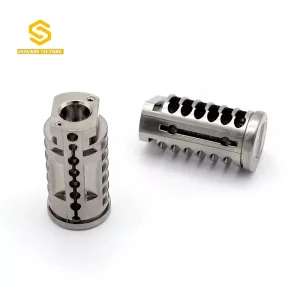
Explore high-precision sintered bearings, OEM transmission castings, lock cylinders, and custom powder metallurgy gears crafted to rigorous ISO 9001 and IATF 16949 standards.





Executive Summary: China's Role in Modern Metallurgy Sourcing
Understanding the macroeconomic shifts, technical evolution, and supply chain maturity driving global OEM procurement toward premier Chinese metal powder manufacturers.
Near-Net Shape Cost Efficiency
Traditional subtractive CNC machining can result in up to 70% raw material waste. Powder Metallurgy (PM) and Metal Injection Molding (MIM) achieve up to 95% material utilization, radically lowering the Total Cost of Ownership (TCO) for complex 3D metal components.
Integrated Supply Chain Synergy
From fine gas-atomized powder production to high-tonnage compaction presses, vacuum debinding sintering furnaces, and secondary CNC precision finishing, China offers an unmatched end-to-end industrial cluster for rapid scale-up.
Rigorous Quality Governance
Modern Chinese powder metallurgy factories operate with automotive-grade quality frameworks (IATF 16949, ISO 9001). Utilizing CMM profile checking, optical sorting, and metallographic grain analysis, batch consistency reaches zero-ppm defect targets.
Global Enterprise Procurement: Critical Sourcing Requirements
Procurement directors and chief engineers face stringent trade-offs between precision tolerances, mechanical strength, lead times, and unit economics. Here is how advanced Chinese factories address critical engineering challenges.
1. Geometrical Complexity & Miniaturization
Modern applications in medical tools, smartphone hinges, and automotive sensors require intricate 3D geometries with internal channels, cross-holes, undercuts, and fine splines. Metal Powder Products (specifically MIM) mold complex metals just like plastic, eliminating secondary operations.
2. Metallurgical Performance & Material Options
Global buyers require alloy compliance identical to wrought metals. Leading Chinese manufacturers deliver certified materials including 316L and 17-4PH stainless steels, Fe-Ni alloy steels, tungsten heavy alloys, Zamak 3/5 zinc alloys, and lightweight structural aluminum (A380, ADC12).
3. Risk Mitigation & DFM Verification
To avoid costly tooling modifications, engineering teams need thorough Design for Manufacturability (DFM) reviews prior to mold cut. Advanced suppliers provide mold flow simulation, binder burnout analysis, and rapid metal 3D-printed prototypes within 48 to 72 hours.
Technical Route Evaluation & Material Performance Matrix
Compare process economics, geometric design limits, and mechanical capabilities to identify the optimal manufacturing technology for your component drawings.
| Manufacturing Technology | Ideal Part Geometry | Typical Volume (Pcs) | Relative Density (%) | Dimensional Accuracy | Material Utilization |
|---|---|---|---|---|---|
| Metal Injection Molding (MIM) | Highly complex 3D shapes, thin walls, micro-geometries | 5,000 – 5,000,000+ | 96% – 99.5% | ±0.3% to ±0.5% (±0.03mm micro) | > 95% |
| Press & Sinter (PM) | 2.5D stepped gears, bushings, structural rings, pulleys | 10,000 – 1,000,000+ | 85% – 92% (Up to 98% with HIP) | ±0.05mm to ±0.1mm | 95% – 98% |
| Aluminum / Zinc Die Casting | Thin-walled housings, heat sinks, structural covers | 2,000 – 500,000+ | Cast Density (Solid Outer Shell) | ±0.05mm – ±0.15mm | 85% – 90% (Recyclable sprues) |
| 5-Axis CNC Machining | Simple to moderate solid blocks, prototype volumes | 1 – 2,000 | 100% (Wrought Stock) | ±0.005mm – ±0.01mm | 15% – 40% (High scrap) |
Deep Dive: MIM Process Steps
Feedstock Compounding: Fine elemental or pre-alloyed metal powders (< 20μm) are homogenously blended with a thermoplastic polymer binder system.
Injection Molding: Formed on standard plastic injection molding machines into "Green" parts.
Debinding: Binders are extracted chemically via solvent immersion or thermally.
High-Temp Vacuum Sintering: Parts are densified at temperatures up to 1380°C under controlled hydrogen/argon or vacuum atmospheres, shrinking uniformly by 15–20% to reach final mechanical strength.
Deep Dive: Press & Sintering (PM)
Powder Formulation: Base iron, copper, or stainless powders are blended with solid lubricants (zinc stearate) and alloying elements.
Uniaxial Compaction: Rigid steel dies press powders under high tonnage (200 to 1,000 tons) into high-green-density shapes.
Belt Sintering: Moving continuously through mesh-belt furnaces at 1120°C–1250°C to create solid-state atomic bonds.
Sizing & Coining: Post-sinter pressing restores exact tight tolerances and surface burnishing.
Cross-Industry Solutions & Sectoral Applications
Discover how custom metal powder components power modern engineering innovation across global OEM markets.
Automotive & New Energy Vehicles (NEV)
Sintered planetary gearboxes, Variable Valve Timing (VVT) rotors, seat adjustment mechanisms, turbocharger vanes, and aluminum die-cast battery cold plates. High fatigue resistance ensures millions of maintenance-free duty cycles.
Medical Devices & Surgical Hardware
Biocompatible 316L and 17-4PH stainless steel laparoscopic grabbers, titanium scalpel handles, dental brackets, and endoscopic articulation joints requiring passivated surface finishes and tight anatomical tolerances.
Consumer Electronics & Smart Wearables
Precision MIM titanium and stainless steel foldable smartphone screen hinges, smartwatch bezels, camera ring housings, and earphone acoustic chambers with ultra-thin wall limits down to 0.3mm.
Industrial Automation & Power Tools
High-torque planetary gears, impact wrench ratchets, hydraulic valve spools, cable lock cylinders, and wear-resistant tungsten carbide inserts engineered for harsh high-vibration operational environments.
Technology Roadmap: Next-Gen Powder Metallurgy Trends
Leading Chinese manufacturers continue to push the boundaries of materials science, automation, and additive manufacturing integration.
1. Titanium MIM Expansion (TiMIM)
Overcoming oxygen-pickup vulnerabilities through low-temperature debinding and specialized vacuum argon furnaces, making titanium alloys accessible for medical implants and high-end consumer devices.
2. Hybrid Additive Manufacturing
Combining Binder Jetting (3D printing powder beds) with high-temperature sintering to skip physical tooling entirely for low-volume production while maintaining powder metallurgy material benefits.
3. AI-Driven Thermal Simulation
Employing machine learning algorithms and finite element software to predict shrinkage behavior during sintering, eliminating trial-and-error mold revisions and shortening time-to-market by 40%.
4. Green Metallurgy & Low-Carbon Footprints
Utilizing closed-loop water atomization, solvent recovery systems, and solar-assisted continuous sintering furnaces to minimize global carbon intensity in compliance with European ESG standards.
Quality Assurance, DFM Workflows & International Compliance
Ensuring seamless international supply chain integration with comprehensive legal, technical, and quality documentation.
Strict IP Protection & NDA Agreements
We respect international intellectual property rights. Formal bilateral Non-Disclosure Agreements (NDAs) are signed prior to reviewing 3D CAD geometries (STEP/IGES/DWG). Secure cloud servers restrict data access strictly to assigned project engineers.
Certified Testing Laboratory
Our in-house quality assurance center is equipped with Zeiss CMMs, Keyence Optical Measuring Systems, SPECTRO X-ray Fluorescence Spectrometers for material composition verification, density scales, and MTS tensile testers.
Export Logistics & Incoterms
Full support for global shipping options including DDP (Delivered Duty Paid), FOB Ningbo/Shanghai, CIF, and Express Air Freight. Every export shipment includes full Material Test Reports (MTR), PPAP Level 3 documentation, and ROHS/REACH compliance certificates.
Precision Engineering Portfolio (Batch 02)
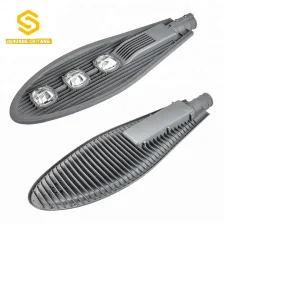
Explore additional specialized MIM parts, die casting machinery output, 316L motor gears, and custom aluminum transmission assemblies.





Technical & Procurement Knowledge Base (FAQ)
Clear answers to complex engineering, ordering, and technical queries regarding powder metallurgy, MIM, and die casting manufacturing in China.
What is the primary technical difference between Powder Metallurgy (PM) and Metal Injection Molding (MIM)?
Press & Sinter Powder Metallurgy (PM) utilizes uniaxial mechanical compaction of coarse powder mixes inside a rigid die cavity, best suited for 2.5D shapes, gears, and symmetric rotational parts. Metal Injection Molding (MIM) blends micro-fine metal powder with a polymeric binder to mold complex 3D shapes like plastic injection molding, making it ideal for thin walls, undercuts, and intricate medical or electronic components.
What dimensional tolerances can be reliably achieved in as-sintered MIM components?
Standard as-sintered tolerances for MIM components typically range within ±0.3% to ±0.5% of the nominal dimension (e.g., ±0.05mm on a 10mm feature). For tighter tolerances down to ±0.01mm or ISO IT6 standards, secondary operations such as CNC reaming, sizing, or precision grinding are applied post-sintering.
How do the mechanical properties of sintered metal powder products compare to machined wrought metals?
Because MIM components reach 96% to 99.5% of theoretical solid metal density, their tensile strength, yield strength, hardness, and fatigue life are virtually indistinguishable from wrought metals (often reaching 98–100% of ASTM wrought equivalents). Conventional PM components reach 85–92% density, providing self-lubricating porous matrix properties ideal for oil-impregnated bushings.
What are the typical lead times for tooling construction and sample delivery?
MIM and Die Casting mold tooling construction typically requires 25 to 35 calendar days depending on cavity count and geometric complexity. First Article Inspection (FAI) samples with full CMM measurement reports are delivered within 5 days following tool validation.
What is the Minimum Order Quantity (MOQ) for custom OEM production runs?
Standard production MOQs are 2,000 pieces for MIM and CNC machined parts, 5,000 pieces for press-and-sinter powder metallurgy parts, and 2,000 pieces for aluminum or zinc die castings. Prototype and initial validation batches can be supported on a project basis.
How does the factory protect proprietary engineering designs and sensitive client data?
We execute strict corporate Non-Disclosure Agreements (NDAs) prior to file transfer. Engineering drawings (STEP, IGES, PDF) are encrypted and isolated within restricted network permissions. We never share customer proprietary designs or cross-utilize tooling assets for unauthorized third parties.
What CAD file formats are required to submit an RFP or DFM request?
For accurate DFM and engineering cost quotation, please provide both a 3D CAD model (.STEP, .IGES, or .X_T) for solid volumetric calculation and a 2D engineering drawing (.PDF or .DWG) specifying critical tolerances, surface finish roughness (Ra), and material grade details.