
Featured Sintered Metal & MIM Components
Explore our high-density precision sintered components engineered for complex automotive, medical, industrial hardware, and electronics applications.








Technical Whitepaper: Metal Powder Sintering & MIM Engineering Excellence
Metal Powder Sintering is the thermal consolidation of compacted metallic powders below their melting point, forming high-strength, near-net-shape structural components. By integrating thermal atomic diffusion, continuous atmosphere sintering furnaces, and state-of-the-art Powder Metallurgy (PM) and Metal Injection Molding (MIM) processes, Chinese manufacturing hubs provide unprecedented material utilization and cost efficiency for international procurement teams.
Information Gain Metric: Traditional CNC subtractive machining wastes up to 60-75% of raw alloy bar stock in high-complexity geometry. Powder sintering achieves 95% to 98% raw material utilization, reducing energy footprints and raw metal acquisition overhead while maintaining tensile strength comparable to wrought materials (MPIF Standard 35 compliant).
Solid-State Sintering Kinetics
During the sintering phase in high-temperature belt furnaces (ranging from 1120°C to 1380°C depending on alloy chemistry), interatomic diffusion takes place across powder particle boundaries. This neck growth mechanism eliminates micro-porosity, yielding solid densification levels upwards of 7.2 g/cm³ to 7.6 g/cm³ for iron-copper and stainless steel formulations.
Controlled Atmosphere & Vacuum Furnaces
Preventing oxidation during thermal processing is critical. Our modern Chinese facilities utilize endothermic gas, decomposed ammonia (75% H₂ / 25% N₂), and vacuum sintering systems. High-vacuum sintering is specifically deployed for titanium (Ti-MIM), 17-4PH, and 316L stainless steel parts to guarantee zero corrosion embrittlement.
Dimensional Precision & ISO Tolerances
Near-net-shape capability drastically eliminates post-machining. Sintering shrinkage is mathematically modeled using advanced DFM simulation tools. Standard press-and-sinter parts achieve ISO 2768-m specifications, with critical features tightened to ±0.015mm via sizing, coining, or CNC secondary operations.
Material Performance Matrix: Sintered Alloys & MIM Steels
Select the ideal metallurgical powder formulation based on yield strength, tensile performance, hardness, and environment exposure requirements.
| Material Grade | Common Process | Sintered Density (g/cm³) | Tensile Strength (MPa) | Yield Strength (MPa) | Typical Industrial Application |
|---|---|---|---|---|---|
| MIM 17-4PH (Custom 454) | Metal Injection Molding | 7.50 – 7.65 | 1,150 – 1,300 | 1,050 – 1,180 | Medical Instruments, High-Load Automotive Gears |
| MIM 316L (Austenitic) | Metal Injection Molding | 7.60 – 7.80 | 520 – 600 | 220 – 280 | Earphone Fittings, Lock Hardware, Chemical Valves |
| FC-0208 (Fe-Cu-C) | Press & Sinter (PM) | 6.80 – 7.20 | 350 – 550 | 280 – 420 | Powder Metallurgy Gears, Timing Pulleys, Structural Caps |
| FN-0205 (Fe-Ni-C) | Press & Sinter (PM) | 7.00 – 7.40 | 450 – 700 | 350 – 550 | High-Torque Power Tool Gears, Automotive Cam Sprockets |
| Ti-6Al-4V (Grade 5 Titanium) | Vacuum Ti-MIM | 4.38 – 4.43 | 880 – 970 | 800 – 890 | Aerospace Fasteners, Biomedical Implants, Luxury Consumer Tech |
China Factory Strategic Advantages: Supply Chain & Cost Efficiency
Sourcing sintered metal parts and complex MIM components from tier-1 Chinese manufacturers grants global enterprises a distinct commercial edge through vertical supply chain integration, aggressive turn-around times, and massive capital infrastructure investments.
Ningbo / Yangtze Delta Supply Ecosystem
Our strategically situated facilities in Ningbo, Zhejiang benefit from an immediate cluster of raw powder suppliers, specialized toolmakers, plating specialists, and international deep-water logistics ports. This industrial density reduces tooling turnaround times from months to mere weeks.
Substantial Total Cost of Ownership (TCO) Savings
By pairing high-volume automated pressing equipment (up to 1,000-ton capacity) with lower tooling amortization costs, global buyers experience unit price reductions between 30% to 60% compared to Western manufacturing quotes without sacrificing quality.
Rapid Tooling & Prototype Turnaround
Transitioning from 3D metal printing prototypes to multi-cavity hardened tool steel molds (H13/S136) is seamless. In-house tooling departments deliver high-precision dies in 25 to 30 days, supported by complete DFM engineering reports prior to steel cutting.
Macro Industry Solutions & Localized Applications
From sub-gram micro-components to high-torque powertrain assemblies, metal powder sintering powers mission-critical hardware globally.
Automotive Powertrain & VVT Systems
Variable Valve Timing (VVT) sprockets, oil pump rotors, ABS sensor rings, and seat recliner mechanisms require extreme wear resistance and fatigue strength. Sintered steel components infused with copper and nickel meet demanding IATF 16949 automotive standards.
Medical & Surgical Instrumentation
Endoscopic graspers, biopsy forceps, laparoscopic scissors, and surgical stapler components rely on 17-4PH and 316L MIM. These parts exhibit high density, biocompatibility, and intricate internal geometries impossible to machine conventionally.
Smart Lock & Security Hardware
Complex structural lock latches, deadbolts, clutch cams, and electronic door lock accessories produced via MIM offer smooth mechanical actuation, anti-drilling hardness (post heat treatment), and exceptional surface finish capabilities for electroplating.
Global Procurement Standards: E-E-A-T Quality Commitment
Meeting international supply chain requirements mandates relentless quality verification. Our manufacturing protocols adhere to rigorous statistical process control (SPC) and international environmental directives.
Design for Manufacturability (DFM)
Every engineering drawing undergoes pre-production evaluation by senior metallurgists. We optimize draft angles, wall thickness uniformity, radius fillets, and parting line placement to guarantee flaw-free sintering outcomes.
Metrology & Material Validation
Equipped with Zeiss CMMs, Optical Emission Spectrometers (OES) for powder chemistry verification, metallographic micro-structure analysis, and automated salt-spray test chambers, ensuring 100% compliance to drawing specs.
Compliance & Risk Mitigation
All materials comply fully with REACH, RoHS, and Conflict Minerals regulations. Complete PPAP Level 3 documentation, full lot traceability via MES software, and dual-sourcing options are standard for international clients.
Additional OEM Custom Products & Assemblies
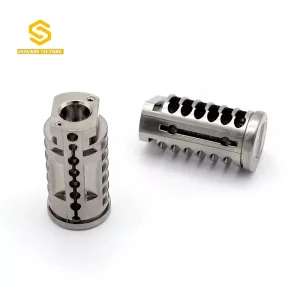
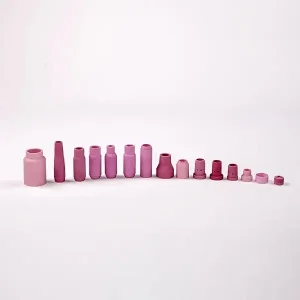
Discover additional precision components including lock accessories, die-cast housings, custom fittings, and earphone MIM elements.





Technical & Procurement FAQ
Expert insights on metal powder sintering design guidelines, tooling costs, density thresholds, and lead times.
What is the key difference between Press-and-Sinter Powder Metallurgy (PM) and Metal Injection Molding (MIM)?
Traditional Press-and-Sinter Powder Metallurgy uses uniaxial mechanical pressing of dry metal powders in a rigid die, ideal for 2.5D geometries like gears, bushings, and timing pulleys. Metal Injection Molding (MIM) mixes fine metal powders with a polymeric binder to injection mold highly complex 3D shapes (undercuts, thin walls, cross-holes) similar to plastic molding, followed by debinding and high-temperature vacuum sintering.
What densities can be achieved via metal powder sintering?
Standard press-and-sinter parts typically achieve 85% to 92% of theoretical solid density (6.8 to 7.2 g/cm³ for steel). Metal Injection Molding (MIM) achieves 95% to 99% theoretical density (7.5 to 7.8 g/cm³ for stainless steel), delivering mechanical strength, impact toughness, and magnetic permeability virtually identical to forged or wrought alloys.
How fast can I receive a formal quotation and DFM analysis for my STEP files?
Upon uploading your 3D CAD files (STEP/IGES/X_T) and 2D dimensional drawings (PDF specifying tolerances and surface finish), our engineering team completes a comprehensive Design for Manufacturability (DFM) assessment and delivers an itemized cost proposal within 48 hours.
What is the typical tooling lead time and sample approval process?
Hardened steel tooling construction (using S136 or H13 mold steel) takes approximately 25 to 30 days. First Article Samples (T1) accompanied by full CMM dimensional inspection reports and material test certificates are dispatched immediately for customer sign-off prior to mass production.
Are secondary operations available in-house for tight tolerances?
Yes. While sintering provides near-net shapes, features requiring ±0.005mm tolerances are finished using in-house CNC machining, centerless grinding, coining presses, wire EDM, and tapping. We also offer surface treatments including heat treatment (carburizing, nitriding), passivation, electroplating, and PVD coating.
Accelerate Your Hardware Development
Partner with China's premier metal powder sintering manufacturer. Contact our metallurgy engineers for instant engineering support and competitive factory pricing.