
Explore our primary mass-production capabilities across custom powder metallurgy, micro-MIM components, copper-based sintered bearings, high-strength auto gears, and specialized sintering furnace infrastructure.







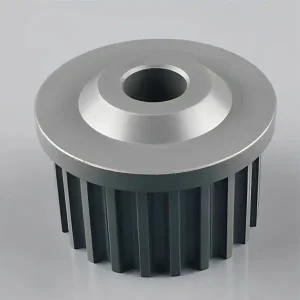
Technical White Paper: Modern Engineering of Metal Power Products in China
In the global industrial manufacturing matrix, China Metal Power Products Suppliers and Factories represent the nexus of advanced powder metallurgy (PM), Metal Injection Molding (MIM), and high-precision die casting technologies. This technical document serves as an enterprise-level architectural framework for procurement executives, lead design engineers, and supply chain directors seeking to optimize Total Cost of Ownership (TCO) while achieving micron-level tolerance fidelity.
Metal Power Products—encompassing water-atomized and gas-atomized elemental metal powders, sintered copper and iron structural components, stainless steel injection-molded complex geometries, and ceramic/aluminum light alloys—have fundamentally transformed modern mechanical design. By leveraging near-net-shape processing, global OEM manufacturers can bypass traditional subtracive CNC machining bottlenecks, reducing raw material waste by up to 95% and decreasing unit production costs by 30% to 50% without compromising yield strength, magnetic permeability, or density metrics.
Whether producing high-torque powder metal planetary gears, surgical-grade 316L MIM scalpel handles, or thermal management aluminum die castings, Chinese manufacturing facilities like Ningbo Jiehuang Chiyang Electronic Tech Co., Ltd. (JHMIM) integrate deep metallurgical expertise with state-of-the-art continuous furnace sintering and 3D optical CMM quality assurance.
China Factory Supply Chain Ecosystem: Technical & Economic Dominance
Understanding why leading Tier-1 automotive, medical device, and consumer electronics conglomerates source powder metallurgy and metal power products from China requires evaluating the end-to-end industrial ecosystem.
1. Raw Powder Synthesis & Atomization
China commands over 40% of global elemental and pre-alloyed powder production capacity. Factories benefit from localized access to ultra-pure gas-atomized spherical powders (particle size 5–25 μm for TiMIM and 17-4PH) as well as water-atomized powders for high-density structural PM pressings. This upstream integration eliminates overseas logistics markup and guarantees consistent powder chemistry lot-to-lot.
2. In-House Tooling & Tool Steel Engineering
Tooling development is the single largest timeline bottleneck in MIM and powder metallurgy. Chinese facilities integrate ultra-precision CNC spark-erosion EDM, wire-EDM, and high-speed CNC machining directly inside the plant. Multi-cavity progressive compaction dies and MIM molds made from tungsten carbide or SKD11 steel are built in 15–30 days at a fraction of Western tooling expenditures.
3. Advanced Atmosphere & Vacuum Sintering
Thermal processing dictates mechanical performance. Chinese suppliers operate state-of-the-art continuous pusher furnaces, mesh-belt debinding-sintering furnaces, and ultra-high-temperature (1700°C) electric vacuum atmosphere sintering furnaces. Controlled hydrogen, nitrogen, or argon vacuum environments ensure complete binder removal (debinding) and full core densification up to 98%+ of theoretical material density.
Sourcing Strategy & DFM Benchmarking for Global Enterprises
Selecting the correct manufacturing route for complex metallic products requires balancing geometric complexity, production volume, material density, and post-processing requirements. Below is a comprehensive engineering matrix comparing Metal Injection Molding (MIM), Powder Metallurgy (PM), Die Casting, and CNC Machining.
| Process Parameter | Metal Injection Molding (MIM) | Powder Metallurgy (PM) | Aluminum / Zinc Die Casting | CNC Machining Service |
|---|---|---|---|---|
| Optimal Geometry Complexity | Extreme (3D undercuts, internal threads, micro-wall <0.5mm) | Moderate (2.5D press-direction geometry, keyways, stepped gears) | High (Thin-wall enclosures, cooling fins, structural shells) | Moderate to High (Tool-path accessible surfaces) |
| Ideal Part Mass / Size | 0.1 g to 100 g (Max produced: 286 g) | 10 g to 3,000 g (Gears up to 150 mm) | 50 g to 15,000 g | Unlimited (High material waste for large blocks) |
| Dimensional Tolerance | ±0.3% to ±0.5% (Down to ±0.03 mm with sizing) | ISO IT8 to IT10 (As-sintered), IT6 (coined) | ±0.05 mm to ±0.1 mm | ±0.005 mm to ±0.01 mm |
| Material Utilization Rate | > 95% (Feedstock recyclable) | > 97% (Zero scrap pressing) | > 90% (Runners remelted) | 15% to 40% (60%+ converted to swarf) |
| Core Density achieved | 95% – 99% theoretical density | 85% – 92% (Up to 95%+ with double press/sinter) | Cast density (Potential porosity) | 100% Wrought Bar Stock Density |
| Break-Even Production Volume | 2,000 to 1,000,000+ pcs/year | 5,000 to 10,000,000+ pcs/year | 2,000 to 500,000+ pcs/year | 1 to 1,000 pcs (High unit cost at scale) |
By conducting a rigorous Design for Manufacturability (DFM) review prior to tool steel cutting, OEM procurement teams can optimize draft angles, uniform wall thicknesses (preventing sink marks during sintering), and shrinkage factor calculations (MIM feedstock shrinks linearly by 12% to 20% during final furnace sintering).
Material Science Expertise, Global Compliance & Quality Assurance
Reliability in high-stress mechanical systems requires rigorous metallurgical standard adherence. Chinese metal power product manufacturers strictly operate under IATF 16949 (Automotive Quality Management Systems) and ISO 9001 certifications.
Custom Alloy Formulations
Capabilities cover a broad material spectrum compliant with MPIF Standard 35, ASTM, DIN, and JIS specifications:
- Stainless Steels: 17-4PH, 316L, 304L, 420, 440C (Corrosion resistance & hardness up to 45-52 HRC)
- Low Alloy Steels: Fe-Ni-C (FN-0205, FN-0208), Fe-Cu-C, 4140, 8620 (High strength auto gears)
- Non-Ferrous Alloys: Copper-based self-lubricating bronze, Brass, Aluminum ADC12/A380, Zinc Za-3
- Specialty Materials: Titanium Ti-6Al-4V (Biocompatible medical & aerospace light alloy), Fuse Ceramics, Porcelain
Inspection & Testing Laboratory
Quality guarantees are backed by advanced analytical instrumentation operated by certified quality control teams:
- Zeiss 3D Coordinate Measuring Machines (CMM): Automated dimensional verification to ±0.002 mm
- Inductively Coupled Plasma (ICP) Spectrometry: Lot powder chemical composition analysis
- Universal Tensile & Micro-Hardness Testers: Yield, elongation, and Vickers/Rockwell hardness validation
- X-Ray Flaw Detection & Salt Spray Chambers: Internal void identification and corrosion resistance testing
Localization Support & International Compliance
For global enterprises operating in North America, Europe, Japan, and Southeast Asia, compliance is paramount. Leading Chinese factories provide full documentation packages including PPAP Level 3 (Production Part Approval Process), IMDS automotive database registration, RoHS/REACH chemical compliance certificates, and Conflict Mineral Reporting (CMRT). Furthermore, localized technical support and consignment inventory warehousing buffer global delivery lead times.
Industry Technology Trends: The Future of Metal Powder Manufacturing
The metal powder products sector is undergoing a massive technological shift driven by electrification, lightweighting, and green manufacturing imperatives.
Titanium MIM (TiMIM)
Rapid adoption of titanium injection molding for ultra-lightweight wearable electronics, surgical implants, and aerospace fasteners offering high strength-to-weight ratio.
1700°C Vacuum Atmosphere Sintering
Transition from traditional atmosphere mesh-belt furnaces to computer-controlled high-vacuum furnaces capable of achieving 99.5% theoretical density for refractory metals.
AI-Driven Mold Flow Simulation
Integration of Moldex3D and finite element analysis (FEA) to simulate binder jetting, feedstock injection velocity, and thermal shrinkage stress before mold manufacturing.
Ceramic Injection Molding (CIM)
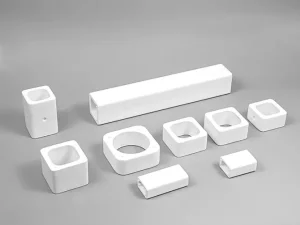
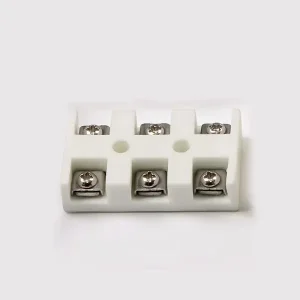
Expanding beyond metals into high-purity Zirconia ($ZrO_2$) and Alumina ($Al_2O_3$) ceramic components for electrical insulation, fuse ceramics, and wear nozzles.
Green Powder Metallurgy
Implementation of closed-loop water atomization systems and low-energy continuous sintering furnaces to achieve net-zero carbon footprints across global procurement channels.
Targeted Application Scenarios & Engineering Case Studies
Powder metal components are deployed in critical assemblies where structural integrity, wear resistance, and high dimensional repeatability are mandatory.
Automotive Powertrain & VCT Systems
Sintered iron-copper alloy timing sprockets, Variable Cam Timing (VCT) vanes, oil pump rotors, and transmission synchronizer hubs. PM parts offer superior acoustic damping compared to solid steel gears, reducing engine cabin noise.
Medical & Dental Instrumentation
MIM 17-4PH and 316L bio-compatible components for endoscopic surgical stapler jaws, laparoscopic graspers, orthodontic brackets (MIM MBT self-ligating brackets), and orthopedic power tool gearboxes requiring autoclave sterilization endurance.
Consumer Electronics & Smart Devices
Micro MIM stainless steel and titanium hinges for next-generation foldable smartphones, camera ring bezels, smartwatch structural chassis, and earphone acoustic cavities requiring high cosmetic polish and thin walls down to 0.3 mm.
Industrial Power Tools & Machinery
High-density powdered copper-based sintered bushings, planetary gear reductions for cordless drills, water pump pulleys, fuse ceramics, and aluminum-silicon metal alloy granules for high-stress aviation structural hardware.
Frequently Asked Questions: Technical Sourcing & Engineering Guidance
Common queries addressed by our Senior Metallurgical & Supply Chain Engineering Directors.
Explore additional high-precision capabilities including orthodontic brackets, specialized alloy granules, fuse ceramics, automotive tooling dies, and lightweight lighting enclosures.





Accelerate Your Metal Component Procurement Today
Submit your 2D/3D engineering drawings to receive a confidential, non-disclosure agreement (NDA) protected DFM evaluation and comprehensive quote within 48 hours.