
Featured Metal Injection Molding & Precision Metal Catalog
Explore our Tier-1 OEM manufacturing capabilities across medical MIM micro-forceps, high-density powder metallurgy components, structural die-cast housings, and precision CNC components.
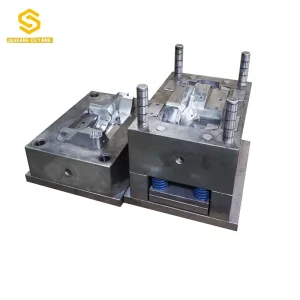
China China CNC Machining Service Aluminium Die Casting Tooling Mold Suppliers, Factories
View Technical Specs
China Short Lead Time for China Customized Kingtex Sintered Stainless Steel Sewing Machine Parts Manufacturer, Factories
View Technical Specs

Wholesale Ultra Titanium Case Parts Stainless Steel Watch Band Charms Manufacturers, Factory
View Technical Specs
Wholesale China Factory Automobile Generator End Cover Spare Auto Parts Die Casting Supplier, Factory
View Technical Specs
Wholesale Trending Products China Spherical Ta1 Alloy Powder for Spraying/Weldable Supplier, Suppliers
View Technical Specs

China Hot Sale for Precision Aluminum Zinc Alloy OEM Die Casting Parts Supplier, Factory
View Technical SpecsGlobal Industry Landscape: The MIM Evolution in Medical Forceps Manufacturing
In the rapidly advancing domain of Minimally Invasive Surgery (MIS), the demand for high-precision, ergonomically complex, and bio-compatible metal components has reshaped global medical device supply chains. Historically, surgical forceps jaws, scissors, dissectors, and needle holders were manufactured via multi-axis CNC machining, Swiss lathe turning, and manual investment casting. However, as surgical procedures shift toward sub-millimeter dexterity, robotic-assisted surgical (RAS) platforms, and single-use disposable laparoscopic instruments, conventional subtractive manufacturing reaches its economic and physical boundaries.
Metal Injection Molding (MIM) has emerged as the definitive benchmark technology for producing complex, high-volume medical forceps components. Combining the design freedom of plastic injection molding with the structural integrity of wrought metallurgical alloys, MIM allows China's premier medical device manufacturers to achieve net-shape geometries with relative densities exceeding 98.5% to 99.5% of theoretical density.
Medical-Grade Metallurgy & Design for Manufacturability (DFM)
Selecting the proper metallurgical composition is crucial for medical forceps applications. Surgical instruments undergo rigorous mechanical stress during clamping, cutting, and tissue manipulation, alongside harsh chemical sterilization protocols (e.g., ethylene oxide, gamma radiation, and repeated steam autoclaving).
Martensitic precipitation-hardening stainless steel offering exceptional tensile strength (up to 1300 MPa after H900 heat treatment) and high hardness. Ideal for grasper jaws, scissors, and high-load articulation linkages in laparoscopic forceps.
Low-carbon austenitic alloy delivering optimal biocompatibility and superior resistance to pitting corrosion in physiological saline environments. Widely utilized for endoscopic clip appliers, non-magnetic biopsy forceps, and housing sleeves.
Ultra-lightweight alloy with superior strength-to-weight ratio and MRI compatibility. Ti-MIM is increasingly integrated into advanced robotic surgical forceps arms where inertia minimization and extreme bio-inertness are required.
| Material Grade | Yield Strength (MPa) | Tensile Strength (MPa) | Elongation (%) | Hardness | Primary Surgical Application |
|---|---|---|---|---|---|
| MIM 17-4PH (H900) | 1,100 | 1,280 | 6.0 | 38 - 44 HRC | Heavy-duty grasping forceps, needle drivers, cutting jaws |
| MIM 316L (As-Sintered) | 220 | 520 | 40.0 | 160 - 190 HV | Endoscopic biopsy jaws, fluidic valves, housing caps |
| MIM 420 (QT) | 1,350 | 1,600 | 3.0 | 48 - 54 HRC | Surgical shears, micro-scissors, precision scalpel mounts |
| Ti-6Al-4V (ELi) | 830 | 900 | 10.0 | 32 - 36 HRC | Robotic wrist elements, lightweight ophthalmic forceps |
China Factory 4.0: Supply Chain Resilience & Manufacturing Efficiency
The transformation of China's MIM manufacturing ecosystem into automated Industry 4.0 smart factories provides global OEM medical buyers with unparalleled cost efficiency, supply chain stability, and speed-to-market. Industrial clusters in Ningbo and the broader Yangtze River Delta region aggregate the entire MIM value chain—from micro-fine spherical powder synthesis and custom binder formulation to multi-cavity tooling design, vacuum sintering, secondary CNC machining, and automated optical inspection (AOI).
Chinese MIM factories employ high-speed CNC mold carving and wire-EDM to deliver multi-cavity hardened steel molds in 25 to 35 days—compared to 8 to 12 weeks in Western facilities. Metal 3D printing (Direct Metal Laser Sintering) is integrated for pre-tooling functional prototypes, permitting physical DFM validation prior to capital investment.
While MIM achieves near-net shapes, critical hinge tolerances (within ±0.01mm) and cutting edges demand specialized secondary operations. Chinese manufacturers house automated 5-axis CNC centers, electrochemical polishing (ECP), laser welding, PVD titanium nitride coating, and passivation inline, guaranteeing end-to-end quality control.
Global Corporate Sourcing & Quality Management Architecture
Procurement executives and quality directors at leading global medical OEMs require absolute compliance with international medical device standards. China’s premier MIM forceps suppliers operate under robust ISO 13485 and IATF 16949 certified quality management systems (QMS), implementing strict Risk Management per ISO 14971.
Every raw material lot undergoes X-ray Fluorescence (XRF) alloy verification and particle size distribution analysis. Mold validation adheres to strict Installation Qualification (IQ), Operational Qualification (OQ), and Performance Qualification (PQ) protocols.
Micro-forceps feature microscopic teeth serrations and pinholes. Automated 3D Coordinate Measuring Machines (CMM) and high-resolution optical comparator vision systems ensure 100% dimensional compliance on critical features.
Cleanliness protocols remove organic binders completely during solvent and thermal debinding. Sintered parts undergo ultrasonic passivation in Class 100,000 (ISO Class 8) cleanrooms to meet cytotoxicity and pyrogenicity compliance.
Localized Application Scenarios in Modern Surgery
MIM medical forceps manufactured in China serve diverse specialized fields across human and veterinary surgical disciplines:
Multi-articulating wrist assemblies for robotic instruments require intricate pulley grooves, micro-actuation linkages, and high-strength jaws within a 5mm diameter footprint. MIM provides the requisite dimensional control and mechanical fatigue life at scale.
Bipolar electrosurgical graspers demand precise insulator-to-metal integration. MIM 17-4PH jaws feature intricate cross-hatch serrations that provide secure tissue holding without causing unintended tissue trauma, supporting both reusable and single-use shafts.
Process Selection Matrix: Technical & Economic Comparison
Understanding process boundaries is essential for medical engineering teams during early-stage product development:
| Evaluation Parameter | Metal Injection Molding (MIM) | 5-Axis CNC Machining | Investment Casting (Lost Wax) |
|---|---|---|---|
| Geometrical Complexity | Extreme (Internal cavities, micro teeth, undercuts) | Medium to High (Limited by tool access) | Moderate (Draft angles required) |
| Dimensional Tolerance | ±0.3% to ±0.5% (As-Sintered); ±0.01mm (Post-CNC) | ±0.005mm to ±0.01mm | ±0.7% to ±1.0% |
| Surface Finish (As-Produced) | Ra 0.8 - 1.6 µm (Polishable to Ra 0.2 µm) | Ra 1.6 - 3.2 µm (Tool marks visible) | Ra 3.2 - 6.3 µm (Requires hand grinding) |
| Material Utilization | > 95% (Feedstock recyclable prior to debinding) | 15% to 40% (High scrap rate) | 70% to 80% (Gating scrap) |
| Unit Cost at High Volume (>10k pcs) | Lowest (up to 60% lower than CNC) | Highest (Constant machine cycle time) | Moderate (High manual labor ratio) |
Frequently Asked Questions (FAQ) for OEM Buyers
China’s advanced MIM medical factories reliably achieve nominal wall thicknesses down to 0.30mm, with localized micro-features and tip serrations reaching radii down to 0.10mm, depending on binder formulation and powder particle size (typically 15–22 microns).
Shrinkage (typically 15% to 20% by volume) is precisely managed by utilizing high-homogeneity feedstock compounders, tight thermal profiling in vacuum sintering furnaces (±2°C zoning), and strict weight monitoring during solvent/thermal debinding.
Yes. Micro-embossing and micro-engraving can be integrated directly into the MIM tooling, eliminating secondary laser marking costs. Raised or recessed characters as small as 0.5mm in height are fully legible post-sintering.
Prototype tooling and T1 sample delivery typically take 25 to 30 calendar days. Upon sample approval and DFM sign-off, mass production lead times range from 3 to 4 weeks depending on batch volume and secondary finishing requirements.
Explore Additional Precision Powder Metallurgy & Die Casting Solutions
Complete your product ecosystem with engineered components manufactured under unified IATF 16949 and ISO quality standards.

Wholesale Popular Design for Sintered Process Powder Metallurgy Parts for Auto Steering Gear Rack Gears Auto Parts Manufacturer, Factories
View Technical Specs
Wholesale 2023 wholesale price OEM Powdered Copper Based Sintered Metal Parts Manufacturers, Suppliers
View Technical Specs
China 2019 New Style Custom Made Aluminum Die Casting Auto Parts Suppliers, Factories
View Technical Specs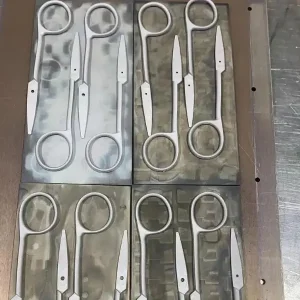

Wholesale OEM Customized Chinese Factory Precision Custom Hardware Accessories Magnesium Zinc Aluminum Parts Die Casting Supplier, Factories
View Technical Specs
China Trending Products China Metal Foundry Product Customized Aluminum Die Casting with Sand Casting Factory, Factories
View Technical Specs
China China OEM Ikari Custom Insert Molding China Manufacturers Metal Injection Molding Used in Automotive Connector Supplier, Factory
View Technical Specs
Wholesale Hot New Products China 2021 Trending Products Custom Processing Steel Powder Metallurgy Sintered Parts Manufacturers, Supplier
View Technical SpecsPartner with China's Premier MIM Medical Forceps Manufacturer
Accelerate your medical instrument development with our complete engineering design review, fast-turnaround mold prototyping, and high-volume MIM sintering capabilities. Request your comprehensive DFM analysis and quotation within 48 hours.