
Micro-MIM in Medical Technology: Macro Market & Global Landscape
Metal Injection Molding (MIM) has emerged as a cornerstone manufacturing technology for modern healthcare devices. As minimally invasive surgery (MIS), robotic-assisted surgical platforms, and implantable micro-mechanisms advance, global demand for ultra-precise, highly biocompatible micro-components has accelerated exponentially.
Global Medical MIM Dynamics
The global medical micro-MIM market is projected to grow at a CAGR of over 9.4% through 2030. Key growth catalysts include the miniaturization of surgical tools, high demand for endoscopic instruments, and wearable diagnostic devices. OEM medical device engineers require tight geometric tolerances without incurring astronomical CNC micro-machining costs.
The China OEM Advantage
China has transformed from a low-cost manufacturing hub into an advanced precision powder metallurgy powerhouse. Specialized industrial ecosystems—such as Ningbo and the Yangtze River Delta—integrate fine atomized metal powder preparation, custom feedstock compounding, multi-cavity micro-mould tooling, and atmosphere vacuum debinding/sintering within unified supply chains.
E-E-A-T & Reliability Assurance
Deploying medical micro components requires absolute structural integrity, non-compromised biocompatibility, and zero-defect quality control. Leading Chinese OEM suppliers combine ISO 13485 and IATF 16949 quality systems with full lot traceability, advanced CMM micro-dimensional validation, and chemical purity controls to satisfy top-tier medical OEMs worldwide.
Micro-MIM Science: Materials, Powder & Debinding Dynamics
Micro Metal Injection Molding (Micro-MIM) handles parts weighing under 1 gram with micro-scale structural details (features under 100 microns). Mastering Micro-MIM demands strict control over feedstock rheology, mold filling kinetics, debinding thermal control, and vacuum sintering shrinkage compensation.
Micro Powder Metallurgy Chemistry
Micro-MIM utilizes spherical gas-atomized metal powders with ultra-fine particle size distribution (D50 usually between 3 µm to 8 µm). Fine powders ensure superior surface finish (Ra < 0.8 µm), precise micro-replication of complex mold cavities, and complete filling of ultra-thin walls (down to 0.15 mm thickness).
Multi-Component Binder Systems
Custom-formulated binder matrices (wax-based, polyacetal/Catamold, or water-soluble polymers) prevent powder-binder separation under high shear micro-injection pressures. Solvent or catalytic nitric acid debinding removes primary binder components cleanly without inducing micro-cracks or part distortion.
Vacuum Sintering Integrity
High-temperature sintering occurs in hydrogen, argon, or high-vacuum thermal furnaces at temperatures ranging from 1,250°C to 1,380°C. Controlled thermal profiles achieve full atomic diffusion, eliminating microscopic void structures and yielding mechanical properties matching or exceeding wrought metals.
Medical Micro-MIM Alloy Specification Matrix
| Medical Alloy Standard | Composition / Grade | Sintered Density | Tensile Strength (MPa) | Typical Medical Application |
|---|---|---|---|---|
| 316L Stainless Steel | Fe-17Cr-12Ni-2Mo (Ultra-low C) | ≥ 7.90 g/cm³ (98%) | 520 - 600 | Endoscopic scissors, biopsy forceps jaws, housing enclosures |
| 17-4PH Stainless Steel | Fe-17Cr-4Ni-4Cu-Nb (Precipitation Hardened) | ≥ 7.75 g/cm³ (98%) | 1,150 - 1,350 (H900) | Surgical stapler anvils, high-torque micro gears, orthopedic latches |
| Titanium Grade 5 | Ti-6Al-4V ELI (Extra Low Interstitial) | ≥ 4.42 g/cm³ (99%) | 890 - 1,000 | Implantable dental brackets, spinal fixation micro-hooks, pacemaker components |
| Cobalt-Chromium | Co-Cr-Mo (ASTM F75) | ≥ 8.25 g/cm³ (98.5%) | 950 - 1,200 | Joint articulation micro-components, dental implants, wear rings |
| Tungsten Heavy Alloy | 95W-Ni-Fe / 97W-Ni-Fe | ≥ 18.0 g/cm³ (99.5%) | 900 - 1,050 | Radiation shielding collimate components, micro balance weights |
Featured Micro MIM & Powder Metallurgy Products
Explore our custom OEM parts, ceramic connectors, titanium MIM assemblies, high-temperature sintering equipment solutions, and precision hardware.
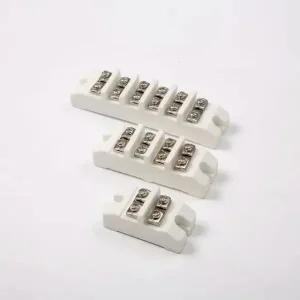
Wholesale Ceramic Terminal Connector Supplier, Factories

Wholesale High quality MIM Process for Titanium Alloy OEM Parts Factory

1700c High Temperature Atmosphere Vacuum Sintering Furnace for Powder Metallurgy CIM MIM
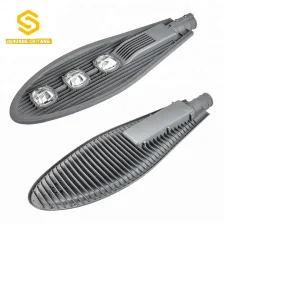
Wholesale Factory for OEM Machinery Auto Parts Die Casting Aluminium Alloy
Professional OEM Metal Injection Molding Process for Stainless Steel Parts

Hot Sale Factory Zamak 3 Customize Aluminum Zinc Alloy Die Castings

Stainless Steel Sintered PM Parts MIM Gear Part for Electronic Components

China Custom High Precision MIM PM Gear Structure Powder Metal Parts
Micro MIM in Action: Surgical, Endoscopic & Dental Scenarios
Medical micro parts fabricated via MIM deliver uncompromised mechanical reliability, high corrosion resistance, and intricate three-dimensional geometries that conventional CNC machining cannot replicate economically.
Robotic Surgery Wrist Gears
Robotic surgical systems require sub-millimeter planetary gearheads and wrist articulation joints. Micro-MIM allows 17-4PH and 316L stainless steel gears (pitch module < 0.2 mm) to withstand intense torsional cycles during robotic laparoscopic procedures.
Endoscopic Biopsy Jaw Assemblies
Micro biopsy forceps jaws and grasper components demand sharp teeth features, integrated pin holes, and thin-shell hinge mechanisms. MIM produces complete net-shape jaws with 0.05 mm radius teeth profiles requiring zero secondary EDM machining.
Orthodontic Self-Ligating Brackets
Medical-grade 316L and custom nickel-free stainless steel orthodontic brackets involve intricate internal archwire slots and locking spring clips. Micro-MIM mass-produces millions of brackets annually with ultra-smooth slot surfaces that reduce wire friction.
Future Directions: 2K Micro-MIM, Micro-CIM & AI Simulation
As medical technologies move toward micro-scale fluidics, targeted drug delivery, and bio-resorbable structures, Micro-MIM processes are evolving through digital hybrid manufacturing.
2-Component (2K) Micro-MIM
Co-injection molding of two distinct metallic powders (e.g., magnetic stainless steel combined with non-magnetic 316L) creates multi-functional monolithic components without requiring assembly pins, welding, or mechanical fasteners.
Ceramic Micro-Injection (Micro-CIM)
High-purity Zirconia (ZrO₂) and Alumina (Al₂O₃) ceramics are molded into bio-inert micro-tubes, insulator rings, and surgical cutter blades, offering extreme wear resistance, thermal isolation, and zero electromagnetic interference.
AI-Driven Cavity Simulation
Advanced Moldflow FEA tools simulate gate positioning, shear rate distribution, and volumetric shrinkage down to the micron scale. AI algorithms optimize mold cooling channels to eliminate sink marks and thermal warpage prior to steel cutting.
Global OEM Support: Compliance, Validation & DFM Guidelines
China MIM micro manufacturers provide end-to-end engineering support—from initial DFM (Design for Manufacturability) consultation through IQ/OQ/PQ equipment qualification and ISO 10993 biocompatibility testing compliance.
Rigorous DFM Design Criteria
Successful Micro-MIM parts start with optimization: maintaining uniform wall thickness (0.3 mm to 2.0 mm), providing internal draft angles (0.5° to 1°), placing gate locations away from critical functional teeth, and allowing radius fillets on internal corners to reduce stress concentration.
Medical Device Regulatory Audit
Facilities are certified under ISO 9001 and IATF 16949, operating cleanroom cleaning, ultrasonic degreasing, and specialized medical packaging stations. Full batch metallographic test reports, raw powder certificates, and CMM dimension maps accompany every shipment.
Localized Supply Chain Integration
Clients in Europe, North America, and Japan benefit from streamlined logistics, fast DFM turnaround (within 48 hours), rapid prototype sampling via metal 3D printing (Binder Jetting / DMLS) prior to tooling, and robust IP protection (NDA agreements).
Advanced Die Casting, Ceramic & Custom PM Hardware
Explore our expanded component manufacturing capabilities across zinc/aluminum die casting, zirconia ceramics, titanium MIM, and custom sintered steel parts.

Precision Casting Starter Aluminum Zinc Die Casting Parts Pulley Flywheel
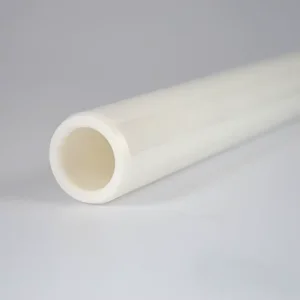
Wholesale Zirconia Ceramic Tube Manufacturer, Factories
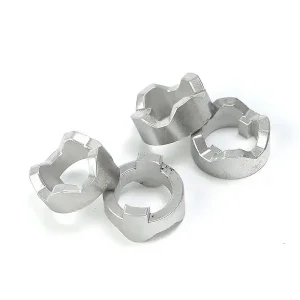
Wholesale Custom Titanium MIM Auto Parts Suppliers, Factories

Custom Processing Steel Powder Metallurgy Sintered Parts Manufacturer

OEM Hardware Mold Metal Injection Aluminum Zinc Die Casting Parts

Metal Injection Moulding Powders (MIM) Gas & Water Atomized

High Density Low Alloy Steel/Titanium MIM Electronic Component

China Factory Supplied Injection Molding Metal Parts Accessories Products
Frequently Asked Questions: China MIM Medical Micro Manufacturing
Expert answers to common engineering, quality, and procurement questions regarding micro metal injection molding components.
What is the minimum part weight and wall thickness achievable in Micro-MIM?
With specialized micro-injection molding units and fine gas-atomized powders (D50 < 5 µm), micro-MIM can reliably mass-produce micro parts weighing as little as 0.02 grams. Thin wall sections down to 0.15 mm (150 microns) can be filled consistently, depending on component geometry and flow length.
How does MIM compare to Swiss CNC turning and 5-axis micro-machining?
While Swiss CNC turning excels for simple cylindrical pins at low volume, Micro-MIM becomes dramatically more cost-effective for annual volumes exceeding 2,000 to 5,000 pieces featuring complex 3D shapes, internal threads, undercuts, or knurling. MIM reduces scrap material loss by over 90% and cuts part production costs by 30% to 50%.
What linear dimensional tolerances can be held without secondary machining?
As-sintered dimensional tolerances for Micro-MIM parts are typically maintained within ±0.3% to ±0.5% of nominal dimensions. For micro components under 5 mm, absolute tolerances of ±0.01 mm to ±0.02 mm can be consistently achieved. Critical features requiring tighter tolerances (e.g., ±0.005 mm) can undergo secondary micro-coining, sizing, or CNC finishing.
Are MIM materials fully biocompatible for surgical and implant applications?
Yes. Standard medical alloys such as 316L, 17-4PH, Titanium Ti-6Al-4V ELI, and Cobalt-Chromium (CoCrMo) processed via high-vacuum sintering exhibit non-porous fine-grain microstructures that satisfy ISO 10993 and ASTM medical standards for cytotoxicity, sensitization, and systemic toxicity.
What is the typical lead time for Micro-MIM tooling and sample validation?
Custom micro mold tooling design and fabrication generally takes 25 to 35 days. Initial T1 sintered sample approval reports (including full FAI CMM reports) are delivered within 5 days following tooling qualification. Rapid metal 3D printing prototypes can also be provided within 5 to 7 days for early design evaluation before cutting hardened steel molds.