
Precision Powder Metallurgy & MIM Catalog (Part 1)






Next-Generation Powder Metallurgy & MIM Engineering in China
In modern high-precision mechanical manufacturing, the request for lightweight, structurally complex, and high-strength metal components has driven a paradigm shift from traditional subtractive CNC machining toward additive and near-net-shape powder metallurgy technologies. Metal Injection Molding (MIM) and Press-and-Sinter Powder Metallurgy (PM) stand at the forefront of this industrial transition.
As a premiere China MIM Powder Metallurgy Manufacturer, Ningbo Jiehuang Chiyang Electronic Tech Co., Ltd. (JHMIM) leverages over 20 years of specialized powder metallurgy metallurgy research, advanced mold-making engineering, and continuous vacuum sintering technology. Operating out of a state-of-the-art 28,000 square meter manufacturing center, our operations are strictly accredited under IATF 16949 automotive quality management and ISO 9001 certification standards.
China's powder metallurgy ecosystem has evolved beyond low-cost production into a global hub for metallurgical innovation and advanced automation. By controlling the entire value chain—from elemental powder blending and binder formulation to catalytic debinding, continuous sintering, and sub-micron secondary machining—certified manufacturers deliver complex 3D metal components with mechanical properties comparable to wrought metals at a fraction of the cost.
Technical Benchmarking: MIM vs. PM vs. CNC vs. Investment Casting
Understanding the engineering boundaries of metal shaping technologies is critical for optimizing OEM project economics and mechanical integrity.
| Process Parameter | Metal Injection Molding (MIM) | Press & Sinter (PM) | 5-Axis CNC Machining | Investment Casting |
|---|---|---|---|---|
| Geometrical Complexity | Extreme (3D undercuts, internal threads) | Moderate (2.5D stepped profiles) | High (Tool access constrained) | High (Draft angle constrained) |
| Material Utilization | 95% – 98% (Near-Zero Scrap) | 90% – 95% | 15% – 40% (High Scrap Volume) | 80% – 85% (Riser/Gate Loss) |
| Dimensional Tolerance | ±0.3% – ±0.5% (CT4 - CT6) | ±0.2% – ±0.4% | ±0.005 mm (Ultra-precise) | ±0.7% – ±1.0% |
| Relative Density | 95% – 99% of Wrought Density | 85% – 92% (Porosity for oil impregnate) | 100% (Wrought stock) | 92% – 96% (Shrinkage voids possible) |
| Economical Batch Size | 2,000 to > 1,000,000 units | 5,000 to > 5,000,000 units | 1 to 1,000 units | 500 to 50,000 units |
| Surface Finish (Ra) | 0.8 µm – 1.6 µm (As-Sintered) | 1.6 µm – 3.2 µm | 0.4 µm – 1.6 µm | 3.2 µm – 6.3 µm |
The Metallurgy of Metal Injection Molding (MIM)
The MIM process combines the design freedom of plastic injection molding with the structural performance of solid metals. The process begins by atomizing metals into ultra-fine spherical powders (typically 4 µm to 20 µm in diameter). These powders are homogeneously mixed with a thermoplastic binder system to create a custom feedstock.
Global Procurement Needs & Industry Growth Trends
The global metal injection molding market size is expanding at a compound annual growth rate (CAGR) exceeding 8.5%, projected to cross $6.2 billion USD by 2030. Key macro factors driving this growth include the rapid miniaturization of electronic devices, the demand for lightweight high-torque automotive powertrains, and the rising adoption of minimally invasive medical instruments.
Strategic Procurement Drivers for Global OEMs
Global procurement teams in North America, Europe, and Japan face continuous pressure to balance supply chain resilience, component quality, and cost structures. Sourcing from top-tier Chinese powder metallurgy manufacturers provides strategic benefits:
Time-to-Market Acceleration
In-house tooling centers utilize 3D metal printing for rapid prototyping, reducing prototype validation cycles from 12 weeks to under 10 business days.
TCO & Tooling ROI Optimization
Multi-cavity mold engineering paired with lower tooling production overhead yields up to a 50% unit price reduction for annual volumes exceeding 50,000 pieces.
Zero-Defect Quality Control
Integrated Vision Inspection Systems and automated CMM dimensional logging ensure zero defect escape rates for critical automotive safety components.
Vertical Industry Solutions & Material Engineering
JHMIM formulates bespoke metallurgical solutions tailored to specific operating environments, thermal requirements, and mechanical stress profiles.
Automotive & Powertrain
High-strength alloy steel (Fe-Ni-C, Fe-Cu-C) sector gears, engine VVT actuators, turbocharger vanes, and seat adjustment mechanism components requiring high fatigue resistance.
Medical & Surgical Devices
Biocompatible 316L and 17-4PH stainless steel endoscopic grasper jaws, surgical scissor hinges, micro-laryngoscopy accessories, and dental orthodontic brackets.
Consumer Electronics
Ultra-thin smartwatch cases, foldable smartphone friction hinges, optical camera module frames, and wear-resistant titanium alloy (Ti-6Al-4V) components.
Industrial & Power Tools
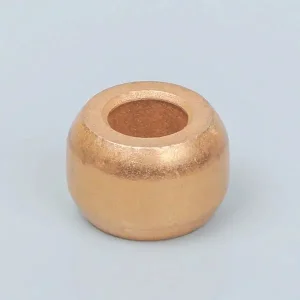
Hardened tungsten carbide and tool steel (M2, SKD11) planetary gearsets, keyless drill chuck jaws, pneumatic valve bodies, and self-lubricating oil-impregnated bronze bushings.
Localized Support, Quality Assurance & Regulatory Compliance
Managing offshore engineering procurement requires robust quality validation and regulatory compliance protocols. JHMIM provides international clients with end-to-end transparency, reducing risk and friction across cross-border operations.
Technology Roadmap & Future Outlook (2025–2030)
The powder metallurgy landscape is undergoing rapid innovation. Key technical advancements spearheaded by leading Chinese research facilities and JHMIM's internal R&D laboratory include:
1. Titanium Micro-MIM (Ti-MIM)
Commercial scaling of Ti-6Al-4V ultra-fine powder sintering for medical surgical implants and aerospace micro-fasteners with zero oxygen pickup.
2. Binder Jetting Hybrid Systems
Integrating toolless 3D metal binder jetting with conventional sintering lines to eliminate tooling costs for low-volume production runs.
3. AI Flow Simulation
Deploying machine learning models to simulate powder-binder phase separation, mold filling pattern anomalies, and non-linear volumetric sintering shrinkage.
Precision Powder Metallurgy & MIM Catalog (Part 2)






Frequently Asked Questions (FAQ)
Detailed answers to technical, procurement, and manufacturing questions regarding MIM and Powder Metallurgy production in China.
Standard as-sintered tolerances for MIM parts typically range from ±0.3% to ±0.5% of the nominal dimension (ISO 2768-m). For example, a 10 mm feature can be held within ±0.03 mm to ±0.05 mm as-sintered. When tighter tolerances (e.g., ±0.005 mm) are required for critical bearing fits or sealing faces, secondary CNC machining, sizing/coining, or grinding operations are integrated seamlessly.
Because MIM achieves 95% to 99% of wrought theoretical metal density through high-temperature vacuum sintering, its tensile strength, yield strength, elongation, and hardness are virtually identical to wrought parts machined from bar stock. Hot Isostatic Pressing (HIP) can be added to eliminate micro-porosity entirely for high-fatigue aerospace or medical applications.
Our baseline production MOQ is 2,000 pieces for standard MIM components and 5,000 pieces for press-and-sinter powder metallurgy parts. Prototype tooling and initial T1 sample evaluation typically take 25 to 35 calendar days depending on geometric mold complexity. Mass production delivery schedules average 3 to 4 weeks upon sample approval.
We process a wide range of standard alloys including Austenitic & Martensitic Stainless Steels (316L, 304L, 17-4PH, 420, 440C), Low Alloy Steels (Fe-Ni-C, FN-0205, 4140, 8620), Titanium Alloys (Ti-6Al-4V, Ti-CP), Soft Magnetic Alloys (Fe-Ni, Fe-Si), Tool Steels (M2, SKD11), and Wear-Resistant Ceramics (Zirconia, Alumina).
JHMIM adheres to strict IP protection protocols. We sign legally binding Non-Disclosure Agreements (NDAs) prior to receiving any CAD files (STEP/IGES/PDF). All project data is stored on encrypted local servers with restricted internal access, and parts are manufactured under strict confidentiality.
Optimize Your OEM Components Today
Submit your 2D and 3D engineering drawings for a complimentary Design for Manufacturability (DFM) review and transparent itemized quote within 48 hours.