
Featured Precision Metal & Die Casting Products
Explore our top-tier selection of OEM custom small metal parts, powder metallurgy components, and alloy die-casting solutions produced with ultra-tight tolerances and advanced material integrity.

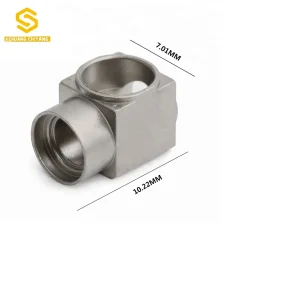



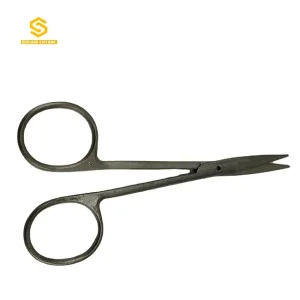
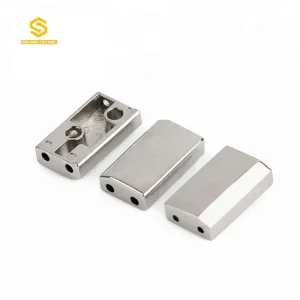
The Paradigm Shift in Micro-Metal Component Manufacturing
In the rapidly evolving landscape of advanced precision engineering, Micro and Mini Metal Injection Molding (Mini MIM) has emerged as a cornerstone technology for manufacturing complex, high-density metal components weighing from less than 0.1 grams up to 250 grams. Globally, original equipment manufacturers (OEMs) across automotive, medical device, aerospace, telecommunications, and high-end consumer electronics sectors are increasingly sourcing from specialized China Mini MIM parts manufacturers to solve intricate micro-geometrical challenges while optimizing Total Cost of Ownership (TCO).
What Defines Mini MIM Superiority?
Metal Injection Molding combines the geometric design freedom of plastic injection molding with the structural strength and mechanical integrity of wrought metals. When applied to miniature metal components (Mini MIM), traditional manufacturing techniques such as multi-axis CNC Swiss machining, investment casting, or conventional powder compaction encounter severe physics and economic limits:
- CNC Machining Limits: High material yield loss (up to 80% scrap metal), excessive tool wear on micro-endmills, inability to machine internal blind keyways or 3D internal channels.
- Investment Casting Limits: Poor surface finish (Ra > 3.2 µm), high dimensional variance (±0.5%), wall thickness constrained to > 1.5mm.
- Mini MIM Breakthrough: Near-net-shape processing, wall thicknesses down to 0.2mm, surface finish Ra 0.8–1.6 µm out of the sintering furnace, and mechanical tensile strengths matching standard wrought alloys.
Why Source Mini MIM Parts from China?
China's industrial ecosystem for powder metallurgy and MIM manufacturing has matured into a global center of excellence. Top-tier Chinese manufacturers integrate world-class German catalytic debinding units, Japanese vacuum sintering furnaces, and Swiss CMM inspection tools with localized supply chain advantages:
- Vertically Integrated Tooling: High-precision multi-cavity hot-runner molds manufactured in-house with lead times under 30 days.
- Raw Material Synthesis: Direct access to gas-atomized and carbonyl ultra-fine metal powders (D50 < 5–10 µm) for superior powder packing density.
- Scale & Flexibility: Automated production lines capable of producing tens of millions of micro components annually with rigorous quality assurance (IATF 16949 & ISO 13485).
The 4-Stage Mini MIM Manufacturing Process Pipeline
Understanding the thermal and chemical thermodynamics behind the MIM process is crucial for global procurement leaders and mechanical design engineers seeking optimal DFM (Design for Manufacturability) outcomes.
1. Feedstock Compounding
Ultra-fine spherical metal powders are homogeneous-blended with a thermoplastic/wax binder system at precise shear temperatures, creating a high-density feedstock containing approximately 60% metal volume fraction.
2. Micro Injection Molding
Feedstock is plasticized and injected into high-precision, multi-cavity molds under high injection pressure. The result is a green part with tight micro-geometries and 15–20% oversized dimensions to account for linear shrinkage.
3. Catalytic Debinding
Primary binder components are chemically removed using gaseous nitric acid (HNO3) or solvent extraction, leaving a porous brown part held together by a primary backbone binder, ready for high-temperature solid-state diffusion.
4. Vacuum Sintering
Brown parts are subjected to temperatures near the alloy melting point (1,200°C–1,380°C) in a controlled hydrogen/vacuum furnace. Atomic diffusion eliminates pores, shrinking the part to final dense form (>98% theoretical density).
Mini MIM Alloys Performance Specifications Matrix
China's leading Mini MIM suppliers process a broad spectrum of ferrous and non-ferrous alloys tailored for mechanical hardness, corrosion resistance, biocompatibility, or magnetic performance.
| Material Grade | Common Standard | Tensile Strength (MPa) | Yield Strength (MPa) | Hardness (HRC/HV) | Key Application Domains |
|---|---|---|---|---|---|
| 17-4PH Stainless Steel | ASTM A564 / UNS S17400 | 1,150 – 1,300 | 1,000 – 1,100 | 38 – 44 HRC | Surgical jaws, automotive latches, aerospace micro-valves |
| 316L Stainless Steel | ASTM A240 / UNS S31603 | 520 – 600 | 220 – 280 | 150 – 200 HV | Medical implants, watch clasps, wearable electronics, chemical micro-fittings |
| Fe-Ni Low Alloy Steels (FN0205) | MPIF Standard 35 | 1,200 – 1,480 (Heat Treated) | 1,050 – 1,250 | 45 – 52 HRC | Power tool micro-gears, lock mechanism cams, high-torque planetary systems |
| Ti-6Al-4V Grade 5 Titanium | ASTM B348 / ISO 5832-3 | 880 – 980 | 790 – 860 | 30 – 36 HRC | Lightweight aerospace fasteners, orthopedic surgical tools, luxury eyewear hinges |
| Tungsten Heavy Alloys (W-Ni-Fe) | ASTM B777 | 900 – 1,050 | 620 – 750 | 28 – 34 HRC | Vibration micro-motors for smartphones, radiation shielding, defense balance weights |
| Soft Magnetic Fe-Si / Fe-Ni Alloys | ASTM A848 | 350 – 450 | 200 – 260 | 120 – 160 HV | Solenoid cores, automotive sensor armatures, electronic relay actuators |
Technology Benchmark: Mini MIM vs. Alternative Manufacturing Routes
When evaluating micro metal fabrication techniques, engineering teams must weigh design flexibility, unit cost, dimensional precision, and material efficiency.
| Evaluation Parameter | China Mini MIM | 5-Axis CNC Machining | Precision Investment Casting | Metal 3D Printing (SLM/DMLS) |
|---|---|---|---|---|
| Part Complexity & Undercuts | Unlimited 3D Freedom | Limited by Tool Access | Moderate | Unlimited (Supports Needed) |
| Annual Volume Economic Range | 10,000 to 10,000,000+ pcs | 1 to 5,000 pcs | 1,000 to 50,000 pcs | 1 to 1,000 pcs |
| Material Utilization Rate | > 95% (Near Net Shape) | 15% to 40% (High Scrap) | 60% to 70% | > 90% |
| Surface Finish (as-sintered/cast) | Ra 0.8 – 1.6 μm | Ra 0.4 – 1.6 μm | Ra 3.2 – 6.3 μm | Ra 6.3 – 12.5 μm |
| Minimum Wall Thickness | 0.20 mm | 0.50 mm | 1.50 mm | 0.40 mm |
| Part-to-Part Repeatability | Excellent (±0.1% to ±0.3%) | High (±0.005 mm) | Moderate (±0.5%) | Variable (±0.2 mm) |
Sector-Specific Macro Solutions via China Mini MIM Suppliers
From minimally invasive surgical tools to next-generation automotive electric drive units, precision micro components from Chinese MIM facilities deliver uncompromising performance under rigorous operational stresses.
Medical Technology & Surgical Devices
Minimally Invasive Surgery (MIS) instruments demand micro-mechanisms with extreme tensile strength and biocompatibility. Mini MIM yields intricate stainless steel (17-4PH, 316L) surgical stapler jaws, laparoscopic grasper hinges, electro-cautery tips, and endoscopic micro-gears that undergo 100% non-destructive X-ray inspection.
Automotive Powertrain & Smart Sensors
Automotive OEMs transition to IATF 16949-certified Chinese suppliers for high-volume Mini MIM parts used in Variable Valve Timing (VVT) solenoids, turbocharger wastegate linkage levers, seat belt retractor micro-pawls, and electric vehicle battery disconnect switch relays.
Consumer Electronics & Wearables
Miniature folding smartphone hinges, smartwatch strap buckles, acoustic camera ring bevels, and optical transceiver housings benefit from Mini MIM's high polishability (PVD plating compatible) and high-density magnetic shielding properties.
Industrial Tools & Smart Hardware
High-torque power tool planetary gearboxes, hydraulic directional valve spools, smart door lock latch bolts, and pneumatic connector sleeves produced via Mini MIM achieve extreme wear resistance without requiring labor-intensive post-machining.
Aerospace & Defense Systems
Precision titanium and nickel-based superalloy Mini MIM parts supply critical flight control actuator joints, micro-fuel injection nozzles, and night-vision goggle structural housings where strength-to-weight ratio is paramount.
Horology & Luxury Goods
High-end luxury watch movement gears, spring bars, micro-clasps, and decorative casing bezels crafted from nickel-free stainless steel or precious metal MIM powders achieve Swiss-grade aesthetic mirror finishes post-polishing.
Compliance, Quality Controls & Risk Mitigation
Sourcing custom metal parts across international borders requires rigorous quality architecture, seamless engineering communications, and transparent supply chain logistics.
International Certification Matrix
Leading Chinese Mini MIM manufacturers hold audited certifications including:
- IATF 16949: Automotive Quality Management System
- ISO 13485: Medical Devices Quality Assurance
- ISO 9001:2015: Core Quality Management
- RoHS & REACH: Full Chemical Compliance
Advanced Metrology & Inspection
Zero-defect production is enforced through comprehensive laboratory equipment:
- 3D Automated Optical Inspection (AOI) & CMM
- X-ray Computed Tomography (CT) for internal pore checks
- XRF Spectrometers for raw powder chemical verification
- Universal Tensile Testing & Micro-Vickers Hardness Testers
Seamless Global Support
Overcoming localized sourcing friction via dedicated OEM engineering protocols:
- Bilingual technical sales team with 24/7 DFM response
- PPAP Level III submission for automotive approvals
- Door-to-door DDP air/ocean freight logistics
- Strict Non-Disclosure Agreements (NDAs) to protect IP
Technological Roadmap & Next-Gen Mini MIM Trends
As global industry demands smarter, lighter, and smaller metal components, China's MIM industry is driving innovation in multi-material co-injection, ceramic injection molding (CIM), and AI-driven thermal simulation.
1. Micro-MIM (<0.05g Parts) & Nano-Powders
By transitioning from standard 10–15 µm metal powders to sub-micron nano-powders, next-generation Micro-MIM allows micro-geometries with wall thicknesses under 0.1mm and edge radii under 10 microns, enabling breakthroughs in biomedical implants and micro-robotics.
2. 2K Multi-Material Co-MIM
Co-injection molding combines two distinct alloys (e.g., magnetic steel joined to non-magnetic stainless steel or wear-resistant tool steel bonded to structural steel) in a single green component, eliminating post-assembly welding or brazing steps.
3. AI-Simulated Mold Filling & Sintering Distortion
Advanced finite-element software models shear strain during mold filling and volumetric shrinkage during high-temperature sintering, predicting warp and distortion in advance. Tooling dimensions are adjusted prior to steel cutting, cutting prototype iterations by 60%.
4. Hybrid Additive-MIM Manufacturing
Integrating 3D Binder Jetting (BJT) with standard MIM sintering infrastructure allows rapid prototyping of complex metal parts using identical MIM powders without upfront tooling investment, seamlessly scaling from prototype into mass MIM production.
Expanded Powder Metallurgy & Custom Machined Components
Discover additional high-precision OEM products tailored for transmission casting, industrial couplings, sintered machinery parts, and specialized zinc/aluminum die-casting assemblies.








Frequently Asked Questions (FAQ) for Mini MIM Sourcing
Get authoritative answers to the most common engineering, cost, and lead time questions regarding Mini Metal Injection Molding in China.
What dimensional tolerances can be consistently held on Mini MIM parts?
Standard standard as-sintered tolerances for Mini MIM are ±0.3% to ±0.5% of nominal dimensions (e.g., ±0.03mm on a 10mm dimension). For critical functional features, micro-coining, CNC secondary sizing, or precision grinding can tighten tolerances down to ±0.005mm (±5 microns).
What is the Minimum Order Quantity (MOQ) and tool life for Mini MIM molds?
Due to initial tooling setup and catalytic debinding thermal cycle economics, production MOQs typically range from 2,000 to 5,000 pieces per batch. However, initial rapid prototypes can be evaluated via metal binder jetting. Hardened tool steel molds (S136 or H13) typically guarantee a lifespan of 500,000 to 1,000,000 shots.
How does the density of Mini MIM components compare to standard machined metal stock?
Vacuum sintered Mini MIM parts achieve 97% to 99% of theoretical wrought density. Consequently, mechanical properties—such as tensile strength, yield strength, impact toughness, and fatigue resistance—are comparable to bar stock and significantly outperform traditional pressed powder metallurgy (80–90% density) or die-cast alloys.
Can Mini MIM parts undergo secondary surface treatments or heat treatment?
Yes. Because Mini MIM parts are essentially fully dense wrought-like metal, they can be processed through conventional secondary operations including vacuum heat treatment (carburizing, quenching, tempering), electroplating (Ni, Au, Cr), Physical Vapor Deposition (PVD) coating, passivation, laser welding, and high-gloss electropolishing.
What drawing formats are required for an engineering quotation and DFM analysis?
We accept 3D CAD models in STEP (.stp), IGES (.igs), or SolidWorks (.sldprt) formats alongside 2D PDF drawings detailing critical tolerance callouts, surface roughness specifications, material grade requirements, and special inspection criteria.
Accelerate Your Micro Component Development
Partner with China's premier Mini MIM parts engineering specialists. Receive a comprehensive DFM review, mold filling simulation, and transparent quote within 48 hours.
Initiate Engineering Consultation →