
Next-Generation Magnetic & Precision Metal Metallurgy
A comprehensive technical report on China’s advanced MPP (Molypermalloy Powder) processing, custom Powder Metallurgy (PM), and Metal Injection Molding (MIM) engineering ecosystem.
In the evolving landscape of high-frequency power electronics, automotive electrification, and micro-mechanical component design, MPP (Molypermalloy Powder) metal powder products have emerged as an indispensable cornerstone. Engineered from a precise magnetic alloy composition—typically 81% Nickel (Ni), 2% Molybdenum (Mo), and 17% Iron (Fe)—MPP represents the highest benchmark in soft magnetic powder cores. It delivers unmatched performance characterized by ultra-low core loss, superior DC bias stability, high permeability options (ranging from 14µ to 550µ), and exceptional thermal stability across fluctuating industrial operating conditions.
China has transformed from a conventional casting hub into the primary global center for high-precision powder metallurgy and advanced metal injection molding. Modern Chinese MPP factories leverage state-of-the-art gas and water atomization systems, vacuum sintering furnaces, automated hydraulic compacting presses, and closed-loop quality control mechanisms. As a result, global Tier-1 automotive manufacturers, renewable energy systems integrators, and industrial machinery suppliers rely heavily on OEM suppliers in China to meet stringent performance metrics while optimizing unit economics.
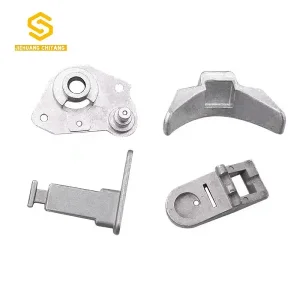
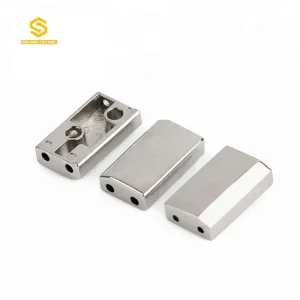
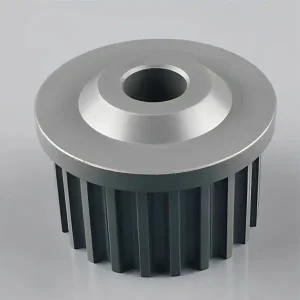
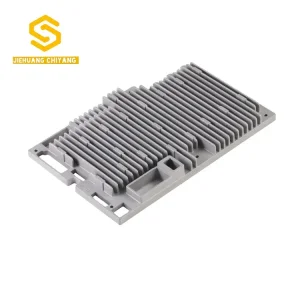
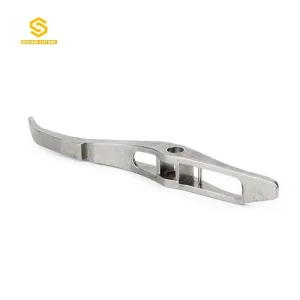
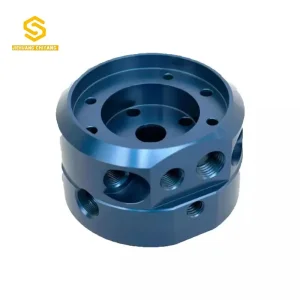
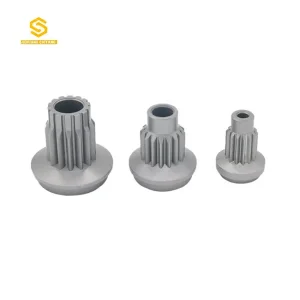
Featured Precision Metal Powder & OEM Component Catalog (Part I)
Direct factory supply of powder metallurgy gears, custom MIM components, and alloy die-casting parts manufactured in certified Chinese production facilities.
Global Commercial & Industrial Landscape of MPP & Metal Powder Products
The global demand for high-performance soft magnetic material cores and sintered precision components is accelerating at an unprecedented rate. Driven by the aggressive transition toward electric mobility (EVs), renewable energy infrastructure (solar inverters, wind turbine converters), high-frequency switch-mode power supplies (SMPS), and telecommunications (5G/6G base stations), the industrial requirement for soft magnetic materials with near-zero power loss has become critical.
Among various powder core formulations—including Sendust (Fe-Si-Al), High Flux (Fe-Ni), Iron Powder, and Amorphous alloys—Molypermalloy Powder (MPP) cores offer the lowest core loss and highest temperature stability available. The non-magnetic binder system dispersed uniformly across spherical atomized MPP grains ensures exceptionally stable inductance under high DC magnetizing forces. Consequently, aerospace electronics, military-grade power modules, medical diagnostic imaging power arrays, and automotive On-Board Chargers (OBC) specify MPP cores as the preferred design baseline.
Technical Insight: MPP cores exhibit negligible magnetostriction, making them virtually silent during high-frequency operation (20 kHz to over 500 kHz). This attribute renders MPP ideal for noise-sensitive telecommunication power units and audio frequency inductors.
Technical Performance Benchmarking: Soft Magnetic Alloy Cores
To assist procurement engineers and electronic design teams in selecting optimal magnetic materials, the following comparative engineering matrix illustrates the operational parameters of MPP relative to alternative powder core technologies:
| Core Type | Alloy Composition | Permeability Range (µ) | Core Loss (at 50kHz, 1000G) | DC Bias Performance | Relative Cost Index |
|---|---|---|---|---|---|
| MPP (Molypermalloy) | 81% Ni, 2% Mo, 17% Fe | 14 – 550 | Lowest (< 120 mW/cm³) | Excellent (> 80% at 100 Oe) | High / Premium |
| High Flux | 50% Ni, 50% Fe | 14 – 160 | Moderate (~ 350 mW/cm³) | Best (> 88% at 100 Oe) | Medium-High |
| Sendust (Kool Mµ) | 85% Fe, 9% Si, 6% Al | 26 – 125 | Low-Moderate (~ 220 mW/cm³) | Good (~ 60% at 100 Oe) | Economical |
| Iron Powder | 100% Fe (Carbonyl/Hydrogen) | 10 – 100 | High (> 1000 mW/cm³) | Fair (~ 50% at 100 Oe) | Lowest |
The China Efficiency Advantage in Metal Powder Manufacturing
Combining complete raw material supply chain control with cutting-edge powder atomization and automated press technology.
Upstream Supply Chain Integration
China leads the world in refined Nickel, Molybdenum, and Iron alloy sourcing. Domestic factories benefit from immediate raw material availability, mitigating geopolitical supply bottlenecks and minimizing lead times for custom alloy blending.
Ultra-Fine Atomization Technology
Leading Chinese MPP facilities utilize inert gas (Argon/Nitrogen) atomization furnaces capable of producing perfectly spherical powder particles down to sub-15 micron particle size distributions (PSD), crucial for MIM micro-parts and high-density cores.
High-Volume Automated Compaction
Deploying multi-axis CNC hydraulic powder compaction presses ranging from 50 to 1,000 tons, Chinese manufacturers achieve precise part-to-part consistency, high green density, and near-net-shape geometry without requiring extensive secondary machining.
Localized Application Scenarios & Sector Implementations
From automotive EV drivetrains to precision medical devices and aerospace actuators—how Chinese powder metallurgy solutions power global industries.
1. Automotive & Electric Vehicle (EV) Systems
In electric vehicles, efficiency directly correlates with driving range. MPP metal powder inductor cores are widely specified in EV On-Board Chargers (OBC), DC-DC converters, and main traction inverter power filters. The superior saturation flux density and thermal stability allow inductors to maintain stable inductance even under extreme ambient temperatures under the hood (up to 155°C). Additionally, custom sintered powder metallurgy components—such as oil pump gears, water pump pulleys, and timing sector gears—deliver 30% weight reduction and improved acoustic dampening compared to conventional solid steel gears.
2. Telecommunications & Data Center Power Supplies
5G base stations and AI cloud data centers require high-density power supply units (PSU) operating at elevated frequencies to achieve 80-Plus Titanium efficiency standards. MPP toroidal cores provide the lowest power loss available, enabling power designers to shrink inductor footprints while eliminating thermal runaway risks. Furthermore, Metal Injection Molding (MIM) stainless steel micro-components are widely utilized in fiber-optic connector housings, RF shielding modules, and server locking mechanisms.
3. Industrial Automation, CNC Machinery & Robotics
Heavy machinery and robotic joints demand high torque transfer within compact physical dimensions. Through advanced sintering and heat treatment (carburizing, induction hardening), Chinese factories supply alloy metal powder sector gears, planetary gearboxes, planetary cams, and lock components with yield strengths exceeding 850 MPa. Near-net-shape sintering significantly lowers production costs for complex gear tooth profiles that would otherwise require multi-axis CNC hobbing.
4. Renewable Energy (Solar & Wind Inverters)
Solar central and string inverters convert high-voltage DC arrays into clean AC grid power. Boost inductors in these systems encounter high DC bias currents combined with high-frequency ripple currents. MPP powder cores maintain high permeability without soft saturation limits, ensuring continuous power conversion efficiency exceeding 98.8% under full load solar generation.
Global Procurement & Supplier Selection Checklist
Key technical criteria for B2B purchasing managers and quality assurance auditors sourcing metal powder products from Chinese suppliers.
Quality System Certifications
Ensure the facility holds audited certifications including ISO 9001:2015 for general industrial products and IATF 16949:2016 for automotive parts. Verification of VDA 6.3 process audit compliance is recommended for European automotive buyers.
Metrological & Testing Capabilities
A reputable powder metallurgy factory must possess in-house Coordinate Measuring Machines (CMM), Optical Profile Projectors, Laser Particle Size Analyzers, B-H Analyzer loops for magnetic core loss testing, and Salt Spray Corrosion Test chambers.
DFM & Tooling Engineering
Evaluate the supplier's Design for Manufacturability (DFM) capabilities. Leading factories provide mold flow simulation for MIM, density distribution modeling for powder pressing, and 3D rapid prototyping before cutting physical tooling.
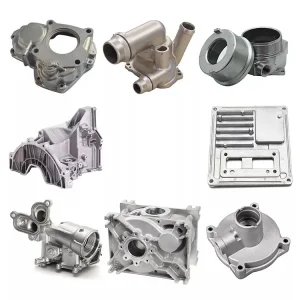
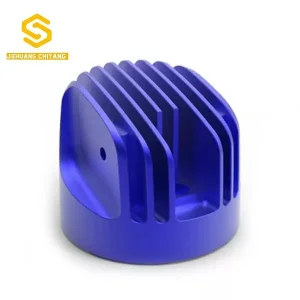
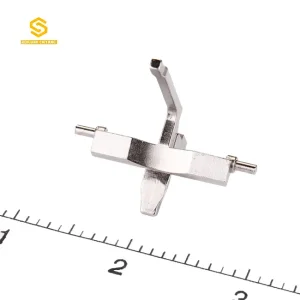
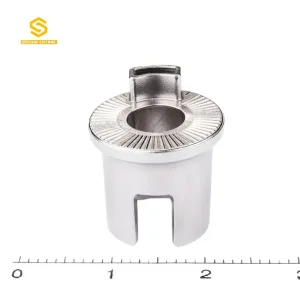
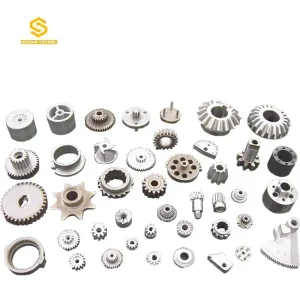
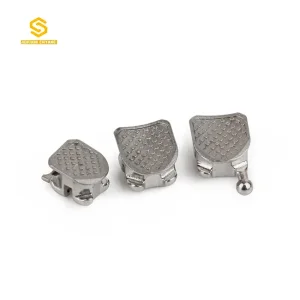
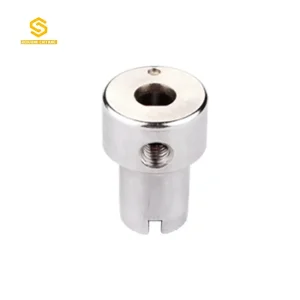
Featured Precision Metal Powder & OEM Component Catalog (Part II)
Explore custom sintered steel components, die casting hardware, and micro-MIM structural parts manufactured to strict ISO/IATF tolerances.
Development Trends in Powder Metallurgy & MPP Technology
Strategic technological shifts defining the next decade of advanced metal powder manufacturing in China.
The powder metallurgy industry is undergoing a digital and material transformation. Over the next decade, strategic innovations will reshape how MPP and custom alloy parts are designed and manufactured:
1. Ultra-High Frequency & Nanocrystalline Powder Formulations
As SiC (Silicon Carbide) and GaN (Gallium Nitride) power semiconductors increase switching frequencies beyond 1 MHz, traditional soft magnetic materials reach thermal limits. Chinese R&D centers are developing ultra-fine nanocrystalline-doped MPP powders with sub-micron oxide insulating coatings, pushing core loss performance down to unprecedented low levels at megahertz frequencies.
2. Hybrid Additive Manufacturing + MIM Sintering
Combining 3D binder jetting with traditional powder metallurgy sintering allows complex internal fluid cooling channels inside powder metal parts. This hybrid process eliminates mold tooling costs for low-volume aerospace and specialized industrial prototypes while maintaining full material density upon sintering.
3. Green Metallurgy & Low-Carbon Hydrogen Reduction
Addressing global ESG (Environmental, Social, and Governance) directives, top Chinese metal powder manufacturers are transitioning from ammonia dissociation to green hydrogen gas reduction furnaces. This operational shift lowers carbon footprints while enhancing powder purity by removing trace oxygen impurities.
Frequently Asked Questions (Technical & Procurement FAQ)
Expert engineering answers regarding MPP specifications, manufacturing lead times, quality assurance, and custom OEM processes.
MPP (Molypermalloy Powder) cores offer the lowest total power loss (hysteresis + eddy current loss) of any soft magnetic powder core technology. Unlike ferrite cores, which suffer from sharp saturation drops at high temperatures, MPP exhibits a smooth, gentle "soft" saturation curve up to 100 Oersteds or higher. Compared to Sendust, MPP maintains substantially higher permeability stability across a wider temperature range (-55°C to +125°C).
Standard as-sintered tolerances for precision MIM stainless steel and structural powder metallurgy parts are typically ±0.3% to ±0.5% of nominal dimension. With secondary coining, sizing, or CNC finish machining, tolerances as tight as ±0.005 mm (±5 microns) can be consistently maintained across mass production runs.
Certified factories follow APQP (Advanced Product Quality Planning) and PPAP (Production Part Approval Process) Level 3 protocols. Every batch shipment includes Material Test Certificates (MTC), dimensional CMM inspection reports, density test results, and magnetic hysteresis curve data (for soft magnetic cores).
For custom powder compaction dies or MIM injection molds, tool design and fabrication usually require 21 to 35 calendar days. First Article Samples (FAS) are delivered immediately following initial sample runs via express air freight. Mass production lead times typically range from 2 to 4 weeks upon sample approval.
Yes. Chinese atomization plants routinely formulate custom nickel-iron-molybdenum ratios, alter particle coating insulation chemistry, and adjust binder content to tailor magnetic permeability, saturation flux density, or specific mechanical yield strengths according to client engineering specifications.
While standard catalog powder metallurgy parts have flexible MOQs starting at 1,000 pieces, custom tooling parts generally start at 2,000 to 5,000 pieces depending on unit weight and material grade. Prototype sample quantities are supported prior to full production releases.