Featured Pneumatic & Metallurgical OEM Products
Directly sourced from verified ISO 9001 / IATF 16949 certified manufacturing facilities in Ningbo, China.
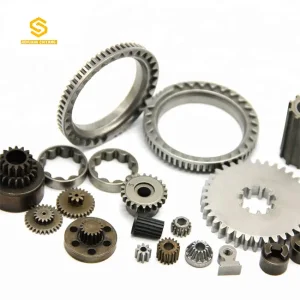
China Chinese Professional Custom Industrial Electromechanical & Power Tools High Quality Iron Based Powder Metallurgy Products Made in China Manufacturer, Suppliers
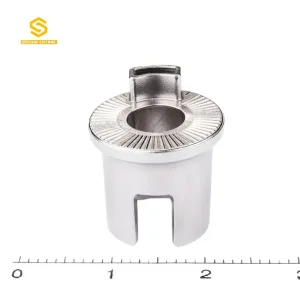
China 2019 Good Quality Manufacturer Customerization Wear-Resistant Anti-Corrosion Heat-Treatment Aluminium Oxide Sintering Non-Standard Alumina Ceramic Components & Parts Manufacturers, Factory
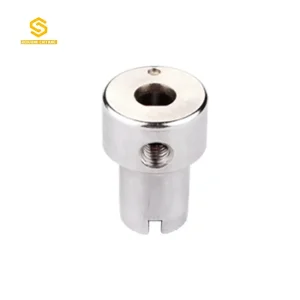
Wholesale High Quality MIM Metal Injection Molding Process High Volume Production for Metal Parts for Customized CNC Precision Turning Milling Stainless Steel Parts Machinery Parts Manufacturer, Manufacturers
China China Gold Supplier for Metal Injection Molding MIM Pim Remanufactured Diesel Engine Parts for Auto Aftermarket Manufacturer, Manufacturers
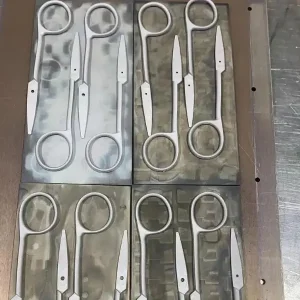
Wholesale MIM Titanium scalpel handle Factory, Factories
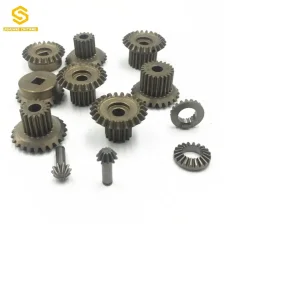
Wholesale Factory wholesale Auto Parts Accessory Sintered Engine Parts Tensioner Spare Powder Metallurgy Company Supplier, Suppliers
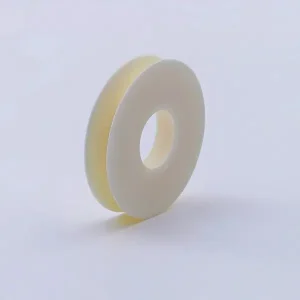
Wholesale What makes JHMIM a favorite for ceramic parts? Supplier, Factory
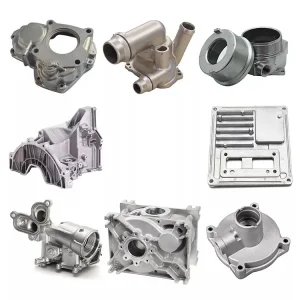
China Manufacturer Custom Metal Brass Zinc Die Casting Mould Parts Anodizing Aluminum Die Casting Suppliers, Factory
1. Executive Summary: The Global Industrial Dynamic of Pneumatic Exhaust Mufflers
In modern automated manufacturing, fluid power efficiency and environmental noise mitigation represent two critical operational pillars. Pneumatic exhaust mufflers—frequently designated as pneumatic silencers, porous sintered filters, or exhaust rebreathers—are indispensable fluid control devices designed to reduce the turbulent acoustic discharge generated by expanding compressed air. Operating at exhaust ports of pneumatic solenoid valves, air cylinders, vacuum generators, and high-speed rotary air tools, these components dissipate sonic kinetic energy while retaining structural backpressure equilibrium.
The global market for pneumatic silencers and exhaust filtration hardware is experiencing unprecedented expansion, driven by stringent global occupational safety mandates such as OSHA 1910.95 (Occupational Noise Exposure) in North America and EU Directive 2003/10/EC across European manufacturing territories. As industrial automation accelerates globally across automotive assembly line robotics, semiconductor wafer handling, pharmaceutical packaging, and heavy electromechanical power tools, procurement demands have shifted from commodity-grade brass fittings toward high-precision, porous sintered metal matrices (porous bronze and 316L stainless steel) engineered for maximum sound attenuation with minimum flow restriction (Cv rating).
Information Gain Insight: Selecting a pneumatic exhaust muffler is not simply a matter of choosing matching thread dimensions (NPT, BSPT, Metric). Advanced fluid dynamics dictates that an improperly engineered muffler induces high backpressure (ΔP), drastically reducing air cylinder actuation velocity, generating thermal buildup, and consuming excessive energy across compressed air networks. China's top tier manufacturers leverage advanced Powder Metallurgy (PM) and Metal Injection Molding (MIM) to mold complex porous geometries that balance acoustic damping (dB reduction) with optimal flow coefficients.
Material Science & Porous Media Engineering
Understanding the metallurgical composition, pore geometry, and acoustic dissipation mechanics of industrial silencers.
Sintered Porous Bronze
Fabricated by neck-bonding spherical copper-tin alloy powders under un-pressurized or controlled compaction sintering. Features uniform pore structure (5µm to 100µm ratings), high thermal endurance (up to 300°C), exceptional mechanical shock resistance, and a cost-effective acoustic dissipation profile suited for industrial valves.
Porous 316L Stainless Steel
Engineered for extreme environments including chemical processing, food & beverage contact, and sterile pharmaceutical lines. Manufactured via specialized powder metallurgy or metal injection molding (MIM). Offers unmatched resistance to nitric/sulfuric acids, zero particulate shedding, and burst strength exceeding 30 Bar.
Polyethylene & Hybrid Plastics
Utilizes ultra-high-molecular-weight polyethylene (UHMW-PE) porous element bodies threaded into solid brass or nickel-plated bases. Delivers compact footprint, light structural mass, superior chemical resistance against oil-mist lubricants, and low-cost disposable maintenance schedules in high-speed automated sorting rigs.
2. Technical Performance Matrix: Material & Acoustic Comparison
Industrial buyers must navigate technical trade-offs when selecting pneumatic silencers. Below is an engineering comparison compiled from factory empirical testing across major Chinese powder metallurgy research labs:
| Muffler Material Type | Micron Rating (µm) | Noise Damping (dB(A)) | Max Pressure (Bar) | Temp Range (°C) | Primary Application Environment |
|---|---|---|---|---|---|
| Sintered Porous Bronze | 20 – 80 µm | 25 – 38 dB(A) | 10 – 16 Bar | :-20°C to +160°CGeneral Industrial Automation, Factory Air Lines | |
| Porous Stainless Steel (316L) | 5 – 50 µm | 30 – 42 dB(A) | 20 – 35 Bar | -50°C to +400°CChemical Processing, Food/Pharma, Marine Rigs | |
| Sintered Plastic (UHMW-PE) | 10 – 40 µm | 20 – 30 dB(A) | 6 – 10 Bar | 0°C to +80°CPackaging Robotics, Electronics Assembly, Cleanroom | |
| Adjustable Speed Control Muffler | 30 – 100 µm | 15 – 28 dB(A) | 10 Bar | -10°C to +90°CActuator Speed Control & Exhaust Metering | |
| Heavy-Duty Wire Mesh Silencer | 100+ µm | 18 – 25 dB(A) | 25 Bar | -30°C to +250°CHigh-Flow Blowdown Valves, Heavy Mining Equipment |
China Factory Efficiency & Scale Advantage
Why Tier-1 global OEMs partner with Ningbo and Zhejiang metallurgical clusters for OEM custom pneumatic production.
1. End-to-End Powder Metallurgy Integration
Leading Chinese pneumatic suppliers feature fully integrated production value chains under one roof: atomized metal powder compounding, automated high-tonnage compaction presses, vacuum sintering belt furnaces, high-precision CNC thread machining (NPT, BSPP, BSPT, Metric), and automated optical inspection (AOI). This vertical integration cuts production lead times from 60 days to 14–21 days.
2. Rapid OEM DFM & Custom Tooling Capabilities
Through advanced CAD/CAM software, 3D metal printing simulation, and direct mold tooling, Chinese factories provide complimentary Design for Manufacturability (DFM) reviews within 24 to 48 hours. Custom thread pitches, non-standard hexagon bases, and specialized pore gradient structures can be prototyped and batch-tested rapidly at a fraction of Western tooling budgets.
3. Rigorous ISO Quality & Zero-Defect Protocols
Premier China pneumatic suppliers maintain strict compliance with ISO 9001 and automotive IATF 16949 quality systems. Every production lot undergoes helium leak detection, acoustic decibel chamber testing, differential pressure drop verification, and 100% thread gauge pass/fail inspection before export packing.
4. Economies of Scale & Raw Material Stability
Situated in major metallurgical regions like Ningbo (Zhejiang Province), factories enjoy direct access to high-purity electrolytic copper, tin, and stainless steel raw materials. Large volume purchasing power lowers component cost per piece by 30% to 50% while guaranteeing stable price commitments against global commodity fluctuations.
Localized Application Scenarios & Use Cases
How specialized pneumatic silencers optimize performance across key industrial sectors.
Automotive Manufacturing & Robotic Welding Lines
On high-speed robotic welding cells and stamping presses, pneumatic cylinders actuate hundreds of times per minute. Standard open exhaust ports emit deafening noise spikes exceeding 95 dB(A). Heavy-duty sintered bronze silencers installed on 5/2-way directional control valves absorb acoustic shock waves, reducing ambient workshop sound to comfortable 65-70 dB(A) levels while filtering airborne oil mists.
Semiconductor & Cleanroom Automation
In microchip fabrication plants and cleanroom wafer transport systems, zero-particulate contamination is mandatory. Sintered 316L stainless steel mufflers with 5-micron filtration elements prevent micro-dust particles from migrating backward into cleanroom vacuums during reverse-pressure spikes, preserving sterile manufacturing environments.
Electromechanical Power Tools & Air Compressors
High-torque air impact wrenches, pneumatic grinders, and portable air compressors rely on compact, low-profile flat-head or cone silencers integrated directly into handle housings. Powder metallurgy techniques allow Chinese suppliers to press compact porous iron or bronze discs that fit tightly into constrained tool frames without bottlenecking airflow.
Pharmaceutical & Food Processing Packaging
Washdown environments in dairy, beverage bottling, and pill packaging require pneumatic hardware resistant to harsh caustic washdown chemicals (chlorine, hydrogen peroxide). Passivated 316L stainless steel pneumatic mufflers with food-grade NPT threads guarantee corrosion resistance and eliminate rust flake contamination.
Pro Procurement Tip: When sourcing pneumatic mufflers for high-cycle packaging equipment, ensure the factory specifies the Cv (Flow Coefficient) alongside the thread dimension. A muffler with a high acoustic attenuation rating but insufficient Cv will choke valve exhaust, leading to sluggish cylinder stroke speeds and premature solenoid coil failure.
Industry Trends & Next-Gen Innovations
Emerging technological shifts re-shaping pneumatic exhaust technology over the next decade.
Integrated Smart Filtration
Modern factories are transitioning to dual-function coalescing silencers. These units integrate oil mist coalescing microfiber elements inside the porous sintered shell, trapping up to 99.9% of pneumatic oil vapors before clean air releases into the environment.
Ultra-Low Backpressure Expansion Design
Innovations in multi-stage expansion chambers allow exhaust air to expand progressively through tiered porous zones. This engineered gradient reduces acoustic velocity instantly while maintaining minimal backpressure differential (ΔP < 0.2 Bar).
Additive Manufacturing & Bimodal Pores
By blending Metal 3D Printing (SLM) with traditional powder sintering, factories are pioneering bimodal pore distribution matrices. These feature micro-pores for high-frequency noise trapping alongside macro-channels for unobstructed air release.
6. Global B2B Procurement Guide: Selecting China Pneumatic Muffler Suppliers
For international sourcing directors, OEM engineering teams, and regional distributors, selecting a qualified manufacturing partner in China requires systematically auditing technical capabilities beyond price per unit. The following framework highlights critical evaluation criteria:
A. Thread Standard Precision & Compatibility Verification
Industrial pneumatic systems utilize divergent international thread geometry standards. A superior Chinese manufacturer must offer precision CNC thread cutting certified against national standards:
- NPT (National Pipe Taper): 60° thread angle, standard across USA, Canada, and Mexico.
- BSPT (PT / R thread): 55° taper angle, standard across European, UK, and Japanese machinery.
- BSPP (G thread): 55° parallel straight thread requiring an O-ring or sealing washer face.
- Metric (M5, M6, M8): Fine pitch miniature threads for compact electronic solenoid manifolds.
B. Verification of Metallurgical Powder Quality
Inquire whether the factory utilizes 100% virgin atomized metal powder or recycled scrap turnings. Virgin copper-tin bronze powder ensures uniform pore bonding and prevents structural fracture under high-pressure impact pulses. Request material test reports (MTR) confirming chemical composition (e.g., CuSn10 for bronze, 316L for stainless steel).
C. Factory Auditing & Quality Management Checklist
| Audit Parameter | Standard Expectation | Critical Verification Metric |
|---|---|---|
| Quality System | ISO 9001 / IATF 16949 Certification | Valid third-party audit certificate (SGS, TÜV, Bureau Veritas) |
| Thread Tolerances | Class 2A / 6g Thread Fit | Go/No-Go thread gauge 100% sampling pass rate |
| Acoustic Testing | ISO 3744 Acoustic Measurement | In-house decibel sound chamber verification reports |
| Production Capacity | Automated Sintering Line | Monthly output capacity exceeding 1,000,000 units |
| Custom DFM Speed | Engineering Drawing Support | 2D/3D drawing review & quotation returned within 48 Hours |
Frequently Asked Questions (FAQ)
Expert technical answers to common engineering and sourcing questions regarding pneumatic exhaust silencers.
How do pneumatic exhaust mufflers achieve sound attenuation?
Pneumatic exhaust silencers reduce sound levels through two physical mechanisms: acoustic dissipation and velocity reduction. High-velocity expanding air discharged from solenoid exhaust ports creates violent turbulence (the source of noise). As air forces its way through thousands of tortuous micro-passages in the sintered porous matrix, turbulent kinetic energy converts into small thermal dissipations. Additionally, expanding the air discharge surface area lowers overall exhaust velocity, dropping noise levels by 20 to 42 dB(A).
What is the difference between NPT, BSPT, and BSPP silencer threads?
NPT (American National Standard Taper Pipe Thread) features a 60° thread angle and self-seals via thread wedge deformation. BSPT (British Standard Pipe Taper, also known as PT or R thread) has a 55° taper angle common in Europe and Asia. BSPP (British Standard Pipe Parallel, or G thread) is a straight parallel thread that relies on a sealing washer or O-ring pressed against the valve port face. Matching the exact thread type is essential to prevent air leakage or stripped aluminum valve manifolds.
Can porous sintered mufflers clog, and how are they cleaned?
Yes, over time, airborne particulate matter, dust, and degraded compressor oil sludge can accumulate within the porous channels, increasing backpressure. Sintered bronze and stainless steel silencers can be cleaned and reused. Maintenance involves removing the silencer, soaking it in an industrial degreasing solvent or ultrasonic cleaning bath for 15-30 minutes, and blowing clean compressed air in the reverse flow direction (outside-in) to flush trapped particles.
What is the typical MOQ and lead time when ordering from China factories?
For standard catalog items (e.g., standard brass body bronze element silencers in 1/8", 1/4", 3/8", 1/2" sizes), MOQs generally start around 500 to 2,000 pieces with lead times of 7 to 14 days. For fully custom OEM items requiring specialized powder metal molds, custom hex dimensions, or non-standard micron ratings, MOQs typically range from 2,000 to 5,000 pieces, with tooling and sample delivery completed within 25 to 35 days.
How does an adjustable speed control muffler work?
An adjustable speed control muffler integrates a needle valve thread mechanism within the silencer body. By turning the knurled adjustment screw, operators can throttle the exhaust airflow volume (adjusting the Cv flow coefficient) while simultaneously muffling exhaust noise. This allows precise control over the return stroke speed of pneumatic cylinders without requiring a separate inline flow control valve.
Why choose metal injection molding (MIM) over traditional sintering for silencers?
While press-and-sinter powder metallurgy is ideal for standard cylindrical or conical porous elements, Metal Injection Molding (MIM) allows for highly complex, multi-featured 3D geometries. MIM is specified when the muffler body requires integrated mounting flanges, internal threads, complex fluid channels, or ultra-thin structural walls that traditional powder compaction presses cannot form without Secondary CNC machining.
Custom OEM Component Manufacturing Capabilities
Explore our full line of powder metallurgy, metal injection molding, ceramic, and die casting products.
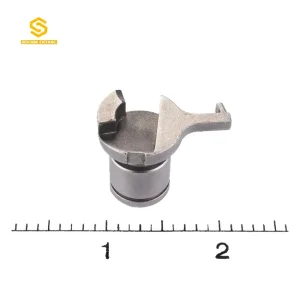
China CE Certificate Sintered Parts Powder Metallurgy Metal Powder Manufacturer Manufacturer, Factories
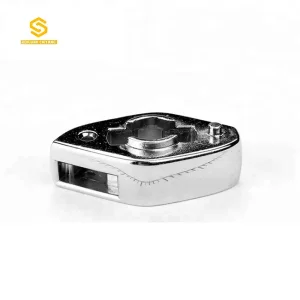
Wholesale Cheap price China Spherical Ti45al8nb Powder with Good Plasticity and Low Brittleness Manufacturer, Factory
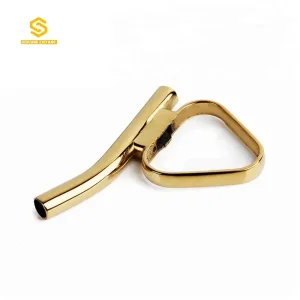
China Metal MIM Product For Earphone Parts Suppliers, Factories
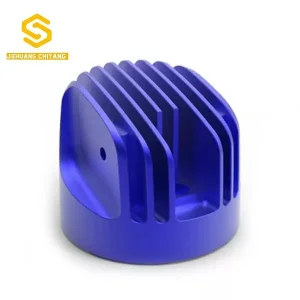
Wholesale Chinese Professional OEM Part Manufacturer Aluminum/Zinc/Brass/Alloy Metal/Steel/Iron Gravity/Sand/Die Casting Supplier, Factories
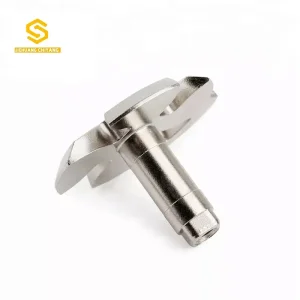
Wholesale MIM Injection Molding For Weapon Industry Suppliers, Factories
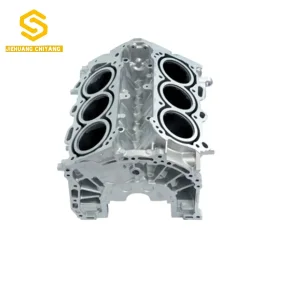
China 2019 Latest Design China Custom Injection Moulding Die Casting Auto Parts Tooling Steel Foundry Casting Moulds Auto Spare Car Parts Manufacturers, Factory
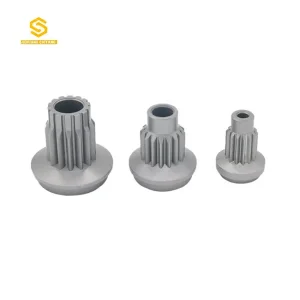
China Wholesale Price China China Aluminum Actuator End Cup Die Casting Manufacturer, Factories