
Featured Powder Injection Molded & Precision Components
Explore our OEM manufacturing catalog featuring Metal Injection Molding (MIM), Ceramic Injection Molding (CIM), high-density powder metallurgy gears, and aluminum/zinc die-cast assemblies engineered for global industrial OEMs.





1. Global Commercial & Industrial Landscape of Powder Injection Molding
Powder Injection Molding (PIM)—combining both Metal Injection Molding (MIM) and Ceramic Injection Molding (CIM)—represents one of the most technologically advanced manufacturing methodologies of the 21st century. By integrating the design freedom of plastic injection molding with the mechanical, thermal, and chemical performance of metallic and ceramic materials, PIM provides an unprecedented pathway for producing complex, high-volume net-shape components.
Modern engineering industries—ranging from automotive powertrain electrification and minimally invasive medical technology to consumer electronics hinges and aerospace fluidics—increasingly rely on Chinese PIM manufacturers. This shift is driven not merely by labor cost advantages, but by sophisticated domestic engineering capabilities in gas-atomized powder production, catalytic debinding technology, continuous vacuum sintering control, and in-house DFM (Design for Manufacturability) tooling capabilities.
2. Deep-Dive Process Engineering: MIM vs. CIM Workflows
The execution of Powder Injection Molding relies on a precise four-stage thermo-chemical transformation. Achieving tight tolerances, void-free grain structures, and high mechanical fatigue resistance requires exact control over powder particle morphology, binder rheology, debinding atmosphere, and thermal sintering kinetics.
Rheological Behavior & Mold Shrinkage Dynamics
A primary technical challenge in MIM and CIM manufacturing is managing the isotropic volumetric shrinkage that occurs during sintering. Because metal and ceramic powders possess densities far higher than the organic binder matrices, the mold cavity must be oversized using a mathematically calculated Shrink Factor ($SF$). This factor typically ranges between 1.1500 and 1.2200 depending on the powder loading percentage ($\Phi$) and the theoretical density of the material alloy.
3. PIM Material Engineering Matrix & Mechanical Performance Benchmarks
Selecting the correct alloy or ceramic grade is vital to achieving optimal mechanical strength, corrosion resistance, magnetic permeability, or wear resistance. Below is an engineering comparison matrix of key materials processed by top-tier Chinese PIM manufacturers.
| Material Class | Alloy / Ceramic Grade | Sintered Density (g/cm³) | Tensile Strength (MPa) | Yield Strength (MPa) | Hardness | Primary Industrial Application |
|---|---|---|---|---|---|---|
| Martensitic Stainless | 17-4PH (UNS S17400) | 7.65 – 7.75 | 1,150 – 1,300 | 1,000 – 1,150 | 38 – 44 HRC | Surgical instruments, aerospace latches, valve bodies |
| Austenitic Stainless | 316L (UNS S31603) | 7.80 – 7.90 | 520 – 600 | 210 – 250 | 150 – 190 HV | Consumer electronic hinges, medical implants, marine hardware |
| Tool Steel | Fe-M2 (AISI M2) | 7.95 – 8.05 | 1,400 – 1,650 | 1,250 – 1,450 | 58 – 64 HRC | High-wear industrial cutters, gear teeth, lock tumblers |
| Titanium Alloy | Ti-6Al-4V (Grade 5) | 4.42 – 4.48 | 890 – 980 | 820 – 910 | 32 – 36 HRC | Biomedical prosthetics, lightweight aerospace fasteners |
| Soft Magnetic | Fe-50Ni / Fe-3Si | 7.60 – 7.70 | 420 – 480 | 240 – 290 | 120 – 150 HV | Solenoid cores, automotive sensors, relay armatures |
| Technical Ceramic | Y-TZP Zirconia (ZrO2) | 6.02 – 6.08 | 1,200 (Flexural) | N/A (Brittle) | 1,250 – 1,400 HV | Wear-resistant ceramic seals, fiber optic sleeves, watch cases |
| High-Purity Ceramic | Alumina (99.5% Al2O3) | 3.90 – 3.96 | 350 (Flexural) | N/A (Brittle) | 1,500 – 1,700 HV | High-voltage electrical insulators, chemical pump impellers |
4. Industry Solutions & Localized Application Scenarios
Powder Injection Molding is engineered to solve complex manufacturing bottlenecks across major industrial sectors. By replacing labor-intensive multi-part assemblies with single-piece MIM or CIM net-shape components, global original equipment manufacturers achieve higher reliability, reduced assembly errors, and structural weight optimization.
Automotive Powertrain & EV Systems
Components: Variable Valve Timing (VVT) rotors, turbocharger vane levers, electric drive selector latches, and sensor housings.
Engineering Value: Sintered 17-4PH and low-alloy Fe-Ni components provide high torsional fatigue resistance and precise dynamic balance while surviving extreme temperature fluctuations under engine hoods.
Medical & Surgical Instrumentation
Components: Endoscopic grasper jaws, laparoscopic scissors, titanium dental brackets, and robotic surgical arm joints.
Engineering Value: Biocompatible 316L stainless steel and Ti-6Al-4V MIM components achieve complex ergonomic surfaces with internal channels that are impossible to machine via traditional sub-tractive CNC milling.
Consumer Electronics & Smart Wearables
Components: Foldable smartphone liquid metal/MIM hinges, smartwatch ceramic bezels, camera ring housings, and acoustic nozzles.
Engineering Value: High structural yield strength prevents bending under drop impacts. Zirconia ceramic CIM components provide scratch resistance (Mohs 8.5) and radio-frequency transparency for 5G/GPS antennas.
Industrial Machinery & Fluid Control
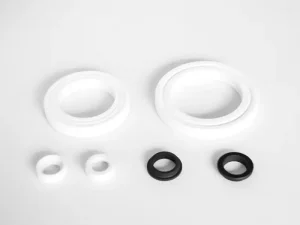
Components: Cable drag chains, high-pressure hydraulic valve spools, ceramic mechanical seal rings, and planetary gear sets.
Engineering Value: Eliminates fluid leakage paths in hydraulic control systems while delivering superior friction performance and abrasion resistance in harsh chemical processing environments.
5. Technology Roadmap & Future Outlook (2025–2030)
The next decade of Powder Injection Molding in China is characterized by intense technological convergence between additive manufacturing, artificial intelligence, and advanced material science. Key developments defining the future of high-precision metal and ceramic component manufacturing include:
Micro-MIM & Micro-CIM Fabrication
Production of micro-components weighing less than 0.005 grams with feature sizes below 20 microns. Utilizing nano-powder feedstocks (D50 < 1μm), Micro-PIM enables micro-fluidic pumps, MEMS sensors, and intra-vascular medical devices.
Hybrid Additive-PIM Workflows
Integrating Binder Jetting (3D Metal Printing) with continuous MIM sintering infrastructure allows rapid prototyping of green parts without initial tooling investment, accelerating time-to-market for low-to-medium pilot volumes.
AI-Simulated Sintering & Closed-Loop AOI
Finite Element Analysis (FEA) computer modeling predicts thermal warp, gravity sag, and binder burn-off friction during sintering. Coupled with Automated Optical Inspection (AOI), 100% inline dimension verification is achieved.
6. Micro-Engineering Trade-Off Matrix: PIM vs. Alternative Processes
Evaluating manufacturing options requires balancing upfront tooling expenditure, unit component costs, geometric complexity flexibility, and material performance metrics. The comparison matrix below highlights why PIM excels in medium-to-high volume production of intricate parts.
| Evaluation Parameter | Metal/Ceramic Injection Molding (PIM) | 5-Axis CNC Machining | Investment Casting (Lost Wax) | High-Pressure Die Casting |
|---|---|---|---|---|
| Design Complexity | Extreme (Undercuts, internal threads, thin walls) | Moderate (Limited by tool access angles) | Moderate-High (Limited by wax removal) | Moderate (Draft angles strictly required) |
| Economical Production Volume | 2,000 to 5,000,000+ pieces/year | 1 to 1,000 pieces/year | 500 to 20,000 pieces/year | 5,000 to 1,000,000+ pieces/year |
| Material Suitability | Stainless Steels, Tool Steels, Ti Alloys, ZrO2, Al2O3 | All machinable metals and polymers | Carbon steels, stainless, nickel superalloys | Aluminum, Zinc, Magnesium alloys (Low melting point) |
| Surface Roughness (Ra) | 0.8 μm – 1.6 μm (As-sintered) | 0.4 μm – 1.6 μm | 3.2 μm – 6.3 μm | 1.6 μm – 3.2 μm |
| Material Waste Ratio | < 2% (Near-net shape, sprue recycled) | 40% – 85% (Subtractive scrap chips) | 10% – 20% (Tree runners and gates) | 5% – 10% (Overflows and biscuit scrap) |
| Unit Cost at High Volume | Very Low | High (Proportional to machine cycle time) | Moderate-High (Manual assembly of wax trees) | Very Low |
Sintered Metal & Ceramic OEM Product Line
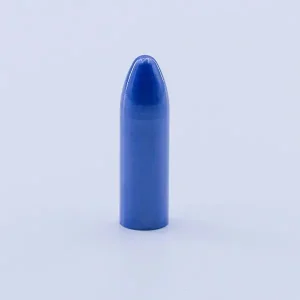
Browse our additional specialized OEM component line, including CE-certified powder metallurgy gears, precision shaft sleeves, ceramic seals, and high-pressure die casting solutions.






7. Frequently Asked Questions (Technical & Procurement FAQ)
Clear engineering insights addressing common technical inquiries regarding design rules, minimum wall thickness, prototype turnaround, and quality assurance standards.
What is the recommended wall thickness for Metal Injection Molded (MIM) parts?
The optimal nominal wall thickness for MIM parts ranges between 1.0 mm and 3.0 mm. While walls as thin as 0.20 mm are achievable on micro-features, uniform wall thickness is crucial to prevent differential thermal shrinkage, sink marks, and distortion during the binder burn-off and high-temperature sintering phases.
How do you compensate for the ~20% dimensional shrinkage during sintering?
Shrinkage is calculated precisely using specialized rheological software during the injection mold design phase. The mold cavity is scaled up by a calculated shrink factor (typically 1.1600 to 1.2150). Tight powder batch control, consistent binder formulations, and computer-controlled sintering temperature profiles ensure batch-to-batch shrinkage repeatability within ±0.05%.
What quality management certifications do your Chinese manufacturing facilities maintain?
Our partner manufacturing facilities operate under fully certified ISO 9001:2015 and IATF 16949:2016 automotive quality management systems. Medical components are produced under ISO 13485 protocols. Quality verification includes 3D Coordinate Measuring Machines (CMM), optical measuring systems, inductively coupled plasma (ICP) material analyzers, and density testing.
Can prototypes be created prior to committing to production injection tooling?
Yes. We offer rapid prototyping options including direct metal laser sintering (DMLS/SLM) or Binder Jetting 3D printing utilizing identical metal powders (such as 17-4PH or 316L). This enables engineers to perform functional physical testing and fit verification before investing in multi-cavity hardened tool steel injection molds.
What is the primary difference between Ceramic Injection Molding (CIM) and Metal Injection Molding (MIM)?
While both share the core PIM injection molding and debinding mechanics, CIM utilizes sub-micron technical ceramic powders such as Yttria-Stabilized Zirconia (Y-TZP) or High-Purity Alumina (Al2O3). Sintering temperatures for CIM are typically higher (up to 1600°C), and the final components provide extreme electrical insulation, extreme hardness (Mohs 8.5–9), and immunity to chemical oxidation.
Request an Engineering DFM Review & Quotation
Send us your 2D (PDF) and 3D (STEP/IGES) CAD drawings. Our senior metallurgical engineers will evaluate your part geometry, perform a free Design for Manufacturability (DFM) review, and provide a competitive OEM quotation within 48 hours.
Submit CAD Drawings Now