
OEM High-Precision Sintered & Molded Products
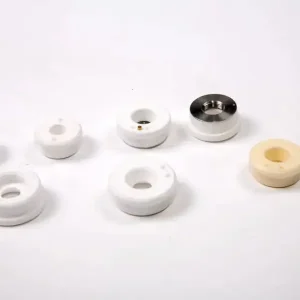
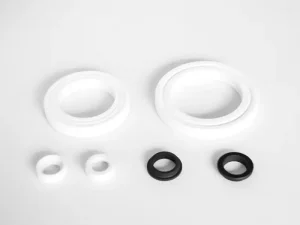
Explore our core manufacturing spectrum ranging from specialized structural ceramics and sintered sleeve bearings to intricate Metal Injection Molding (MIM) parts and aluminum-zinc alloy castings.





The Strategic Evolution of Powder Metallurgy Manufacturing in China
In the contemporary global precision manufacturing landscape, selecting a top-tier China Powder Metallurgy Company Manufacturer & Factory is no longer merely a cost-reduction tactical move; it is a critical strategic imperative for automotive OEMs, medical device innovators, and industrial machinery conglomerates. Powder Metallurgy (PM)—encompassing Conventional Press-and-Sinter, Metal Injection Molding (MIM), Hot Isostatic Pressing (HIP), and Ceramic Injection Molding (CIM)—represents the pinnacle of near-net-shape manufacturing.
China's powder metallurgy sector has undergone a radical industrial transformation over the past decade. Driven by massive investments in automated compaction equipment, atmosphere-controlled continuous sintering furnaces, and advanced metallurgical research partnerships with premier academic institutes, Chinese PM factories deliver unprecedented dimensional consistency (IT7–IT9 tolerances), exceptional mechanical toughness, and drastic raw material utilization exceeding 95%.
Why China Powder Metallurgy Companies Lead Global Supply Chains
Global procurement directors evaluating PM vendors must assess systemic engineering capability, raw powder supply security, toolmaking velocity, and quality control systems. Chinese PM manufacturers offer distinct competitive advantages across these critical nodes:
China houses world-class elemental powder atomization infrastructure. From water-atomized iron powders to ultra-fine gas-atomized spherical stainless steel, titanium, and cobalt-chromium powders, local sourcing drastically reduces raw material lead times and cost fluctuations.
Equipped with high-speed 5-axis CNC machining centers, wire EDM, and mirror spark erosion equipment, Chinese factories build multi-cavity compaction dies and MIM injection molds in 30–45 days—50% faster than Western counterparts.
Leading factories operate certified quality management systems tailored for high-volume automotive and medical component compliance, deploying automated optical inspection (AOI), CMM, laser scanners, and density testing meters.
Technical Process Spectrum: Press-and-Sinter vs. MIM vs. Die Casting
Selecting the optimal powder processing route is pivotal to balancing tooling cost, mechanical properties, and part complexity. The table below provides engineering guidance for design engineers and buyers:
| Process Methodology | Typical Volume Range | Geometrical Complexity | Relative Density Range | Ideal Applications |
|---|---|---|---|---|
| Conventional Press-and-Sinter (PM) | 10,000 - 1,000,000+ units | Medium (2.5D axially symmetric shapes, spur gears) | 85% - 92% (Standard) Up to 95% (Double press) |
Structural gears, self-lubricating bronze bearings, timing pulleys. |
| Metal Injection Molding (MIM) | 5,000 - 500,000+ units | Extremely High (3D complex shapes, internal threads, undercuts) | 96% - 99.5% (Wrought-like performance) | Medical surgical instruments, phone hinges, firearm parts, lock mechanisms. |
| Hot Isostatic Pressing (HIP) | Low to Medium (High value) | Medium to High (Large structural blocks, voids removal) | 99.9% (Near-zero porosity) | Aerospace turbine components, nuclear energy valves, critical defense parts. |
| Aluminum/Zinc Die Casting | 2,000 - 100,000+ units | High (Thin walls, large enclosures, housings) | N/A (Cast molten structure) | Automotive motor housings, electronic heat sinks, ATV enclosures. |
Material Engineering & Alloy Options for Global Sourcing
Chinese powder metallurgy manufacturers work with an extensive portfolio of ferrous, non-ferrous, and specialized alloy powders engineered to withstand extreme mechanical stress, friction, and corrosive environments:
• 17-4PH Stainless Steel: Precipitate hardened material offering exceptional yield strength (up to 1100 MPa) and corrosion resistance, ideal for aerospace latches and surgical tools.
• 316L Austenitic Stainless: Maximum pitting corrosion resistance for medical implants, marine hardware, and high-end consumer electronics.
• Fe-Ni Low Alloy Steels (FN-0205 / FN-0208): High-density sintering alloy ideal for heavy-duty automotive engine gears and transmission ratchets.
• Titanium Alloys (Ti-6Al-4V): Extremely high strength-to-weight ratio, bio-compatibility, used in TiMIM for wearable smart devices and orthopedic tools.
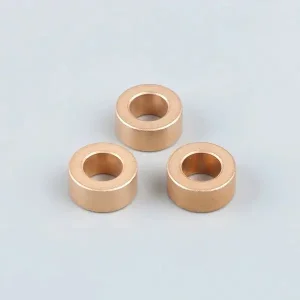
• Sintered Bronze & Brass: Controlled porosity interconnected matrix tailored for oil-impregnated self-lubricating sleeve bearings.
• Soft Magnetic Alloys (Fe-Si / Fe-Ni): Ultra-high magnetic permeability and low coercivity components for electric vehicle (EV) solenoid cores and sensors.
Macro-Industry Solutions & Application Scenarios
Powder Metallurgy components serve as the critical hardware backbones across high-growth global industries. China's manufacturing clusters excel in tailoring process chains to specific industrial sector standards:
Variable Valve Timing (VVT) sprockets, oil pump rotors, ABS sensor rings, and planetary gear sets for electric motor reduction gearboxes.
Complex surgical stapler jaws, laparoscopic graspers, orthopedic drill components, and dental brackets made via ultra-clean MIM processes.
Smartphones & Wearables
Foldable smartphone screen hinges, camera module rings, smartwatch titanium casings, and earbud charging contacts.
High-torque cordless drill gearboxes, lock cylinders, sewing machine cams, and wear-resistant valve seals.
Future Trends Shaping China's Powder Metallurgy Industry (2026–2030)
As global decarbonization mandates and Industry 4.0 digitizations accelerate, leading Chinese PM factories are pioneering breakthrough technological shifts:
Implementation of finite element software (FEA) to simulate thermal shrinkages and binder debinding distortion in complex MIM molds, reducing prototyping cycles from months to days.
Integration of Direct Metal Laser Sintering (DMLS) and Binder Jetting 3D printing alongside conventional press tooling for ultra-low volume customized production runs.
Transitioning to zero-carbon electric arc melting and closed-loop water atomization, dramatically lowering carbon footprints across automotive supply chains.
Global OEM Procurement Protocol & Risk Mitigation Framework
Procuring precision metal components from overseas factories requires a structured, multi-stage quality gate system. Below is the standardized procurement workflow executed by premier Chinese PM suppliers:
Engineers evaluate draft angles, wall uniformity, parting lines, and debinding feasibility, delivering a detailed Design for Manufacturability (DFM) report prior to mold fabrication.
Tooling yields T1 samples accompanied by full Production Part Approval Process (PPAP Level 3) documents: CMM dimensional inspection, metallurgical grain structure analysis, and salt spray testing.
In-Line Statistical Process Control (SPC) continuously tracks compaction weights, furnace sintering temperatures, atmospheric gas purity, and post-sinter secondary CNC machining tolerances.
Custom Sintered & Die Cast Component Solutions
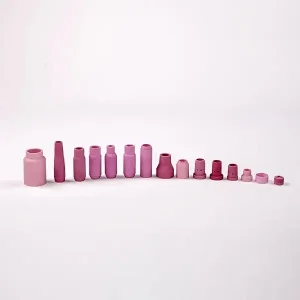
Detailed product showcase featuring customized sintered sewing machine components, motor housings, ceramic terminal blocks, MIM structural spare parts, and large-tonnage die casting capabilities.






Frequently Asked Questions (FAQ) for Global Buyers
In-depth technical answers curated by senior metallurgical growth directors to clarify common engineering, tooling, and procurement inquiries: