
OEM Precision Components Mass-Produced in China
Explore high-precision sintered components, titanium MIM handles, die castings, and ceramic elements fabricated under ISO 9001 and IATF 16949 certified quality systems.

Wholesale MIM Injection Molding For Weapon Industry Suppliers, Factories
View Product Details
Wholesale Reasonable price Powder Metallurgy Company Custom Powder Metallurgy Products Manufacturers, Supplier
View Product Details
China Supply ODM High Precision China Customized Zinc Aluminum Die Casting Products Manufacturers, Factories
View Product Details
Wholesale Supply ODM Cutomized OEM Factory Price Fabrication Service Aluminum/Zinc Alloy Precision Parts Die Casting Auto Parts Manufacturer, Supplier
View Product Details
Wholesale china aluminium pressure die casting housing manufacturer Manufacturer, Supplier
View Product Details
Wholesale Good Wholesale Vendors China Metal Injection Moulding MIM Mold for Communications Products Manufacturer, Factories
View Product Details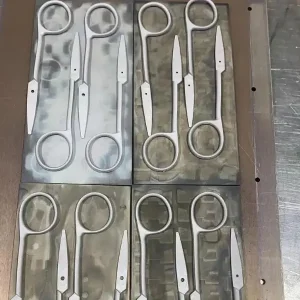
Wholesale MIM Titanium scalpel handle Factory, Factories
View Product Details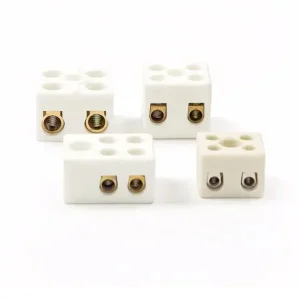
Wholesale Ceramic Resistance Manufacturers, Supplier
View Product DetailsEngineering Excellence in China Powder Metallurgy Component Manufacturing
A comprehensive procurement analysis on material microstructures, sintering densification, DFM parameters, and total cost of ownership (TCO) optimization for Tier-1 global OEMs.
In modern high-precision mechanical engineering, China Powder Metallurgy (PM) components suppliers and factories have transitioned from low-cost mass manufacturers to global technology partners. Leveraging cutting-edge vacuum sintering furnaces, automated multi-cavity press tooling, and advanced Metal Injection Molding (MIM) technologies, Chinese manufacturers now produce components that meet or exceed stringent ISO, ASTM, and MPIF Standard 35 specifications.
Powder metallurgy combines material science with near-net-shape forming. By consolidating metallic powders—ranging from low-alloy steels and 316L/17-4PH stainless steel to Ti-6Al-4V titanium alloys—engineers can produce complex 3D geometries with minimal material waste (often reducing chip waste by up to 95% compared to subtractive CNC machining).
Selecting the optimal metal forming process relies heavily on annual volume, geometric complexity, and mechanical load profiles. MIM is supreme for complex 3D parts under 100g, whereas press-and-sinter PM is most economical for high-volume rotational components such as spur gears, timing pulleys, and self-lubricating oilite bushings.
Process Engineering Comparison Matrix: PM vs MIM vs Investment Casting vs CNC
| Evaluation Parameter | Powder Metallurgy (Press & Sinter) | Metal Injection Molding (MIM) | Investment Casting (Lost-Wax) | 5-Axis CNC Machining |
|---|---|---|---|---|
| Geometric Complexity | Moderate (2.5D press-direction shapes) | Ultra-High (3D shapes, undercuts) | High (Internal cavities) | High to Very High |
| Typical Part Weight | 5 g to 3.5 kg | 0.2 g to 150 g (Max 286 g) | 50 g to 50+ kg | Unlimited |
| Dimensional Tolerance | ±0.05 mm (IT 8 – IT 9) | ±0.3% – ±0.5% nominal | ±0.5% – ±1.0% | ±0.005 mm (IT 5 – IT 7) |
| Relative Density Range | 88% – 95% (Custom porous option) | 96% – 99.5% (Wrought-like) | 98% – 100% | 100% (Solid wrought stock) |
| Material Utilization Rate | 95% – 98% | 95% – 98% (Feedstock recyclable) | 70% – 80% (Gating scrap) | 15% – 40% (High chip waste) |
| Economic Break-Even Volume | > 5,000 pcs / year | > 2,000 pcs / year | > 500 pcs / year | 1 to 1,000 pcs |
Technological Advancements in Powder Metallurgy & MIM
How Chinese powder metallurgy factories are leveraging ultra-fine metal powders, green debinding systems, and AI-driven thermal shrinkage simulation.
1. Micro-MIM & Ultra-Thin Wall Sintering
Driven by smartphone foldables, medical surgical robotics, and micro-actuators, Chinese suppliers are achieving wall thicknesses down to 0.25 mm. Utilizing sub-micron powder sizes (<5µm) combined with specialized binder chemistry eliminates micro-porosity while guaranteeing structural integrity under stress.
2. Titanium MIM (TiMIM) Maturation
Titanium alloy processing (Ti-6Al-4V & Commercially Pure Ti) has historically faced oxidation challenges during debinding. Advanced Chinese factories now deploy ultra-pure argon/vacuum atmosphere control, drastically reducing oxygen pickup to < 0.15wt% for aerospace fasteners and implantable medical handles.
3. High-Density Warm Compaction
For traditional press-and-sinter PM components, heated die and powder systems (Warm Compaction) enable single-press densities reaching up to 7.4 g/cm³ in iron-based alloys. This bridges the performance gap with wrought steel without necessitating secondary forging processes.
4. Hybrid Additive-PM Manufacturing
Integrating Binder Jetting (BJT) and Metal 3D Printing for rapid low-volume prototyping alongside high-volume MIM tooling. This hybrid strategy allows OEMs to validate physical prototypes in 5–7 business days prior to committing capital to multi-cavity injection molds.
5. Green Sintering & Closed-Loop Solvent Recovery
Environmental compliance is top-of-mind. Top China manufacturers operate closed-loop solvent debinding systems that recover >99% of nitric acid or organic solvents, drastically lowering carbon emissions per kilogram of finished metal component.
Global Buyers' Procurement Intent & Decision Criteria
What international procurement directors, supply chain VPs, and design engineers look for when selecting a China Powder Metallurgy supplier.
Procurement teams from North America, Europe, and Asia-Pacific approach Chinese powder metallurgy suppliers with specific strategic objectives. Moving beyond simple piece-price considerations, enterprise buyers evaluate suppliers based on risk mitigation, engineering responsiveness, and long-term quality reliability.
1. Design for Manufacturability (DFM) Leadership
Buyers expect rapid 3D DFM simulation reports within 48 hours. Identifying shrink factors (typically 15% to 22% during sintering), mold draft angles, and wall uniformity early prevents expensive tooling modifications later.
2. Traceable Quality Management (IATF 16949)
Tier-1 Automotive buyers require full PPAP (Production Part Approval Process) Level 3 documentation, complete with CMM dimensional reports, CPK density distribution analysis, and batch chemical composition testing.
3. Comprehensive Secondary Finishing Services
Leading suppliers offer one-stop post-processing: CNC machining, heat treatment (carburizing, quenching, vacuum hardening), surface plating (PVD, electroplating, anodizing), and ultrasonic cleaning under one roof.
Industry-Specific Engineering Solutions
Tailored metallurgical properties and manufacturing routes engineered for demanding industrial ecosystems.
Automotive & EV Powertrains
High-strength sintered steel planetary gears, VVT (Variable Valve Timing) rotors, electric motor actuators, ABS sensor rings, and seat recliner mechanisms built to handle high fatigue limits and rigorous wear cycles.
Medical & Surgical Hardware
Biocompatible 316L and 17-4PH stainless steel surgical scalpel handles, endoscopic biopsy grippers, orthodontic brackets, and titanium implant components delivering ultra-smooth surfaces and autoclavable reliability.
Consumer Electronics & Wearables
Precision MIM foldable smartphone hinges, smartwatch ceramic and metallic cases, camera ring frames, optical fiber connectors, and metallic CPU cooling fans engineered for sleek cosmetics and high thermal dissipation.
Industrial Power Tools & Hardware
Heavy-duty power tool planetary gearboxes, hydraulic valve plates, lock cylinder cores, high-torque ratchets, and wear-resistant nozzles fabricated via cost-effective press-and-sinter powder metallurgy.
Localization Support & Compliance Safeguards
Ensuring global buyers experience smooth supply chain integration, bulletproof IP protection, and complete environmental compliance.
Certifications & Standards
Fully accredited under ISO 9001:2015 and IATF 16949 quality management systems. Material formulations comply with global standards including ASTM B883, MPIF Standard 35, DIN 30910, and JIS Z2500.
RoHS & REACH Compliance
All raw metal powders and binder chemistry are verified free of hazardous substances. SGS material inspection reports accompany every shipment to guarantee adherence to EU RoHS and REACH regulations.
IP Protection & Legal NDAs
Strict non-disclosure agreements (NDAs) are signed prior to CAD drawing submission. Client files are stored on isolated, encrypted servers with strict internal access authorization controls.
Flexible Logistics & Stocking
Offering FOB, CIF, DDP (Delivered Duty Paid), and Vendor-Managed Inventory (VMI) arrangements with safety stock management in overseas bonded warehouses for seamless just-in-time (JIT) line feeds.
Technology Roadmap: 2026 and Beyond
Next-generation powder metallurgy innovations reshaping high-volume precision manufacturing.
The powder metallurgy industry in China is undergoing a massive digital and material transformation. Factory automation, AI vision quality checks, and advanced alloy development are lowering operational costs while pushing precision limits further:
-
Superalloy & Soft Magnetic Component Sintering: Expanding beyond standard stainless steel into Fe-Ni and Fe-Co soft magnetic alloys for EV inverter cores and high-frequency solenoid valves requiring high magnetic permeability.
-
AI-Powered Thermal Shrinkage Simulation: Implementing proprietary finite-element simulation tools that accurately predict non-linear sintering shrinkage. This cuts physical mold revision iterations from 4–5 down to 1–2 trials.
-
100% Automated Optical Sorting (AOI): High-speed camera inspection machines utilize machine vision algorithms to inspect 100% of finished MIM parts for micro-cracks, flash, and surface blemishes at speeds exceeding 120 parts per minute.
Additional Custom OEM Factory Offerings
Browse our broader range of custom gear modules, CPU cooling components, die-cast housings, and ceramic watch assemblies.

China Factory Cheap Hot China High Quality OEM Design Custom Electronics/Automobile, Motorcycle Parts/Mechanical Parts Compression Molding Die Casting Moulds Manufacturer, Supplier
View Product Details
Wholesale Factory wholesale Customized Powder Metallurgy Metal Injection Molding Parts Suppliers, Factories
View Product Details
Wholesale Hot-selling China Pm Powder Metallurgy Sintering Parts Manufacturers, Supplier
View Product Details
China OEM/ODM Manufacturer Powder Metallurgy Parts Power Tools Sintered Metal Planetary Spur Gear Planets Disk Manufacturers, Factories
View Product Details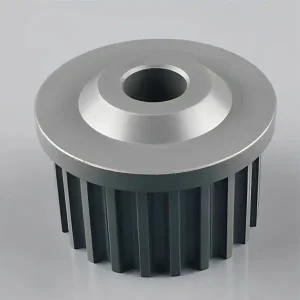
China China Water Pump Pulley Supplier Manufacturers, Suppliers
View Product Details
China Custom Sintered Titanium MIM Parts for Auto Parts Supplier, Suppliers
View Product Details
Wholesale metal injection of metallic CPU Cooling fans Suppliers, Factory
View Product Details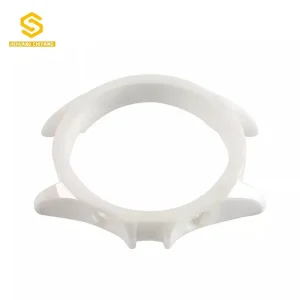
Wholesale Customized ceramic injection molding watch case for wrist accessories Suppliers, Factories
View Product DetailsFrequently Asked Questions (FAQ)
Expert engineering responses to critical questions regarding powder metallurgy capabilities, tolerances, lead times, and quality control.
Standard mold construction for multi-cavity Metal Injection Molding (MIM) tooling takes approximately 25 to 35 calendar days. First-article T1 sample samples (complete with initial FAI dimensional reports) are shipped immediately following vacuum sintering. Rapid metal 3D-printed prototypes can be delivered in as few as 5 days for early design validation.
MIM utilizes sub-micron spherical metal powders mixed with a thermoplastic binder system, creating a homogeneous feedstock that flows like plastic under pressure. During high-temperature vacuum sintering (often >1350°C), atomic diffusion causes substantial shrinkage (15-22%), closing internal pores and producing a near-wrought grain structure with high tensile strength and impact resistance.
The standard production MOQ is 2,000 pieces for MIM components, 2,000 pieces for die casting, and 5,000 pieces for traditional powder metallurgy press-and-sinter components. However, prototype quantities and pilot runs (100–500 pcs) can be accommodated during project development.
To perform a thorough DFM and moldflow analysis, please provide 3D step files (.STEP, .STP, or .IGS) alongside a 2D PDF drawing specifying critical dimensions, geometric tolerances (GD&T), material grades (e.g., MPIF FL-4405, 17-4PH), heat treatment specifications, and surface finishing needs.
Yes. While MIM and PM achieve excellent near-net shapes, features requiring tolerances tighter than ±0.03 mm (such as bearing seats, thread tapping, or high-precision gear bore diameters) are secondary-machined in-house using 5-axis CNC machining centers and precision grinders.