
Engineering Precision: Executive Overview of China's Powder Metallurgy Sector
The global manufacturing ecosystem demands unprecedented levels of mechanical precision, material efficiency, and geometric versatility. As modern engineering transitions from subtractive machining toward near-net-shape manufacturing, Powder Metallurgy (PM) and Metal Injection Molding (MIM) stand at the center of high-volume industrial innovation.
China's premier manufacturing hubs, exemplified by Tier-1 OEM facilities like Ningbo Jiehuang Chiyang Electronic Tech Co., Ltd. (JHMIM), have reshaped global component sourcing. By blending advanced solid-state diffusion kinetics, computer-controlled atmosphere sintering, and automated compaction pressing, Chinese powder metallurgy factories deliver precision sintered parts that meet rigorous global standards including IATF 16949:2016 and ISO 9001:2015.
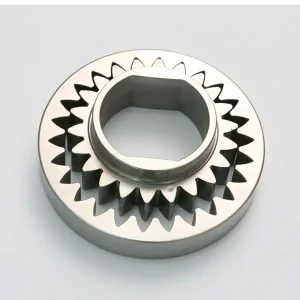
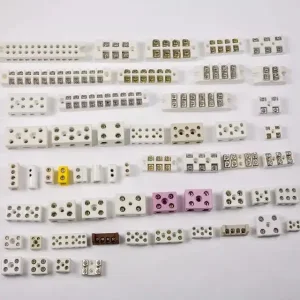
Featured Precision Powder Metallurgy & Molded Components (Part I)
Explore our engineering capability matrix across MIM, sintered iron/steel components, high-density gears, and custom die castings.






China Factory 4.0: Smart Manufacturing & Supply Chain Resilience
The modern Chinese powder metallurgy facility is no longer merely a labor-efficient supplier; it is an automated, sensor-driven Industry 4.0 ecosystem. Advanced facilities in Ningbo leverage localized supply chains, vertically integrated tooling shops, and closed-loop process monitoring to guarantee zero-defect delivery across multi-million piece orders.
Automated Compaction Pressing
Deploying CNC multi-level hydraulic and mechanical presses ranging from 15 to 1,000 tons. Real-time tonnage monitoring prevents density gradients across complex multi-step profiles.
Atmosphere-Controlled Sintering
Continuous mesh-belt and walking-beam furnaces utilizing endothermic gas and high-purity Hydrogen/Nitrogen atmospheres for complete dewaxing and oxide reduction.
End-to-End Traceability
Integrated MES (Manufacturing Execution Systems) track raw metal powder batches, particle size distribution (PSD), press parameters, and post-sinter heat treatment certificates.
Technology Roadmap & Future Outlook (2025–2035)
As industrial engineering accelerates toward electrification, miniaturization, and green manufacturing, China's leading Powder Metallurgy factories are investing heavily in next-generation material science and process hybridizations.
Titanium MIM (TiMIM) & Bio-Compatible Alloys
Emerging medical implants, aerospace fasteners, and luxury consumer wearables demand ultra-lightweight, high-strength Ti-6Al-4V components. Advanced debinding technology eliminates interstitial oxygen contamination, reaching tensile strengths exceeding 900 MPa.
Soft Magnetic Composites (SMC) for Electric Vehicles
With the global shift to EV powertrains, high-frequency axial flux motor cores utilize iron powder particles coated with nanometer-thin dielectric insulation. Sintered SMC cores reduce eddy current losses by up to 70% compared to traditional laminated silicon steel sheets.
Hybrid Additive Manufacturing & Binder Jetting Integration
Bridging the gap between rapid prototyping and million-piece mass production, Powder Metallurgy leaders are adopting industrial Binder Jetting 3D printing. This hybrid workflow eliminates hard tooling investments for low-volume production runs (100–5,000 units).
Macro-Industry Solutions: Application Engineering Matrix
Powder Metallurgy and Metal Injection Molding provide specialized performance advantages across high-stakes vertical sectors:
Automotive Powertrains & E-Drives
Variable Valve Timing (VVT) rotors, oil pump gears, transmission synchronizer rings, and electric parking brake (EPB) planetary gearsets engineered to MPIF Standard 35 requirements.
Medical Surgical Instruments
316L and 17-4PH stainless steel laparoscopic grasper jaws, endoscopic stapler housings, and dental orthodontic brackets with complex internal channels and smooth surface finishes (Ra < 0.8 μm).
Consumer Electronics & Smart Wearables
High-precision smartphone folding screen hinges, smartwatch chassis, camera ring bezels, and audio acoustic housings produced with micro-MIM wall thicknesses as thin as 0.3 mm.
Industrial Power Tools & Hardware
Heavy-duty sintered iron-nickel impact driver bevel gears, hydraulic pump shaft sleeves, self-lubricating bronze bushings, and lock hardware designed for extreme fatigue wear resistance.
Global Procurement Benchmark: Technology Selection Matrix
Selecting the optimal manufacturing route depends heavily on part geometry, material density demands, annual batch sizes, and tooling amortizations:
| Manufacturing Route | Best Feature Complexity | Ideal Part Weight | Relative Unit Cost (100k pcs) | Material Utilization | Secondary Machining |
|---|---|---|---|---|---|
| Powder Metallurgy (PM) | Moderate (2.5D Axial Press) | 5g to 2.5 kg | Lowest (★★★★★) | 95% – 98% | Minimal / None |
| Metal Injection Molding (MIM) | Extreme (3D Undercuts/Threads) | 0.1g to 250g | Very Low (★★★★) | 90% – 95% | Near Zero |
| Aluminum / Zinc Die Casting | High (Thin Wall Shells) | 20g to 5 kg | Low (★★★) | 85% – 90% | Flash Trimming / CNC |
| 5-Axis CNC Machining | High to Unlimited | Unrestricted | High (★★) | 15% – 40% | Primary Process |
Localization Support & Global Compliance Assurance
Collaborating with a China OEM powder metallurgy manufacturer requires seamless technical alignment, strict intellectual property protection, and thorough international regulatory compliance.
DQA & DFM Engineering Support
Every 2D/3D customer model undergoes early Design for Manufacturability (DFM) review. Senior metallurgical engineers evaluate mold draft angles, wall uniformity, radius fillet optimization, and isotropic sintering shrinkage predictions prior to tooling steel cutting.
Quality Assurance & Metrology
Factories employ Zeiss Coordinate Measuring Machines (CMM), optical image measurement systems, metallographic micro-hardness testers, carbon-sulfur analyzers, and salt-spray corrosion test chambers to validate PPAP Level III submissions.
Global Trade & Regulatory Compliance
Products strictly adhere to international environmental and safety standards including REACH, RoHS, Conflict Minerals compliance, and ISO 14001 environmental management protocols with full international logistic documentation.
Featured Precision Powder Metallurgy & Molded Components (Part II)
Discover additional high-precision OEM sintered components, motor sleeves, MIM titanium parts, and spherical alloy powders.







Frequently Asked Questions (FAQ) for Global Procurement Officers
Direct technical answers addressing engineering feasibility, lead times, tooling costs, and mass production standards.
Standard mass production MOQs start at 2,000 pieces for Metal Injection Molding (MIM) and CNC components, 2,000 pieces for Aluminum/Zinc die casting, and 5,000 pieces for conventional press-and-sinter Powder Metallurgy parts. Prototype tooling and pilot sample quantities can be customized per engineering request.
Sintering shrinkage is mathematically predicted during mold design using advanced CAE computer simulation. MIM components experience isotropic linear shrinkage between 15% and 22%. By precisely controlling feedstocks, thermal debiting cycles, and sintering temperatures (±2°C zone control), final part tolerances reach IT8–IT10 standards before secondary sizing or coining.
Yes. Protecting customer IP is a fundamental operational policy. We routinely sign mutual non-disclosure agreements (NDAs) before evaluating any 2D (PDF/DWG) or 3D (STEP/IGES) CAD models. All customer data is secured inside encrypted internal access networks.
We provide full secondary processing, including case hardening, steam treatment (oxalic oxide layer formation for wear resistance), oil impregnation for self-lubricating bearings, electroplating (Ni, Cr, Zn), PVD coating, passivation, electropolishing, and high-precision CNC hobbing or grinding.
Complete commercial quotations and DFM manufacturability evaluations are returned within 48 hours upon receiving drawings. Tooling design, mold fabrication, T1 samples, and FAI measurement reporting are completed within 25 to 35 calendar days.