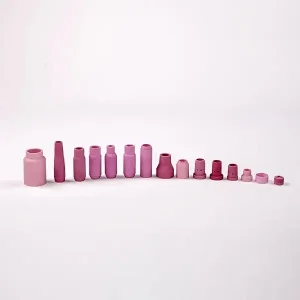
Precision Sintered & Cast Product Showcase (Part 1)
High-density sintered components, custom MIM structural parts, and aluminum/zinc die-castings engineered to exact international tolerances.





Executive Summary: China's Evolving Leadership in Precision Powder Metallurgy
Over the past two decades, the global metal manufacturing paradigm has undergone a seismic shift toward near-net-shape processing technologies. At the epicentre of this transformation is China's Powder Metallurgy (PM) and Metal Injection Molding (MIM) industry. Modern industrial buyers, tier-1 automotive suppliers, aerospace contractors, and medical device engineers no longer view Chinese PM factories simply as low-cost suppliers, but as high-precision engineering hubs capable of executing complex material formulations, ultra-tight tolerances, and high-volume continuous sintering.
Powder Metallurgy represents a blend of material science, mechanical compression physics, and solid-state thermochemical reactions. By consolidating metallic powders—ranging from Fe-Ni alloys, 17-4PH stainless steels, and copper-steels to advanced titanium grades and alumina ceramics—powder metallurgy bypasses the material wastage inherent in conventional subtractive CNC machining and the internal voids typical of traditional sand or die castings.
Information Gain Insights for Strategic Procurement Directors:
Unlike standard subtractive manufacturing where material utilization often drops below 30% for complex geometries, Chinese powder metallurgy factories achieve material yield rates exceeding 95%. When coupled with automated multi-cavity press tooling, high-vacuum sintering, and secondary hot-isostatic pressing (HIP), total cost of ownership (TCO) is reduced by 30% to 60% compared to European or North American machining routes.
Technical Deep-Dive: PM Press-Sintering vs. Metal Injection Molding (MIM)
Selecting the appropriate powder metallurgy process route requires an understanding of mechanical compression vs. fluid-dynamic molding thermodynamics.
Press-and-Sinter PM
Uniaxial mechanical or hydraulic compaction of elemental or pre-alloyed powders inside precision carbide dies at pressures reaching 600–800 MPa, followed by continuous mesh-belt sintering. Ideal for 2.5D geometric shapes, timing pulleys, spur gears, oil-impregnated bronze bushings, and high-volume automotive transmission components.
Metal Injection Molding (MIM)
Combines plastic injection molding design freedom with powder metallurgy material performance. Fine metal powder (typically <20 µm) is blended with a thermoplastic polymer binder system, injected into complex molds, catalytic/solvent debound, and sintered to >97% theoretical density. Perfect for medical scalpels, smart-device hinges, and complex aerospace brackets.
Die Casting & Hybrid Alloys
For structural housings requiring rapid thermal dissipation and light weight, China factories integrate non-ferrous aluminum (A380, ADC12) and zinc alloys (Zamak 3, Zamak 5) alongside PM components. In-house secondary CNC finish machining bridges the gap between raw casting contours and critical bearing seat tolerances.
Manufacturing Process Selection Matrix for Design Engineers
| Engineering Attribute | Conventional PM Pressing | Metal Injection Molding (MIM) | Aluminum/Zinc Die Casting | 5-Axis CNC Machining |
|---|---|---|---|---|
| Geometric Complexity | Moderate (2.5D, no undercuts) | Extreme (3D internal threads, undercuts) | High (Thin walls, rib structures) | Extreme (Tool access limited) |
| Relative Sintered Density | 85% – 92% (Can be sizing coining density) | 96% – 99% (Wrought-like integrity) | N/A (Cast porosity potential) | 100% (Solid billet stock) |
| Economic Batch Size (MOQ) | > 5,000 pcs | > 2,000 pcs | > 2,000 pcs | 1 – 500 pcs |
| Material Utilization | 95% – 98% | 95% – 99% (Runner regrind reuse) | 90% – 95% | 15% – 40% (High scrap) |
| Surface Roughness (Ra) | 1.6 – 3.2 µm | 0.8 – 1.6 µm | 1.6 – 3.2 µm | 0.4 – 1.6 µm |
| Tensile Strength (MPa) | 400 – 850 MPa (Depending on Fe-Ni alloy) | 550 – 1600 MPa (17-4PH / Low Alloy Steel) | 160 – 320 MPa | Directly matches billet spec |
Global Procurement Strategies & Macro-Industry Solutions
How Chinese PM and MIM manufacturing plants solve complex engineering bottlenecks across major global industries.
Automotive Powertrain & VVT Systems
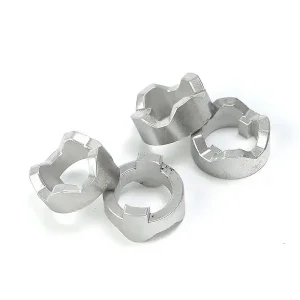
Automotive OEMs demand zero-defect delivery under IATF 16949 audit protocols. Powder metallurgy sintered lock cams, engine Variable Valve Timing (VVT) rotors/stators, transmission planetary gear carriers, and sensor bosses benefit from controlled self-lubricating porosity and high torque fatigue endurance.
Medical & Surgical Devices
Using biocompatible 316L and 17-4PH stainless steel alongside custom Titanium MIM (TiMIM), Chinese manufacturers produce micro-articulating laparoscopic grasper jaws, endoscopic stapler components, surgical handle locks, and orthodontic brackets with complex organic curves that are impossible to machine efficiently.
Consumer Electronics & Hardware
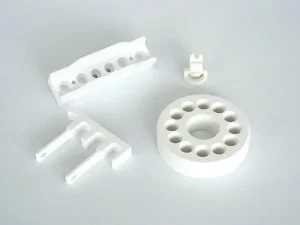
The miniaturization of smartphones, foldable devices, smartwatches, and power tool gearboxes relies heavily on MIM technology. High magnetic permeability alloys, ceramic terminal strips, and complex structural lock cylinders are produced with smooth surface finishes suitable for PVD coating, electroplating, or anodizing.
Understanding Total Cost of Ownership (TCO) in Chinese Sourcing
When global procurement directors evaluate China powder metallurgy suppliers, the invoice piece price is only one metric. Advanced factories in manufacturing centers like Ningbo, Dongguan, and Jiangsu provide integrated value engineering that impacts the entire supply chain balance sheet:
- Integrated Design for Manufacturability (DFM): In-house CAD/CAM engineers review part geometry using mold-flow and sintering simulation software, preventing post-tooling dimensional distortion before steel tooling is cut.
- Tooling Amortization and Ownership: Premium Chinese factories utilize imported Japanese SKD11 or tungsten carbide mold inserts, providing tool lifespans of 500,000 to 1,000,000 cycles with full lifetime maintenance guarantees included in contract agreements.
- Secondary Operations Ecosystem: Proximity to localized heat-treatment facilities (vacuum carburizing, nitriding), specialized plating shops (electroless nickel, PVD), and automated CNC finishing centers minimizes logistics lead-times and freight costs.
Localization Support, Quality Assurance & Regulatory Compliance
Rigorous metrology labs, certified quality management systems, and transparent intellectual property protections build long-term international procurement trust.
IATF 16949 & ISO Quality Frameworks
Standard operating procedures include APQP (Advanced Product Quality Planning), PPAP Level III documentation packages (including dimensional inspection reports, material chemical certifications, control plans, and FMEA analysis), and 100% CMM automated dimensional verification.
Global Material Standards Matching
Materials are strictly compliance-tested against international benchmarks including MPIF Standard 35 (Powder Metallurgy Parts Specifications), ASTM B883 (MIM Materials), DIN 30910, and JIS Z2550. Full traceability is guaranteed from raw powder lot numbers to final packed boxes.
Intellectual Property & Legal NDAs
To safeguard customer proprietary designs, tier-1 Chinese powder metallurgy manufacturers execute legally binding non-disclosure agreements under international jurisdiction options, enforcing segregated server file storage and strict access controls over 2D/3D CAD drawings.
Technological Roadmap: The Next Decade of Powder Metallurgy
Embracing Industry 4.0, additive manufacturing convergence, and ultra-green hydrogen sintering processes.
The powder metallurgy landscape is changing rapidly due to breakthroughs in material science, automated factory machinery, and computer-driven process controls. Leading Chinese manufacturers are investing heavily in five key technical frontiers:
1. Binder Jetting & PM Convergence
Integrating Industrial Metal 3D Printing (Binder Jetting) alongside traditional MIM tooling allows rapid prototype validation within days without tooling costs, transitioning directly into high-volume MIM mold production using identical powder formulations.
2. Micro-MIM (< 0.1 gram components)
Demands in medical robotics and micro-actuators have accelerated the development of Micro-MIM, processing ultra-fine powders (<5 µm) to achieve part wall thicknesses as low as 0.15 mm with micron-level feature definition.
3. Green Hydrogen Sintering & Decarbonization
To meet strict international Scope 1 and Scope 2 carbon footprint mandates, progressive Chinese sintering factories are replacing ammonia-dissociated atmosphere furnaces with pure green hydrogen sintering systems, reducing carbon emissions by up to 80%.
Technical FAQ: Frequently Asked Procurement & Engineering Questions
Direct answers to critical questions regarding manufacturability, tooling costs, lead times, and quality controls.
Q1: What geometry features are best suited for MIM vs. conventional CNC machining?
MIM excels when part geometry includes multi-axis undercuts, thin wall sections down to 0.5 mm, internal splines, knurled surfaces, or organic sculpted shapes. If a part requires extensive multi-setup 5-axis CNC machining with high material removal rates (chips), MIM typically offers a 30% to 60% unit cost reduction once tooling is amortized.
Q2: How do Chinese PM manufacturers handle linear sintering shrinkage in MIM parts?
Linear shrinkage during high-temperature thermal debinding and sintering generally ranges between 12% and 20% depending on the powder loading percentage. Chinese DFM engineers use specialized cavity-oversizing equations in mold design and validate them using FEA simulation software. Final sizing or coining dies can be used for critical features to lock in tolerances within ±0.03 mm.
Q3: What is the typical lead-time breakdown from drawing submission to mass production?
A standard procurement timeline consists of: (1) DFM Review & Quotation: 24–48 hours; (2) Prototype verification (optional via 3D metal printing): 5–7 days; (3) Production Tooling & T1 Sample Submissions: 25–35 days; (4) Sample Approval & Mass Production Ramp-up: 15–20 days.
Q4: Can powder metallurgy parts be heat-treated and surface-plated?
Yes. Sintered parts can undergo case hardening, induction hardening, vacuum carburizing, and steam treatment (to seal interconnected surface pores with a black oxide layer). For plating (Ni, Cr, Au, PVD), high-density MIM parts (>96%) can be plated directly. Lower density PM parts can be resin-impregnated prior to plating to eliminate entrapment of plating chemicals.
Q5: What documentation is provided with international shipments?
Every production shipment includes a complete quality dossier containing: Material Chemical & Mechanical Test Certificates (EN 10204 3.1), CMM Full-Dimensional Inspection Report, Heat Treatment Hardness Charts, RoHS/REACH Compliance Certificates, and a Certificate of Conformance (CoC).
Precision Sintered & Cast Product Showcase (Part 2)
Explore our full line of plastic mold components, ceramic terminal strips, precision sintered lock cams, and die-cast structural hardware.