
Featured OEM Metallurgy Components (Part I)
High-precision sintered metal components, MIM structural hardware, and die-casting parts engineered for high-stress industrial applications.

Wholesale Special Price for Customized High Pressure Aluminium ADC12 Die-Casting Parts Manufacturer, Factories
View Specifications
China Free sample for Custom MIM Metal Powder Injection Molding 17-4pH Auto Parts Tee Tube Manufacturers, Suppliers
View Specifications
China China MIM Auto Parts Manufacturer, Supplier
View Specifications
Wholesale China Supplier Metal Injection Molding MIM Medical Equipment Scissors Accessories Products, Supplier, Suppliers
View Specifications
China Chinese Professional Custom Industrial Electromechanical & Power Tools High Quality Iron Based Powder Metallurgy Products Made in China Manufacturer, Suppliers
View Specifications
Wholesale Reasonable price Powder Metallurgy Company Custom Powder Metallurgy Products Manufacturers, Supplier
View Specifications
China Online Exporter Metal Injection Molding MIM Custom SS304 SS316 Ss17-4 Material Stainless Steel Parts for CNC Machining Components Custom Parts Sintered Parts OEM Hardware Supplier, Suppliers
View Specifications
China 2019 Latest Design China Custom Injection Moulding Die Casting Auto Parts Tooling Steel Foundry Casting Moulds Auto Spare Car Parts Manufacturers Factory
View SpecificationsExecutive Summary: The Paradigm Shift in Precision Metal Consolidation
As global original equipment manufacturers (OEMs) shift from subtractive CNC machining to near-net-shape manufacturing, China's powder metallurgy (PM) infrastructure has evolved into a key hub for advanced material processing.
The Global Procurement Imperative
Industrial buyers across North America, Europe, and Asia-Pacific face rising raw material costs, strict geometric tolerance demands, and aggressive speed-to-market targets. Traditional subtractive processes like 5-axis CNC machining yield high material waste (often exceeding 60-70% chip-off ratios). Chinese Powder Metallurgy production facilities offer near-net-shape forming capabilities that consolidate complex multi-piece assemblies into unified, single-step sintered components.
Why China Powder Metallurgy Clusters Lead
China’s PM industrial hubs (notably in Ningbo, Zhejiang, and Guangdong) combine localized gas and water atomization powder production, rapid mold tooling fabrication, continuous atmosphere-controlled sintering kilns, and secondary CNC finishing under unified ISO 9001 and IATF 16949 quality management systems. This localized ecosystem reduces tooling lead times from months to weeks while maintaining mechanical performance comparable to wrought alloys.
Technical Roadmap & Metallurgical Mechanics
Understanding the physical dynamics of elemental powder consolidation, polymer binder rheology, and solid-state diffusion sintering.
Metal Injection Molding (MIM)
Designed for ultra-complex 3D geometries under 250 grams. MIM mixes fine metal powders (<20 μm) with a thermoplastic binder system. The feedstock is injected into mold cavities, debound via solvent or catalytic processes (e.g., HNO3 atmosphere), and sintered near solidus temperatures to achieve >98% theoretical density.
- Key Materials: 17-4PH, SS316L, SS304, Ti-6Al-4V, Fe-Ni alloy
- Ideal For: Medical instruments, automotive lock mechanisms, consumer electronics
Press & Sinter (Conventional PM)
Ideal for high-volume structural components such as gears, sprockets, and self-lubricating bushings. Coarser powders (45–150 μm) are compacted under extreme pressure (400–800 MPa) using rigid tooling in 1,000-ton automated presses, followed by mesh-belt sintering at 1120°C–1250°C.
- Key Materials: MPIF 35 grades, Fe-Cu-C, FC-0208, FN-0205
- Ideal For: Transmission planetary gears, VVT rotors, oil pump gears
Die Casting & Hybrid Alloys
For larger structural enclosures requiring thermal management and high strength-to-weight ratios. High-pressure die casting (HPDC) utilizing ADC12, A380, and Zinc alloys complements PM lines to deliver complete assembly housing solutions.
- Key Materials: ADC12, A380, Zamak 3, Zamak 5
- Ideal For: LED heat-sink housings, automotive ECU brackets, power tool bodies
Process Selection Matrix for Procurement Engineers
| Evaluation Parameter | Metal Injection Molding (MIM) | Press & Sinter (PM) | High Pressure Die Casting | 5-Axis CNC Machining |
|---|---|---|---|---|
| Geometric Complexity | Extremely High (3D undercuts, internal threads) | Moderate (2.5D press-direction geometry) | High (Thin wall housings, ribs) | Unlimited (Tool access bound) |
| Part Weight Range | 0.2g to 250g (Max ~286g) | 5g to 5000g | 50g to 15,000g | Unrestricted |
| Relative Material Density | 96% – 99.5% | 85% – 92% (Infiltrated to 95%) | 90% – 95% (Solid core) | 100% (Wrought plate/bar) |
| Dimensional Tolerance | ±0.3% to ±0.5% | ±0.1% to ±0.3% | ±0.5% | ±0.005mm (Micron level) |
| Material Utilization Rate | >95% (Feedstock recyclable) | >98% (Zero waste yield) | >90% (Runners remelted) | 15% – 40% (High chip waste) |
| Tooling Cost Investment | Moderate ($3,000 – $8,000) | Moderate to High ($5,000 – $15,000) | High ($12,000 – $40,000) | Zero Tooling NRE |
Enterprise Sourcing & Procurement Framework
Navigating Total Cost of Ownership (TCO), Quality Assurance Protocols, and DFM Engineering Reviews.
1. Design for Manufacturability (DFM) Guidelines
Before committing tooling capital, our engineering desk conducts a comprehensive DFM audit on client 3D STEP/IGES files. Key DFM focus points include:
- Uniform Wall Thickness: Avoiding localized sink marks or thermal cracking during debinding by maintaining nominal wall transitions between 0.8mm and 4.0mm.
- Radius Optimization: Replacing sharp internal corners with a minimum radius of 0.25mm to reduce stress concentrations during sintering shrinkage.
- Gate Placement Strategy: Position injection gates on non-functional, non-cosmetic surfaces to prevent post-gate grinding operations.
- Shrinkage Compensation Factor: Precision mold design calculating exact volumetric shrinkage rates (typically 15% to 22% depending on alloy composition).
2. Quality Control & Metrology Validation
To meet stringent automotive (IATF 16949) and medical technology standards, Chinese powder metallurgy factories employ multi-stage inspection arrays:
- Coordinate Measuring Machines (CMM): Automated Zeiss optical and tactile CMM verification for complex spatial tolerances.
- Metallographic Density Analysis: Archimedes method density measurement alongside microstructural grain size examination.
- Tensile & Hardness Testing: Rockwell (HRC/HRB) and Vickers (HV0.1) surface hardness verification post-heat treatment.
- Salt Spray & Corrosion Validation: ASTM B117 environmental chamber testing for passivated 17-4PH and electroplated hardware.
Future Tech Roadmap: Next-Gen Powder Metallurgy
How advanced material science and green manufacturing are reshaping Chinese production capabilities through 2030.
Titanium MIM (Ti-MIM)
Overcoming oxygen pick-up during sintering through ultra-high vacuum furnaces (<10^-4 Torr). Ti-6Al-4V MIM components achieve bio-compatibility and lightweight structural strength for aerospace fasteners and surgical implants.
Soft Magnetic Alloys (SMC)
In response to EV motor electrification, insulated iron powder particles (SMC) enable 3D magnetic flux paths, reducing eddy current losses in high-frequency electric drive actuators and axial-flux motors.
Binder Jetting Additive Hybridization
Bridging rapid prototyping and mass production. Metal Binder Jetting (MBJ) uses standard MIM powder beds printed layer-by-layer, eliminating hard tooling costs for low-to-medium batch runs while utilizing identical sintering lines.
Global Compliance & Supply Chain Resilience
Ensuring seamless international trade, regulatory adherence, and door-to-door delivery reliability.
Environmental & Regulatory Declarations
Tier-1 global OEMs require strict material compliance documentation before project sign-off. Premium Chinese PM production facilities provide certified dossiers including:
- RoHS & REACH Compliance: Verification of heavy metal restriction (lead, mercury, cadmium, hexavalent chromium) and SVHC compliance.
- Conflict Minerals (3TG): Full supply chain transparency guaranteeing tantalum, tin, tungsten, and gold are sourced from validated non-conflict smelters.
- IMDS Registration: Direct entry into the International Material Data System for automotive component approval (PPAP Level 3).
International Logistics & Buffer Stocking
Mitigating ocean freight volatility and global supply disruptions through structured commercial agreements:
- Flexible Incoterms: Supporting EXW, FOB Ningbo/Shanghai, CIF, DDP, and DAP direct to customer distribution centers.
- Vendor-Managed Inventory (VMI): Safety stock buffering maintained in overseas bonded warehouses for seamless blanket purchase order releases.
- VCI Protective Packaging: Vapor Corrosion Inhibitor (VCI) vacuum sealing protecting precision iron and steel sintered components against maritime moisture exposure.
Frequently Asked Questions (Technical Procurement FAQ)
Direct engineering answers to common inquiries regarding China powder metallurgy capabilities, tolerances, and pricing models.
What is the standard lead time for MIM tooling and initial prototype samples in China?
Standard single-cavity or multi-cavity MIM tooling design and fabrication typically takes 25 to 35 calendar days. First Article Inspection (FAI) samples with full dimensional inspection reports and material certificates are shipped immediately following sample sintering. Emergency tooling programs can be accelerated to 18 days upon drawing sign-off.
How does sintered MIM material density compare to traditional wrought metals?
Metal Injection Molding achieves between 96% and 99.5% of theoretical material density depending on sintering profiles and powder particle distribution. Because of this high density, MIM components exhibit tensile strength, yield strength, and fatigue life virtually identical to bar-stock wrought alloys, vastly outperforming conventional die-casting or low-density press-and-sinter parts.
What dimensional tolerances can be maintained as-sintered without secondary machining?
As-sintered dimensional tolerances for MIM components are typically ±0.3% of nominal dimensions (or ±0.05mm for small dimensions under 10mm). For critical features requiring tighter tolerances (such as H7 bearing bores or IT6 gear teeth profiles), secondary operations like CNC sizing, coining, reaming, or wire-EDM are performed in-house.
What are the Minimum Order Quantities (MOQ) for custom powder metallurgy orders?
Standard production MOQs generally start at 2,000 pieces per batch for MIM components, 5,000 pieces for press & sinter PM structural gears, and 2,000 pieces for die casting parts. Low-volume pilot runs (500–1,000 pcs) for qualification or high-value medical/aerospace parts can be accommodated during project onboarding.
How are intellectual property (IP) and proprietary part designs protected in China?
We enforce strict IP confidentiality via formal Non-Disclosure Agreements (NDAs) prior to receiving customer drawings. CAD models, tooling files, and process parameters are stored on isolated, encrypted servers with strict role-based access controls. Custom tooling molds remain the exclusive property of the customer.
Featured OEM Metallurgy Components (Part II)
Precision ceramic components, specialized MIM hardware, and custom zinc/aluminum die castings.

Wholesale China oem Led High Precision Die Casting Manufacturer Supplier, Factory
View Specifications
China 2019 Good Quality Manufacturer Customerization Wear-Resistant Anti-Corrosion Heat-Treatment Aluminium Oxide Sintering Non-Standard Alumina Ceramic Components & Parts Manufacturers, Factory
View Specifications
China Quality Inspection for China SUS 304 Small Size Metal Parts Made by Powder Metallurgy Manufacturers, Suppliers
View Specifications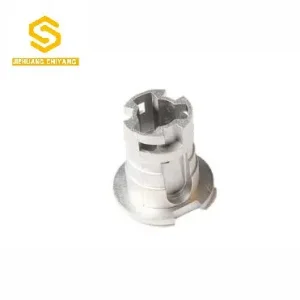
Wholesale metal injection molding parts for medical technology Manufacturer, Factory
View Specifications
China Hot sale Customized/Designing Zinc/Aluminium Die Casting Parts for Auto/Hardware/Medical/LED Light Manufacturers, Factories
View Specifications
China China Factory for OEM MIM Sheet Metal Powder Injection Molding Machine Steel Stainless Custom Parts Suppliers, Factories
View Specifications
China Best-Selling Zinc Die Cast Set Screw Galvanized Steel Pipe Conduit EMT Coupling Hot Sale Factory, Factories
View Specifications
China OEM Manufacturer Custom Stainless Steel Hardware Special Parts Non-Standard Powder Metallurgy Metal Injection Molding MIM Process for Machinery Components CNC Turning Parts Manufacturers, Supplier
View SpecificationsRequest a Free DFM & Quote for Your Drawing
Upload your 2D PDF and 3D CAD models (STEP/IGES). Receive an engineer-reviewed Design for Manufacturability (DFM) analysis and a transparent quotation within 48 hours under mutual NDA.