
OEM Powder Metallurgy & Engineered Castings Showcase
Explore our top-tier catalog of precision-engineered sintered metal components, high-density powder metallurgy gears, custom MIM structural parts, and specialized aluminum die-casting assemblies delivered directly from China's leading manufacturing hub.

China Wholesale OEM Factory Customized OEM Aluminium Transmission Casting with 3D Drawings ISO Suppliers, Factory
View Product Specs
Wholesale Wholesale Price Lk 800 Ton Die Casting Machine for Automotive Aluminium Casting Parts Suppliers, Factories
View Product Specs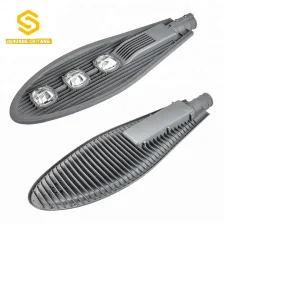
China China aluminum die casting factories led street light housing Manufacturers, Factories
View Product Specs
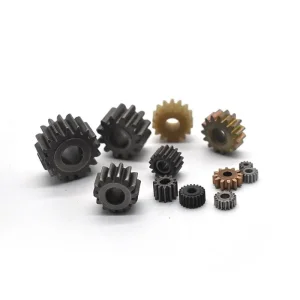
China Free sample for Custom MIM Metal Powder Injection Molding 17-4pH Auto Parts Tee Tube Manufacturers, Suppliers
View Product Specs
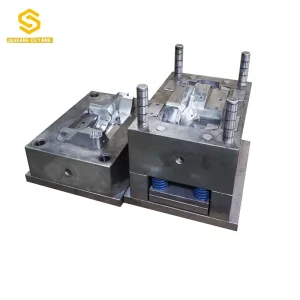
China China CNC Machining Service Aluminium Die Casting Tooling Mold Suppliers, Factories
View Product Specs
China China OEM MIM Auto Spare Parts Car Parts Accessories Motor Motorcycle Parts by Metal Injection Molding CNC Machining Suppliers, Factories
View Product SpecsGlobal Commercial Landscape of Precision Sintered Parts
The global precision powder metallurgy (PM) and Metal Injection Molding (MIM) market is undergoing a structural paradigm shift. Valued at over $10.5 Billion globally, demand is rapidly expanding across electrified mobility, automated surgical robotics, aerospace micro-actuators, and advanced consumer electronics. Modern engineering demands micro-level dimensional repeatability, complex 3D contours, and mechanical properties equivalent to wrought metals—without the prohibitive material waste and tool wear of traditional subtractive machining.
Fundamentals of Powder Metallurgy & Solid-State Sintering
Precision sintering is a thermal metallurgical process where compacted metal or alloy powders are heated in a strictly controlled atmospheric furnace to temperatures below their absolute melting point (typically 75% to 90% of the melting point). Through atomic diffusion across inter-particle contact points, grain boundaries merge, pores neck down, and the component undergoes solid-state densification. This yields homogeneous microstructures with tailored tensile strength, wear resistance, magnetic permeability, and fatigue limits.
Metal Injection Molding (MIM) Technical Evolution
MIM combines the geometric design freedom of plastic injection molding with the structural strength of wrought stainless steel, titanium, and cobalt-chrome alloys. Fine metal powders (typically 3-20 μm) are homogenized with a polymeric binder system to form feedstock. After molding into complex 3D shapes, the binder is extracted via solvent or thermal debinding prior to high-vacuum sintering. The result is net-shape precision parts boasting 95% to 99% theoretical density without secondary turning.
Technical Process Selection Matrix for Global Procurement Officers
| Manufacturing Process | Achievable Density | Dimensional Tolerance | Geometric Complexity | Material Yield | Optimal Annual Volume |
|---|---|---|---|---|---|
| Powder Metallurgy (PM) | 6.8 - 7.4 g/cm³ (88-95%) | ±0.05 mm (ISO IT8-IT9) | Medium (2.5D Prismatic / Cylindrical) | 95% - 98% | 10,000 to 1,000,000+ pcs |
| Metal Injection Molding (MIM) | 7.5 - 7.9 g/cm³ (95-99%) | ±0.3% to ±0.5% nominal | Ultra-High (Complex 3D / Thin Wall / Undercut) | 98% | 5,000 to 500,000+ pcs |
| CNC Subtractive Machining | 100% (Wrought Stock) | ±0.005 mm (ISO IT5-IT7) | High (Tool Access Limited) | 15% - 40% | 1 to 2,000 pcs (Low Batch) |
| Aluminum / Zinc Die Casting | 90 - 95% (Alloy Dependent) | ±0.10 mm | High (Draft Angle Dependent) | 85% - 90% | 5,000 to 500,000+ pcs |
Why Global Enterprises Source Precision Sintered Components from China
China’s advanced precision sintering infrastructure integrates raw elemental powder production, toolmaking, high-temperature furnace manufacturing, automated quality verification, and surface plating within concentrated industrial clusters. This centralized ecosystem offers foreign OEM procurement teams unparalleled speed, scale, and cost control.
Vertically Integrated Powder Supply
Direct access to domestic water atomization and gas atomization raw powder refiners ensures stable chemical purity, custom alloy blending (e.g., low-alloy nickel-steels, soft magnetic alloys), and protection against global material price volatility.
Tooling Velocity & Rapid DFM
In-house CNC spark erosion (EDM), wire-cutting, and 5-axis mold tooling reduce tooling development times from the western industry average of 10-12 weeks down to 18 to 25 calendar days, enabling rapid market entry.
Continuous Automation & AI Inspection
China factories utilize automated multi-station mechanical and hydraulic presses (up to 1,000 tons) paired with continuous mesh-belt vacuum furnaces and vision-guided optical sorting machinery for 100% automated inspection.
Application Scenarios Across Critical Global Sectors
Our engineered sintered components serve as core functional building blocks across demanding mechanical, electrical, and thermal environments worldwide.
Automotive & Electric Vehicles (EV)
High-torque powder metallurgy planetary gears, engine Variable Valve Timing (VVT) rotors, oil pump rotors, steering column lock pawls, and EV traction motor sensor housings. Excellent fatigue life and noise-dampening acoustic profile.
Medical Devices & Surgical Instruments
Biocompatible 17-4PH & 316L stainless steel MIM endoscopic articulation joints, laparoscopic grabber teeth, surgical stapler components, and dental brackets requiring sterile corrosion resistance and high yield strength.
Consumer Electronics & Smart Hardware
Miniature MIM watch cases, smart ring structural chassis, foldable smartphone screen friction hinges, camera module brackets, and power tool planetary gear disk assemblies demanding sleek cosmetic finishes and structural rigidity.
Industrial Automation & Power Tools
Sintered iron-copper alloy spur gears, pneumatic tool impact clutches, hydraulic pump wear plates, magnetic actuators, and robotic arm elbow joint reduction gears designed for million-cycle wear resistance.
Aerospace & Defense Micro-Mechanisms
High-density tungsten heavy alloy counterweights, titanium alloy (TiMIM) drone camera gimbal clamps, and high-temperature nickel superalloy turbine guide vanes capable of withstanding extreme thermal cycles.
Smart Home & Commercial Appliances
Custom sintered stainless steel gears for high-end espresso machine grinders, smart door lock deadbolts, motorized curtain drive gears, and HVAC damper actuators engineered for silent operation.
Emerging Trends Shaping the Sintering Technology Sector
As global OEMs push for lower carbon footprints, lightweight materials, and sub-millimeter precision, China’s sintering industry is pioneering several technological breakthroughs.
Titanium Powder Injection Molding (TiMIM)
Replacing heavy stainless steels with Ti-6Al-4V titanium alloy MIM parts delivers a 45% weight reduction alongside exceptional specific strength and bio-compatibility. Advanced vacuum-debinding furnaces prevent interstitial oxygen pickup, matching wrought titanium ASTM standards.
AI-Simulated Shrinkage Modeling
During sintering, MIM feedstock undergoes a linear dimensional shrinkage of 15% to 22%. By implementing finite-element simulation (FEA) software during die tooling design, engineers predict localized sintering warpage and compensate mold cavities prior to steel cutting.
Ultra-High Density Warm Compaction
By heating both organic lubricants and alloy powders to precisely 120°C - 150°C during single-press compaction, press operators achieve green densities exceeding 7.4 g/cm³ without double-press double-sinter (DPDS) secondary processing overhead.
Green Powder Metallurgy & Decarbonization
Continuous sintering furnaces powered by green hydrogen atmospheres eliminate hydrocarbon gas emissions, while near-net-shape processing intrinsically eliminates 90%+ of metal cutting chips, aligning with European CBAM and ESG mandates.
Design for Manufacturability (DFM) Rules for Sintered Parts
Optimizing component drawings specifically for powder metallurgy or metal injection molding ensures zero defect rates, lower tooling maintenance, and optimal unit economics. Review our essential engineering rules before finalizing your 3D STEP models.
Maintain consistent wall sections (1.0mm to 6.0mm for MIM) to prevent differential thermal shrinkage, sink marks, or internal void creation during sintering.
Provide a 0.5° to 1° draft angle on ejector-pin surfaces and internal corner radii ≥ 0.5mm to avoid stress risers during powder ejection.
Eliminate sharp punch tool edges in conventional PM dies. Incorporate a minimum land of 0.25mm to extend press tool lifespan.
Design at least one flat datum surface or custom ceramic sintering tray interface to prevent gravity-induced sag at high sintering temperatures.
Specify CNC sizing, coin pressing, magnetic deburring, or PVD coating only on critical datum interfaces requiring IT6 tolerances.
Custom Metal Powder & Mechanical Components Lineup
Review our extensive range of specialized stainless steel sintered parts, micro powder metallurgy gears, ceramic components, and precision die-cast enclosures built strictly according to customer technical specifications and ISO quality standards.

Wholesale Factory Selling Stainless Steel Sintered Powder Metallurgy Parts Pm Metal Injection Molding MIM Gear Part for Electronic Components Suppliers, Factory
View Product Specs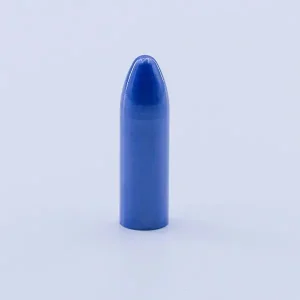

Wholesale Top Grade Zinc/Aluminum Die Cast for Housing/Structure Parts Manufacturers, Factories
View Product Specs
Wholesale Good quality Stainless Steel Sintered Powder Metallurgy Parts MIM Metal Injection Molding MIM Gear Parts for Electronic Components Factory, Factories
View Product Specs
China OEM/ODM Manufacturer Powder Metallurgy Parts Power Tools Sintered Metal Planetary Spur Gear Planets Disk Manufacturers, Factories
View Product Specs
China OEM Supply Sintered Powder Metallurgy Custom Metal Injection Molding Parts for CNC Machining Stainless Steel Components,Iron Plated Spare Parts for Machine Electric Device Manufacturer, Factory
View Product Specs
China China New Product Die Castings Anodized Powder Coating Precision Pressure Parts Enclosure Zinc Alloy Aluminum Die Casting Manufacturer, Suppliers
View Product Specs
Wholesale OEM Factory for Customized Phone Button Watch Button by MIM Metal Injection Molding Factory, Factories
View Product SpecsFrequently Asked Questions (FAQ) for Engineering & Sourcing Teams
Get expert answers regarding sintered metal tolerances, density benchmarks, material selections, non-disclosure agreements, and production lead times.
What dimensional tolerances can be consistently held on as-sintered parts?
For conventional Powder Metallurgy (PM), standard as-sintered radial tolerances range from ±0.05 mm to ±0.10 mm (ISO IT8-IT9 standard). For Metal Injection Molding (MIM), nominal dimensional tolerance is typically ±0.3% to ±0.5% (e.g., ±0.03 mm on a 10 mm feature). Where tighter limits (such as ±0.008 mm) are specified for bearing seats or gear journals, secondary CNC turning, grinding, or coining (sizing) is performed.
How does sintered part density impact overall mechanical performance?
Density directly correlates with yield strength, tensile elongation, impact toughness, and magnetic permeability. Standard PM parts (6.8 to 7.2 g/cm³) retain 85-92% theoretical density, suitable for structural gears and oil-impregnated bushings. High-density MIM parts (7.5 to 7.85 g/cm³) reach 95-99% theoretical density, exhibiting mechanical properties virtually identical to wrought bar stock, including heat-treatability and hermetic weldability.
Which stainless steel grades are available for MIM manufacturing?
We regularly process precipitation-hardening stainless steel 17-4PH (AISI 630) for high strength and hardness (up to 45 HRC after H900 heat treatment), austenitic 316L (AISI 316L) for extreme medical/surgical corrosion resistance, martensitic 420 & 440C for cutting edges, and custom Fe-Ni low alloy steels (FN-0205, FN-0800) for structural automotive pawls and gears.
What is the typical tooling cost and lead time for new custom projects?
PM compaction dies generally range from $2,500 to $6,000, while multi-cavity MIM injection molds range from $4,000 to $12,000 depending on part complexity and slide mechanisms. Prototype samples are delivered within 20 to 25 calendar days following 3D CAD drawing approval. Mass production lead time is typically 3 to 4 weeks for initial dispatch.
Can sintered metal components undergo surface plating and heat treatment?
Yes. Sintered parts can undergo vacuum carburizing, induction hardening, nitriding, DLC (Diamond-Like Carbon) coating, electro-polishing, zinc-nickel plating, electroless nickel plating, and black oxide treatment. For porous conventional PM parts (<7.2 g/cm³ density), resin impregnation is performed prior to wet electroplating to prevent chemical entrapment inside internal pores.
How do you guarantee quality compliance and intellectual property (IP) protection?
We operate under audited ISO 9001:2015 and IATF 16949 quality management systems. Every shipment includes a Full First Article Inspection (FAI) report, Material Inspection Certificate (RoHS/REACH compliant), optical CMM measurement chart, and metallographic test data. We sign binding non-disclosure agreements (NDAs) before reviewing any client 2D PDF or 3D STEP drawings.
Ready to Optimize Your Part Costs with Precision Sintering?
Submit your 2D PDF or 3D STEP files today. Our senior metallurgy engineering team will provide a complete Design for Manufacturability (DFM) review, material recommendation, and competitive factory quotation within 24 to 48 hours.