
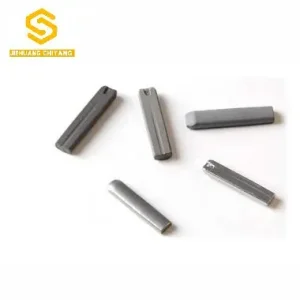
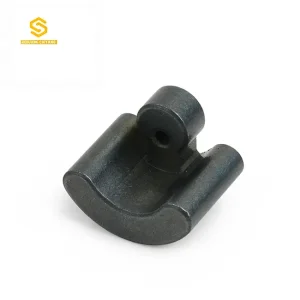
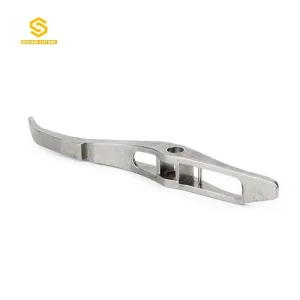
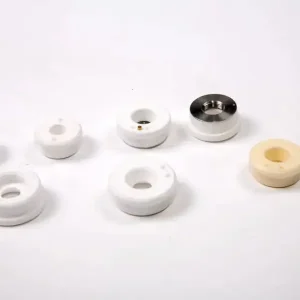
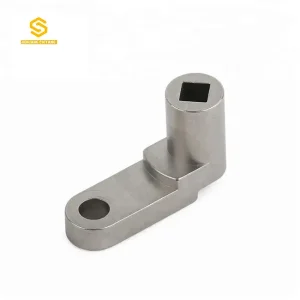
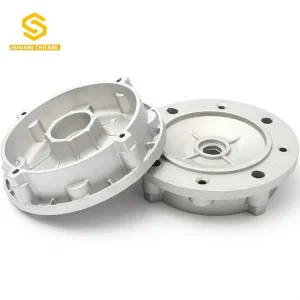
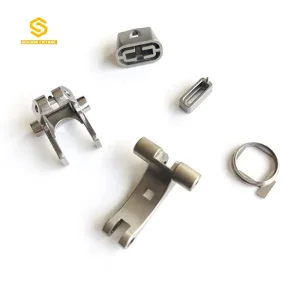
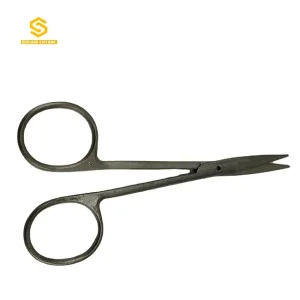
Featured Precision Powder Metallurgy Components
Explore our certified sintered metal, MIM, and OEM die-casting component portfolio engineered for zero-maintenance performance.
1. Tribological Engineering & Physics of Self-Lubricating Sintered Bearings
Self-lubricating Powder Metallurgy (PM) bearings represent a cornerstone of modern mechanical engineering. By combining precision metallurgy with controlled capillary fluid dynamics, these components operate seamlessly in maintenance-free environments across global industrial applications.
Microscopic Porosity & Capillary Reservoir System
Unlike solid machined metal bearings that rely entirely on external, continuous lubrication systems, sintered PM bearings feature an interconnected micro-porosity network typically occupying 18% to 28% of the total component volume. During manufacturing, these microscopic voids are vacuum-impregnated with specialized synthetic or mineral lubricating oils.
When the journal shaft begins rotation inside the sleeve bearing, frictional heating and dynamic shear stress alter the fluid dynamics within the matrix. As temperature rises, thermal expansion causes the oil within the pores to expand faster than the metallic structure, drawing the lubricant out through capillary channels directly to the contact zone.
Hydrodynamic Lubrication & Self-Regulating Mechanism
Once rotation reaches operational speed, a hydrodynamic oil wedge forms between the shaft surface and the bearing bore. This microscopic pressure field completely separates the metallic friction surfaces, keeping coefficients of friction exceptionally low (μ = 0.02 to 0.08).
When operation ceases, the system experiences a reverse thermodynamic response: cooling friction zones contract, capillary pressure shifts, and the lubricant is drawn back into the porous metallic reservoir. This self-regulating cycle eliminates fluid leakage, prevents contamination of surrounding gearboxes, and delivers zero-maintenance life cycles spanning tens of thousands of operating hours.
2. Sintered PM Bearings vs. Traditional Machined Solid Bearings
Choosing the right bearing geometry and manufacturing route dictates lifetime cost, maintenance frequency, and equipment operational reliability. Below is a comprehensive engineering comparison.
| Performance / Production Feature | Sintered Self-Lubricating PM Bearings | Machined Solid Bronze/Brass Bushings | Needle Roller / Ball Bearings |
|---|---|---|---|
| Maintenance Requirement | Zero Maintenance (Self-Lubricating) | Frequent Relubrication Needed | Grease Re-application Required |
| Raw Material Utilization | 95% - 98% (Near-Net Shape) | 40% - 60% (High Machining Scrap) | 60% - 70% (Complex Assembly Waste) |
| PV Limit Capabilities | Up to 2.5 MPa·m/s (Oil Dependent) | Up to 1.8 MPa·m/s (Unlubricated) | High Speed / Moderate Pressure |
| Acoustic / Noise Dampening | Superior (Porous Metal Absorbs Vibration) | Moderate (Solid Metal Transmits Resonance) | Poor (High Mechanical Roller Noise) |
| Unit Cost in Mass Production | Extremely Low (High Mold Efficiency) | High (Machining Time & Material Scrap) | Very High (Multiple Precision Parts) |
| Corrosion & Chemical Resistance | Tailor-made Stainless (316L/17-4PH) / Bronze | Standard Cast Alloy Dependent | Requires Special Stainless Seals |
3. Sourcing Advantages: China's PM Manufacturing Advantage
China has established itself as the global powerhouse for precision powder metallurgy, combining full supply chain integration, world-class toolmaking capabilities, and strict quality assurance standardizations.
Complete End-to-End Powder Industrial Ecosystem
From elemental atomized iron, bronze, and copper powder production to high-temperature mesh belt sintering furnaces and secondary oil impregnation, Chinese suppliers maintain complete vertical integration. This regional clustering reduces raw material lead times and insulates international procurement teams from global supply shocks.
Advanced Automated Pressing Technology
Modern Chinese PM manufacturers utilize CNC-controlled multi-axial hydraulic compaction presses ranging from 15 tons to 1,000 tons. This high-tonnage compaction capability ensures uniform density distribution across multi-tier sleeve, flanged, and spherical bearing geometries with tolerances within ±0.005 mm.
Strict Quality Validation & ISO Certification
Leading Chinese PM bearing suppliers adhere to global benchmarks including IATF 16949, ISO 9001, and ISO 14001. Quality control labs leverage Coordinate Measuring Machines (CMM), optical image measurement equipment, radial crush strength testers per MPIF Standard 35, and vacuum density testing equipment.
4. Powder Metallurgy Material Specifications & Formulations
Proper material formulation ensures optimal load-bearing capacity, wear resistance, and thermal conductivity. Sintered PM bearings are categorized into three primary alloy families:
Sintered Bronze (SAE 841 / CuSn10)
Composition: 88-90% Copper, 9-11% Tin, combined with micro-graphite additives.
Features: Outstanding wear resistance, smooth running properties, non-magnetic, and exceptional corrosion resistance. Ideal for high-speed, light-to-medium load applications like electric motors, precision instruments, and household appliances.
Sintered Iron-Copper (FC-0208 / Diluted Bronze)
Composition: 96-98% Iron, 1.5-3.5% Copper, with controlled combined carbon content.
Features: Higher mechanical strength and radial crush resistance compared to pure bronze. Delivers an ideal economic compromise for medium-load, medium-speed applications such as automotive sub-assemblies and power tools.
Sintered Iron-Carbon (Fe-C / Heavy Duty Alloys)
Composition: Pure atomized iron powder alloyed with graphite (0.5-1.0%) for thermal heat-treatment hardenable matrixes.
Features: Extreme load-bearing capability under low-speed, high-impact oscillatory conditions. Widely utilized in agricultural machinery, hydraulic cylinder pivots, and heavy industrial gearboxes.
5. Global OEM Industry Applications & Localized Use Cases
Self-lubricating PM bearings form the quiet backbone of modern automation, automotive engineering, and consumer technologies. Explore how these components drive system performance across key global sectors:
Automotive Systems
Essential for Starter Motor drives, Electric Power Steering (EPS) actuators, HVAC blower motors, Electronic Throttle Controls (ETC), and windshield wiper linkages. PM bearings provide whisper-quiet operation across extreme automotive temperature ranges (-40°C to +150°C).
Home Appliances & HVAC Motors
Widely integrated into washing machine drain pumps, refrigerator fan motors, air-conditioner compressors, and kitchen appliances. The porous oil matrix suppresses high-frequency acoustic resonance, enabling ultra-quiet home environments.
Industrial Automation & Robotics
High-density bronze bearings serve inside linear actuator guide sleeves, pneumatic cylinder rod ends, robotic joint gearboxes, and conveyor roller systems, providing zero-maintenance operation in dusty or inaccessible environments.
Medical & Laboratory Equipment
Used in surgical tools, infusion pumps, diagnostic imaging table drives, and dental handpieces. The self-contained oil system prevents fluid contamination in cleanroom and healthcare settings.
6. Global Procurement Framework: Risk Mitigation & Engineering DFM
Procuring custom powder metallurgy components internationally requires rigorous quality assurance protocols and upfront Design for Manufacturability (DFM) verification.
1. DFM & Pressing Feasibility Review
Prior to tooling investment, engineers analyze draft angles, wall thickness uniformity, radius undercuts, and compaction density balance to ensure flawless ejection from high-precision tungsten carbide molds.
2. Lubricant Oil Selection Strategy
Selecting the appropriate lubricant viscosity (ISO VG 32 to VG 150) and synthetic additive chemistry (PAO, Ester, Mineral) ensures optimal performance under low temperatures, high speeds, or extreme contact pressure loads.
3. PPAP Level III & Material Certifications
Full Production Part Approval Process (PPAP) documentation, including dimensional inspection reports, material spectrographic analysis, and salt spray corrosion validation, is provided prior to mass production volume clearance.
7. Advanced Trends: Smart Bearings & Carbon-Neutral Powder Sintering
The powder metallurgy sector continues to evolve rapidly driven by electric vehicle powertrain integration, smart industrial IoT sensors, and global carbon-reduction mandates.
Solid Lubricant Nano-Impregnation
Next-generation PM bearings incorporate nano-particles of Molybdenum Disulfide (MoS2), Graphene, and Polytetrafluoroethylene (PTFE) directly into the powder matrix, delivering dry self-lubricating performance up to 400°C where liquid oils break down.
Green Hydrogen Sintering Furnaces
Leading Chinese manufacturers are deploying hydrogen-based atmosphere sintering systems to replace traditional cracked ammonia, dramatically lowering carbon footprints while improving metallurgical purity and inter-particle bond strength.
Hybrid MIM-Additive Bearings
Combining 3D metal printing with Metal Injection Molding (MIM) allows for internal conformal cooling micro-channels within bearing housings, revolutionizing thermal management in high-performance motorsport and aerospace actuators.
8. Frequently Asked Questions (FAQ) for OEM Buyers & Engineers
Get immediate answers to crucial engineering, ordering, and technical validation questions regarding self-lubricating powder metallurgy components.
How do you calculate the PV Limit for self-lubricating PM sleeve bearings?
What method is used for oil impregnation in sintered bearings?
Can PM self-lubricating bearings be machined or reamed after press fitting?
What is the typical shelf life of oil-impregnated sintered bearings?
What dimensional tolerances can Chinese PM suppliers achieve?
Custom OEM Engineering & Tooling Portfolio
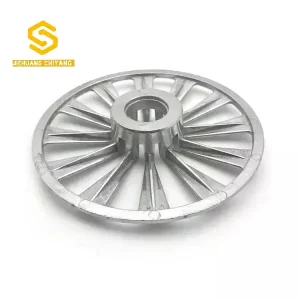
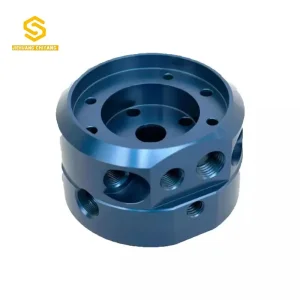
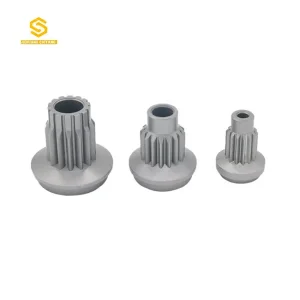
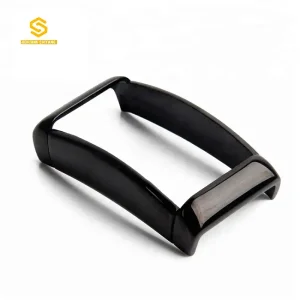
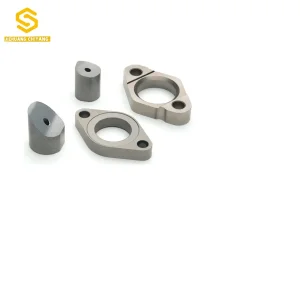
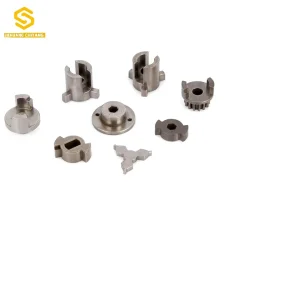
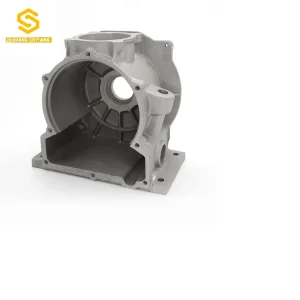
Review our extended manufacturing lines spanning metal injection molding, precision aluminum/zinc die casting, and custom powder metal structural components.
Partner with China's Premier PM Bearing Specialists
Submit your 2D engineering drawings (PDF/CAD) and 3D step models today. Our tribology engineering team delivers a complete DFM analysis and transparent manufacturing quote within 48 hours.