
Featured Powder Metallurgy & OEM Components
Explore precision-engineered sintered components, ceramic assemblies, and custom alloy parts direct from accredited manufacturing facilities.
Global Industrial Demand & Sintered Filtration Dynamics
Sintered bronze filters represent a cornerstone technology in fluid power, pneumatic silencing, gas sparging, and chemical separation across high-tier manufacturing supply chains.
Strategic Role in Modern Fluid Power
In modern automated industrial systems, sintered bronze filters act as primary defenses against particulate contamination. Manufactured by sintering spherical bronze powder (typically CuSn10 alloy) inside rigid molds at temperatures below the metal melting point, these components deliver structural integrity, superior thermal dissipation, and predictable flow characteristics without requiring synthetic binders.
Why Procurement Teams Partner with China OEM Suppliers
China has established a mature, highly integrated powder metallurgy ecosystem. Sourcing sintered bronze filters from qualified Chinese suppliers grants global original equipment manufacturers (OEMs) access to advanced atomization facilities, automated high-precision sintering kilns, tooling agility, and dramatic unit cost reductions—all supported by strict ISO 9001 and IATF 16949 quality management systems.
Metallurgical Science: How Sintered Bronze Powder Filters Function
A comprehensive examination of liquid-phase sintering kinetics, pore geometry control, and Darcy’s Law flow dynamics.
1. Spherical Powder Atomization
The manufacturing process begins with inert gas atomization of bronze alloys—most commonly CuSn10 (90% Copper, 10% Tin) or CuSn8 formulations. Gas atomization yields highly spherical powder particles with uniform dimensional characteristics. Particle size distribution directly dictates final pore rating, ranging from coarse distribution (100–150 microns for high-flow silencers) to ultra-fine fractions (<10 microns for precision gas spargers).
2. Gravity Sintering & Diffusion Bonding
Unlike conventional powder metallurgy which uses hydraulic pressing, porous bronze filters are often created via loose-powder sintering inside heat-resistant graphite or stainless steel molds. The loaded molds pass through controlled-atmosphere continuous mesh belt furnaces at temperatures between 800°C and 850°C. Solid-state atomic diffusion occurs at contact points, creating robust metallic necks while preserving inter-particle void spaces.
3. Pore Geometry & Flow Dynamics
The resulting matrix features a tortuous, interconnected network of open pores. Fluid flow behavior through this permeable metal body follows Darcy’s Law for Porous Media:
Where Q is flow rate, k is permeability, A is surface area, ΔP is differential pressure drop, μ is fluid viscosity, and L is element wall thickness. Microstructural stability ensures the filter resists pressure surges without pore deformation.
Engineering Selection Matrix: Filter Media Comparison
Evaluating sintered bronze against alternative industrial filtration media to assist design engineers in material specification.
| Performance Metric | Sintered Bronze Powder | Sintered 316L Stainless Steel | Porous Ceramic Tubes | Woven Wire Mesh |
|---|---|---|---|---|
| Operating Temperature | Up to 250°C (482°F) | Up to 550°C (1022°F) | Up to 1000°C (1832°F) | Up to 400°C (752°F) |
| Corrosion Resistance | Excellent in oil, water, pneumatics; fair in acids | Superior in harsh chemicals/acids | Exceptional in aggressive acids/alkalis | Dependent on alloy weave |
| Mechanical Shock Resistance | High (ductile bronze metallic matrix) | Very High | Poor (brittle fracture risk) | Moderate (susceptible to tearing) |
| Noise Attenuation (dB) | Outstanding (up to 35 dB reduction) | Moderate | Poor | Minimal |
| Manufacturing Tooling Cost | Low to Moderate (Gravity molding) | Moderate to High | High | Low (Stamping/Rolling) |
| Unit Cost in High Volume | Most Cost-Effective | Higher material cost | Moderate | Moderate |
Cross-Industry Macro Solutions & Sourcing Applications
How global enterprises deploy sintered bronze porous elements across critical industrial sectors.
Pneumatic Mufflers & Silencers
Pneumatic exhaust valves generate high-decibel acoustic energy. Threaded sintered bronze silencers reduce exhaust velocity while splitting compressed air streams through millions of micro-passages, lowering noise below OSHA compliance thresholds (85 dBA) without creating severe backpressure on air tools, solenoid valves, and cylinders.
Hydraulic System Valve Protection
In high-pressure hydraulic circuits, proportional and servo valves require protection against particulate wear. Sintered bronze conical filters installed directly within valve ports capture foreign matter, metal filings, and varnish, protecting fine spool tolerances and extending hydraulic power unit operational life.
Flame Arrestors & Explosion-Proof Housing
Gas sensors deployed in hazardous petrochemical environments rely on sintered bronze flame arrestors. The high thermal conductivity of bronze instantly quenches heat waves during internal combustion events, preventing external gas ignition while permitting volatile organic compounds (VOCs) to reach optical or electrochemical sensors.
Gas Dispersion & Micro-Sparging
In fermentation vessels, water treatment units, and chemical reactors, uniform gas introduction is crucial. Sintered bronze diffusion plates generate ultra-fine micro-bubbles (<50 microns), drastically expanding liquid-gas contact surface area and elevating mass transfer oxygen dissolution rates compared to drilled pipe spargers.
Automotive Fuel Venting & Breathers
Fuel storage tanks, automotive gearboxes, and industrial crankcases require atmospheric pressure equalization while blocking ingress of road splash, ambient moisture, and dust. Hydrophobic-treated porous bronze breather caps maintain internal equilibrium under high thermal cycles.
Semiconductor Equipment Vacuum Snubbers
High-vacuum semiconductor processing equipment utilizes porous metal discs to equalize pressure during chamber venting cycles. The filter dampens aggressive gas shockwaves, preventing delicate silicon wafer movement or airborne particulate deposition inside cleanrooms.
Global Enterprise Procurement Framework
A structured approach for sourcing custom sintered bronze filters from qualified Chinese suppliers.
Design for Manufacturability (DFM) Guidelines
- Draft Angles: Include a minimum of 0.5° to 1.0° draft angle on cylindrical wall geometries to facilitate smooth automated mold ejection.
- Wall Thickness Uniformity: Aim for consistent wall thickness (ideally between 1.5mm and 4.0mm) to prevent thermal gradient variations during sintering.
- Integral Threading Options: For threaded silencers, assess whether bronze powder can be direct-sintered into brass/copper hexagonal fittings or if post-sintering machining is required.
- Fillet Radii: Specify generous internal radii (>0.8mm) at step transitions to alleviate localized stress concentrations.
Supplier Auditing & Quality Control Protocol
- Powder Chemistry Verification: Inspect X-Ray Fluorescence (XRF) and Inductively Coupled Plasma (ICP) test reports to ensure lead-free, RoHS-compliant CuSn10 bronze powder.
- Bubble Point Testing (ISO 4003): Verify maximum pore size rating through standardized bubble point pore testing across production batches.
- Permeability Testing (ISO 4022): Confirm air/liquid pressure drop vs. fluid flow velocity curves on calibrated test benches.
- Tensile & Shear Strength Testing: Evaluate structural mechanical integrity per ASTM B202/B438 standard testing criteria.
Technology Roadmap & Future Outlook (2025–2035)
Key technological evolutions transforming sintered porous bronze manufacturing and application engineering over the next decade.
Additive-Sintering Hybrids
Integration of selective laser sintering (SLS) and binder jetting with traditional gravity sintering allows creation of multi-density gradient pore structures, enabling custom internal fluid channels within monolithic bronze filter bodies.
Nanoscale Surface Functionalization
Atomic Layer Deposition (ALD) and plasma-enhanced chemical vapor deposition (PECVD) coat internal pore voids with hydrophobic, oleophobic, or antimicrobial nanolayers without occluding primary fluid pathways.
AI-Driven Automated Tomography
Inline 3D Computed Tomography (CT) scanning powered by computer vision algorithms detects non-destructive internal voids, density variations, and pore wall defects in real time on high-speed OEM production lines.
Global Compliance, Localization & ESG Assurance
Ensuring seamless integration with international legal, environmental, and regional supply chain mandates.
Regulatory Compliance & Certifications
Tier-1 Chinese sintered metal filter manufacturers maintain rigorous international certification standards to simplify import clearance and assembly line integration for North American, European, and Asia-Pacific buyers:
- EU RoHS & REACH: Strict control over chemical constituents, ensuring heavy metal limits (Lead <0.1%, Cadmium <0.01%) conform to EU Directives.
- FDA CFR 21 177.2600: Material formulations verified safe for incidental food and beverage contact during pneumatic processing.
- ISO 14001 & ISO 45001: Sustainable environmental management and safe workplace practices.
Localization & Supply Chain Resilience
To insulate global customers from geopolitical and shipping disruptions, leading suppliers offer tailored supply chain logistics solutions:
- Vendor-Managed Inventory (VMI): Consignment stock buffers held in regional European and US warehouses to guarantee 24-hour replenishment.
- Custom Export Packaging: Anti-corrosion VCI (Vapor Corrosion Inhibitor) polybags, vacuum sealing, and heavy-duty reinforced wooden crates prevent oxidation during ocean transit.
- Multi-Linguistic Technical Support: On-staff metallurgical engineers offering design reviews, localized drawing conversions (ANSI/DIN/JIS), and real-time support.
Frequently Asked Questions (FAQ)
Expert engineering answers to common procurement, design, and operational queries regarding sintered bronze filters.
Additional Industrial & High-Precision Hardware Solutions
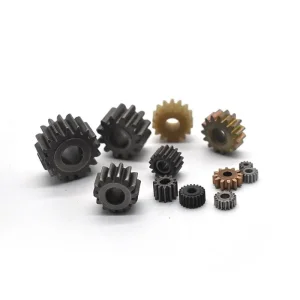
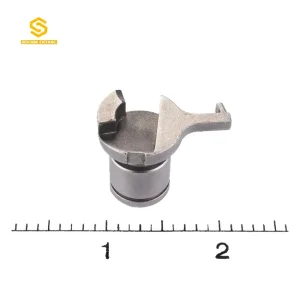
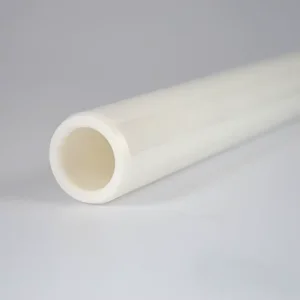
Explore our broader technical catalog covering MIM parts, micro gears, ceramic tubing, and custom investment castings.
Request an Engineering DFM Review & Custom RFQ
Partner directly with experienced Chinese powder metallurgy directors and application engineers. Receive an official DFM evaluation, pore matrix sizing recommendation, and a transparent quotation within 24–48 hours.