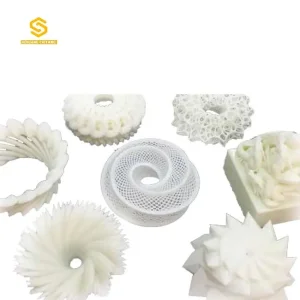
Precision Engineering Product Catalog (Part I)
Direct-from-factory sintered metal solutions engineered for critical tolerance application in automotive, industrial machinery, and micro-mechanical systems.
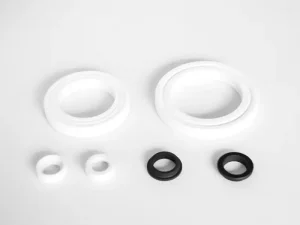







Macro Industry Solutions & Powder Metallurgy Architecture
Sintered metal technology represents the modern apex of near-net-shape manufacturing efficiency. By fusing elemental or pre-alloyed metal powders under precise thermal and atmospheric control, Chinese manufacturing clusters deliver structural components with enhanced magnetic, mechanical, and thermal performance that traditional CNC machining or sand casting cannot match at high production volumes.
Automotive & E-Mobility
High-density sintered gears, variable valve timing (VVT) rotors, oil pump gears, and electric vehicle drive components engineered to withstand high torque and cyclic fatigue while minimizing acoustic noise.
Industrial Power Tools
Complex planetary gearboxes, ratchet mechanisms, and impact driver anvils utilizing MIM and pressing technology to deliver Rockwell hardness levels exceeding 58 HRC after secondary induction hardening.
Medical & Surgical Devices
Biocompatible stainless steel (316L, 17-4PH) surgical scalpel handles, endoscopic articulation joints, and orthodontic brackets produced via micro-Metal Injection Molding (Micro-MIM) with zero residual porosity.
Comparative Metallurgy Performance Standard
| Manufacturing Process | Typical Density Range | Tensile Strength (MPa) | Geometrical Complexity | Material Utilization Efficiency | Economic MOQ |
|---|---|---|---|---|---|
| Press & Sinter Powder Metallurgy (PM) | 6.8 - 7.4 g/cm³ | 400 - 950 MPa | Moderate (2.5D Axial Profile) | 95% - 98% | 5,000 Pcs |
| Metal Injection Molding (MIM) | 7.5 - 7.9 g/cm³ (96-99% Theoretical) | 600 - 1,200 MPa | Extreme (3D Complex Geometry) | 95% - 98% | 2,000 Pcs |
| Subtractive CNC Machining | 100% Solid Wrought | 500 - 1,100 MPa | High (Tool Access Limited) | 15% - 40% | 1 Pc (Low Vol) |
| Investment Casting (Lost Wax) | 92 - 96% Theoretical | 450 - 800 MPa | High | 60% - 75% | 500 Pcs |
China Industry 4.0: Supply Chain Resilience & Efficiency
The Chinese sintered metal ecosystem has undergone a massive technological transformation. Leading factories in Ningbo, Zhejiang, and Jiangsu integrate AI-assisted powder atomization, automated CNC compaction presses up to 1,000 tons, and continuous mesh-belt vacuum sintering furnaces equipped with real-time carbon-potential monitoring.
Vertical Raw Material Integration
By controlling the powder processing pipeline—from water and gas atomization of pre-alloyed powders (Fe-Ni, Fe-Cu, 316L, 17-4PH) to custom binder formulation—Chinese suppliers minimize raw material price volatility. Sourcing directly from certified domestic powder producers ensures consistent particle size distribution (PSD) critical for ultra-dense sintering.
Digital Twin & Mold Flow Simulation
Before tooling steel (DC53 or tungsten carbide) is cut, finite element analysis (FEA) and specialized powder compaction software simulate green density distribution. Potential defect zones—such as micro-cracks, uneven shrinkage during debinding, or sintering distortion—are identified and corrected digitally during the Design for Manufacturability (DFM) phase.
Sintered Metal Technical Roadmap & Future Outlook (2025–2030)
The powder metallurgy domain is advancing beyond conventional press-and-sinter boundaries. Key technological trends driving the industry forward emphasize ultra-high density, advanced material formulations, and additive hybrid processes.
Phase 1: Spark Plasma Sintering (SPS) & Warm Compaction
Adoption of field-assisted sintering techniques (SPS) and heated die warm compaction allows parts to achieve density levels exceeding 98% of theoretical wrought density without requiring full liquid phase sintering. This enhances impact toughness by up to 40%.
Phase 2: Titanium MIM & High-Entropy Alloy Powders
Titanium MIM (Ti-6Al-4V) commercialization is scaling rapidly for aerospace micro-fasteners, luxury consumer wearables, and bio-implantable devices. Simultaneously, research into High-Entropy Alloys (HEA) offers unparalleled corrosion and thermal resistance for extreme environments.
Phase 3: Hybrid Additive Metallurgy Integration
Combining Binder Jetting 3D printing with high-throughput continuous sintering furnaces enables prototype-to-mass-production transition without tooling costs for short runs, followed by rapid scale-up using multi-cavity injection molds once product geometry freezes.
Global Enterprise Procurement Guidelines & Risk Mitigation
Procuring custom mechanical components from Chinese factories requires a structured audit methodology to balance landed costs, lead time predictability, and engineering compliance.
1. Technical Audit Checklist
Ensure the supplier maintains in-house metallographic evaluation labs, coordinate measuring machines (CMM), optical contour projectors, and continuous vacuum debinding/sintering units rather than outsourcing critical thermal processing.
2. Tooling & Sample Validation
Mandate Production Part Approval Process (PPAP Level 3) documentation including full dimensional inspection reports, material chemistry certifications via ICP spectroscopy, and salt-spray corrosion test data prior to mass production release.
3. Total Cost of Ownership (TCO)
Evaluate non-unit pricing variables: multi-cavity die durability (target > 1,000,000 cycles), automated optical sorting speeds, optimized export packaging, and flexible Incoterms (FOB, CIF, DDP).
Quality Assurance Framework, Standards & Compliance
International buyers operate under strict regulatory and environmental parameters. Qualified Chinese sintered metal manufacturers operate certified quality management systems built to eliminate non-conformance before shipment.
International Certification Standards
- IATF 16949:2016: Strict automotive supply chain defect prevention and variance control.
- ISO 9001:2015: Comprehensive organizational quality management.
- ISO 14001 & ISO 45001: Environmental management and workplace health & safety standards.
- MPIF Standard 35 Compliance: Standardized structural PM part specifications for material density, hardness, and strength.
Environmental & ESG Compliance
- RoHS & REACH Declarations: Full compliance preventing heavy metals, hazardous binders, or banned chemicals.
- Conflict Mineral Reporting (CMRT): Traceable supply chain documentation ensuring ethical gold, tantalum, tin, and tungsten sourcing.
- Zero Waste Recycling Loop: Green-state compact scrap is 100% recycled back into powder processing feedstocks.
- Closed-Loop Thermal Recirculation: Efficient sintering furnace heat recovery reducing energy footprint.
Frequently Asked Questions (Engineering & Procurement FAQ)
Direct technical answers from senior metallurgical engineers regarding design rules, tolerances, and supply chain logistics.
As-sintered structural PM parts typically hold dimensional tolerances of ±0.05mm per 25mm. For Metal Injection Molding (MIM), standard linear tolerances are ±0.3% to ±0.5% of nominal dimensions. When secondary sizing, coining, or precision CNC machining operations are integrated post-sintering, critical dimensions can routinely achieve tight tolerances down to ±0.005mm (5 microns).
Choose Powder Metallurgy (PM) if your part has a uniform cross-section (2.5D profiles like cylindrical gears, sprockets, bushings, and flat plates) and requires high volume at minimum unit cost. Choose Metal Injection Molding (MIM) if your geometry is highly complex, 3-dimensional (featuring internal threads, undercuts, complex cross-holes, or curved profiles), weighs less than 250 grams, and requires high density (>96%) similar to wrought steel.
Density directly correlates with yield strength, tensile strength, impact toughness, and fatigue life. A sintered iron part at 6.8 g/cm³ density exhibits roughly 60% of the tensile strength of solid steel. Raising density to 7.4 g/cm³ through warm compaction or copper infiltration increases performance to 85-90%. At MIM densities (>7.6 g/cm³), static and dynamic properties match wrought materials, enabling heat treatment, carburizing, and electroplating without surface porosity issues.
Standard prototype tooling and initial sample production (T1 samples) take approximately 25 to 35 calendar days. Accelerated metal 3D printing (Binder Jetting or SLM) can produce functional prototype samples within 5 to 7 days for preliminary design validation before cutting permanent multi-cavity production steel molds.
Yes. High-density MIM parts (density > 7.5 g/cm³) can undergo standard plating (Zinc, Nickel, Chrome, PVD coating) and heat treatments (Case hardening, Carbonitriding, Vacuum hardening) identically to machined parts. For lower density press-and-sinter parts (<7.2 g/cm³), resin impregnation is applied prior to plating to seal internal interconnected pores and prevent chemical entrapment.
All client engineering files, CAD models, and technical specifications are protected under enforceable non-disclosure agreements (NDAs). Data is stored on secure, air-gapped CAD servers with restricted employee access privileges. Custom tooling owned by the buyer is never utilized for third-party orders or open-market catalog sales.
Precision Engineering Product Catalog (Part II)
Complete OEM product solutions spanning specialized MIM hardware, precision die-casting components, and high-durability mechanical elements.